


A mortgage broker is a licensed intermediary who connects borrowers with multiple lenders to find the most suitable home loan. The role of mortgage broker goes far beyond paperwork. Brokers assess your financial position, search a wide panel of lenders, manage your application, and guide you from first inquiry through to settlement. For homebuyers and investors navigating complex financing decisions, a broker’s market access and lender knowledge can mean the difference between a rejected application and a settled deal.
What does a mortgage broker do for homebuyers and investors?
Mortgage broker services cover the entire financing process, not just the loan search. The first step is an initial consultation, which is generally free and non-binding, focused on gathering detailed financial information including income, deposit source, and property goals. That data shapes every recommendation the broker makes afterward.

After the assessment, a broker searches their lender panel to find products that match your profile. This is where their value becomes concrete. Brokers access specialist lenders not visible to the general public, which opens options that a direct bank application would never surface. For investors building a portfolio or buyers with irregular income, that access is critical.
The full range of mortgage broker services includes:
- Affordability and borrowing capacity assessment before you start house hunting
- Loan product comparison across multiple lenders, with clear explanations of rate structures and fees
- Application preparation and submission, reducing errors that cause delays
- Lender communication management throughout underwriting and approval
- Post-settlement support including refinancing reviews as your financial situation changes
Pro Tip: Ask your broker how many lenders are on their panel. A broker with access to 20 or more lenders gives you meaningfully more options than one working with only five.
One critical boundary to understand: only the lender’s underwriter makes the final approval decision. A broker manages the process and advocates for you, but cannot override a lender’s risk criteria.
How do mortgage brokers differ from banks and loan officers?
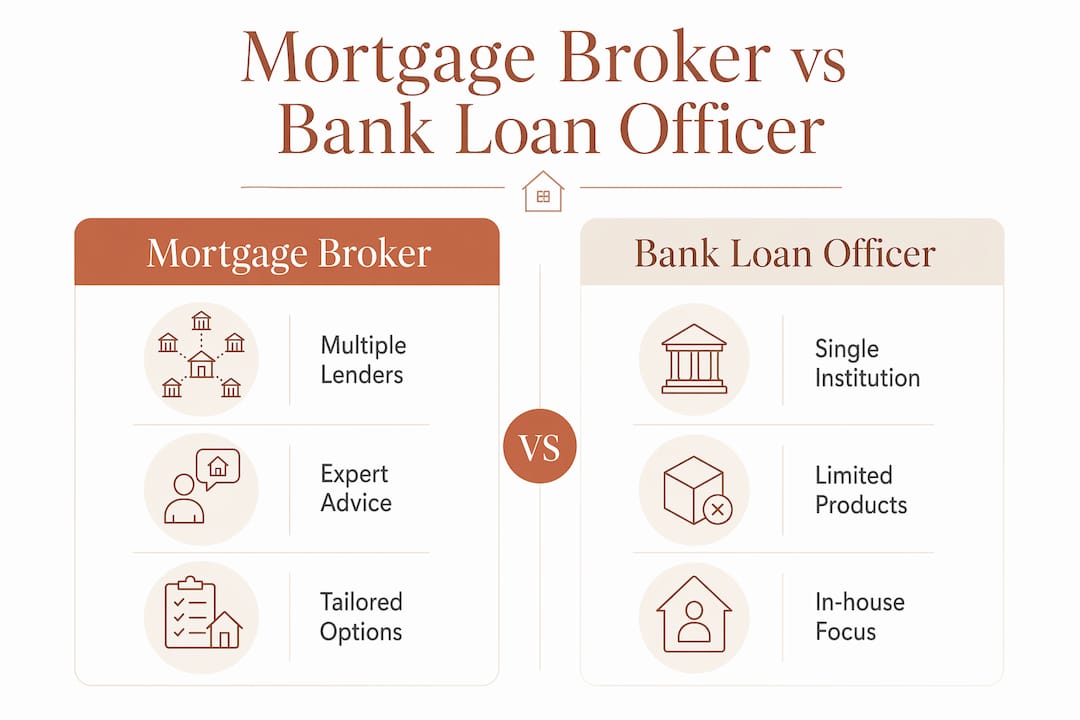
A bank loan officer is an employee of one institution. Their job is to sell that institution’s products. A mortgage broker is an independent intermediary whose job is to find the right product for you across many lenders. That structural difference changes everything about the advice you receive.
When you walk into a bank, the loan officer can only offer what that bank sells. If your financial profile does not fit their standard criteria, you get a decline. A broker, by contrast, matches clients with complex credit or non-traditional income to lenders with flexible underwriting policies. That matchmaking function is the broker’s core advantage over a single-lender channel.
| Feature | Mortgage broker | Bank loan officer |
|---|---|---|
| Lender access | Multiple lenders, including specialists | One institution only |
| Client obligation | Acts in borrower’s best interest (regulated markets) | Acts for the bank |
| Compensation | Commission from lender, disclosed to borrower | Salary or bank incentive |
| Best suited for | Complex profiles, portfolio investors, first-time buyers | Simple applications with strong credit |
| Application scope | Manages full process across lenders | Manages one bank’s process |
Potential conflicts of interest do exist. A broker paid higher commission by one lender may favor that lender’s products. Regulated markets address this directly. In Australia, the Best Interests Duty under the NCCP Act 2009, effective since january 1, 2021, legally requires brokers to recommend suitable loans and act in the client’s best interest. That legal standard does not apply to bank loan officers.
Pro Tip: Always ask a broker how they are compensated and whether any lender pays them a higher commission. A trustworthy broker answers that question without hesitation.
What qualifications and regulations govern mortgage brokers?
Professional standards for mortgage brokers vary by country, but regulated markets share a common goal: protecting borrowers from unsuitable advice. Understanding these standards helps you verify that the broker you choose is operating legally and ethically.
Key regulatory frameworks include:
- Australia: Brokers operate under the National Consumer Credit Protection Act 2009. The Best Interests Duty, active since january 1, 2021, requires brokers to prioritize client outcomes. The Australian Securities and Investments Commission (ASIC) oversees licensing and compliance.
- United Kingdom: UK brokers must hold the CeMAP qualification and comply with Financial Conduct Authority (FCA) regulations. The FCA enforces strict professional standards that govern advice quality and disclosure. Readers researching UK mortgage advice can also review guidance from Prosper Home Loans for context on professional qualification requirements.
- Singapore: Mortgage advisory is governed under the Monetary Authority of Singapore (MAS) framework. Brokers and financial advisors must hold relevant licenses before providing credit advice. Understanding frameworks like the Total Debt Servicing Ratio (TDSR) is central to any mortgage advisory conversation in Singapore.
Across all regulated markets, brokers must disclose their commission arrangements and any potential conflicts of interest. Transparency is not optional. It is a legal requirement in Australia, the UK, and Singapore. That disclosure requirement is the single most important consumer protection in the broker relationship.
What are the benefits and potential downsides of using a mortgage broker?
The benefits of using a mortgage broker are concrete and well-documented. The potential downsides are real but manageable if you know what to look for.
Benefits:
- Broader loan access. Brokers reach lenders you cannot approach directly, including specialist lenders for self-employed buyers, investors with multiple properties, or buyers with past credit issues.
- Time savings. Brokers consolidate multiple lender applications into one process, saving you weeks of individual research and form-filling.
- Expert guidance on lender criteria. Brokers know which lenders are currently approving applications for specific borrower profiles. That knowledge prevents costly delays and application errors that can damage your credit file.
- No direct cost in most cases. Brokers are typically paid by lenders via upfront commission on loan settlement, so most borrowers pay no direct fee.
- Ongoing support. A good broker reviews your loan after settlement and flags refinancing opportunities as rates or your financial position change.
Potential downsides:
- Some brokers work with a limited lender panel, which restricts your options without you realizing it.
- Commission-based pay can create incentives to recommend higher-loan products over lower-cost alternatives.
- Not all brokers are equally experienced with investor financing, commercial loans, or cross-border purchases.
Choosing the right broker requires direct questions. Ask how many lenders are on their panel, how they are paid, and whether they have experience with your specific property type. A broker who specializes in investment property selection will give you more relevant guidance than a generalist focused on first-home buyers.
Pro Tip: Request a written credit proposal before committing to any loan. It should show the recommended product, the reason for the recommendation, and the broker’s commission from that lender.
Key Takeaways
A mortgage broker’s core value is access: access to more lenders, better-matched products, and expert knowledge of lender criteria that borrowers cannot easily obtain on their own.
| Point | Details |
|---|---|
| Broker role defined | A licensed intermediary who connects borrowers with multiple lenders and manages the full application process. |
| Regulatory protection | In Australia, the Best Interests Duty (effective 2021) legally requires brokers to act in clients’ best interests. |
| Cost structure | Most brokers are paid by lenders via commission, so borrowers typically pay no direct upfront fee. |
| Key advantage over banks | Brokers access specialist lenders and match complex profiles to flexible underwriting policies. |
| How to evaluate a broker | Ask about lender panel size, commission disclosure, and experience with your specific property type. |
What I’ve learned about brokers that most buyers find out too late
The most underrated part of a broker’s value is not the loan they find you. It is the applications they steer you away from. Brokers carry insider knowledge of lender workloads and policy nuances that prevents you from applying to a lender who is quietly declining applications for your borrower profile. That knowledge is invisible to you as a buyer. You would never know you were about to waste a hard credit inquiry on a lender who was never going to approve you.
I have seen buyers go directly to their bank, get declined, and then spend months trying to understand why. A broker would have known within minutes that the bank’s current policy made that application a long shot. The time cost alone is significant. The credit file impact can be worse.
The other thing buyers consistently underestimate is the post-settlement relationship. Your financial position changes. Rates change. A broker who knows your full history can identify refinancing opportunities faster than you can track them yourself. That ongoing relationship is worth more than the initial loan placement, especially for investors building a portfolio over time.
My honest advice: treat your broker like you treat your accountant. Ask hard questions upfront, verify their credentials, and choose someone who specializes in your type of purchase. A broker who works primarily with first-home buyers is not the right fit for a commercial acquisition or an overseas investment. Specificity matters.
— Aman
Property consulting and mortgage advice: a stronger combination
Mortgage financing is one piece of a larger property decision. The lender you choose, the loan structure you select, and the property you buy all interact in ways that affect your long-term returns.

At Aesthetic Havens, Aman Aboobucker works with buyers and investors to align financing strategy with property selection from the start. Understanding the full benefits of working with a property consultant helps you see how advisory support extends well beyond what a mortgage broker alone provides. Whether you are buying your first home in Singapore or expanding an international portfolio, integrated advice produces better outcomes than financing and property decisions made in isolation.
FAQ
What is the role of a mortgage broker?
A mortgage broker is a licensed intermediary who assesses your financial position, searches multiple lenders for suitable loan products, and manages your application through to settlement. The broker acts on your behalf, not the lender’s.
Does a mortgage broker charge fees?
Most mortgage brokers are paid by lenders via commission on loan settlement, so borrowers typically pay no direct upfront fee. Brokers are legally required to disclose their commission arrangements in regulated markets like Australia and the UK.
Is a mortgage broker better than going directly to a bank?
A broker gives you access to multiple lenders, including specialists, and matches your profile to the most suitable product. Going directly to a bank limits you to that institution’s products and criteria, which is a disadvantage for buyers with complex financial situations.
What questions should I ask a mortgage broker?
Ask how many lenders are on their panel, how they are compensated, whether any lender pays a higher commission, and whether they have experience with your specific property type or investment strategy.
How do I know if a mortgage broker is qualified?
In Australia, check that your broker holds an Australian Credit License or is an authorized credit representative under ASIC oversight. In the UK, verify their FCA registration and CeMAP qualification. In Singapore, confirm their MAS licensing before proceeding.


