

Introduction
If you’re weighing Upper Thomson Residences vs Thomson Reserve, you’re comparing two of the most significant private residential projects along the upper thomson corridor – and the answer to which Thomson launch suits your family depends heavily on your timeline, school priorities, and budget. Thomson Reserve launched in late October 2026 as a 1,268-unit mega-development in District 20’s Rest of Central Region, while Upper Thomson Residences is a ~595-unit project in District 26’s Outside Central Region expected to launch around mid-2027, offering a different value proposition entirely.
This article compares scale, PSF pricing, MRT access, school networks, and lifestyle trade-offs between these two launches for family buyers. It also addresses investor-oriented considerations and common concerns about timing, interest rates, and future competing supply.
In brief: Thomson Reserve is the stronger pick for school-focused, MRT-reliant families targeting the Bishan–Thomson education belt (particularly ai tong school within 1 km), while Upper Thomson Residences deserves serious consideration from quieter-lifestyle seekers, DINKs, and budget-conscious upgraders willing to trade school proximity for a potentially lower entry price and integrated Springleaf MRT access.
This guide focuses specifically on these two Thomson launches – both private condos on 99-year leases – rather than the broader Lentor or Bishan–Ang Mo Kio market. Detailed mortgage planning and HDB eligibility rules fall outside scope, though we note key upgrade considerations where relevant. The target readers are Singaporean families, HDB upgraders, and long-term investors deciding whether to commit to Thomson Reserve now or wait for Upper Thomson Residences.
By the end, you will:
-
Understand both projects’ core facts – developer, unit count, land cost, indicative PSF, and timeline
-
See side-by-side comparisons on pricing, MRT connectivity, school catchment, and facilities
-
Grasp lifestyle and timeline trade-offs including nature access, commute efficiency, and P1 registration alignment
-
Get a decision framework customised for four distinct family profiles
Understanding the Thomson Corridor for Families
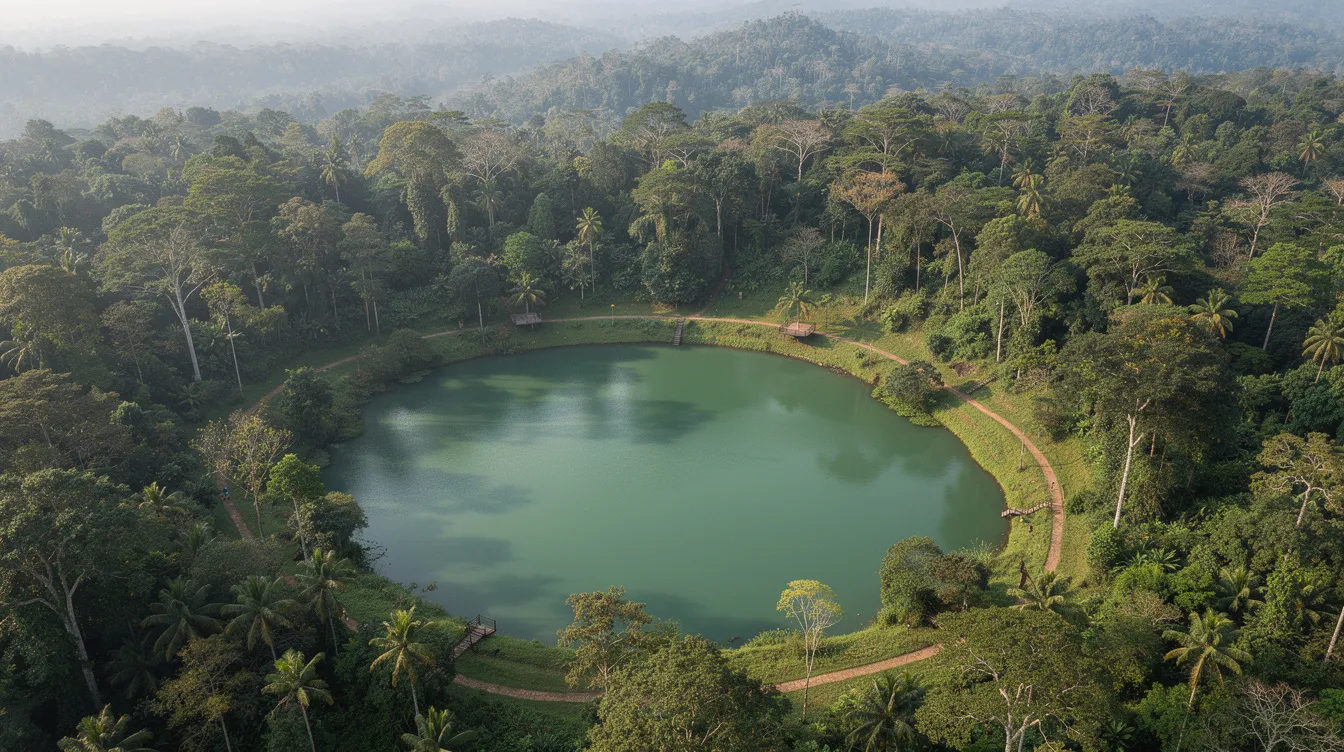
The upper thomson and bright hill corridor has evolved into one of Singapore’s most desirable family residential belts. The convergence of the fully operational thomson east coast line, proximity to the central catchment nature reserve, a cluster of elite primary schools, and an established neighbourhood dining and retail scene along upper thomson road makes this corridor structurally different from typical suburban offerings. For families, the combination of reliable MRT connectivity, green space, and education access is exceptionally hard to replicate elsewhere.
Thomson Reserve sits in District 20 (Rest of Central Region), commanding a pricing premium consistent with its RCR classification and proximity to the Bishan–Ang Mo Kio heartland. Upper Thomson Residences, located in District 26 (Outside Central Region), occupies a fringe position that typically translates to lower PSF benchmarks but also different long-term appreciation dynamics. Understanding this district distinction is essential – RCR properties have historically demonstrated stronger capital resilience, while OCR launches can offer more accessible entry quantum for families stretching their first private condominium purchase.
Why Families Are Focusing on Upper Thomson in 2026–2031
Three infrastructure catalysts are reshaping the corridor’s appeal during this window:
-
Thomson-East Coast Line (TEL) is now fully operational, giving residents direct MRT access from upper thomson mrt station and Springleaf MRT through to Orchard, Marina Bay, and the central business district without transfers.
-
Bright Hill TEL × Cross Island Line interchange is targeted for completion around 2030, which will add east–west MRT connectivity at bright hill mrt – just one stop from Thomson Reserve.
-
North–South Corridor expressway, expected around 2027–2028, will dramatically shorten driving times between the Thomson belt and the CBD.
Family-centric anchors reinforce the appeal. Ai Tong School (SAP primary) sits within 1 km of Thomson Reserve, while Catholic High School and chij st nicholas girls school are within 1–2 km – forming one of Singapore’s densest clusters of sought-after primary schools. Upper Thomson Residences, being further north near Springleaf, does not share these within-1 km catchments, which is a critical distinction for families planning P1 registration.
There is also genuine scarcity at play. Large, central-north RCR sites with direct MRT access and nature adjacency to MacRitchie Reservoir, windsor nature park, and Lower Peirce Reservoir are rare in Singapore’s future residential supply pipeline. This structural scarcity differentiates both launches from typical OCR condos in newer townships.
The Role of New Launches in Mature Neighbourhoods
Mega-launches like Thomson Reserve and sizeable future projects like Upper Thomson Residences refresh an established neighbourhood in ways that resale stock cannot – newer recreational facilities, modern floor plans optimised for work-from-home flexibility, energy-efficient building systems, and higher PSF benchmarks that elevate the precinct’s profile.
Mature neighbourhoods typically offer richer amenities and deeper school options for families compared to entirely new townships. Thomson Plaza is already across upper thomson road from Thomson Reserve. The Upper Thomson café belt, hawker centres, and neighbourhood shops are well-established. But this maturity comes at a cost – land cost and developer pricing reflect the premium of building within a proven ecosystem rather than pioneering a greenfield site.
Think of Thomson Reserve and Upper Thomson Residences as two distinct “on-ramps” for families entering the Thomson corridor, each with different trade-offs in timing, price, and product concept. The next section breaks down each project’s fundamentals before we dive into the detailed comparison.
Project Overviews: Thomson Reserve vs Upper Thomson Residences
Before analysing how these launches compare on the metrics that matter most to families, it’s worth establishing the factual baseline for each project. The data below reflects confirmed details for Thomson Reserve and current estimates for Upper Thomson Residences.
Thomson Reserve at a Glance
Thomson Reserve is developed by Tamarind Development Pte. Ltd., a joint venture of UOL Group, Singapore Land Group, and CapitaLand Development. UOL Group has over 50 years of experience in property development, while CapitaLand Development is part of one of Asia’s largest real estate groups – credentials that carry weight for a project of this scale.
Key facts:
-
Units: 1,268 residential units across six residential towers arranged in two residential collections – the Classic Collection (740 units with two- to four-bedroom layouts) and the Luxury Collection (528 residences with two- to five-bedroom layouts)
-
Site: Approximately 51,567 sqm (~555,000 sq ft) at bright hill drive, on the former thomson view site
-
Tenure: 99-year leasehold from 14 July 2026
-
TOP: Indicative by February 2031
-
Land cost: Approximately S$1,178 psf ppr from the 2024 Thomson View en bloc acquisition at S$810 million for the former thomson view condominium
-
Starting price: S$2,608 PSF, with two-bedroom apartments from S$1.544 million and four-bedroom units from S$3.388 million
-
Unit mix: 716 units (56.5%) are two-bedroom configurations; 28 five-bedroom suites are available, each measuring 1,808 sq ft
-
MRT: Two-minute walk to upper thomson mrt (TEL), with bright hill mrt (future TEL/CRL interchange) approximately one stop away
-
Schools: Ai Tong School within 1 km; Catholic High, CHIJ St Nicholas Girls’ School within 1–2 km
-
Nature & Amenities: Walking distance to MacRitchie Reservoir and windsor nature park; Thomson Plaza directly across upper thomson road; adjacent to singapore island country club
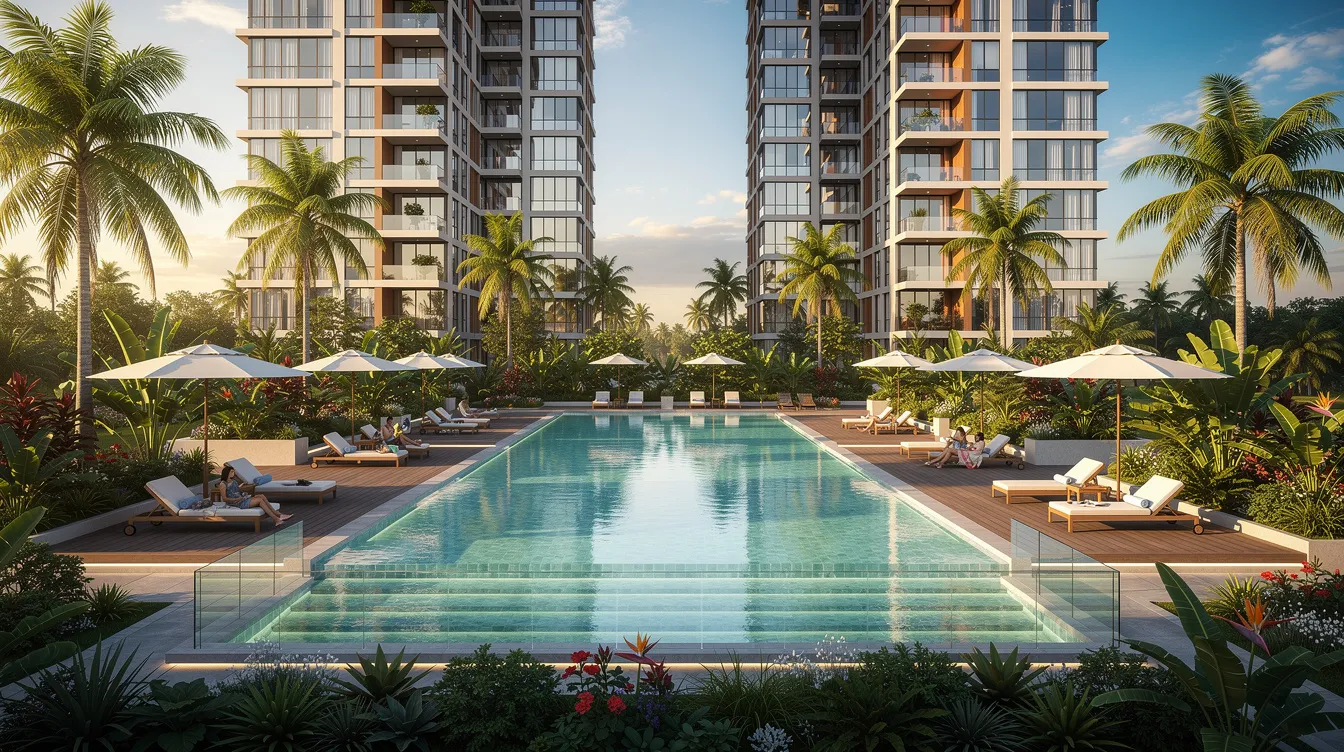
Thomson Reserve brings a resort-scale facility offering to the upper thomson neighbourhood – over 80 lifestyle facilities including two 50-metre lap pools, a hydro spa pool at the wellness club, tennis court and multi-purpose courts, a state-of-the-art gymnasium, and the grand clubhouse and island club. Selected larger layouts include private lift access for added privacy. The development is positioned as a family-focused, mega-scale RCR project anchored by its education-nature-connectivity triangle.
Upper Thomson Residences at a Glance
“Upper Thomson Residences” refers to the new launch on the Upper Thomson Road (Parcel A) Government Land Sale site in the Springleaf precinct, District 26. The site was awarded in October 2025 to a joint venture led by Wee Hur Property and GSC Holdings for S$613.9 million, equating to approximately S$1,062 psf ppr – meaningfully lower than Thomson Reserve’s land cost.
Key parameters (estimated and projected):
-
Units: Approximately 595 residential units with integrated ground-floor commercial, F&B retail space, and a childcare centre (minimum 1,000 sqm)
-
Site: Approximately 24,400 sqm (~half Thomson Reserve’s scale)
-
Tenure: 99-year leasehold
-
Launch: Expected public launch in first half of 2027
-
TOP: Estimated around 31 December 2031, with legal completion potentially extending to 2033–2034
-
Pricing estimates: Developer breakeven likely S$1,700–1,900 psf; eventual launch price expectations of approximately S$2,250–2,400 psf based on comparable benchmarks (Springleaf Residence sold 92% at ~S$2,175 psf on opening weekend)
-
MRT: Positioned directly beside Springleaf MRT Station (TE4), with station entrance potentially integrated into the development
-
Schools: Upper Thomson Residences lacks major primary schools within a 2 km radius; no flagship primary within the critical 1 km zone
-
Nature: Proximity to Springleaf Nature Park, Upper Seletar Reservoir, and park connectors; characterised by a quieter, low-density atmosphere in a suburban context
Upper Thomson Residences is located in District 26, classified as Outside Central Region – a different market segment from Thomson Reserve’s RCR positioning. It offers integrated commercial spaces as part of its development, potentially reducing residents’ dependence on external retail. The project appears more investor-leaning or small-household oriented, with a higher proportion of 1–2 bedroom units expected given the site’s scale and market positioning.
Understanding these fundamental differences in scale, PSF, and catchment areas is crucial before choosing which suits your family.
Key Comparison: Scale, PSF, MRT, Schools and Lifestyle
This section mirrors how families actually shortlist new launches – by cost, space, travel, schooling, then lifestyle – and guides you through each factor point by point.
1. Scale & Facilities: Mega-Development vs Mid-Sized Estate
Thomson Reserve is considered a mega-development offering a vibrant community environment with 1,268 units, while Upper Thomson Residences features approximately 595 residential units – roughly half the scale.
Thomson Reserve’s facility depth is substantial: over 80 lifestyle facilities spread across three club zones – the grand clubhouse, island club, and wellness club. Families benefit from two 50-metre lap pools, kids’ water play areas, a tennis court and multi-purpose courts, a swimming pool complex, co-working-style lounges, a hydro spa pool, and wellness pods. Approximately 88% of the former thomson view site is devoted to landscaping, creating a park-like environment within the development.
Upper Thomson Residences will likely offer a more compact facility deck – perhaps a single clubhouse, one to two pools, fitness corner, and fewer speciality amenities. However, this smaller scale delivers tangible benefits: less crowding at recreational facilities, potentially lower ongoing ownership costs (maintenance contributions tend to scale with total unit count and facility complexity), and a more intimate residential environment.
The family trade-off: Mega-developments like Thomson Reserve provide variety – your children have more on-site activity options, and the larger resident community creates a stronger social network for kids. Smaller estates like Upper Thomson Residences offer quieter daily life and potentially easier internal movement, which some families prefer, especially those with younger children or elderly family members.
2. Price & PSF: What Are You Really Paying For?
Thomson Reserve’s starting price is S$2,608 PSF. Two-bedroom apartments start from S$1.544 million, while four-bedroom units start from S$3.388 million. The land for Thomson Reserve was acquired for $810 million – the former thomson view condominium’s en bloc sale – translating to a land cost of S$1,178 psf ppr. Launch pricing reflects both this land cost and the RCR premium associated with District 20’s established neighbourhood credentials.
Upper Thomson Residences’ land cost is approximately S$1,062 psf ppr – about S$116 less per psf ppr than Thomson Reserve. Developer breakeven is estimated at S$1,700–1,900 psf after accounting for construction, financing, and commercial podium obligations. Based on comparable launches (notably Springleaf Residence’s strong debut at ~S$2,175 psf average), the eventual launch price for Upper Thomson Residences is projected in the S$2,250–2,400 psf range, though this remains subject to 2027 market conditions.
Absolute quantum for two-bedroom units could be similar or slightly lower in Upper Thomson Residences due to potentially smaller unit sizes. However, family-sized three- to four-bedroom premium units may not be the project’s focus. Thomson Reserve’s broader range of unit types – from Classic Collection two-bedders through to Luxury Collection five-bedroom suites with private lift – gives families significantly more choice at the larger end.
Critically, RCR versus OCR classification matters beyond headline PSF. RCR properties (Thomson Reserve) tend to command stronger long-term capital resilience and narrower price volatility compared to OCR launches, where Upper Thomson Residences is positioned.
3. MRT Access: Station Doorstep vs Commute Efficiency
Both developments benefit from the thomson east coast line, providing convenient MRT access – but the specifics differ.
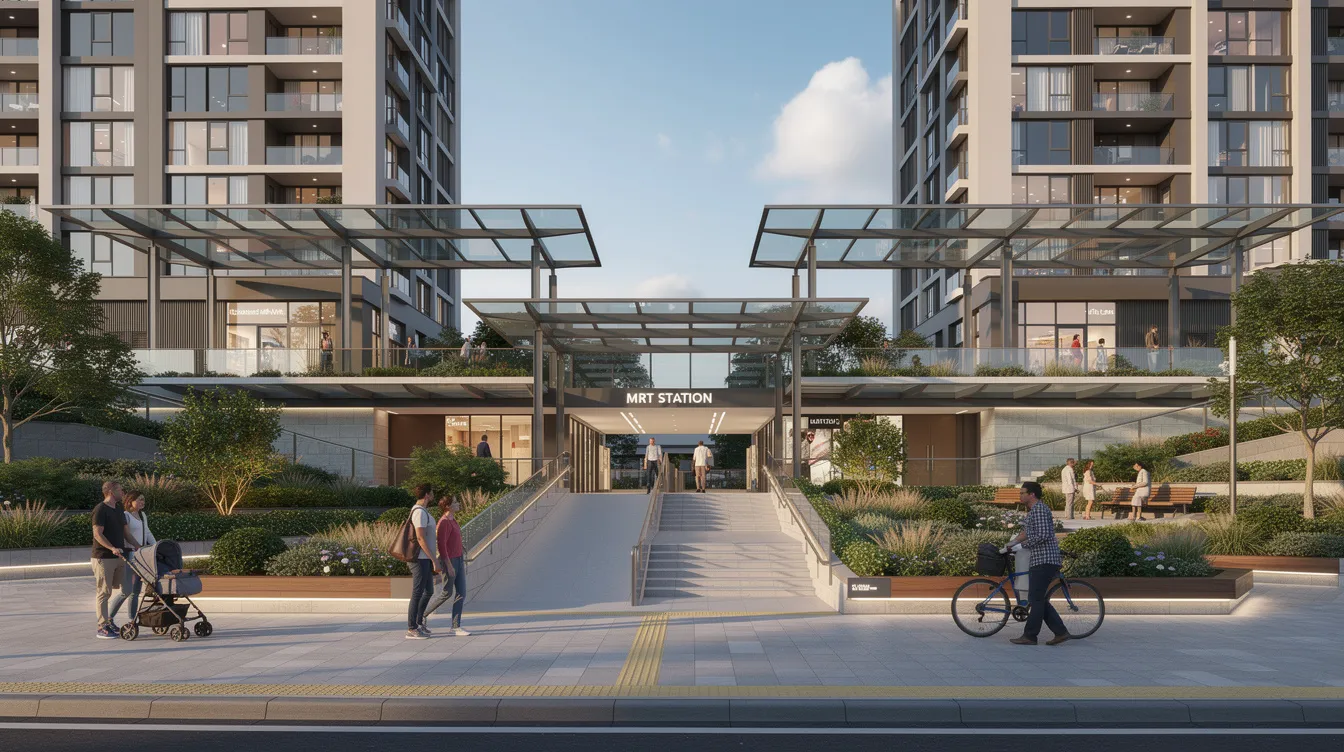
Thomson Reserve has direct access to upper thomson mrt station, approximately a two-minute sheltered walk. From Upper Thomson (TE8), it’s roughly 4 stops to Orchard and 6 stops to Marina Bay. The bright hill mrt station (TE7), which will become a TEL × cross island line interchange by around 2030, is just one stop away – giving future east–west connectivity without transfers.
Upper Thomson Residences is positioned directly beside Springleaf MRT Station (TE4), with station entrance potentially integrated into the building. This gives arguably even better doorstep MRT access. However, Springleaf is further north on the TEL, meaning more stops and longer travel times to reach Orchard, the central business district, or Marina Bay compared to boarding at Upper Thomson.
For families: Predictable MRT travel times matter for daily school runs, enrichment classes in town, and work commutes. Families with one or both parents commuting to the CBD or Orchard will find Thomson Reserve’s more central TEL position saves meaningful time daily. Those working in the North, Seletar industrial zone, or Woodlands may find Upper Thomson Residences / Springleaf more convenient.
4. Schools & Education Catchment: Clear Differentiator
School proximity is often the decisive factor for families with young children, and this is where the two launches diverge most sharply.
Thomson Reserve: Ai Tong School (SAP primary) is within 1 km, giving Phase 2C(S) distance-based priority for P1 registration – a significant advantage given Ai Tong’s perennial oversubscription. Within 1–2 km, families also access Catholic High School (Primary), chij st nicholas girls school, Marymount Convent School, and Ang Mo Kio Primary. For secondary and pre-university education, Peirce Secondary, Eunoia Junior College, and connections via short train rides to Raffles Institution make the catchment exceptionally deep. Analyzing the surrounding amenities and school access is essential when evaluating residential properties, and Thomson Reserve scores strongly on this axis.
Upper Thomson Residences: The project lacks major primary schools within a 2 km radius. While it sits within the broader Thomson/Bishan school belt geographically, families will not benefit from the within-1 km advantage for top primary schools. P1 registration will fall into Phase 2C beyond 1 km – a materially weaker position in oversubscribed schools.
This catchment gap also affects investors: tenant families willing to pay a bedroom premium for Ai Tong belt access create stronger rental demand around Thomson Reserve. Upper Thomson Residences will need to compete on other merits – quieter environment, integrated retail, and potentially lower rent quantum.
5. Lifestyle & Nature: MacRitchie Edge vs Quiet Northern Corridors
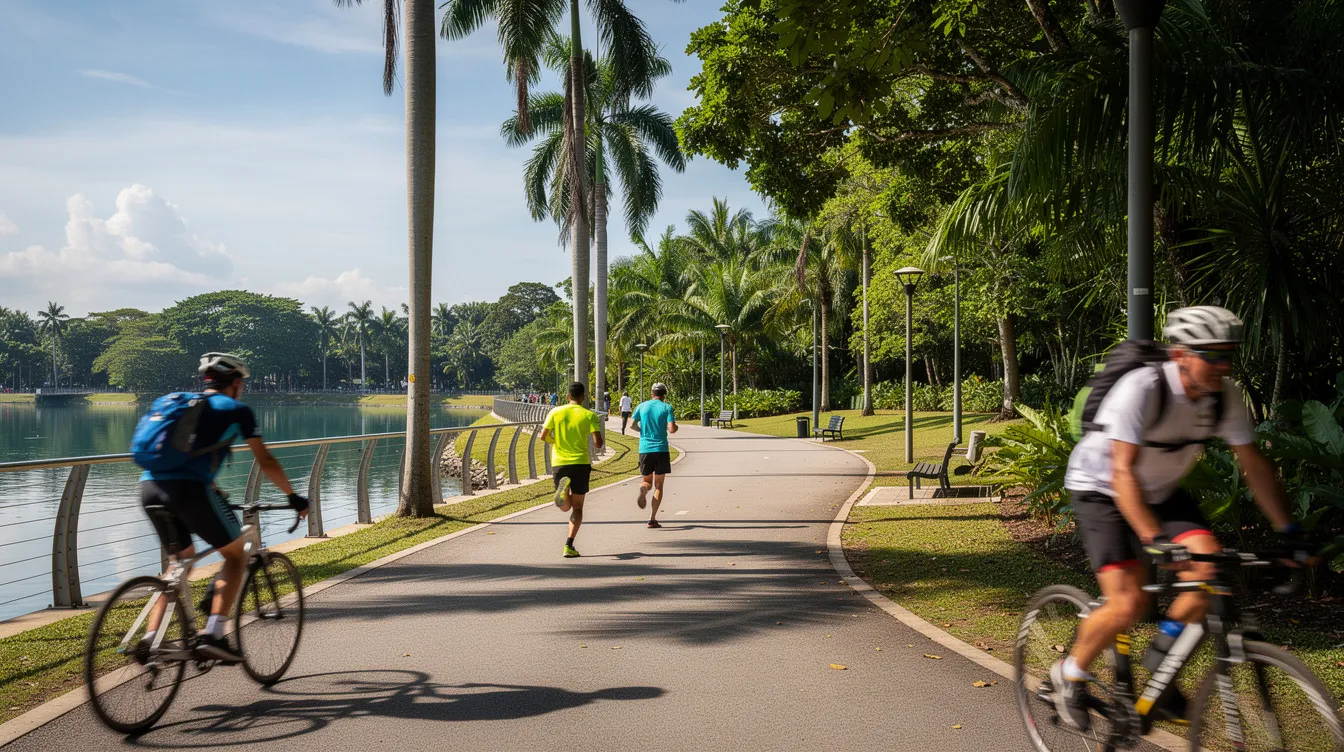
Thomson Reserve sits within walking distance of windsor nature park (~5 minutes), MacRitchie Reservoir, and Lower Peirce Reservoir – the heart of the central catchment nature reserve system. Elevated stacks enjoy reservoir and forest views, while the adjacency to singapore island country club ensures low-rise, green outlooks for select facing directions. The Upper Thomson food and café belt, Thomson Plaza directly across the road, and the broader Bishan–Ang Mo Kio amenity cluster provide a blend of nature and urban convenience that’s hard to match.
Upper Thomson Residences tilts towards tranquility. The Springleaf precinct is quieter, lower density, and more suburban, with access to Springleaf Nature Park, Upper Seletar Reservoir, and park connectors. There are fewer large malls nearby, but integrated commercial spaces at the ground floor and nearby shophouses partially compensate. For families who prioritise serenity over bustling café streets, the Springleaf atmosphere is genuinely appealing.
Thomson Reserve offers the “best of both worlds” – nature and urban vibrancy in close proximity. Upper Thomson Residences offers deeper immersion in quiet, low-density living at the cost of fewer walkable retail and dining options.

Detailed Trade-Offs: Which Launch Fits Your Family Profile?
Rather than declaring a single “winner,” this section segments the analysis by common buyer profiles – because the right launch depends entirely on your family’s priorities.
Profile 1: Young Family Planning for Primary School
Typical scenario: Parents with toddlers or planning children in the next 3–8 years, targeting ai tong school or other Bishan–Thomson nearby schools.
Thomson Reserve aligns strongly. The 1 km proximity to Ai Tong gives Phase 2C priority, and the launch timing (late 2026) with TOP around 2030–2031 means families can establish residency before P1 registration for cohorts entering between 2028 and 2033. Thomson Reserve floor plans include three- and four-bedroom layouts suitable for growing families, though many larger units sold early – reflecting precisely this family demand. The established neighbourhood around bright hill drive provides immediate access to enrichment centres, paediatricians, and family-oriented amenities.
Upper Thomson Residences is a weaker fit for this profile. No flagship primary within 1 km reduces registration competitiveness. The projected 2027 launch and later TOP (likely 2031–2032 or beyond) may misalign with near-term P1 registration windows. Some families may find the quieter environment appealing, but school access is typically non-negotiable for this cohort.
Directional recommendation: Ai Tong-focused families are more likely to choose Thomson Reserve even at higher PSF. The education catchment advantage justifies the premium for this buyer profile.
Profile 2: Multi-Generational or Bigger Households
Needs: Three to five bedrooms, helper’s room, storage, flexible layout for seniors and children, and barrier-free circulation.
Thomson Reserve delivers the strongest options. The Luxury Collection features four- and five-bedroom suites – including 28 five-bedroom suites each measuring 1,808 sq ft with private lift access for added privacy. Larger floorplates, the option of a bedroom suite with en-suite bathroom for elderly parents, and generous common areas suit multi-generational living. Thomson Reserve brings robust communal facilities for all ages – from kids’ water play to the wellness club’s spa amenities for grandparents.
Upper Thomson Residences, as a smaller-scale project, is expected to offer fewer large layouts and likely skew towards one- to three-bedroom stock. Multi-generational depth – dedicated elder-friendly spaces, private lift lobbies, expansive communal gardens – may be more limited depending on the developer’s final design.
Directional recommendation: Multi-generational households with sufficient budget and urgency lean towards Thomson Reserve. Those willing to compromise on size to stay under a strict quantum could wait and monitor Upper Thomson Residences’ layout mix once the official price list and latest official floor plans are released.
Profile 3: Dual-Income Couple Without Kids (DINKs) or Investors
Priorities: Commute time, rentability, exit liquidity, quantum, and on-site facilities – school catchment is secondary.
Thomson Reserve pros include the RCR tag, upper thomson mrt proximity, and Ai Tong-driven tenant demand creating a reliable rental floor. Cons: higher PSF, and the mega-development’s 716 two-bedroom units mean significant internal competition upon resale from similar unit types.
Upper Thomson Residences offers potentially lower entry price for one- to two-bedroom units, integrated retail enhancing lifestyle appeal for tenants, and a quieter OCR environment that attracts a specific tenant segment. However, it lacks Thomson Reserve’s brand power and school magnet effect, and exit liquidity for OCR projects can be more variable.
Directional recommendation: Capital-focused DINKs and investors with flexible timelines should compare risk-adjusted PSF at point of entry. A lower entry quantum at Upper Thomson Residences may deliver better yield-on-cost, while Thomson Reserve’s RCR positioning and school catchment provide a stronger capital preservation argument.
Profile 4: HDB Upgraders from Bishan, Ang Mo Kio, Yishun and Sembawang
Needs: Upgrading after MOP, desire to stay near parents and schools, budget constrained by HDB sale proceeds and loan caps.
Thomson Reserve appeals as a once-in-a-cycle Bishan–upper thomson mega-launch with established amenities and schools. The challenge: developer pricing at S$2,608 PSF starting price means family-sized units require substantial quantum. Upgraders arriving after initial launch phases may find three- and four-bedroom inventory already absorbed, limiting choices to two-bedroom configurations.
Upper Thomson Residences offers a potential path into the Thomson corridor at slightly lower PSF, useful for upgraders currently in northern estates (Springleaf, Khatib, Yishun) wanting to move closer to central without overextending. The trade-off is a less central location, weaker school network, and later move-in.
Key consideration: Balance upgrade timing (MOP dates, additional buyer’s stamp duty implications if holding both properties temporarily) with launch calendars. Financial modelling specific to your HDB valuation, CPF balances, and TDSR limits is essential before committing to either launch.
How to Decide Step-by-Step
This practical mini-framework helps you move from comparison to commitment. Work through each step sequentially – your answers will naturally narrow the field.
Step 1: Fix Your Timeline (P1 Registration, MOP, TOP)
Map your key dates onto a timeline:
-
HDB MOP expiry (if applicable): When can you sell and purchase a private condominium?
-
Children’s P1 registration years: If your child turns 6 between 2028 and 2033, you need an established address within the target school’s 1 km radius before the registration exercise.
-
Expected TOPs: Thomson Reserve ~2030–2031; Upper Thomson Residences likely 2031–2032 or later.
If P1 registration is within 3–5 years, waiting for a later launch risks missing critical registration windows. Thomson Reserve’s earlier TOP and proven Ai Tong proximity make it the more appropriate choice – or consider existing resale options in the belt.
Step 2: Decide on Minimum Space and Layout Needs
Choose between two-, three-, four-, or five-bedroom layouts as your non-negotiable, factoring in work-from-home rooms and helper accommodation. Proximity to reliable public transport options is a crucial factor in real estate decisions, but bedroom count must align with realistic day-to-day use.
Thomson Reserve offers proven three- to five-bedroom family layouts across its Classic Collection and Luxury Collection (though availability is tightening for larger units). Upper Thomson Residences is more likely to skew towards one- to two-bedroom stock. A mismatch here can override minor PSF differences – there’s no point chasing a lower PSF project that doesn’t offer the space your family needs.
Step 3: Model Your Budget and PSF Sensitivity
Follow this sequence:
-
Estimate net sale proceeds from your current home (HDB or private)
-
Check your Total Debt Servicing Ratio (TDSR) limit and maximum loan quantum
-
Add stamp duties (BSD, additional buyer’s stamp duty if applicable) and renovation buffer
-
Determine your comfortable maximum purchase quantum
-
Translate that quantum into a target PSF and unit size at each project
The RCR premium at Thomson Reserve may be justifiable for long-term owner-occupiers who value school catchment and capital resilience. Investors or stretched upgraders operating near their PSF ceiling may find Upper Thomson Residences offers breathing room.
Step 4: Rank Your Priorities: School, Commute, Lifestyle, Investment
Rank these four axes in order of importance for your household:
-
School access – within-1 km priority for top primaries
-
Daily commute – travel time to workplace and school
-
Nature & lifestyle – reservoir access, quiet surroundings, dining options
-
Capital appreciation / rental potential – long-term value, rental yield
Quick guidance:
-
If “school” and “commute to CBD/Orchard” top the list → Thomson Reserve tends to win
-
If “quantum” and “quiet lifestyle” dominate → Upper Thomson Residences deserves strong consideration
Step 5: Use a Side-by-Side Comparison
The structured comparison table in the next section summarises major factors so you can visualise differences at a glance. Use it as a final cross-check against your ranked priorities from Step 4.
Side-by-Side Comparison: Thomson Reserve vs Upper Thomson Residences
The table below consolidates the key differences between these two Thomson launches. Use it as a quick-reference tool alongside the detailed analysis above.
|
Criterion |
Thomson Reserve |
Upper Thomson Residences |
|---|---|---|
|
Location & District |
Bright Hill Drive, District 20 (RCR) |
Springleaf / Upper Thomson, District 26 (OCR) |
|
Developer |
Tamarind Development Pte. Ltd. (UOL Group, Singapore Land Group, CapitaLand Development joint venture) |
Wee Hur Property & GSC Holdings joint venture |
|
Land Cost (psf ppr) |
~S$1,178 psf ppr |
~S$1,062 psf ppr |
|
Expected Launch |
Launched October 2026 |
Projected 1H 2027 |
|
Scale (units / site) |
1,268 units / ~555,000 sq ft site |
~595 units / ~263,000 sq ft site |
|
MRT Station & Distance |
Upper Thomson MRT (TE8) – 2-min walk |
Springleaf MRT (TE4) – integrated/adjacent |
|
Stops to Orchard |
~4 stops |
~8 stops |
|
Within-1km Primary School |
Ai Tong School ✓ |
None confirmed |
|
Nearby Schools (1–2km) |
Catholic High, CHIJ St Nicholas Girls’, Marymount Convent, Eunoia JC |
Limited options; no top-tier primary within 2 km |
|
Typical Unit Mix Focus |
2BR to 5BR; 56.5% two-bedroom; 28 five-bedroom suites |
Expected 1BR to 3BR focus; fewer large units |
|
Indicative PSF Range |
From S$2,608 PSF (starting price) |
Est. S$2,250–2,400 PSF (subject to 2027 market) |
|
2BR Starting Quantum |
From S$1.544 million |
TBD – potentially lower due to smaller sizes |
|
4BR Starting Quantum |
From S$3.388 million |
TBD – limited large-unit supply expected |
|
Key Facilities |
80+ facilities; grand clubhouse, island club, wellness club, two 50m pools, tennis court, hydro spa pool |
Compact facility deck; integrated retail & childcare |
|
Nature Access |
MacRitchie Reservoir, Windsor Nature Park, Lower Peirce |
Springleaf Nature Park, Upper Seletar Reservoir |
|
Lifestyle / Retail |
Thomson Plaza, Upper Thomson café belt, SICC adjacency |
Integrated commercial podium; quieter suburban feel |
|
TOP Estimate |
~February 2031 |
~End 2031 or later |
Interpreting the data: For families, the school catchment and commute efficiency gaps are the most consequential differences – not merely PSF. Thomson Reserve is Thomson Reserve suitable for households where education access, facility variety, and RCR capital resilience matter most. Upper Thomson Residences carves a niche for buyers prioritising entry quantum, integrated MRT convenience, and low-density living. These are complementary products serving different needs within the same corridor, not direct substitutes.
Note that projections for Upper Thomson Residences remain contingent on final GLS outcomes, developer design decisions, and 2027 market conditions. Thomson Reserve’s figures reflect confirmed launch data.
Common Concerns and How to Think About Them
Several recurring doubts surface when families compare these two launches. Here’s how to think through each one clearly.
Concern 1: What if Upper Thomson Residences Launches Cheaper and Pulls Prices Down?
While the land cost for Upper Thomson Residences is about S$116 per psf ppr lower than Thomson Reserve’s, the projects occupy different market segments. OCR vs RCR classification, school catchment differences, and facility scale mean they are not perfect substitutes. A later OCR launch at lower PSF is unlikely to directly depress RCR Thomson Reserve pricing – historically, such launches provide a separate option for buyers with different needs rather than undercutting existing RCR product. Proximity to reliable public transport options alone doesn’t equalise market positioning.
Concern 2: Risk of Overpaying at a Mega-Launch
Some buyers worry that early phases of a 1,268-unit private residential project carry a “launch premium” that evaporates. Data from comparable District 20 launches – AMO Residence and Jadescape – shows that early entrants in well-located, MRT-adjacent projects with strong school catchments generally fared well over medium-term holding periods (5–7 years). The combination of TEL connectivity, ai tong school proximity, and nature adjacency provides fundamental support. The risk is real if paying above-market PSF for stacks with limited outlook durability, so assess each thomson reserve unit and its view corridor carefully.
Concern 3: Interest Rates and Long Build Times
Both projects have long build timelines – Thomson Reserve to around 2030–2031, Upper Thomson Residences potentially into 2032. The bulk of loan drawdown happens nearer TOP through progressive payment schemes. Stress-test your repayments at higher interest rates (e.g., 4–5% rather than today’s prevailing rates) and maintain 6–12 months of mortgage instalments in cash or CPF buffers. This applies regardless of which launch you choose.
Concern 4: Rental Demand and Exit Strategy
TEL stations, nature proximity, and the Ai Tong belt create robust rental demand for Thomson Reserve – particularly from expatriate and local families willing to pay premiums for school access. Upper Thomson Residences may rely more on MRT integration and quiet-living appeal for tenants, which attracts a different (and potentially smaller) tenant pool.
Families who are primarily owner-occupiers should treat rental yield and capital gains as secondary bonuses, not sole decision drivers. Your daily quality of life – school runs, commute times, weekend nature access, facility use with family members – should anchor the decision.
Conclusion and Next Steps
Thomson Reserve is the RCR mega-development offering Ai Tong within 1 km, closer proximity to Orchard and the CBD via upper thomson mrt, MacRitchie on its doorstep, over 80 recreational facilities including the wellness club and grand clubhouse, and a proven range of family floor plans from the classic collection through to luxury collection five-bedroom suites with private lift access – at a starting price of S$2,608 PSF.
Upper Thomson Residences is the OCR-fringe alternative: smaller scale (~595 units), integrated Springleaf MRT access, potentially more affordable one- to two-bedroom quantum, integrated commercial spaces, and a quieter suburban atmosphere – but without the within-1 km school advantage and with a later TOP timeline.
The “best” choice depends on your family’s timeline, space needs, and budget. There is no generic winner.
Your next actions:
-
Map out P1 registration years for each child and your HDB MOP date (if applicable) – these non-negotiable deadlines should filter your options first
-
Fix your minimum acceptable bedroom count and layout features (helper’s room, private lift, study) – this eliminates projects that can’t deliver what you need regardless of PSF
-
Set a comfortable maximum quantum and test both launches against it, factoring in stamp duties, renovation, and interest rate buffers
-
Visit the Thomson Reserve showflat (if still open) and physically walk both the Upper Thomson and Springleaf corridors to feel each micro-location – no amount of floor plan analysis replaces experiencing the neighbourhood
-
Consult a property advisory to compare these launches against resale alternatives or other new launches in the Thomson–Bishan belt
For families also exploring commercial or industrial property for business operations alongside a home purchase, the Thomson–Bishan corridor offers proximity to light industrial and mixed-use zones that may be relevant to your broader real estate strategy.
Additional Resources and AESTHETIC HAVENS Support
To deepen your research, consider:
-
A Bishan–Thomson district guide covering schools, transport nodes, and amenity mapping for families
-
A PSF vs quantum explainer tailored for HDB upgraders navigating their first private condominium purchase
-
A new launch comparison checklist covering unit mix, lease tenure, developer track record, and GLS history
AESTHETIC HAVENS can support your decision by:
-
Providing updated pricing and availability for Thomson Reserve units, including remaining unit types and stack-by-stack analysis
-
Tracking GLS results and likely pricing for Upper Thomson Residences as details emerge ahead of its projected 2027 launch
-
Running bespoke comparisons that incorporate both home and business space needs – particularly relevant for business owners considering residential and industrial properties across nearby districts
-
Modelling scenarios comparing holding either launch versus alternative RCR or OCR properties in the Thomson corridor
Frequently Asked Questions: Thomson Reserve vs Upper Thomson Residences
These FAQs address the quick, practical questions families ask most frequently.
Is Thomson Reserve or Upper Thomson Residences closer to the MRT and CBD?
Thomson Reserve is approximately a two-minute sheltered walk from upper thomson mrt station (TE8) and sits about 4 stops from Orchard on the thomson east coast line. Upper Thomson Residences is positioned directly beside Springleaf MRT (TE4), offering immediate station access – but Springleaf is further north on the TEL, meaning approximately 8 stops to Orchard. For CBD/Orchard commuters, Thomson Reserve offers meaningfully shorter journey times.
Which project is better if my child is targeting Ai Tong School?
Thomson Reserve is within 1 km of ai tong school and fits MOE’s distance-based priority framework for Phase 2C(S) registration. Upper Thomson Residences is unlikely to sit within the same 1 km radius based on current GLS parcel locations. For tong school priority, Thomson Reserve is the clear choice.
Will Upper Thomson Residences definitely be cheaper than Thomson Reserve?
Not necessarily. While Upper Thomson Residences’ land cost is lower (~S$1,062 vs S$1,178 psf ppr), OCR projects may launch at only modestly lower PSF once construction inflation and market sentiment are factored in. The RCR vs OCR classification difference and school catchment advantages also justify PSF gaps. Expect a narrower discount than the raw land cost differential suggests.
What if I need a 4- or 5-bedroom unit – which launch should I look at?
Thomson Reserve offers confirmed four-bedroom units (from S$3.388 million) and 28 five-bedroom suites (1,808 sq ft each) with private lift access in the Luxury Collection. It is the more reliable choice for large households. Upper Thomson Residences is expected to have fewer large-unit options, skewing towards one- to three-bedroom configurations. If generous floor plans for multi-generational living are non-negotiable, Thomson Reserve is where to focus – though availability may be limited after initial launch phases, so check the official price list and remaining inventory.
How can AESTHETIC HAVENS help my family choose between these two?
AESTHETIC HAVENS can share updated price movements and unsold stock for Thomson Reserve, track GLS results and likely pricing for Upper Thomson Residences, and run bespoke comparisons including both home and business space needs across residential and industrial properties. Whether you’re evaluating Thomson Reserve showflat visits, modelling upgrade scenarios from your current HDB, or weighing these launches against resale options, their advisory can help translate this comparison into a decision personalised to your family’s circumstances.

