

Introduction
Singapore’s core CBD office market faces acute tightness in 2026, and Union Square Central is positioned to capitalize on precisely this dynamic. With vacancy rates in CBD falling to 5.6% in Q2 2026 – the lowest in nine quarters – and CBD Grade A office rents rising to S$12.50 per sq ft versus the previous quarter, the structural undersupply of CBD office space has built up over several years in Singapore, creating landlord-favorable conditions that few new developments can exploit.
This article covers Union Square Central’s strategic positioning within the constrained Singapore office market, its development specifications, investment timing implications, and leasing strategy recommendations. The target audience includes commercial real estate investors evaluating the office sector, corporate tenants navigating limited CBD supply, and property advisors seeking to understand the underlying market dynamic shaping rental growth through 2029.
In short, Union Square Central capitalizes on CBD supply tightness by delivering approximately 735,500 sq ft of premium mixed-use development – including roughly 300,910 sq ft of grade A office space – in 2029, when no meaningful new Core CBD Grade A completions are scheduled for 2026-2027 and sustained occupier demand continues to outpace available space.
Key outcomes from this analysis:
-
Why the current office supply gap creates a multi-year window of opportunity for Union Square Central
-
Rental growth projections and vacancy compression forecasts through 2029
-
Tenant demand drivers accelerating the flight to quality trend in Singapore’s CBD
-
Competitive positioning versus other prime buildings and upcoming developments
-
Actionable investment and pre-leasing strategies for stakeholders
Understanding Singapore’s CBD Office Supply Tightness
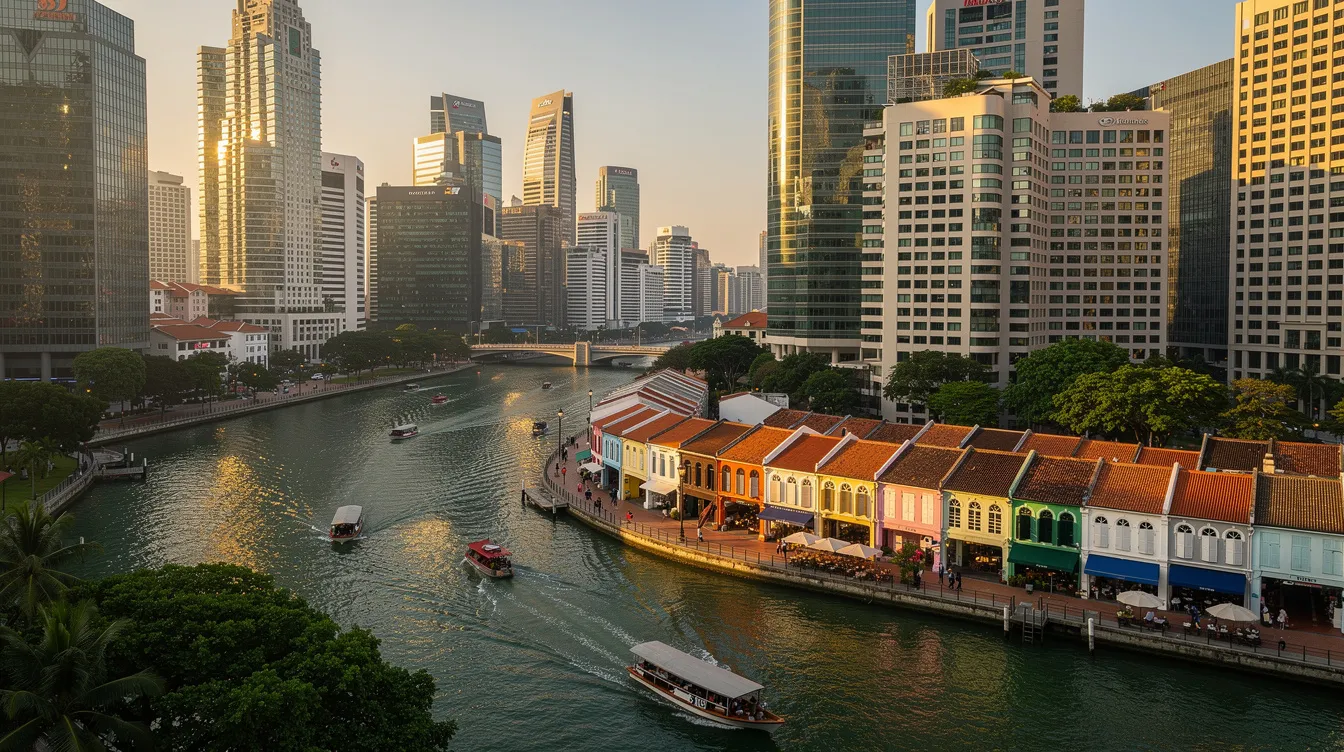
The central business district office market in Singapore is experiencing its tightest conditions in nearly a decade. Core CBD Grade A vacancy is historically low around 3.3% to 5.6%, depending on the measurement scope – with CBRE reporting Core CBD Grade A vacancy at just 3.3% in Q2 2026, while overall CBD vacancy edged down to 5.6% on a broader basis. For investors and corporate tenants alike, these figures signal that quality space is increasingly tangible in its scarcity, and that securing well located spaces ahead of future completions requires proactive planning.
Supply Pipeline Analysis Through 2029
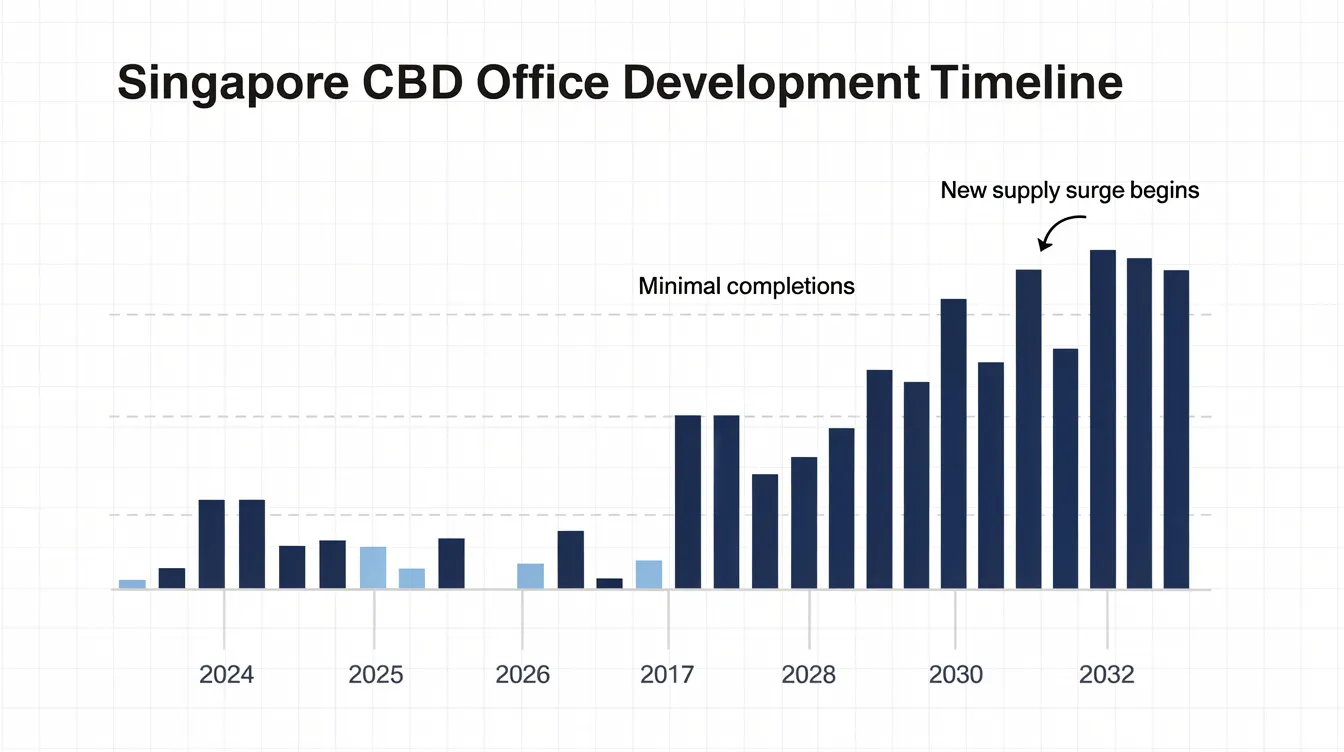
The supply picture through 2027 is remarkably thin. No new Grade A office completions are expected until 2027, with Shaw Tower’s completion representing the only major grade A delivery in 2026. Newport Tower stands as the sole non strata development expected in 2027, but beyond that, upcoming significant developments are largely postponed until 2028. According to SBR’s analysis of Grade A supply, meaningful new office supply does not arrive until 2028–2029, when projects like The Skywaters, The Clifford, and Singtel Comcentre are expected to complete.
Knight Frank’s data estimates approximately 6.4 million sq ft of total office pipeline from 2026 to 2029 nationwide, of which around 5.0 million sq ft is under construction. However, in Core CBD, significant supply remains sparse until 2028. Projected islandwide office completions through 2030 are below historical averages, reinforcing the supply constraint narrative.
This gap is further tightened by government planning incentives. The URA’s SDI Scheme and CBD Incentive Scheme encourage redevelopment of older office buildings – effectively removing existing stock from the market while new supply takes years to materialize. Union Square Central’s 2029 completion timing positions it directly into the tail end of this supply shortage, when continued office demand growth should be at its most intense.
Rental Growth Trajectory and Market Dynamics
Rents for core CBD Grade A spaces rose 0.8% quarter on quarter in Q2 2026, marking the sixth consecutive quarter of growth. Analysts expect CBD rents to rise by 3% to 5% year on year, with some projections suggesting Grade A rental growth is projected at 2% to 7% in 2026 depending on sub-segment and specification quality.
The relationship between constrained supply and landlord pricing power is direct: landlords hold significant pricing power due to low vacancy rates, and renewals are driving the majority of leasing activity, locking high-quality stock in place. Vacancy in CBD Grade A offices is projected to drop below 4% by year-end, and Morningstar forecasts suggest vacancy rates could fall to approximately 2.4% by 2027 in Core CBD for Grade A.
Over a five-year horizon to 2030, cumulative rental increases of approximately 15% are forecast for premium office stock – a trajectory that makes Union Square Central’s 2029 delivery strategically compelling for both developers and early-committed tenants seeking to lock in rates before peak conditions.
Union Square Central’s Strategic Market Positioning
Against this backdrop of limited supply and accelerating rental growth, Union Square Central emerges as a new development that addresses a genuine market gap in the Singapore River Planning Area – combining premium office spaces with mixed-use amenity in a location that bridges the CBD fringe and core.
Development Specifications and Grade A Positioning
Union Square Central is a landmark mixed use development by CDL (City Developments Limited), comprising a 20-storey premium office tower within a 735,500 sq ft integrated precinct. The property development achieves a 67% GFA uplift under the URA SDI Scheme – the first project in the Singapore River Planning Area approved under this framework. The total development includes approximately 300,910 sq ft of Grade A office GFA (41%), 366 luxury residential units (42%), retail (10%), and 134 co-living rooms with hotel license (approximately 7%).
Under SDI 2.0 requirements effective from February 2025, the office component targets Green Mark Platinum Super Low Energy certification with Maintainability and Whole Life Carbon badges. District cooling integration and energy-efficient building systems are core to the design. Occupiers are increasingly prioritizing modern, efficient, and sustainable buildings, and tenants increasingly prefer energy-efficient buildings to reduce operational costs – trends that Union Square Central is designed to capture.
The bonus GFA under SDI allows densification of the site, potentially offering more efficient floor plates and better layouts than many existing prime grade office space options. The cap on bonus GFA across incentive schemes is generally 10% over the Master Plan allowable GPR, providing meaningful but regulated uplift.
Connectivity and Precinct Advantages
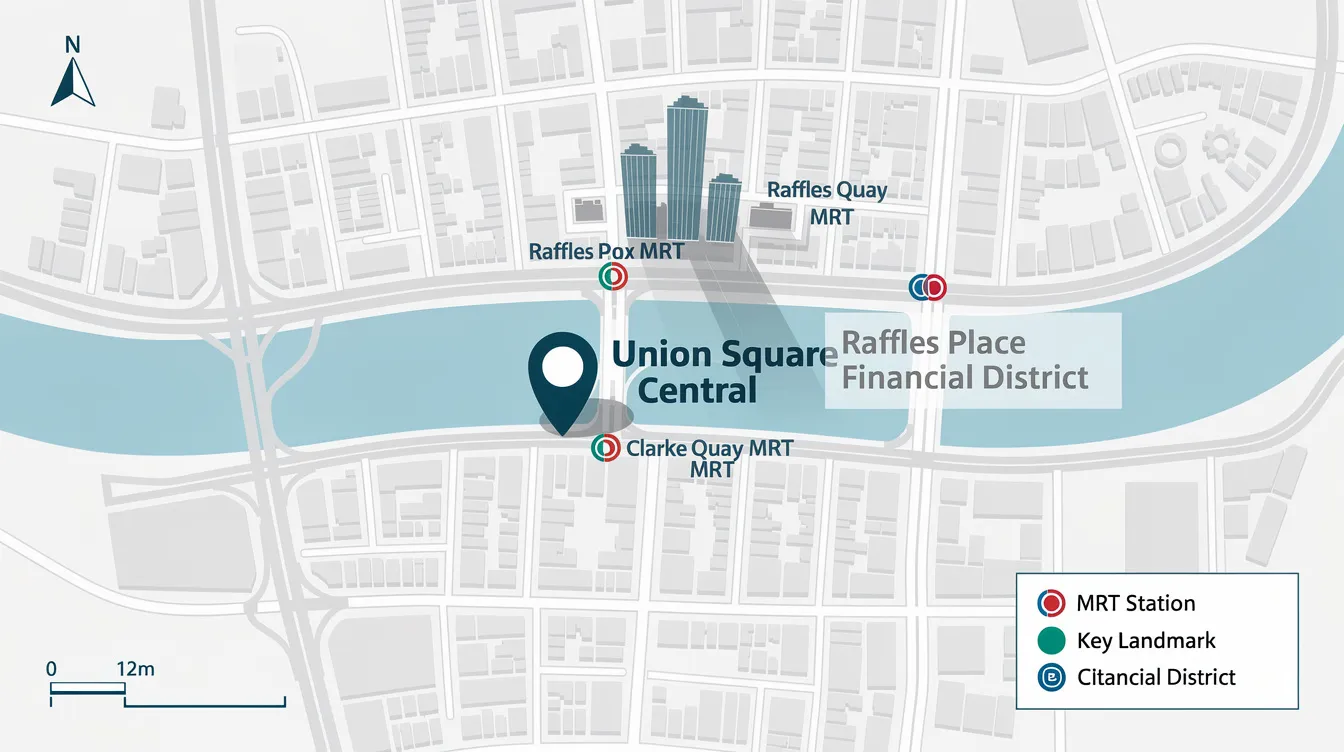
Union Square is bounded by Magazine Road and Havelock Road along the Singapore River, with three MRT stations within walking distance: Clarke Quay (NE5), Chinatown (NE4/DT19), and Fort Canning (DT20). This provides tenants with North-East Line and Downtown Line access – matching or exceeding the connectivity of many core CBD locations like Marina Bay or Asia Square Tower precincts.
The Singapore River Planning Area redevelopment creates enhanced public spaces, riverfront amenities, and cultural features – including conservation buildings integrated into the site – that appeal to firms seeking prestige and ESG credentials. For companies that prefer CBD locations but want differentiation from the density of Raffles Place, Union Square Central offers a distinctive alternative in a rejuvenated urban precinct.
Compared to other locations in core CBD, the development offers competitive positioning: proximity to the financial district without the premium of Marina Bay remaining at elevated pricing, combined with the lifestyle amenity that a mixed-use environment provides. This is a primary demand driver for firms seeking to attract and retain talent in south east Asia head office functions.
Tenant Demand Profile and Market Timing
Companies from the financial and AI sectors are absorbing prime office space in Singapore at a notable pace. A flight-to-quality trend is affecting demand for high-spec buildings, with financial services firms, professional services companies, AI enterprises, and insurance operators all driving CBD absorption.
The demand picture is well illustrated by recent activity: ByteDance took three floors at Mapletree Business City, demonstrating the appetite of technology companies for permanent office space in Singapore – even outside the core CBD. Meanwhile, payments technology firm Adyen and other fintech operators continue to secure well located spaces in prime buildings. Shell’s pre commitment at Newport Tower further confirms that resilient demand tenants are willing to lock in space years before delivery.
Corporate tenants require operational certainty, brand presence, and premium workspace – factors driving pre-leasing activity for future completions. Singapore’s CBD office supply is constrained until 2027, and approximately 145,000 sq ft of secondary space will be available by mid-2027, but this secondary space coming to market is insufficient to meet the requirements of firms seeking new office space with grade AAA buildings specifications.
Investment and Leasing Strategy Implementation
The combination of limited CBD supply, sustained rental growth, and Union Square Central’s 2029 delivery creates a specific playbook for investors and tenants seeking to capitalize on current market conditions. Investors should consider commercial strata office assets in Central Region to hedge against rental inflation, and Union Square Central represents one of the most compelling options in this category.
Pre-Leasing and Tenant Engagement Strategy
Early tenant commitment is critical for both developers seeking income certainty and tenants aiming to secure favorable terms before 2029 delivery. The market tight conditions through 2027–2028 create urgency:
-
Target premium tenants requiring CBD presence but seeking alternatives to fully priced core Raffles Place or Marina Bay locations – particularly south east Asia headquarters operations and technology firms expanding from co working environments into permanent office space
-
Leverage the 2027–2028 supply gap to secure pre-commitments at projected market rents, since analysts expect rents to continue rising through this period and available space will be minimal
-
Position sustainable features and district cooling as operational cost advantages, demonstrating lower total cost of occupancy versus older office buildings – serviced offices provide immediate operational readiness upon move-in, but long-term tenants benefit more from purpose-built Grade A efficiency
-
Capitalize on the mixed-use environment offering residential, retail, and co-living integration within the same building precinct – a differentiator versus standalone office buildings rose in value precisely because of such amenity
Companies are considering decentralization due to tight CBD supply, with decentralized Grade A space costs approximately S$7.87 per sq ft – but the rent gap between CBD and decentralized offices is 30% to 35%, and for firms where brand positioning matters, this discount is insufficient to justify leaving the central business district.
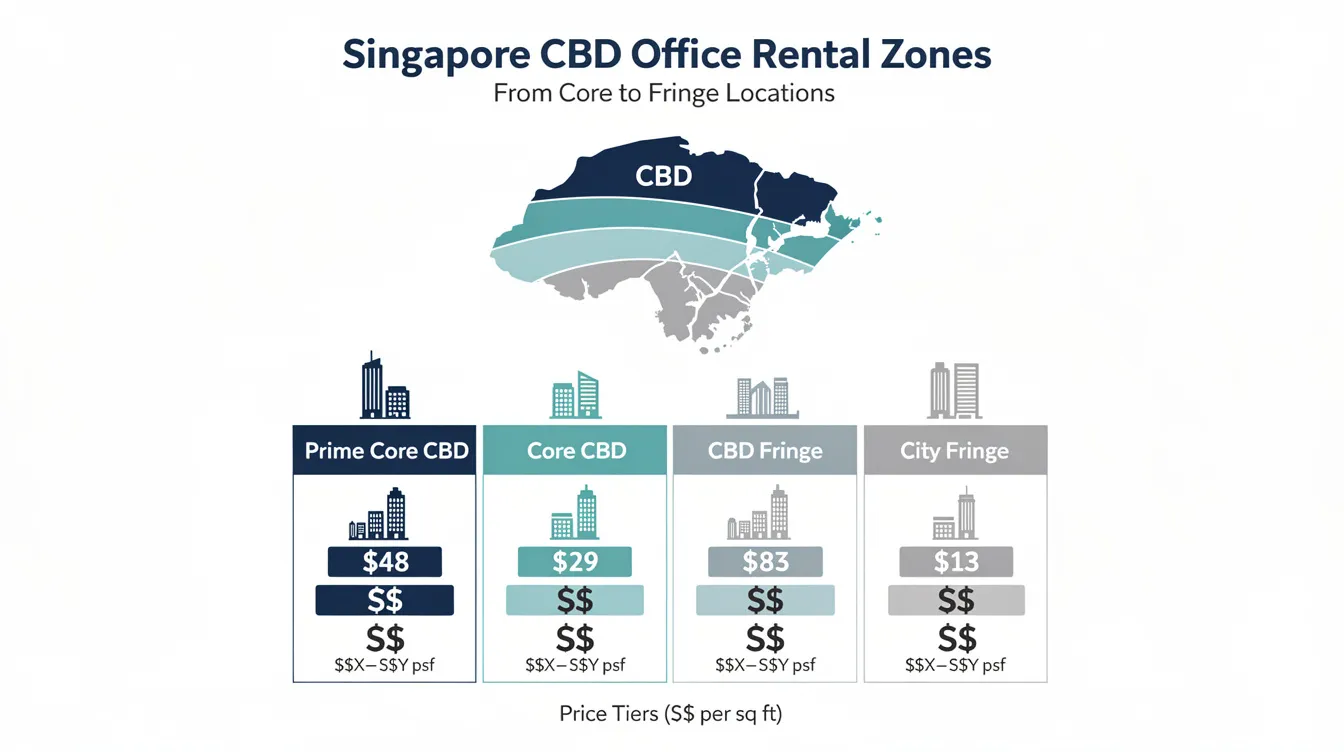
Rental Positioning and Market Comparison
|
Location |
2026 Rent (S$ psf/month) |
2029 Projected Rent |
Supply Status |
|---|---|---|---|
|
Core CBD Grade A (e.g., IOI Central Boulevard Towers) |
S$12.50 |
S$13.50–14.00 |
Limited new supply |
|
Union Square Central |
TBD (pre-leasing) |
S$11.50–12.50 |
New Grade A delivery 2029 |
|
CBD Fringe locations |
S$10.00–11.00 |
S$11.00–12.00 |
Secondary options |
|
Decentralized Grade A |
S$7.87 |
S$8.50–9.00 |
More available space |
Gross effective rents for Union Square Central are likely to offer a modest discount to top-tier Core CBD office buildings at launch – positioning around S$11.50–12.50 per square foot per month – while still capturing meaningful rental growth as the Singapore office market continues to tighten. For investors, this represents rental arbitrage: entering at a discount to IOI Central Boulevard Towers or Asia Square Tower benchmarks while benefiting from convergence as the precinct matures.
Rents for CBD Grade A offices are forecasted to grow by 3-7% in 2026, and this trajectory supports future growth in Union Square Central’s achievable rents through to delivery and beyond. Lease structuring should incorporate fixed rental escalations – typically 2–3% annually – to protect against inflation while providing tenants with cost certainty versus market-rate renewals in a constrained CBD.
Common Challenges and Market Solutions
Navigating a supply-constrained office market presents specific obstacles for both investors and tenants. Understanding these challenges – and Union Square Central’s built-in solutions – is essential for informed decision-making.
Limited Pre-Leasing Inventory in Constrained Market
Vacancy fell across all Core CBD segments in early 2026, leaving few options for tenants seeking new office space of scale. The solution lies in early engagement with Union Square Central’s development team to secure priority positioning and favorable lease terms before general marketing begins. Businesses can occupy serviced offices within days of agreement as a bridge solution – serviced offices require no capital expenditure for fit-out and include utilities and internet in a single fee – while their permanent office space at Union Square Central is being completed.
Rental Growth Outpacing Budget Projections
With analysts expect rents to rise by 3% to 5% yearly for the foreseeable future, tenant budgets set in prior planning cycles may prove insufficient. Fixed rental escalations in long-term leases at Union Square Central provide cost certainty versus market-rate renewals. Serviced offices allow flexible terms without long leases for companies needing interim space, while serviced offices eliminate administrative burdens of conventional leases during transition periods.
Tenant Fit-Out and Operational Readiness Timelines
Coordinating fit-out specifications with Union Square Central’s sustainable building systems and district cooling infrastructure requires advance planning – but delivers meaningful operational efficiency gains. The new development’s Green Mark Platinum Super Low Energy certification translates directly to lower energy costs per square foot, and serviced offices provide immediate operational readiness upon move-in for teams that need to be operational before the main space is ready.
Conclusion and Next Steps
Union Square Central enters a Singapore office market defined by the most acute Core CBD supply tightness in years. With CBD grade A vacancy at historic lows, no meaningful new supply until 2028, and sustained occupier demand across technology, financial services, and professional services sectors, the development’s 2029 delivery is strategically timed to capture peak market conditions, as noted by the cited research source’s executive director. The combination of prime grade office space specifications, SDI Scheme benefits, mixed-use precinct advantages, and Singapore River location creates a differentiated proposition in a market where options are scarce.
Immediate actionable next steps for investors and corporate tenants:
-
Contact the Union Square Central development team for pre-leasing presentations and floor plate specifications – early engagement secures priority positioning
-
Conduct comparative analysis of Union Square Central versus available CBD alternatives including Newport Tower, The Skywaters, and existing Core CBD stock through 2029
-
Evaluate lease structuring options to capitalize on pre-completion pricing advantages, including fixed escalation clauses and fit-out contributions
-
Assess operational requirements alignment with sustainable building features, district cooling benefits, and the mixed-use precinct’s amenity offering
Related topics worth exploring include Singapore River Planning Area redevelopment impacts on property values, sustainable office building investment returns in south east asia, CBD fringe location strategies for corporate tenants seeking quality at value pricing, and interest rates implications for commercial property development economics.
Additional Resources
-
URA SDI Scheme guidelines and GFA uplift calculations for mixed-use developments in the central business district
-
Singapore office market supply pipeline analysis from Cushman & Wakefield, covering quarterly vacancy and rental data through 2030
-
Green Mark Platinum Super Low Energy certification requirements and operational cost benefit studies for new office buildings
-
District cooling system specifications and energy efficiency comparisons for premium office developments in Singapore’s CBD

