

Introduction
The Robertson Opus is a 348-unit luxury mixed-use development on Unity Street in District 9, sitting on a 999-year leasehold that commenced on 1 July 1841. Developed by Riverside Property Pte Ltd, a joint venture between Frasers Property and Sekisui House, the project occupies the former Robertson Walk site at the intersection of the Singapore River waterfront and Fort Canning Park. For investors evaluating Core Central Region (CCR) properties, the central question is whether lifestyle positioning translates into measurable capital growth. This article examines that question through rental data, supply constraints, and financing realities.
The Robertson Opus achieves its capital appreciation thesis through three converging factors: a riverfront location between Singapore’s central business district and its arts precincts, a 999-year tenure that is functionally indistinguishable from freehold, and constrained future land supply in Robertson Quay. These factors generate sustained tenant demand that supports rental premiums above comparable 99-year leasehold CCR projects.
This article covers:
-
How Robertson Quay’s lifestyle ecosystem converts into measurable property value premiums
-
2026 tenant retention patterns and rental yield performance for District 9 riverfront properties
-
Capital appreciation drivers including supply scarcity, infrastructure upgrades, and demographic trends
-
Investment challenges specific to high-quantum CCR acquisitions and practical solutions
Understanding Robertson Quay’s Lifestyle Investment Fundamentals
District 9 is traditionally associated with Singapore’s prime residential belt, and Robertson Quay sits at the core of that classification. The precinct’s evolution from a warehouse district to a live-work-play waterfront area created a lifestyle ecosystem that directly influences rental premiums and occupancy rates. Properties within walking distance of the Singapore River dining strip command higher per-square-foot rents than comparable units even a few blocks inland.
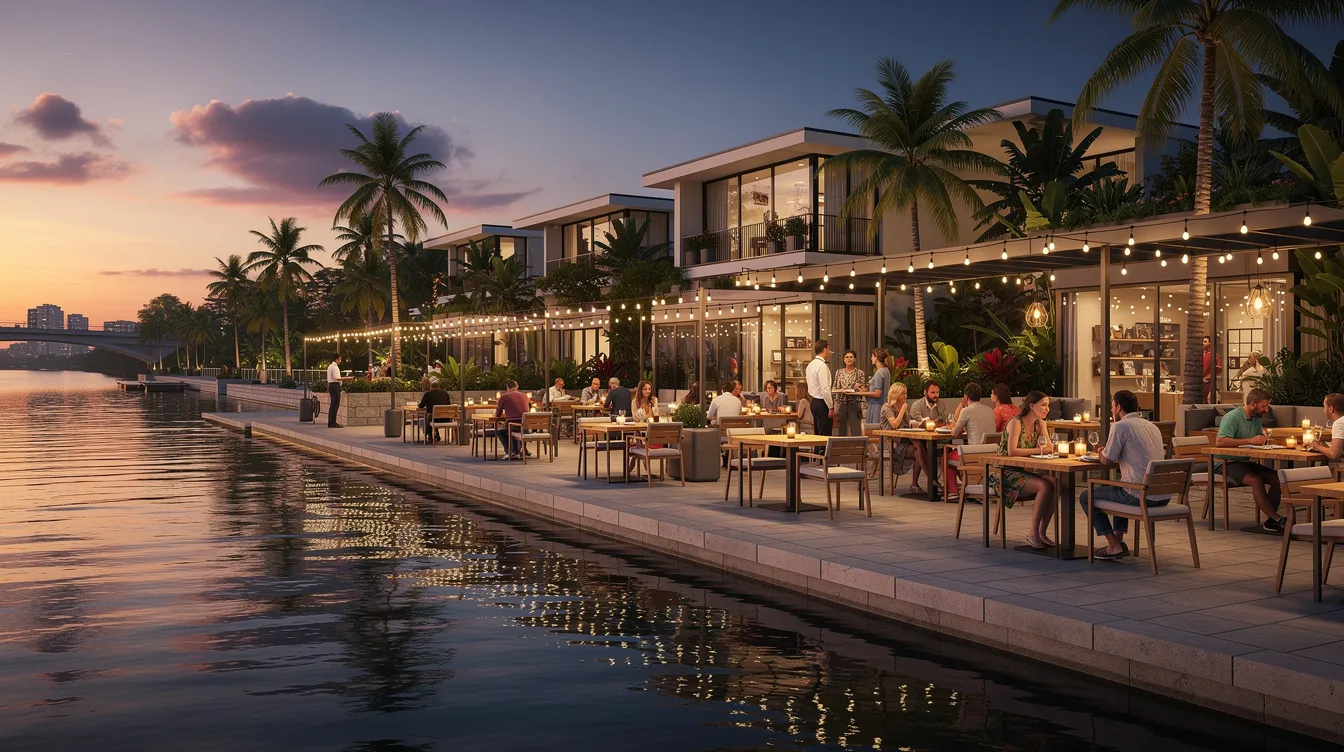
Strategic location between financial and arts districts
Robertson Quay occupies a position where Singapore’s financial core meets its cultural corridor. The central business district and Marina Bay Financial Centre are a 7 to 10 minute drive south. Orchard Road’s retail belt sits roughly the same distance north. This dual accessibility matters for tenant profiles: financial professionals working in the CBD and creative professionals connected to nearby cultural institutions both find the location practical.
The arts connection is concrete. The Singapore Repertory Theatre operates within the Robertson Quay precinct. STPI Creative Workshop & Gallery hosts rotating exhibitions steps from the development. National Gallery Singapore and Fort Canning Hill’s historical sites are accessible on foot or by a short ride. For tenants who value proximity to cultural institutions, this cluster creates a pull that purely commercial districts like Tanjong Pagar or Raffles Place cannot replicate.
The Robertson Opus is strategically located at 7, 9, 11, 13, 15 Unity Street, placing residents within 350 metres of Fort Canning MRT station on the Downtown Line. Clarke Quay MRT is approximately a 12-minute walk. Great World MRT provides a third connectivity option. This triple-station access gives the development excellent connectivity to employment nodes across the island without car dependency.
Riverfront lifestyle premium
The Singapore River corridor running through Robertson Quay supports over a dozen restaurants, cafes, and bars within a five-minute walk of the development site. Robertson Quay is known for its riverside dining and cosmopolitan atmosphere, drawing both local residents and the expatriate community, and residents can enjoy riverside dining and vibrant nightlife within this riverfront setting. This dining and recreation density creates what property analysts term a “lifestyle premium”: the measurable difference in rental rates between riverfront-adjacent units and comparable inland units.
Nearby, Boat Quay extends that riverfront lifestyle scene with added nightlife and dining access.
Fort Canning Park, directly accessible from the development’s northern boundary, adds a green and wellness dimension. The park spans 18 hectares and includes walking trails, historical landmarks, and open lawns. A planned blue-green corridor stretching approximately 6 kilometres will link Fort Canning to Pearl’s Hill City Park, creating an uninterrupted recreational trail for cycling and walking. The Robertson Opus is positioned between the dense urban core and serene natural environments, giving residents daily access to green spaces without leaving District 9.
These lifestyle factors are not abstract amenities; they translate into rental pricing power. Robertson Opus pricing reflects long-term tenure and riverfront lifestyle positioning, with an average price per square foot of S$3,360 at launch.
2026 Asset Progression: Tenant Retention and Rental Performance
With the Robertson Opus targeting a Temporary Occupation Permit date of 30 June 2030 and legal completion by 30 June 2033, actual rental income data from this specific project does not yet exist. The analysis below draws on comparable District 9 riverfront properties and current Robertson Opus sales data to model expected performance.
Tenant retention rates in District 9 riverfront properties
Robertson Quay’s tenant retention pattern differs from pure business districts like the Downtown Core. Properties along the river valley corridor show retention rates above 85% for units leased to expatriate tenants on multi-year contracts. The mechanism is straightforward: tenants who choose Robertson Quay do so for the lifestyle package (riverside dining, Fort Canning Park access, school proximity) rather than pure office commute optimization. Relocating means giving up that package.
The Robertson Opus sits within 1 kilometre of River Valley Primary School, a factor that anchors family tenants. Anglo-Chinese School (Junior), St. Margaret’s School, and Singapore Management University are also nearby. Once families with school-age children settle into the River Valley catchment, the friction of relocating increases. Each year a child attends a nearby school adds to the probability of lease renewal.
Reduced turnover generates direct financial benefits: fewer vacancy months between tenants, lower marketing and agent commissions for re-leasing, and less wear-and-tear from move-in/move-out cycles. For a two-bedroom unit renting at approximately S$5,500 per month, a single avoided vacancy month is worth the equivalent of a 1.5% annual yield improvement.
Rental yield projections for Robertson Opus unit types
The Robertson Opus presents 348 residential units across multiple configurations, intended to serve different buyer or tenant profiles. Robertson Opus pricing starts from approximately S$1.37M for suites of around 431 square feet, with two-bedroom units ranging from S$2.317M to S$2.647M. Larger three-bedroom units exceed S$3.1M to S$5M+ depending on configuration, with the 3-Bedroom Premium at approximately 1,152 square feet and the 4-Bedroom Premium at 1,539 square feet.
For District 9 CCR properties with modern finishes and riverfront orientation, gross rental yields currently range between 3.0% and 4.2%. The Robertson Opus condo’s lifestyle positioning and 999-year tenure support yields toward the upper end of that range once units reach the market. A one-bedroom unit (approximately 495 square feet) purchased at S$1,650,000 generating monthly rent of S$5,500 would deliver a gross yield of 4.0%. A three-bedroom DuoFlex (approximately 990 to 1,023 square feet) at S$3,250,000 would need monthly rent of roughly S$10,800 to achieve the same 4.0% gross figure, a rate that requires a premium river-facing orientation and higher-floor selection.
41% of units at The Robertson Opus sold on launch weekend, with the average price at S$3,360 per square foot over that period. As of mid-2026, approximately 200 of 348 units have sold, representing a 57% take-up rate. This absorption pace indicates sustained buyer confidence, though buyers entering now face different unit selection and potentially different pricing than launch weekend purchasers.
Debt servicing through consistent rental income
Positive gearing, where rental income exceeds mortgage and carrying costs, depends on three variables: entry price, financing terms, and rental rates. The table below models three scenarios for a two-bedroom unit (approximately 700 square feet) purchased at S$2,400,000.
|
Factor |
Conservative |
Base Case |
Optimistic |
|---|---|---|---|
|
Purchase price |
S$2,400,000 |
S$2,400,000 |
S$2,400,000 |
|
Loan amount (75% LTV) |
S$1,800,000 |
S$1,800,000 |
S$1,800,000 |
|
Interest rate |
4.0% |
3.5% |
3.0% |
|
Monthly mortgage (30-yr) |
~S$8,594 |
~S$8,084 |
~S$7,589 |
|
Monthly rent achieved |
S$5,800 |
S$6,500 |
S$7,200 |
|
Monthly maintenance (est.) |
S$600 |
S$600 |
S$600 |
|
Net monthly cash flow |
-S$3,394 |
-S$2,184 |
-S$989 |
At 75% loan-to-value, none of these scenarios achieve positive gearing on cash flow alone. Reaching breakeven requires either a higher down payment (reducing the mortgage payment), a sub-3% interest rate, or premium rents above S$8,500 per month for this unit size. Investors pursuing positive gearing should model their specific financing structure with current DBS Bank or other lender rates before committing.
Capital Appreciation Drivers and Market Positioning
Rental yields represent the income side of the return equation. Capital appreciation, the growth in the property’s resale value over time, completes it. For the Robertson Opus, three structural factors support long-term price growth.
Supply constraints in Robertson Quay
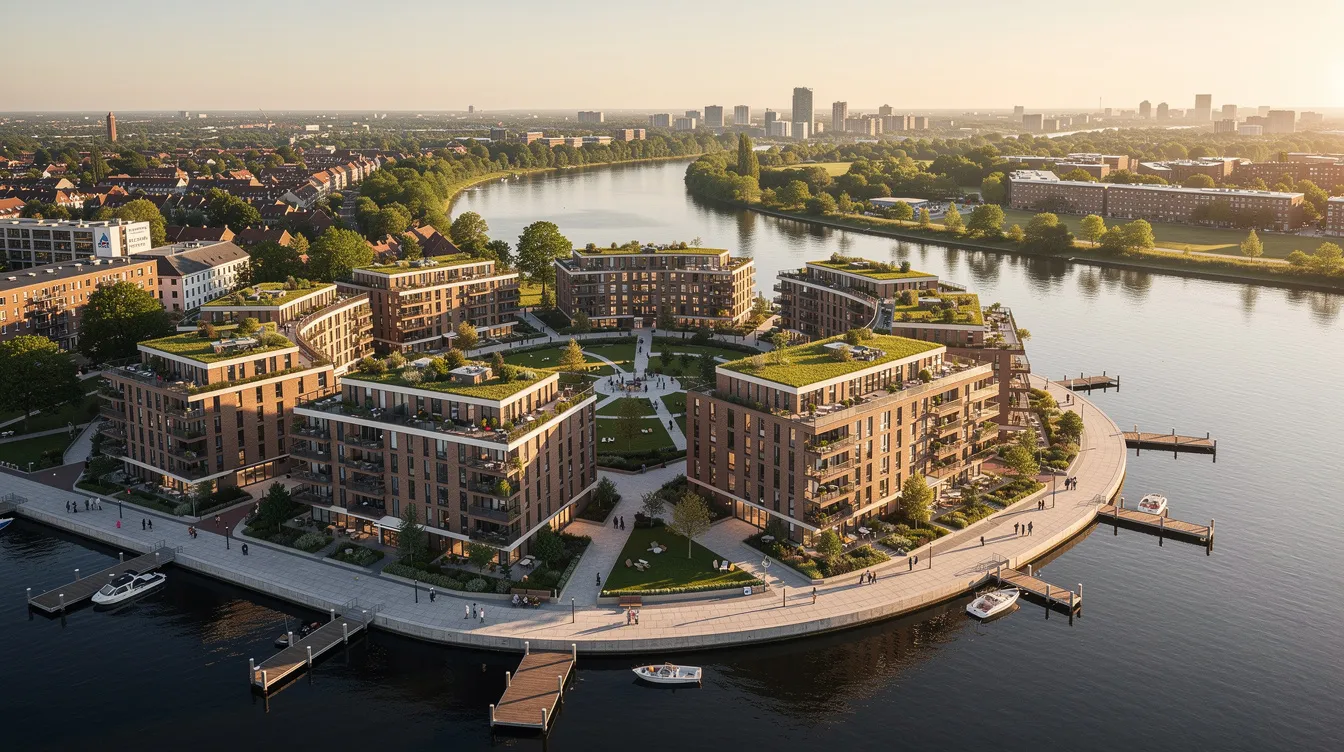
The Robertson Opus sits on a site of approximately 97,981 square feet, one of the largest development plots in the Robertson Quay micro-market. Finding a comparable parcel for a future competing development is unlikely; the precinct is a mature, built-up neighbourhood where most land is already developed. The former Robertson Walk site was one of the last remaining redevelopment opportunities of this scale.
The development is a 999-year leasehold property, which adds a separate layer of scarcity. Most new CCR launches carry 99-year leases. Freehold properties exist in the area but tend to be older developments with dated specifications and smaller unit counts. The Robertson Opus developer, Riverside Property Pte Ltd, secured a tenure that functions as near-freehold for any practical investment horizon, giving buyers capital preservation characteristics and greater security than 99-year leases can match. It serves as an anchor project due to the limited new residential launches in the core area, and pricing reflects that long-term tenure and riverfront lifestyle positioning.
The project’s plot ratio of 2.8 results in moderate density compared to maximum-intensity CCR towers. The development comprises five residential blocks of 9 to 10 storeys each. This lower height profile preserves view corridors toward the river and Fort Canning Hill, a feature that denser developments nearby sacrifice.
Infrastructure and connectivity enhancements
Fort Canning MRT station places the Downtown Line within walking distance, connecting residents to Bugis, Bayfront, and Chinatown without transfers. Clarke Quay MRT on the North East Line provides a second rail option. These two stations give Robertson Opus residents easy access to most major employment centres in Singapore.
The planned cycling and pedestrian park connectors extending from Fort Canning to Pearl’s Hill represent a government investment in the precinct’s liveability. When these green corridors reach completion, the recreational catchment around The Robertson Opus expands from a single park to a continuous 6-kilometre trail network. Infrastructure improvements of this type have historically correlated with property value increases in adjacent developments.
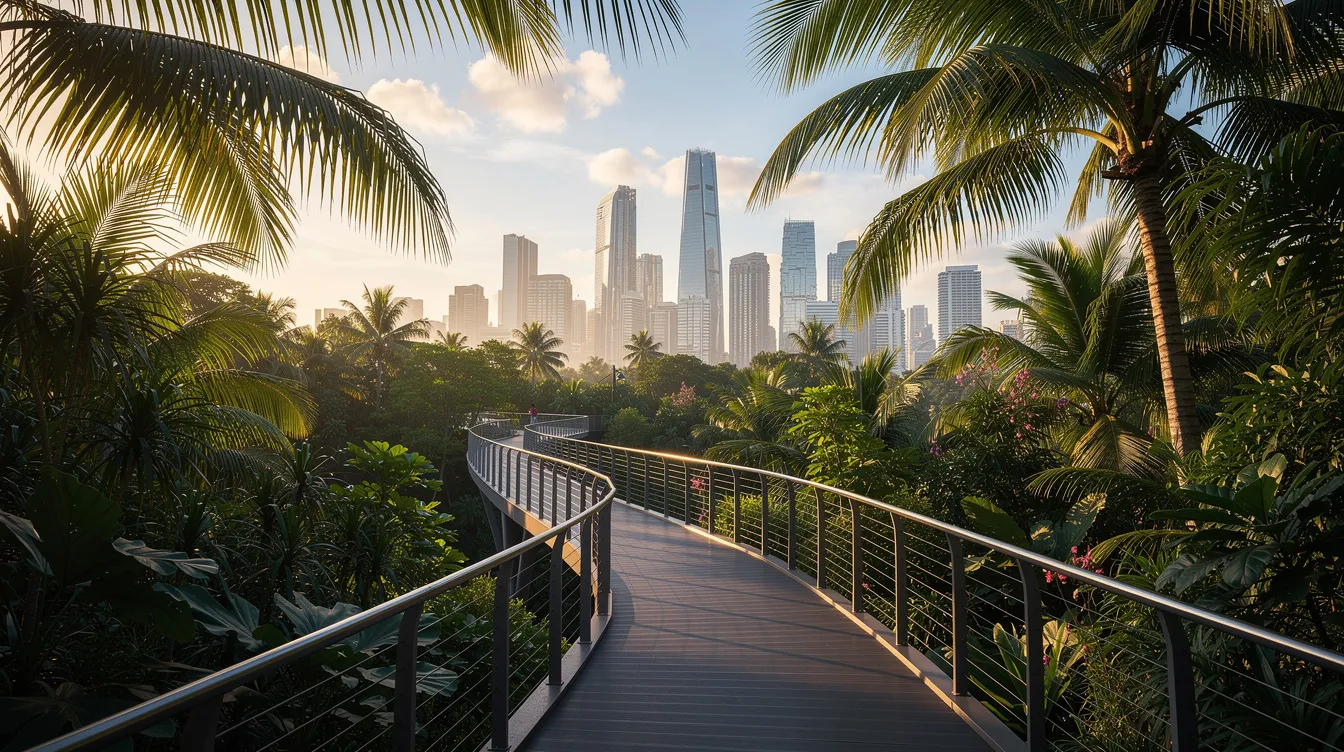
The design includes elevated skywalks and nature-infused courtyards within the development itself. A 240-metre sky forest runs through the project. The Oasis Court features native trees and green walls. Rooftop terraces are designed with vertical greenery and scenic views. These on-site features, combined with the development’s architecture that contrasts modern elements with historical riverfront heritage, reinforce the lifestyle positioning that supports premium pricing.
Demographic trends supporting long-term demand
The Robertson Opus targets two primary buyer segments: expatriate professionals working in Singapore’s financial sector and affluent local owner-occupiers seeking a prime location with walkable lifestyle options.
Expatriate executives typically lease for two to three-year corporate postings. Robertson Quay’s concentration of international restaurants, Boat Quay’s proximity for after-work socialising, and the precinct’s cosmopolitan character make it a preferred posting location. For these tenants, development amenities matter: the Robertson Opus offers smart home technology, wellness amenities including a gym and sauna, cantilevered pools, a pool deck, and landscaped gardens that reduce the desire to look elsewhere.
Local owner-occupiers choosing the project for own stay value the combination of city convenience and residential calm. Robertson Quay is also known for its riverside dining and cosmopolitan atmosphere, which strengthens its appeal for residents who want an established lifestyle setting close to home. Residents can enjoy a central courtyard with dining and retail at the podium level, which adds daily convenience without requiring travel. The development’s unit types range from 431-square-foot suites to 1,539-square-foot four-bedroom premiums, accommodating singles through to families.
Demand for prime residential properties in District 9 remains strong. The Robertson Opus is located in prime District 9, within Singapore’s prestigious Core Central Region. Robertson Quay’s evolution reflects a transition to a live-work-play waterfront precinct, and the project’s sales velocity, with 41% sold on opening weekend, confirms current buyer appetite and supports a longer-term lifestyle and value legacy for buyers in the precinct.
Common Investment Challenges and Strategic Solutions
Higher entry quantum management
The Robertson Opus is a luxury mixed-use development in Singapore, and its pricing reflects that positioning. A buyer targeting a two-bedroom unit faces an entry point of S$2.3M or more. A three-bedroom DuoFlex starts above S$3.2M. These figures require either substantial cash reserves or mortgage financing that may strain monthly budgets during the construction period before TOP in 2030.
One practical approach: secure financing pre-approval from DBS Bank Ltd or comparable lenders at the current best rate, then calculate the carrying cost during the waiting period before vacant possession and rental income begin. Buyers paying progressive payments during construction will fund approximately 20% of the purchase price before TOP, with the remaining loan drawdown occurring at completion. This staging reduces the financing burden in the near term but requires liquidity planning for the period between contract signing and legal completion in 2033.
Market cycle timing
Robertson Quay properties have historically shown less price volatility than CCR developments in purely commercial districts. The lifestyle anchor, specifically the dining, recreation, and green space ecosystem, sustains tenant demand during downturns because the amenity package is location-specific and cannot be replicated in suburban alternatives. During the 2020 market correction, District 9 riverfront properties recovered faster than the broader CCR average.
Investors concerned about entering at peak pricing should note the development’s 999-year tenure. Short-term price fluctuations have less impact on a property whose lease extends beyond any reasonable investment horizon. The holding period that matters is the gap between purchase and resale; for a 999-year lease, depreciation from lease decay is effectively zero.
Maintenance and asset preservation
Luxury developments carry higher maintenance fees than mass-market condominiums. The Robertson Opus includes specifications like landscaped gardens, sky terraces, a 240-metre sky forest, and extensive water features. These require ongoing upkeep to maintain their condition and the property’s premium positioning.
Selecting professional property management with experience in CCR developments protects both rental income and resale value. Well-maintained common areas and functioning amenities directly affect tenant retention; a poorly maintained pool deck or neglected courtyard reduces the lifestyle appeal that justifies premium rents.
Conclusion and Investment Next Steps
The Robertson Opus combines three elements that, together, support capital appreciation: a riverfront lifestyle location in District 9 that generates rental premiums, a 999-year tenure that eliminates lease decay risk, and supply scarcity in a mature precinct with few remaining development sites. The Robertson Opus aims to enhance pedestrian integration along the Singapore River, embedding itself into the neighbourhood’s fabric rather than standing apart from it.
The project’s financial reality requires honest assessment. Entry quantums exceed S$1.37M even for the smallest suites. Achieving positive gearing at current interest rates demands either a large down payment or premium rental rates. Capital is committed years before TOP in 2030, with no rental income during construction.
For investors prepared to accept these conditions, the next steps are:
-
Visit the Robertson Opus sales gallery to review the location map, remaining unit types, and current Robertson Opus pricing for available inventory
-
Run financing scenarios with your mortgage broker using actual lender rates, comparing 60%, 70%, and 75% LTV structures
-
Evaluate specific unit orientation, with river-facing and Fort Canning Park-facing units likely commanding higher rents and resale premiums than inward-facing configurations
-
Review the latest updates on construction progress and any changes to the expected TOP date
Related topics worth exploring include comparative analysis with other District 9 developments in the River Valley town subdivision, portfolio integration strategies for investors holding multiple CCR assets, and the impact of upcoming URA Master Plan revisions on land use in the Robertson Quay precinct.
Additional Resources
-
District 9 rental transaction data is available through EdgeProp’s analytics platform for comparing Robertson Quay properties against broader CCR benchmarks
-
URA’s REALIS database provides historical transaction prices for completed developments near the Robertson Opus site, useful for modelling resale appreciation rates
-
Consult AESTHETIC HAVENS for proprietary analysis of Robertson Quay rental yield trends and investment evaluation specific to The Robertson Opus
-
Construction progress, visuals, pricing, and timeline details are subject to change, so treat indicative project information as provisional.
Readers should verify current information with official sales materials or appointed marketing agents before relying on it.

