

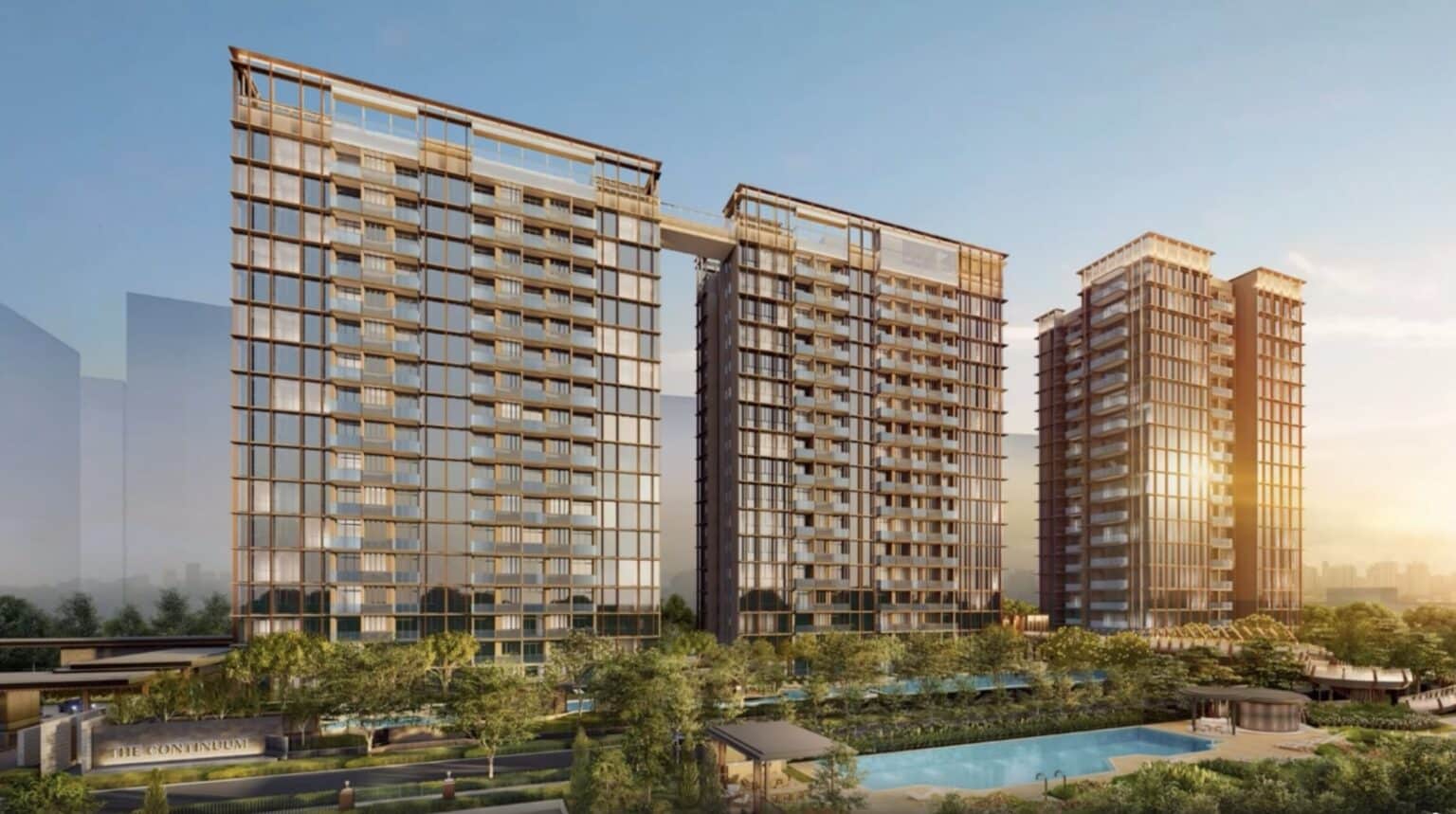
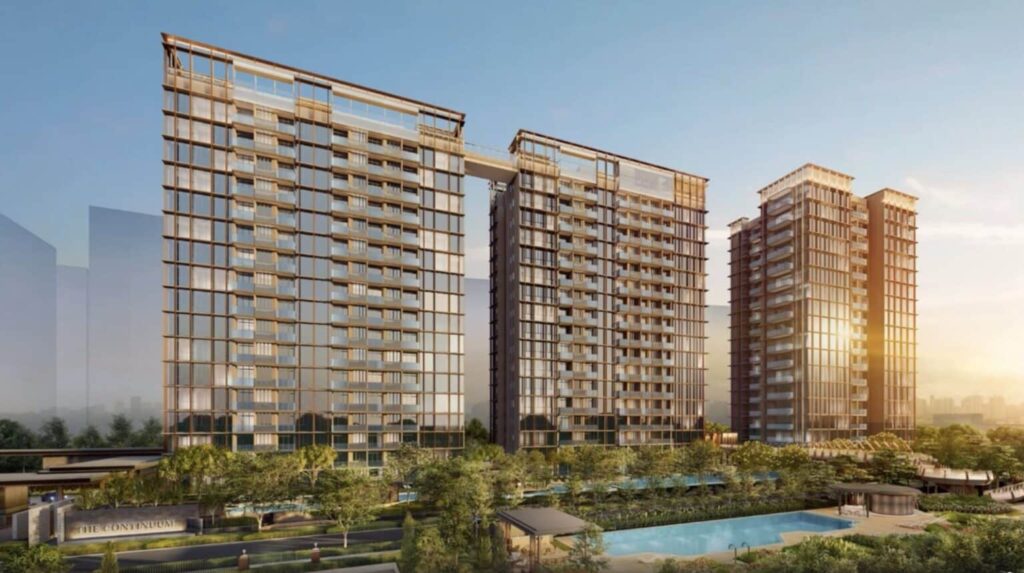
The Continuum just smashed pricing records, and I’m seeing smart money pour into this District 15 development. But here’s what most investors get wrong about freehold properties in Singapore – they focus on the wrong metrics.
Everyone’s asking me the same questions: “Is now the right time to buy?” “What about the cooling measures?” “Will rental yields justify the price?” I’ve been tracking this market for years, and I’ll share what I’m seeing on the ground.
Why The Continuum Stands Out
Here’s the thing about freehold developments in Singapore – they’re rare as hen’s teeth. It’s been close to two decades since the launch of a new condominium on a large freehold plot of land in Katong. When something this scarce hits the market, you pay attention.
The numbers don’t lie, and they tell a compelling story. The Continuum just hit $3,091 psf for a 872 sq ft unit that sold for $2.7 million in December. That’s not speculation – that’s real market demand from investors who know value when they see it.
What caught my attention wasn’t just the price point. It’s the fundamentals:
- 816 units across two massive sites connected by a sky bridge
- Freehold tenure in a leasehold-dominated market
- 67% sold since launch at average $2,790 psf
These aren’t vanity metrics – they’re indicators of genuine market confidence.
Location Advantages
I always tell clients the same thing – you can renovate a unit, but you can’t move a building. The Continuum sits right between Dakota MRT and Paya Lebar interchange, which means your tenants can walk to work or hop on trains to anywhere in Singapore.
My mate who works in Paya Lebar Quarter told me his colleagues are queuing up to rent in this area. Makes sense when your daily commute becomes a pleasant stroll instead of a sweaty train ride. Proximity to business districts isn’t just nice to have – it’s what separates good investments from great ones.
The transportation network here reads like an investor’s wishlist:
- Pan-Island Expressway (PIE) access
- Kallang-Paya Lebar Expressway (KPE) nearby
- East Coast Parkway (ECP) for airport runs
- Circle Line and East-West Line connections
When infrastructure supports easy movement, property values follow.
For families, the education angle seals the deal. Kong Hwa, Haig Girls’, and Tanjong Katong Primary are all within 1km, which matters enormously for the Phase 2C school registration process. Add East Coast Park just 6 minutes by car and the famous Katong food scene at your doorstep, and you’ve got a lifestyle package that writes itself.
Expected Returns
Singapore’s average rental yield sits at 3.29% in 2025, and I know what you’re thinking – that sounds low. Here’s the context most “gurus” won’t tell you: a gross rental yield of 4% to 6% is considered healthy for residential properties, but that’s gross, before you factor in maintenance, taxes, and vacancy periods.
I ran the numbers for a similar project last year, and here’s what actually happened. Gross yield started at 4.2%, but after expenses dropped to 3.1% net yield. However, capital appreciation hit 8% over 18 months, giving a total return of 11.1% annualised. The real money isn’t just in rental income – it’s in the land value appreciation over time.
The calculation looks different when you factor in leverage too. Most investors use 70-75% financing, which means your actual cash-on-cash returns multiply significantly. A 4% gross yield on a $2 million property with $500,000 down payment translates to much higher returns on your actual investment.
Policy Changes
Let me address the elephant in the room first. The government extended SSD holding period from three to four years for properties bought after July 2025. Most investors are panicking, but I see opportunity in this move.
Here’s why this actually helps serious investors: it reduces speculation, which means more stable prices; it filters out flippers, so there’s less competition for good units; and it supports the rental market by ensuring fewer units hit resale quickly. These aren’t punishment measures – they’re market stabilisation tools.
Property price growth forecast remains at +2% to +4% for 2025, which represents healthy, sustainable growth. The government isn’t trying to crash the market – they’re trying to prevent bubbles. Smart investors understand the difference and position accordingly.
Developer Track Record
Developer track record matters more than most investors realise, and I’ve seen too many projects delayed or delivered below expectations. When you’re committing seven figures, you want builders who’ve proven they can deliver on time and on spec.
Hoi Hup Realty has been in Singapore since 1983, which means they’ve survived multiple market cycles. Their recent completions include Waterford Residence and Sophia Hills, and I haven’t heard any horror stories in my network. That matters when you’re trusting someone with your money for three years of construction.
Sunway Group brings Malaysian scale and expertise to the partnership. They’ve delivered over 11,000 residential and commercial units across the region, which suggests they understand large-scale project management. When two established players joint venture, it usually means shared risk, combined expertise, and better financial backing.
Investment Strategies
I’ll be straight with you about property investment – it’s not about finding the “perfect” deal. It’s about finding good deals that fit your strategy and risk tolerance.
- For rental income focus, target 1-2 bedroom units and consider furnishing for the expat market.
- For capital appreciation, larger freehold units in prime districts work better.
- For wealth preservation, stick to freehold tenure with quality developers.
The Continuum ticks boxes for all three strategies, which is why it’s attracting diverse investor profiles from young professionals to family offices.
Smart Money Moves
I’m seeing family offices and HNWIs quietly accumulating freehold properties, and their playbook is surprisingly straightforward.
Phase 1: Secure good units during launch when prices are lower.
Phase 2: Hold through construction for 2-3 years.
Phase 3: Rent out upon completion for immediate income.
Phase 4: Hold long-term for capital appreciation.
One client bought 3 units in a similar project in 2019. Today, each unit is worth 40% more and generating $4,500 monthly rental. The key was buying during soft launch, holding through the uncertainty, and benefiting from both rental income and capital growth.
The pattern repeats across Singapore’s freehold market. Patient capital gets rewarded, while hot money chasing quick gains usually gets burned. The Continuum’s freehold status and District 15 location position it well for this long-term appreciation strategy.
Financing Options
Most investors mess up the financing, so here’s what actually works in Singapore’s current environment.
Bank loans offer 75% LTV for first property (Singapore citizens) and 45% LTV for second property. Progressive payment during construction helps manage cash flow.
Cash flow management becomes critical during the construction period when you have no rental income. Budget for completion plus 6-12 months to find tenants, and factor in renovation costs if you’re targeting premium rents.
Tax considerations include rental income being taxable, property tax on annual value, and stamp duty plus legal fees upfront. I always tell clients: if you need 100% financing, you’re not ready to invest in property. Have buffers and backup plans.
Risk Management
Every investment has risks, and smart investors manage them instead of ignoring them.
Market risks include interest rate changes, oversupply in surrounding areas, and economic downturns affecting rental demand. These are systemic risks that affect all property investments.
Project risks are more specific: construction delays, developer financial issues, and design or build quality problems. The Continuum’s established developer profile helps mitigate some of these risks.
Personal risks often get overlooked but matter most. Job loss affecting loan servicing, need for emergency cash when property is illiquid, and family circumstances changing can force unwanted sales. Plan for these scenarios before you need to.
Market Timing
Here’s what I’m watching for optimal entry timing, and the signals are mostly positive right now. Green lights include:
- sales rate above 60% (shows market confidence)
- launch pricing still available
- construction progress on track, and
- no major policy changes announced.
Red flags would be:
- slow sales despite marketing push
- multiple similar projects launching nearby
- developer cash flow rumours, and
- government considering new cooling measures.
As of January 2025, The Continuum shows mostly green lights with strong sales velocity.
The construction timeline matters for planning too. With completion expected in 2026, you’re looking at roughly 18-24 months of holding costs before rental income starts. Factor this into your cash flow projections and financing structure.
Alternative Options
I believe in presenting options, so here are other opportunities I’m tracking. Similar freehold projects include Grand Dunman (completed, immediate rental income) and Tembusu Grand (smaller scale, different price point). Each has different risk-return profiles.
REITs offer comparison benchmarks: CapitaLand Integrated Commercial Trust and Mapletree Commercial Trust provide lower entry cost and immediate liquidity.
Commercial properties deliver higher yields (6%+) and are exempt from ABSD for foreigners, but require different tenant management.
Each has trade-offs versus The Continuum. The freehold advantage with residential rental stability appeals to investors wanting predictable returns with upside potential from land value appreciation.
Area Development
The area is transforming, and infrastructure development typically drives property values. The completion of the Thomson-East Coast Line will unlock new MRT stations at Katong Park, Tanjong Katong, Marine Parade, and Marine Terrace. More connectivity historically means higher property values and more rental demand.
I’m seeing this pattern repeat across Singapore. Areas that get new MRT lines typically see 15-25% property value increases within 3-5 years. The mechanism is simple: better accessibility increases demand, which pushes up both sale prices and rental rates.
The Continuum is positioned to benefit from this infrastructure development. Early investors who buy before the full impact of improved connectivity is priced in usually capture the most upside.
Bottom Line
The property game in Singapore rewards patience and smart positioning over trying to time market cycles perfectly. The Continuum offers what serious investors want: freehold tenure, strategic location, and established developers with proven track records.
Yes, the prices have increased from launch. Yes, there are new government measures to navigate. But good assets in prime locations have always commanded premiums, and scarcity drives value over time.
If you’re looking for quick flips or trying to time the market perfectly, this isn’t for you. If you want to build wealth through quality real estate over 7-10 years, The Continuum deserves serious consideration as part of a diversified investment strategy.
We here at Aesthetic Havens continue tracking developments like this and providing the market analysis that helps our readers make informed investment decisions in Singapore’s evolving property landscape.
Frequently asked questions (FAQs)
1. What’s the minimum investment for The Continuum and what returns can I expect?
1-bedroom units start around $1.2 million, with financing you’ll need roughly $300,000 cash. Target 3.5-4.5% rental yield initially, plus capital appreciation. I’ve seen similar freehold projects deliver 6-8% total annual returns over 5-year periods, but past performance doesn’t guarantee future results.
2. How do the new cooling measures affect my investment timeline?
The 4-year SSD holding period means you’ll pay penalty if you sell within 4 years. But if you’re buying for rental income and long-term growth, this actually helps by reducing speculation and stabilising prices. Plan to hold minimum 5-7 years anyway for optimal returns.
3. Is it better to buy during construction or wait for completion?
Construction phase offers lower prices but no immediate rental income. I typically advise buying during soft launch for best pricing, then prepare for 2-3 years of holding costs. Upon completion, you can immediately start generating rental income at higher market rates that reflect the completed development.
4. What’s the rental demand like for this area and what tenant profile should I target?
District 15 attracts both expats and locals working in CBD, Paya Lebar, and airport areas. Target families for larger units ($6,000-8,000 monthly) or young professionals for 1-2 bedrooms ($3,500-5,500 monthly). Vacancy rates typically run 2-4 weeks between tenants in well-managed properties.
5. How does The Continuum compare to buying resale freehold properties in the same area?
New developments offer modern facilities, warranties, and potential for initial capital appreciation as the project establishes itself. Resale properties may offer immediate rental income but often need renovation. The Continuum’s scale and amenities will likely command premium rents compared to older, smaller developments.

