

Introduction
The Collective at One Sophia District 9 7 fringe stands out as a mixed-use redevelopment in Singapore’s core central region, positioned on the civic district fringe of District 9 where investment appeal meets connected city life. For investors seeking high-yield central assets without paying the full Orchard Road premium, this former Peace Centre redevelopment at 1 Sophia Road combines compact micro-unit layouts, education belt rental demand, and triple-line MRT connectivity in a way few CCR launches can match.
This article covers rental yield optimization strategies, micro-unit selection frameworks, mixed-use development advantages, civic district fringe positioning, financing and tenant diversification considerations, and the 2026 market positioning of The Collective at One Sophia – from studio-level entry points through to 2-bedroom dual-key potential – while official project materials such as One Sophia E remain useful reference points when checking floor plans or brochures. It stays focused on the residential component’s income-generating potential rather than pure luxury-tier positioning or commercial strata investment. The analysis is built for property investors pursuing high-yield central region assets, HDB upgraders looking for a more accessible CCR entry point, and portfolio diversifiers who want a mixed-use project with strong built-in tenant demand drivers.
In direct terms, The Collective at One Sophia District 9 7 fringe is best understood as a compact-unit, dual-income investment play: unit sizes run from 431 to 1,249 sqft, the location draws tenants from nearby education and arts precincts, and the triple-line MRT access supports gross yields near 3.0% in a central region setting. You’ll see which unit types best fit micro-rental strategies, how to select for yield rather than brochure appeal, and where the project’s main advantages – and constraints – sit for buyers comparing central Singapore opportunities.
Key outcomes from this analysis:
-
Understanding how micro-unit investment principles apply specifically to One Sophia’s unit mix and pricing structure
-
Leveraging Dhoby Ghaut interchange connectivity and education belt proximity for sustained tenant appeal
-
Maximizing rental yields through strategic unit type, floor level, and facing selection
-
Building equity faster through lower quantum entry points compared to traditional CCR residential layouts
-
Navigating common challenges including PSF premiums, financing optimization, and tenant diversification
Understanding Dual-Income Property Investment Fundamentals
Dual-income property strategies centre on extracting maximum rental revenue per dollar invested, often by targeting compact, efficiently designed units that command disproportionately high per-square-foot rental rates. In Singapore’s high-density urban market – where land constraints, cooling measures like additional buyer’s stamp duty, and tight CCR supply shape every transaction – understanding these fundamentals is essential before evaluating any specific development.
Micro-Unit Investment Principles
Micro-unit strategies focus on acquiring smaller-quantum properties (typically studios through 1-bedroom configurations) that deliver higher gross rental yield percentages relative to purchase price. The logic is straightforward: a 450 sqft studio costing S$1.25 million and renting at S$3,000/month generates approximately 2.9% gross yield, while a 1,200 sqft three-bedroom at S$3.6 million renting at S$7,500/month generates only 2.5%. The smaller unit also requires less capital outlay, fills vacancies faster due to broader tenant eligibility, and enables portfolio diversification across multiple assets rather than concentration in a single high-quantum property.
In Singapore’s rental market, central locations with strong MRT connectivity amplify these advantages. Tenants paying premium rents for micro-units prioritize proximity to workplaces, transit nodes, and lifestyle amenities over raw floor area – making developments near interchange stations particularly attractive for this strategy.
Mixed-Use Development Advantages
Integrated developments combining residential, commercial, and retail spaces create a self-reinforcing ecosystem that enhances rental appeal and tenant retention. When a resident can work, dine, shop, and commute without leaving the development precinct, the convenience premium embedded in rental rates becomes defensible even during market softness. This mixed development model also generates daytime foot traffic from office workers and retail visitors, creating vibrancy that purely residential condominiums cannot replicate.
The relationship to micro-unit strategy is direct: tenants in compact units are the most convenience-sensitive segment. A studio resident without a full kitchen benefits enormously from ground-floor dining options. A young professional in a 1-Bedroom + Study values co-working proximity. Mixed-use developments convert what might be a spatial compromise into a lifestyle advantage.
Civic District Fringe Benefits
The civic district fringe – the transitional zone between Orchard Road’s prime shopping belt and the Bras Basah-Bugis arts and education precinct – offers a distinctive investment positioning. Properties here sit within the core central region classification, benefiting from CCR prestige and infrastructure, while avoiding the extreme land premiums of addresses directly on Orchard Road. This city fringe positioning means lower entry quantum for investors without sacrificing the rental demand generated by central business district proximity, cultural institutions like National Gallery Singapore and Singapore Art Museum, and dense MRT networks.
This foundational understanding – micro-units for yield, mixed-use for tenant appeal, civic fringe for pricing efficiency – sets the framework for evaluating how The Collective at One Sophia specifically capitalises on each advantage.
The Collective at One Sophia’s Strategic Market Position
With the dual-income investment thesis established, the One Sophia condo emerges as a development purpose-built to exploit each of these structural advantages. From its origins as a transformative en bloc redevelopment to its precise positioning within Singapore’s densest education and transit corridor, the project’s specifics reinforce the micro-unit investor’s case at every level.
Former Peace Centre Transformation Impact
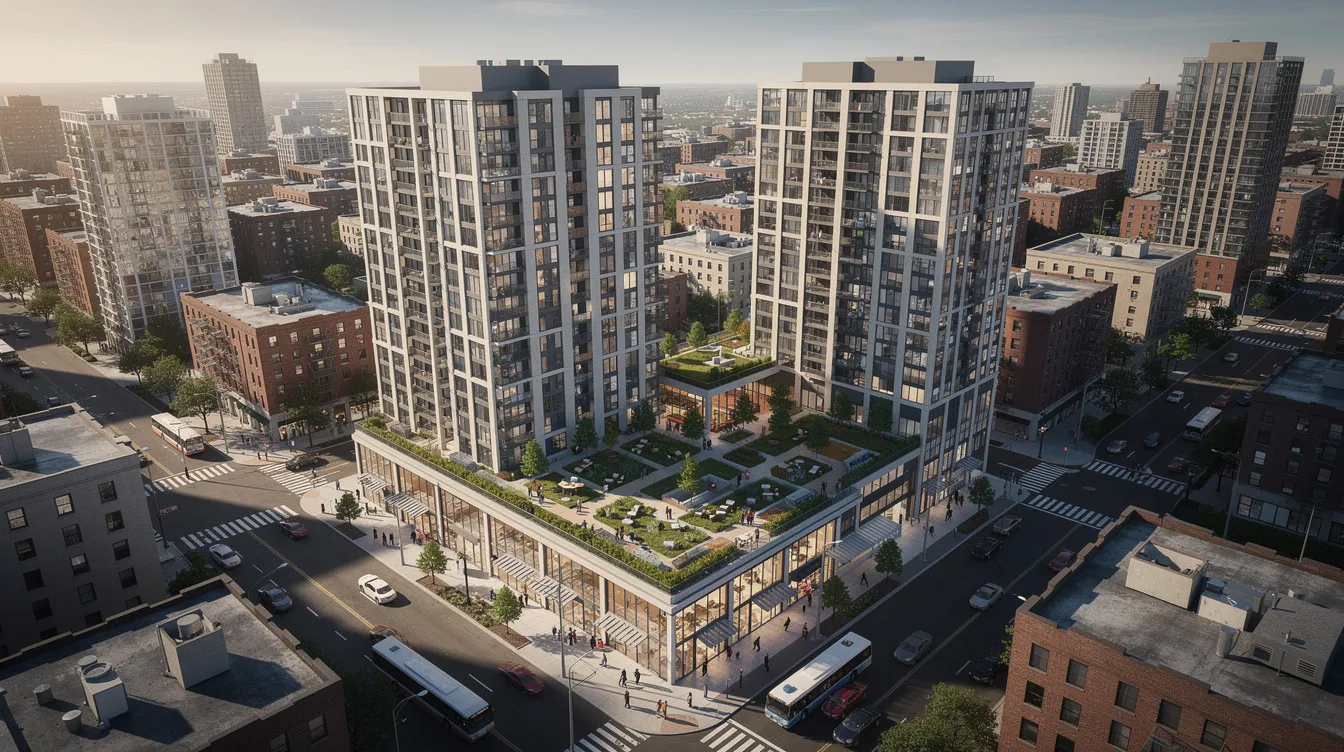
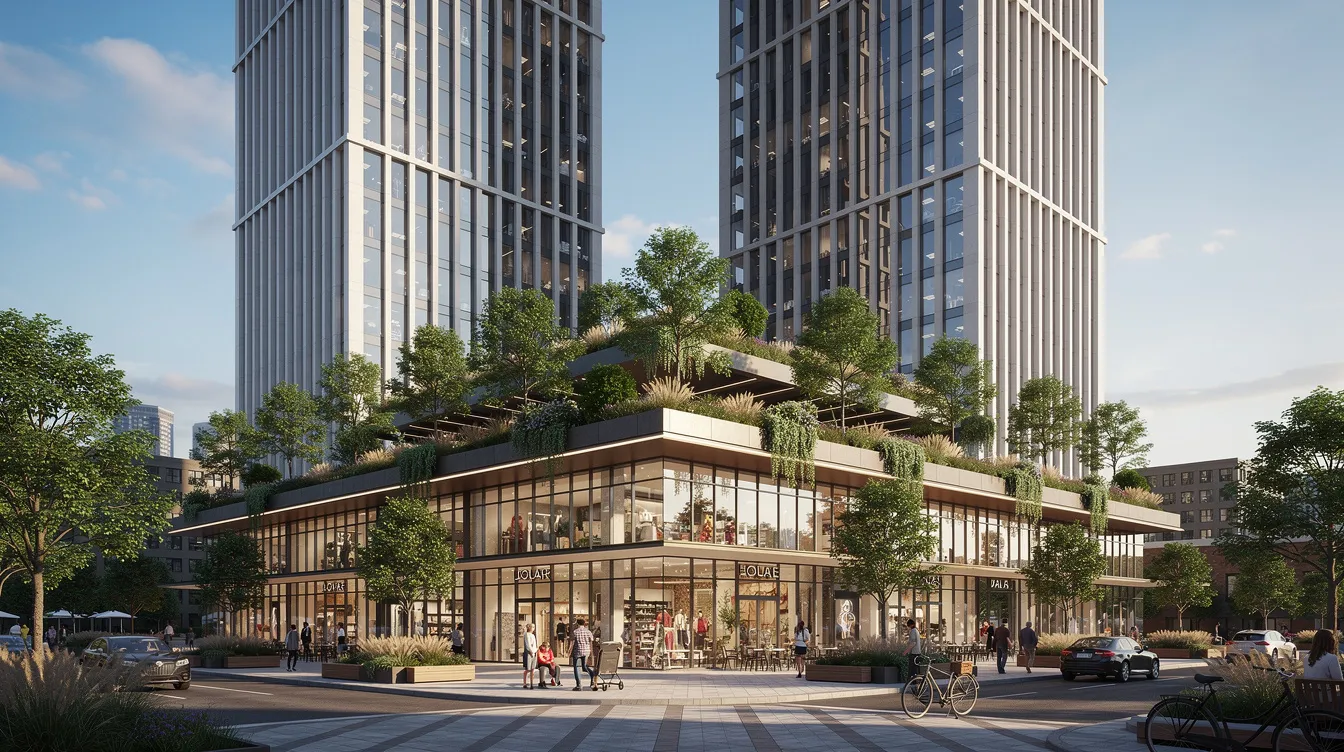
It occupies the former site of Peace Centre and Peace Mansion – a dated but beloved mixed-use landmark at 1 Sophia Road that was acquired in December 2021 for S$650 million through a joint venture among CEL Development, SLB Development, and a consortium including Ho Lee Group and KSH Holdings, with the one sophia developer structure behind The Collective at One Sophia reflecting that partnership. The Urban Redevelopment Authority’s planning approval in late 2023 greenlit the transformation into One Sophia, a comprehensive redevelopment featuring two 19-storey residential towers with 367 residential units, a commercial block housing 122 strata-office spaces, and a retail podium containing 127 retail units. ADDP Architects and studioMilou designed The Collective at One Sophia, and the project is expected to complete by December 2029. This isn’t a cosmetic renovation – it represents the complete reimagining of a 76,617 sqft site into a modern mixed-use development with a 99-year leasehold tenure and approximately 4.2 plot ratio, reflecting the density that this prestigious central address warrants.
Education Belt Rental Demand Engine
The One Sophia location sits at the epicentre of Singapore’s arts and education precinct. The proximity to educational institutions creates rental demand that few CCR developments can match: Singapore Management University is within walking distance, while the School of the Arts (SOTA), Nanyang Academy of Fine Arts, LaSalle College of the Arts, and the University of the Arts Singapore are all clustered within the immediate neighbourhood. Anglo-Chinese School is another notable nearby institution, which also adds appeal for family-oriented tenants and buyers who prioritise access to established schools. This concentration generates consistent demand for studios and 1-bedroom units from students, faculty, visiting lecturers, and young professionals in creative industries.
The connection to micro-unit strategy is powerful: education-driven tenants typically seek compact, well-connected units on shorter lease cycles, accepting higher PSF rents for proximity to campus. This supports higher occupancy rates and allows landlords to reset rents to market more frequently – a structural advantage for yield-focused investors targeting the collective at one sophia’s smaller configurations.
Triple-Line MRT Connectivity Advantage
Dhoby Ghaut MRT is a 3-minute walk away, providing immediate access to the North-South, North East, and Circle Lines – three of Singapore’s most critical transit arteries. Residents benefit from exceptional MRT connectivity within a 700-meter radius, with Bencoolen MRT Station 5 minutes away and Rochor station similarly accessible. The development is strategically located near six MRT lines, with six MRT stations within a 1-km distance, including access to the Downtown Line. Nearby MRT stations include Dhoby Ghaut, Bencoolen, Rochor, and Bras Basah, creating unmatched island-wide connectivity to Marina Bay, the central business district, Orchard Road, and beyond. The development is also near major expressways like CTE and PIE for vehicular access.
This density of transit options – rare even for CCR developments – directly supports rental sustainability. Tenants can reach virtually any employment node in Singapore within 30-40 minutes, making the one sophia location map compelling for expatriate professionals, students, and young working couples alike. This transit advantage bridges directly into practical implementation: understanding which units to select and how to structure dual-income returns.
Maximizing Dual-Income Returns Through Strategic Implementation
With location fundamentals and market positioning established, the critical question becomes execution: which unit types, at which price points, deliver the strongest dual-income performance? The residential component offers layouts from studios to 3-bedroom apartments across the 367-unit inventory, but not all configurations serve the yield-focused investor equally.
Optimal Unit Selection Strategy
The one sophia price list reveals a tiered entry structure that enables precise targeting based on investment objectives:
-
Studio Type A1/A2 (431–452 sqft): Starting from approximately S$1.14–1.25 million, these represent the lowest quantum entry into the CCR market. They target single professionals, students from nearby institutions, and short-term corporate tenants. Average prices range from $2,706 to $3,029 psf across the development, with studios sitting at the higher PSF end but lowest absolute cost – the ideal micro-unit profile.
-
1-Bedroom + Study (549 sqft): Priced from approximately S$1.505–1.536 million, this configuration captures remote work trends by providing a dedicated workspace within a compact footprint. The study area significantly broadens tenant appeal to young couples and work-from-home professionals, commanding meaningful rental premiums over basic studios.
-
2-Bedroom Configurations (646–764 sqft): The 2-Bedroom Deluxe + Study at 700 sqft (~S$1.93–1.97 million) and 2-Bedroom Premium at 764 sqft (~S$2.08–2.18 million) serve dual purposes. These units appeal to small families and co-tenant arrangements, and the study configurations offer potential flexibility for partial-use rental strategies, subject to strata by-law verification. The master bedroom in premium configurations provides the spatial quality that justifies family living rental premiums.
-
Strategic Floor and Facing Selection: Lower floors with less premium city skyline views can reduce purchase price by 5–10% while rental rate differentials for mid-tier versus high floors remain narrower – typically 3–5%. This spread creates a yield optimization opportunity for investors willing to accept non-premium views.
Rental Yield Optimization Analysis
Based on comparable CCR projects and location-adjusted benchmarks for this sophia condo:
|
Unit Type |
Expected Monthly Rental |
Approximate Purchase Price |
Implied Gross Yield |
|---|---|---|---|
|
Studio (431–452 sqft) |
S$2,800–S$3,300 |
~S$1.25M |
~2.9% |
|
1-Bed + Study (549 sqft) |
S$3,500–S$4,200 |
~S$1.50M |
~3.0% |
|
2-Bed Premium (764 sqft) |
S$4,500–S$5,500 |
~S$2.10M |
~3.0% |
|
3-Bed Luxury (1,227 sqft) |
S$6,500–S$8,500 |
~S$3.57M |
~2.5% |
The pattern is clear: compact units deliver higher percentage yields while maintaining accessible quantum. A studio investor deploying S$1.25 million generates roughly the same yield percentage as a 2-Bedroom Premium investor deploying S$2.10 million – but preserves S$850,000 in capital for diversification or a second property investment.
Strata offices within the integrated commercial component are exempt from Additional Buyer’s Stamp Duty, creating an additional avenue for investors seeking to pair a residential micro-unit with a commercial asset within the same development – a genuine dual-income configuration under one address.
The sophia developer has structured the unit land rate and pricing to reflect the CCR market realities of 2026: moderate price growth but steady rental demand, particularly for well-connected central locations where supply remains constrained.
Common Investment Challenges and Practical Solutions
Micro-unit investment in CCR mixed-use developments presents specific obstacles that require deliberate mitigation strategies. Understanding these before committing capital separates informed property investments from speculative purchases.
Higher Per-Square-Foot Purchase Cost Management
At S$2,700–S$3,000+ PSF, The Collective at One Sophia commands premium pricing consistent with new-launch CCR positioning. The sophia represents a high-quality development, but investors must avoid fixating on PSF comparisons with older resale properties that lack equivalent amenities, design quality, or transit proximity. The solution: evaluate absolute rental yield and vacancy risk rather than pure PSF metrics. A newer unit with a stunning lap pool, fully-equipped fitness centre, and ground-floor retail spaces will command rental premiums that older developments cannot match. The project combines modern design with landscaped areas, and the development has attained BCA Green Mark Gold Plus certification – credentials that increasingly influence tenant selection, particularly among environmentally conscious expatriate tenants.
The Collective at One Sophia features a suspended garden design that reflects Singapore’s ‘City in a Garden’ vision, with lush green spaces integrated across multiple levels. Amenities include a swimming pool, gym, function rooms, and outdoor spaces. There are BBQ pits and entertainment rooms for social events, plus a social club and games room – all supporting the live-work-play lifestyle that justifies premium positioning.
Financing Quantum Optimization
The real advantage of micro-unit strategy at One Sophia is absolute quantum accessibility. Studio and 1-bedroom units priced between S$1.14M and S$1.54M sit well below the S$2M+ threshold where loan-to-value ratios and total debt servicing requirements become more constraining. This lower entry point preserves borrowing capacity for portfolio expansion and reduces cash downpayment requirements – critical for investors targeting equity acceleration through multiple smaller assets rather than a single large holding.
Sophia Residential Pte and Sophia Commercial Pte – the developer entities behind the residential and commercial components respectively – have structured progressive payment schedules aligned with the December 2029 completion timeline, allowing investors to manage cash flow during the construction period.
Tenant Mix Diversification
Reliance on a single tenant demographic creates concentration risk. The solution at One Sophia is deliberate diversification across the development’s natural demand pools: education sector professionals and students from SMU, NAFA, and LaSalle College drawn by campus proximity; expatriate singles and couples employed in the central business district accessible via the North-South and North East lines; creative industry workers attracted to the Bras Basah-Bugis arts precinct including arts Singapore institutions; and young professionals who value being steps from the Orchard Road shopping belt, Plaza Singapura, and other lifestyle amenities.
It is located near major lifestyle malls like Plaza Singapura and Bugis Junction, reinforcing the youth-centric mall and urban living appeal that sustains rental demand across economic cycles. The development’s proximity to cultural landmarks – Fort Canning Park, the Singapore Art Museum precinct, and Mount Sophia heritage area – adds lifestyle depth that purely residential developments on Sophia Road cannot offer. Serviced apartments in the area provide rental benchmarking data, and the One Sophia review among market analysts has been broadly positive regarding tenant demand sustainability.
Investment Execution and Next Steps
The Collective at One Sophia stands as an optimal dual-income vehicle for investors who understand that yield maximization in the 2026 CCR market requires precision – in unit selection, financing structure, and tenant targeting. The development’s micro-unit inventory, civic district fringe pricing, and integrated mixed-use ecosystem create a self-reinforcing investment thesis: lower quantum enables entry, education belt demand sustains occupancy, mixed-use convenience commands rental premiums, and triple-line MRT connectivity ensures enduring tenant appeal. The project integrates residential, commercial, and retail spaces into a coherent precinct that is genuinely redefining urban living at this prime district address.
Immediate next steps for serious investors:
-
Review available studio and 1-Bedroom + Study inventory to identify optimal stack positions, prioritising mid-floor units with favourable facing-to-price ratios
-
Model financing scenarios using current interest rates and LTV limits to determine maximum yield after debt servicing – stress-test at 1% above current rates
-
Schedule a One Sophia showflat viewing to evaluate unit efficiency, natural lighting, and the spatial quality of study areas that drive rental appeal for the collective at one sophia’s target tenant segments
-
Verify strata by-laws regarding flexible occupancy arrangements for 2-Bedroom + Study configurations before committing to dual-key strategies
For broader context, investors should explore comparisons with other District 9 micro-unit opportunities, evaluate competing mixed-use developments in the Dhoby Ghaut-Bugis corridor, and monitor URA Master Plan developments for the precinct’s long-term capital appreciation trajectory. The sophia offers a distinctive proposition within the CCR market, but informed positioning requires understanding the competitive landscape.
Additional Investment Resources
-
District 9 CCR Fringe Comparative Data: Review the EdgeProp analysis of The Collective at One Sophia for positioning relative to comparable developments and education belt rental dynamics
-
URA Master Plan Context: The Urban Redevelopment Authority’s plans for the Dhoby Ghaut-Bras Basah precinct continue to evolve – monitor the URA planning portal for updates affecting long-term value drivers in the commercial buildings and residential corridor along Sophia Rd
-
Development Specifications and Unit Availability: Detailed unit breakdowns, site plans, and the sophia price list are available through the developer’s project page including the one sophia location map and the sophia location map for connectivity analysis
-
Rental Market Benchmarking: Track CCR fringe rental data through property portals to validate yield projections against actual transacted rents for comparable new-launch micro-units near the Fullerton Bay Hotel precinct and Marina Bay financial district

