

Introduction
Singapore shophouse prices hit record highs in 2026 despite low volume – a paradox that has captured the attention of property investors across Asia-Pacific. In the first half of 2026, just 25 landed shophouse transactions were recorded, totaling a reduced total transaction value of approximately S$269 million. Yet average psf price of freehold shophouses rose to S$6,500 in 1H 2026, and individual trophy deals shattered previous benchmarks. The answer to what’s driving this lies in three reinforcing forces: ultra-thin supply of conserved heritage stock, concentrated wealth-preservation demand from family offices and UHNWIs, and a handful of marquee sale transactions resetting price expectations across entire precincts.
This article focuses on conserved and landed shophouses used for commercial and mixed-use investment from 2024 to mid-2026 – not HDB shops, generic strata retail, or modern mixed-use developments. The audience is family offices, ultra-high-net-worth individuals, business owners, and corporate investors evaluating Singapore shophouses as long-term wealth-preservation and operational assets. Understanding why this market behaves as it does is essential for anyone considering an allocation to heritage commercial property in one of Asia’s most stable jurisdictions.
Key takeaways you will gain from this article:
-
Why landed shophouses transaction volume has fallen even as prices climb to new records
-
Who is buying at these levels – the profiles, motivations, and emerging buyer segments driving demand
-
Key price benchmarks in 2026 across Districts 1, 2, 8, and 15, and how they compare with 2025
-
Risk factors including conservation costs, financing complexity, and yield compression
-
How to approach a shophouse acquisition methodically in a thin, high-price market
Throughout the article, suggested images include heritage streetscapes of iconic rows like Keong Saik and Joo Chiat, interior fit-outs of high-end restaurants and boutique hotels within conserved shophouses, and simple charts illustrating the divergence between volume and price from 2021 to 2026.
Understanding Singapore’s Shophouse Market in 2026
A shophouse in the Singapore context is a conserved low-rise building – typically two- to three-storey buildings with fixed supply – featuring a narrow frontage, shared party walls with neighbouring units, and a ground floor historically used for commercial purposes. Upper floors may serve residential, office, or hospitality functions. Shophouses gazetted under the Urban Redevelopment Authority‘s conservation plans are subject to strict façade preservation, material restrictions, and limitations on structural alterations.
This asset class behaves fundamentally differently from mass-market condominiums or conventional office space. Conservation restrictions prevent the construction of new shophouses in Singapore, meaning the stock of approximately 6,500 conserved shophouses is permanently capped. There is no densification path, no ability to add floors, and no possibility of replicating heritage value through new builds. This scarcity, combined with heritage prestige, creates pricing dynamics that defy typical supply-demand logic seen in mainstream residential property or commercial markets.
The 2021–2025 cycle illustrates this clearly. The shophouse market peaked in 2021 amid ultra-loose global liquidity and strong investor appetite. In 2022–2024, rising interest rates, higher financing costs, and geopolitical headwinds – including the ongoing Middle East conflict – moderated shophouse transactions and compressed yields. But by late 2025, renewed strength emerged: Knight Frank reported that 96 shophouses sold in full-year 2025 at a total transaction value of S$879.7 million, with an average psf price of S$5,471 on land. In Q3 2025, shophouse transactions rose 50% quarter-on-quarter, indicating strong interest from deep-pocketed buyers. Historical trends show a divergence between sales volume and price resilience in shophouse transactions – a pattern that intensified heading into 2026.
Conserved Shophouses vs Non-Conserved and Strata Units
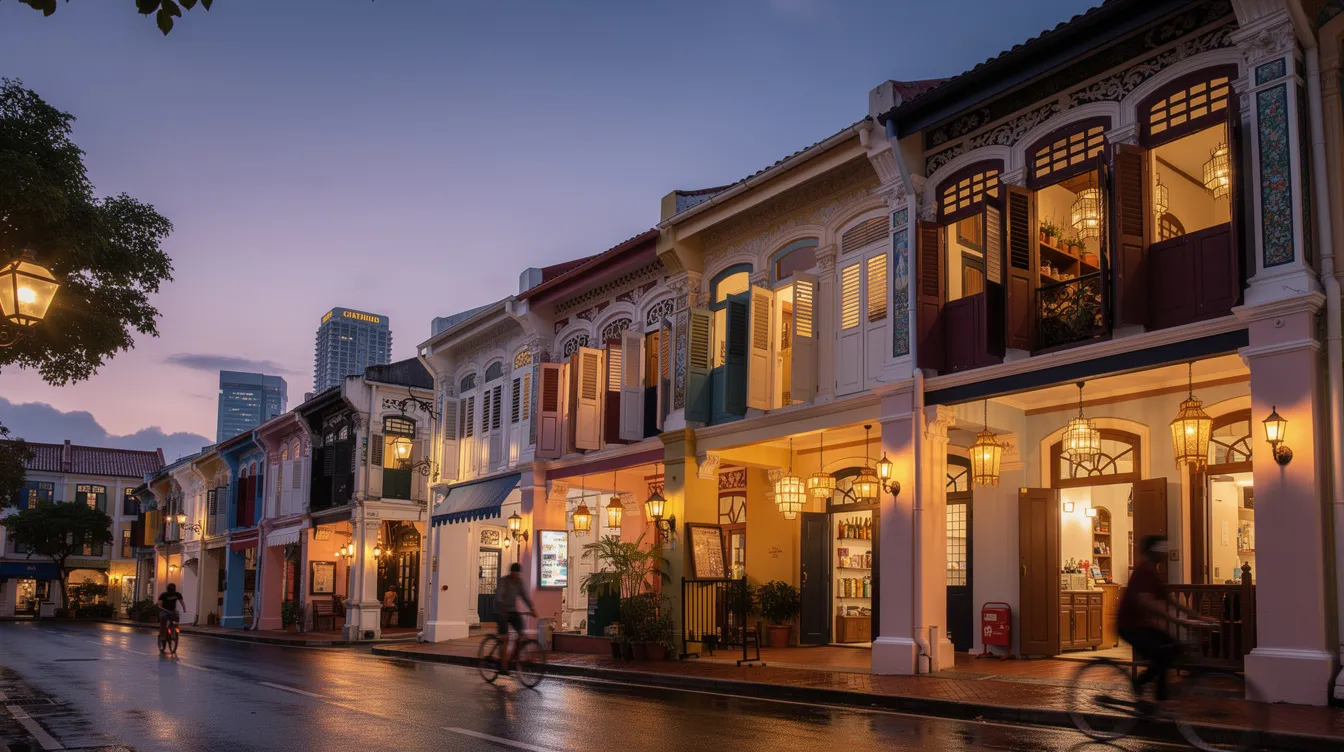
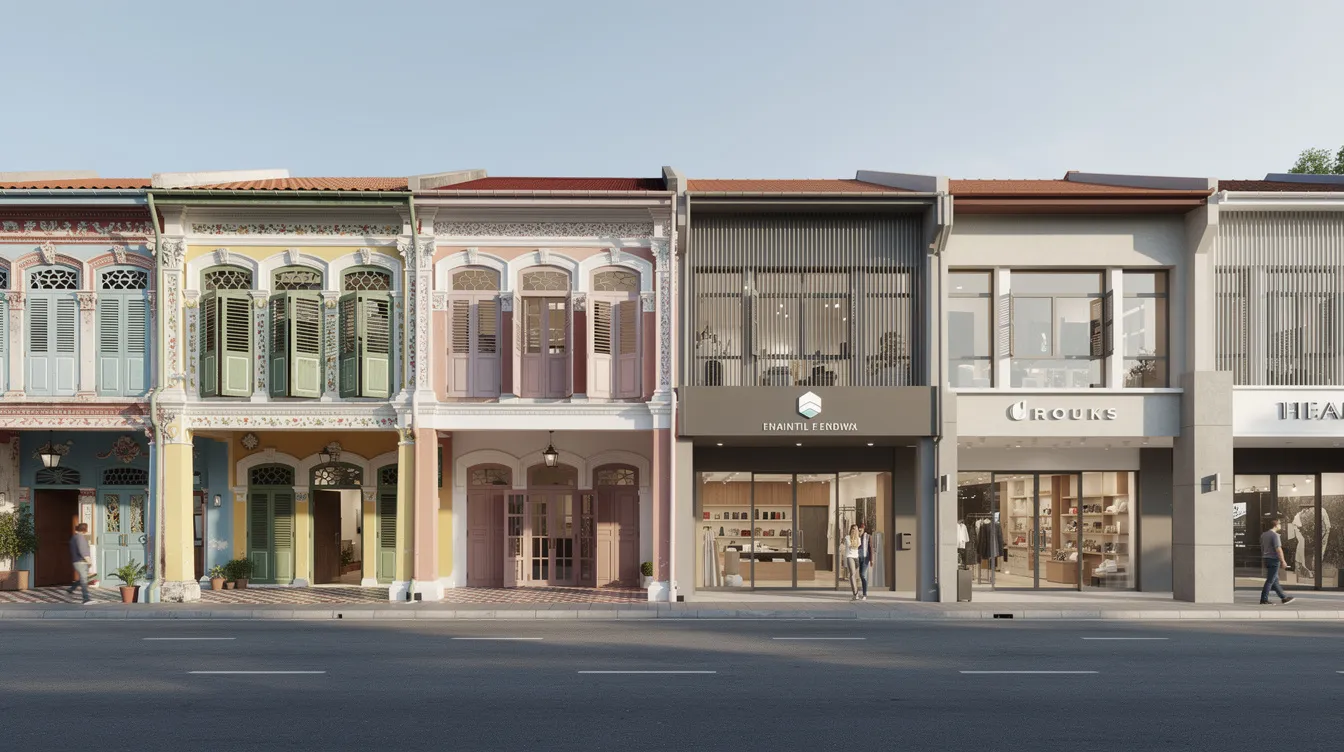
Conserved shophouses occupy gazetted heritage districts – Chinatown, Kampong Glam, Joo Chiat, Little India, and others – where the Urban Redevelopment Authority mandates façade preservation, governs permissible uses, and limits structural changes. These constraints mean owners cannot demolish, substantially alter exteriors, or intensify floor area. The result is a permanently scarce asset class where heritage value and scarcity appeal compound over time.
Non-conserved stock or strata-titled shophouse units in modern mixed-use developments sit at the opposite end of the spectrum. They offer more flexibility – easier renovations, fewer compliance hurdles, lower capital expenditures related to restoration – but carry far less prestige and no genuine heritage scarcity premium. These units face competition from new commercial centres and are more susceptible to lease decay and tenant turnover.
For investors, the distinction matters enormously. Conserved shophouses require higher upfront capital expenditures – heritage architects, URA-compliant materials, structural reinforcements – but deliver stronger long-term wealth-preservation profiles. They are considered defensive assets precisely because conservation rules prevent dilution of the stock. Buyers willing to absorb compliance costs gain access to an asset class with durable capital stability and deep demand from lifestyle, hospitality, and prestige-driven tenants.
Freehold / 999-Year vs 99-Year Leasehold Shophouses
Tenure is among the most consequential variables in any shophouse acquisition. Freehold or 999-year leasehold shophouses – legally near-equivalent for most purposes within freehold or leasehold tenures – are treated as generational assets. They carry no remaining lease term anxiety, no value erosion from tenure decay, and appeal strongly to buyers with multi-decade holding horizons. In 1H 2026, freehold shophouses accounted for 84% of transactions, confirming that they remain accounting for the majority of deals and that demand for freehold and 999-year leasehold shophouses dominates the market.
Conversely, leasehold shophouses fell out of favour among top-tier buyers, with valuation gaps widening based on the tenure involved properties carry. Properties under 99-year leases – particularly those past the halfway mark – face systematic discounting by sophisticated investors who calculate the cost of tenure decay into their underwriting. Operators may be more open to 99-year stock if the location offers greater tenant demand and strong foot traffic, but even they prefer freehold status when budget permits.
Freehold vs 99-Year Leasehold: Key Dimensions
-
Price psf: Freehold commands a significant premium – often 20–40% above comparable 99-year stock in similar districts. Average price per square foot for freehold shophouses rose 52.1% in recent periods, reflecting concentrated demand.
-
Yield: Freehold typically delivers lower headline yields (because purchase prices are higher), but stronger preservation of real value over time. Leasehold may offer higher initial yields but with greater long-term risk.
-
Exit liquidity: Freehold shophouses are substantially more liquid among premium buyer pools. Leasehold units are harder to trade at high premiums, especially as the remaining lease term shortens.
How Can Prices Be at Record Highs When Shophouse Transactions Volumes Are Low?
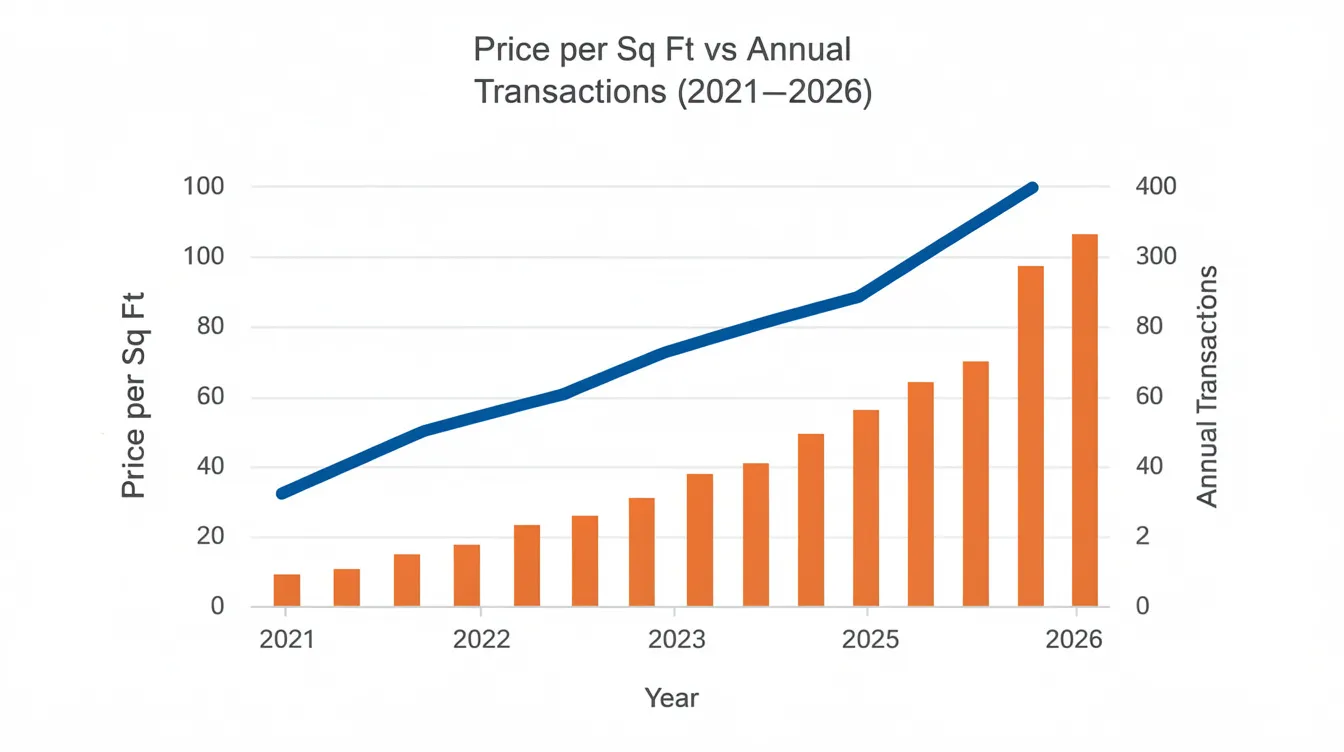
The apparent contradiction – record prices alongside declining shophouses transaction volume – is a defining feature of the 2026 landed shophouse market. In 1H 2026, only 25 landed shophouse sales were recorded, worth approximately S$269 million in total transaction value. Compare this with 2H 2025, when 45 deals earlier in that period generated roughly S$361 million. Yet the highest psf price recorded in prime districts surged past all prior benchmarks.
Concrete data points anchor this picture. A shophouse along North Canal Road transacted in December 2025 at S$13,810 psf on land – one of the highest psf price recorded for any shophouse. A Jalan Besar deal in September 2025 achieved S$5,723 psf, a new precinct record. In May 2026, URA Realis data showed a conservation shophouse in Keong Saik trading at S$22.0 million, with matched gains exceeding +103.7% from the seller’s earlier acquisition – representing extraordinary capital growth over the hold period.
The mechanics are straightforward in a thin market. High-value sales can disproportionately influence the perceived average prices in the shophouse market. Because the total pool of conserved shophouses is small and the willing-seller pool is even smaller, a few trophy transactions immediately reset headline benchmarks. Meanwhile, more modestly priced properties that might trade at lower levels often never change hands at all – owners rarely sell, and limited transaction volume can indicate strong seller resistance to lower prices rather than weak demand. The result: average and peak psf figures climb, even as total deal counts compress.
Supply: Why Available Shophouses Are So Thin in 2026
The supply side of the equation is structurally constrained in ways that no market cycle can meaningfully alter. Singapore’s conserved shophouse stock is finite – approximately 6,500 units gazetted under URA conservation plans. Conservation restrictions prevent the construction of new shophouses in Singapore, and no amount of developer activity can replicate the heritage, streetscape character, or historical provenance of existing rows.
Beyond the fixed stock, owners rarely feel compelled to sell due to low pressure to liquidate. Many shophouse holdings sit within family-held portfolios, clan associations, or legacy entities that prioritise intergenerational ownership over trading profits. These long-term holders ride through economic cycles rather than flip – a pattern reinforced by the factors outlined earlier: geopolitical uncertainty, preference for real-asset hedges against a robust Singapore dollar environment, and a lack of compelling reinvestment alternatives at equivalent risk-return profiles.
Furthermore, many 2021–2022 buyers are still in early hold periods and have no incentive to sell into a market where replacement stock is unavailable. Properties under 99-year leases approaching mid- or late-tenure are unattractive to most premium buyers, which means those owners either hold or accept steep discounts – and sellers prefer to wait rather than capitulate. The net effect: available inventory in 2026 is razor-thin, and what does come to market is typically the highest-quality stock, commanding the highest prices.
Demand: Who Is Still Paying Record Prices in 2026?
The buyers underpinning record prices are not speculative flippers but deep-pocketed principals acquiring for legacy, branding, or operational reasons. High-net-worth individuals are significant investors in Singapore’s shophouse market, alongside global family offices whose numbers have grown dramatically – PwC’s Emerging Trends in Real Estate Asia Pacific report notes that Singapore hosted over 2,000 single-family offices by 2024, quadruple the figure from 2020. These buyers view conserved shophouses as legacy assets for the next generation, not short-term yield plays.
Singapore shophouses attract both local and international wealth due to their safe-haven status. International investors – particularly from Greater China, Southeast Asia, and the Middle East – continue drawing foreign investors to Singapore’s heritage commercial sector, viewing it as a politically stable, legally transparent store of value. Over 70% of Singapore shophouse transactions are priced above S$5 million, confirming the most favoured price segment sits firmly in the UHNWI bracket.
Emerging buyer segments add further depth. Digital-economy founders and AI-related firms are seeking character offices in areas like Keong Saik, Duxton, and Joo Chiat – locations where heritage charm aligns with creative-industry identity. Operator-owners in F&B and boutique hospitality are willing to pay record capital values for flagship street-level premises. For these top-tier buyers, deal quality and identity value matter far more than near-term yield, supporting record psf benchmarks despite lower sales volume, even if broader macro improvements do not equally affect domestically focused industries.
Policy, Tax and Macro Backdrop Supporting High Prices
Policy architecture in Singapore has inadvertently channelled capital toward shophouses. The Additional Buyer’s Stamp Duty (ABSD) – which adds substantial friction to residential property purchases, especially for foreign buyers and entities – does not apply to pure commercial shophouses. Shophouses are attractive due to lack of Additional Buyer’s Stamp Duty, making them a rational allocation for investors who would otherwise face 60% or higher ABSD on residential acquisitions.
Macro conditions reinforce this preference. The 2024–2026 period has seen higher-for-longer interest rates globally, which might be expected to dampen property demand. But buyer sensitivity to macro credit conditions influences transactions in the shophouse market differently than in mass-market segments: shophouse buyers are typically cash-rich or low-leverage, less sensitive to borrowing costs. The robust Singapore dollar and Singapore’s safe-haven status for regional wealth further support demand, while export oriented sectors and domestically focused industries both benefit from Singapore’s economic stability.
No new commercial heritage stock can be created – conservation rules lock in scarcity permanently. Combined with limited new supply of comparable character assets anywhere in Southeast Asia, these policy and macro dynamics continue to funnel capital into a narrowing pool of available shophouses. District- and street-level dynamics, explored next, further amplify these high prices in specific micro-locations.
Where Record Prices Are Emerging: Districts, Streets and Use-Cases
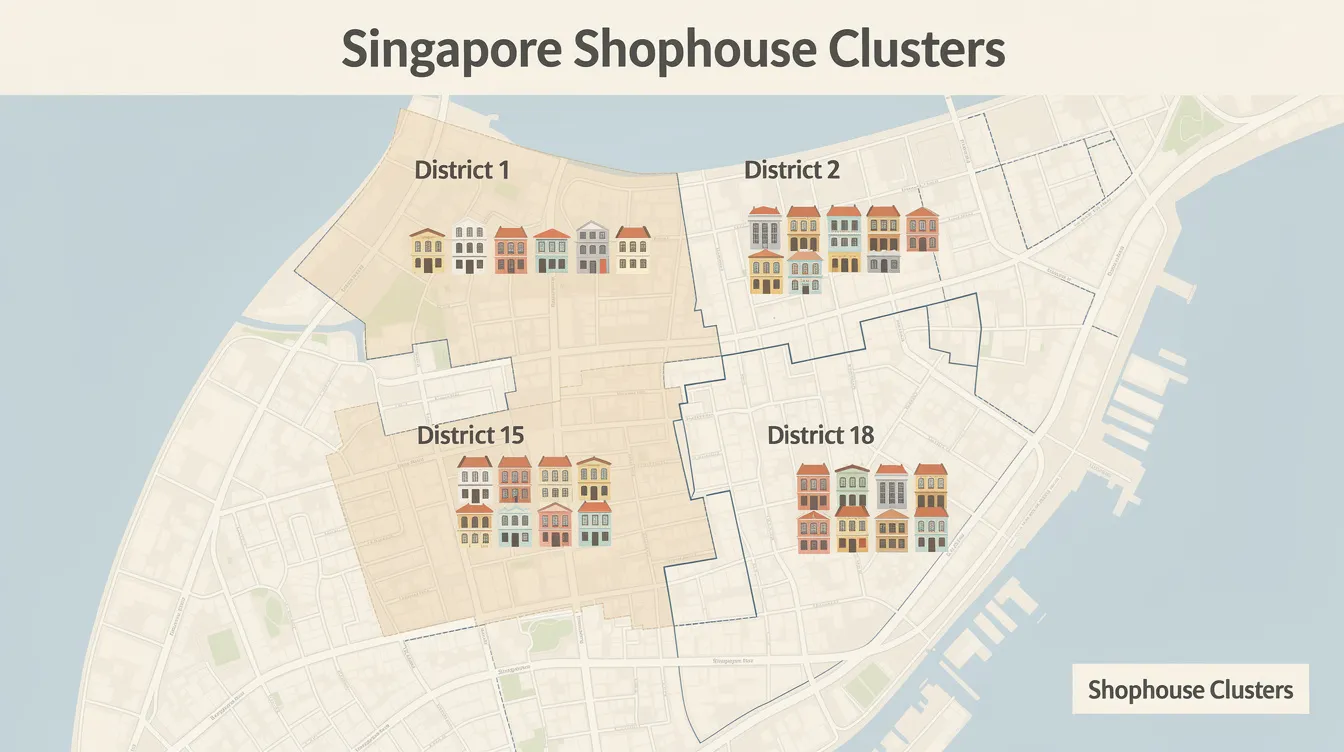
Not all Singapore shophouses are hitting records. Performance is concentrated in specific micro-locations where tenant demand is strongest, heritage appeal is highest, and connectivity continues to improve. The central region demand profile differs meaningfully from city-fringe dynamics, and both differ from East Coast lifestyle corridors. Districts combined accounted for nearly all leading transaction activity in 1H 2026, with 84% of deals occurring in the Central Region.
Prime Central Districts: CBD, Chinatown, Tanjong Pagar, Keong Saik
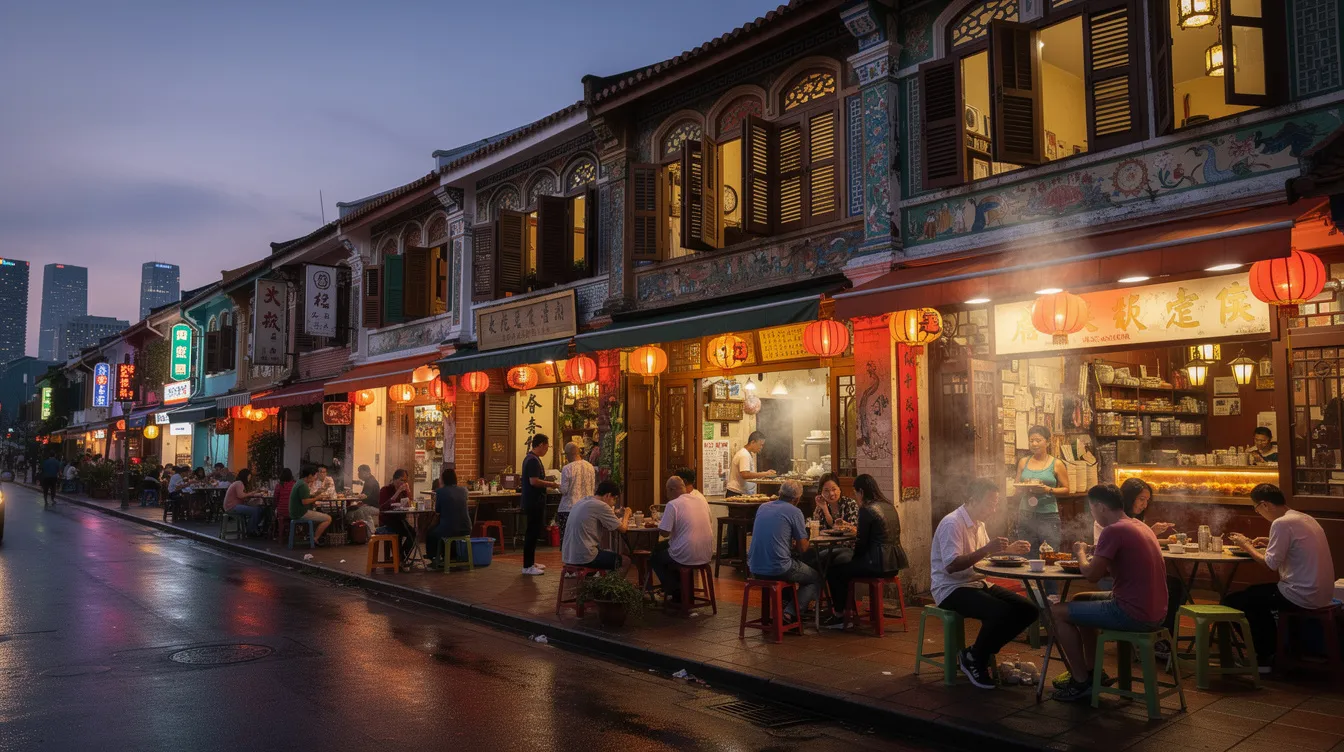
In Districts 1 and 2, the shophouse market operates at its most rarefied level. The Keong Saik conservation shophouse sold in May 2026 for S$22 million, while the North Canal Road transaction in December 2025 at S$13,810 psf remains among the highest psf price recorded for any landed shophouse. These are streets where hospitality, upscale F&B, and co-working concepts command premium rents and where heritage façades serve as branding assets.
Investors in these rows often accept yields as low as 2–3%, per Savills’ analysis, prioritising prestige, long-term capital security, and the ability to secure higher rents from trophy tenants. The top five shophouse transactions in recent periods have consistently originated from these prime rows, with some deals also high in sales rank among the period’s most prominent property trades. Shophouses drew multiple offers when they did come to market, particularly for freehold units near Maxwell, Telok Ayer, and Tanjong Pagar. Holland Road Shopping Centre is another notable freehold District 10 commercial asset that shows how prime, high-footfall, heritage-adjacent properties attract wealthy buyers.
City Fringe and Cultural Districts: Kampong Glam, Little India, District 8
District 8 emerged as the leading transaction hotspot in 1H 2026, even as freehold landed shophouses increased their share of pricing strength in the wider market. In the first half of 2026, District 8 had nine transactions – the highest count of any single district. Shophouses in District 8 sold for between S$2.2 million and S$15 million, reflecting a wide price quantum accessible to both private funds and owner-operators. Jalan Besar and Farrer Park continue to attract lifestyle F&B operators, boutique hotels, and creative offices seeking character premises at prices below core CBD levels.
These city-fringe areas often show more balanced yield versus capital appreciation dynamics. Recent MRT enhancements and ongoing placemaking efforts – including streetscape improvements and cultural programming – sustain rental demand despite broader retail headwinds of lower retail rents in generic commercial space. A September 2025 Jalan Besar deal at S$5,723 psf set a new benchmark for the precinct, signalling that the central region trend toward price discovery is radiating outward into cultural districts.
East Coast, Joo Chiat, and Katong: Lifestyle and Wealth Preservation
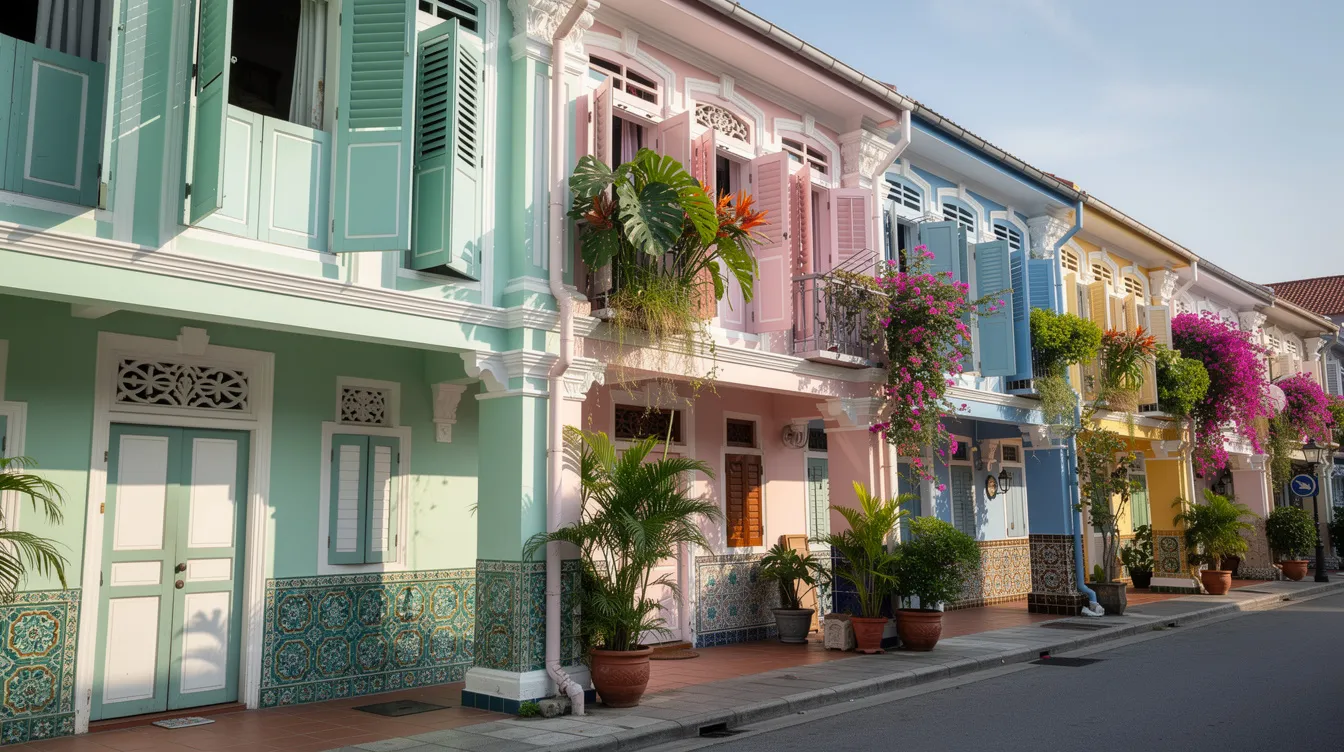
District 15 recorded eight shophouse transactions worth S$47.9 million in Q3 2025, reflecting strong investor interest in this lifestyle and heritage corridor. In 1H 2026, District 15 had four shophouse transactions, with total transaction value in District 15 reaching S$650 million for the full year forecast. The area’s evolution into a hub for F&B, co-living, boutique retail, and wellness concepts has deepened its appeal.
The Thomson–East Coast Line (TEL) completion phases and the Bayshore housing pipeline are expected to boost footfall and catchment growth, making East Coast shophouses compelling long-term wealth-preservation plays. Many investors view freehold shophouses in Joo Chiat and Katong as generational assets: strong community identity, deep local demand, and aesthetic heritage appeal that no new development can replicate.
Advanced Drivers: Wealth Preservation, Portfolio Strategy and Operational Use
Beyond the simple narrative of “prices up because supply is low,” strategic forces position shophouses at the centre of 2026 wealth-preservation strategies. Understanding these drivers separates informed acquisition from reactive purchasing – and explains why sophisticated capital continues to flow into a market with compressed yields and high entry costs.
Shophouses as a Wealth Preservation Tool
Conserved shophouses embody the core characteristics of a wealth-preservation asset: they are hard assets, permanently scarce, located in a politically stable financial hub, and serve as an effective inflation hedge. Rental demand for shophouses in Singapore has remained steady, averaging around S$6.47 psf monthly – providing baseline income while capital values appreciate on a long secular trend.
Intergenerational planning is explicit in buyer profiles. Many 2026 buyers are acquiring with a 20–30 year family horizon, not short-term flipping intentions. The connection of rent levels and transaction prices can differ significantly in Singapore’s property market – which means wealthy buyers are less concerned about current rental yields and more focused on absolute capital preservation and legacy positioning.
Compared conceptually with other wealth-preservation assets, shophouses occupy a distinctive niche. Core CBD offices offer higher scalability and yield but carry more economic cycle risk. Gold provides portability but no operational utility. Prime London residential involves currency and regulatory risk. Conserved shophouses combine location scarcity, operational utility, legal clarity, and heritage identity into a single asset – which is why conservation constraints, while operationally onerous, actually support long-term capital stability by preventing supply dilution.
Operational Fit: Using Shophouses for Business, Hospitality and Offices
Common business use-cases for shophouses include flagship restaurants, café concepts, wellness clinics, design studios, family-office headquarters, boutique hotels, and hybrid live-work spaces. Operators value identity and street-level presence more than efficient floor plates – the heritage charm, walkability, and neighbourhood character of a conserved shophouse row deliver experiential value that modern commercial space cannot replicate.
For some business owners, the ability to own their operating premises in a heritage row justifies paying record capital values. The cost of ownership replaces rent, builds equity, and provides branding that no lease can match. This is particularly true in F&B and lifestyle sectors where the physical space is itself part of the brand.
However, fit-out and zoning considerations are material. Conservation rules restrict signage, façade modifications, and certain structural changes. Electrical, plumbing, and fire-safety systems in older buildings often require significant upgrading. Prospective occupier-buyers need to assess allowable uses under current zoning, estimated renovation costs, and ongoing maintenance obligations before committing capital.
Portfolio Allocation: How Institutions and Family Offices View Shophouses
Institutions and family offices typically allocate a niche slice of their real-asset portfolio to scarcity-driven assets like conserved shophouses. This is not scale investing – shophouses are illiquid, high-ticket, and management-intensive compared with office blocks or logistics facilities. But the allocation serves a specific function: low correlation with mainstream commercial and residential cycles, strong downside protection in prime heritage locations, and decorrelated performance that enhances overall portfolio resilience.
Family-office mandates in 2026 often specify “core Singapore heritage commercial” as a distinct target category, separate from conventional commercial real estate. Risk-return expectations acknowledge lower yield but emphasise capital preservation and intergenerational relevance.
When adding a shophouse to your portfolio may make sense:
-
Your capital base can absorb a high-ticket entry (typically above S$5 million) without over-concentrating
-
Your return targets prioritise capital preservation over yield maximisation
-
Your holding horizon is 10–30 years with no near-term liquidity need
-
You have clarity on the operational or leasing plan post-acquisition
-
You have appetite and budget for conservation compliance and ongoing maintenance
From Interest to Execution: How to Approach a Shophouse Acquisition
For business owners and investors watching 2026’s record prices with interest, a structured acquisition process is essential. When supply is scarce and competition is sophisticated, rushed decisions carry outsized risk. The guidance below is general in nature – individual decisions require tailored financial, tax, and legal advice.
Step-by-Step Acquisition Process in a Thin, High-Price Market
In a market characterised by thin listings and highly informed counterparties, discipline matters more than speed. Each step below is designed to protect capital and ensure alignment between the asset and your objectives.
-
Define objectives: Clarify whether you are acquiring for capital preservation, yield, business use, or a combination. Specify preferred districts, budget ceiling, and tenure requirements – these decisions will filter 80% of the market immediately.
-
Secure financing and capital structure: Obtain in-principle bank approvals, understand LTV expectations (typically conservative for older heritage stock), and model interest-rate scenarios. Many shophouse purchases are substantially equity-funded given that financing costs and lender caution limit leverage.
-
Screen assets: Evaluate heritage condition, conservation status, zoning, existing tenancies, and any restrictions on use. Not all sold shophouses are equal – location within a row, street frontage, and floor configuration vary dramatically.
-
Underwrite cashflows: Build realistic projections for rental income, vacancy, capital expenditures, and operating costs. Do not rely on headline psf – the average price masks significant variation in net yield after maintenance and tenant risk.
-
Negotiate and perform due diligence: Commission structural surveys, verify conservation compliance history, confirm title and tenure, and review any encumbrances. For certain transactions, the building may require heritage architect assessments before purchase.
-
Plan post-acquisition strategy: Define your repositioning or tenant-mix plan, set a long-term maintenance budget, and establish governance for ongoing conservation compliance. The hold period for most acquisitions should be measured in decades, not years.
Comparing Shophouse Investment with Other Commercial Assets
|
Criterion |
Conserved Shophouse |
Strata Office / Business Park |
|---|---|---|
|
Yield |
2–3% (prime); 3–4% (fringe) |
4–6% typically |
|
Volatility |
Low – scarcity buffers downside |
Moderate – tied to office cycle |
|
Tenant Profile |
Lifestyle F&B, boutique hospitality, creative offices |
Corporate tenants, SMEs |
|
Capex Needs |
High – conservation compliance, heritage restoration |
Moderate – standard commercial fit-out |
|
Scalability |
Very limited – fixed stock, high ticket |
Higher – more supply, smaller unit sizes |
The interpretation is clear: shophouses suit investors seeking stability, character, and legacy positioning more than those optimising for scale or highest yields. The trade-off between lower income return and stronger capital resilience is a deliberate choice that aligns with wealth-preservation mandates. ERA forecasts 70 shophouse sales worth S$550 million to S$650 million in 2026, suggesting that while shophouse sales volume remains below historical peaks, total transaction momentum is expected to improve in the second half.
Common Challenges and How to Manage Them in 2026
Record prices and low volumes create an environment where misinformed or rushed decisions carry amplified consequences. Each challenge below reflects a real risk observed in 2026 market conditions, paired with a concrete mitigation strategy.
Challenge 1: Overpaying for a Trophy Asset
The risk of anchoring on headline record psf without benchmarking comparable stock is acute in a thin market. Two major deals at the top of the market can skew expectations for an entire street – but individual shophouses differ substantially in condition, tenure, zoning, and income potential. Higher sale prices on a neighbouring unit do not guarantee equivalent value for the next.
Mitigation: Commission independent valuations from specialists experienced in conserved shophouses. Run sensitivity analyses on rental income, vacancy, and exit values under different macro scenarios. Establish a strict walk-away price before entering negotiations and maintain discipline regardless of competitive pressure.
Challenge 2: Underestimating Conservation and Fit-Out Costs
Capital expenditures related to heritage restoration regularly surprise first-time shophouse buyers. Typical surprises include structural reinforcements for party walls, façade restoration using heritage-compliant materials, M&E system overhauls to meet modern fire safety and accessibility codes, and long lead times for URA and Building Control approvals.
Mitigation: Commission a pre-purchase building survey from a conservation architect. Budget a capex contingency of at least 15–20% above initial estimates. Engage with URA early to understand what alterations are permissible and what timelines to expect.
Challenge 3: Financing Complexity and Interest-Rate Risk
Lenders are typically cautious with older conserved stock. Loan-to-value ratios may be lower than for conventional commercial property, and banks may require higher capital buffers. Financing costs remain elevated in 2026, and floating-rate exposure adds risk to leveraged acquisitions as initially anticipated rate cuts have been slower to materialise.
Mitigation: Engage multiple lenders early in the process. Explore fixed-rate or hedged-rate options to reduce interest-rate exposure. Target conservative leverage – many successful shophouse buyers deploy 50% or more equity to insulate against credit-market volatility.
Challenge 4: Misreading Rental Yields and Tenant Risks
The difference between gross and net yields is material in shophouse ownership. Headline rents in 2026 can mask vacancy risk, break clauses, and high operating costs. Rental demand for shophouses in Singapore has remained steady, averaging around S$6.47 psf monthly – but individual properties may deviate significantly from this average based on location, condition, and tenant quality.
Mitigation: Focus on tenant covenant strength, lease structure, and break-clause provisions rather than just initial monthly rent. Model gross-to-net yield carefully, accounting for maintenance reserves, property tax, insurance, and potential vacancy periods. Properties with strong tenants and long lease tails offer more predictable cash flow.
Conclusion and Next Steps
Singapore shophouse prices reached record highs in 2026 because of structurally limited stock, concentrated wealth-preservation demand from family offices and UHNWIs, and selective trophy acquisitions that reset benchmarks across prime districts – despite subdued deal volumes. The market intelligence brighter outlook for H2 2026 and into 2027 suggests continued price resilience, though transaction volume eases may persist as owners rarely sell and available inventory remains thin.
What this means for you:
-
Adopt a patient, disciplined strategy – the best shophouse acquisitions in thin markets come from preparation, not urgency
-
Set realistic yield expectations: 2–3% in prime districts is the norm, and capital preservation is the primary return driver
-
Invest in professional due diligence – conservation compliance, structural condition, and tenant quality are non-negotiable
-
Assess portfolio fit honestly: shophouses reward long-horizon holders with sufficient capital and low liquidity needs
Next steps:
-
Clarify your investment or business-use thesis for owning a shophouse – capital preservation, operational headquarters, or both
-
Benchmark target locations and budget against 2025–2026 transaction data across Districts 1, 2, 8, and 15
-
Assemble your advisory team: independent valuation, legal counsel, conservation architect, and financing specialist
-
Reach out to AESTHETIC HAVENS for shophouse and commercial asset screening aligned to your specific objectives
Related topics to explore next include industrial property opportunities in Singapore, commercial loan structuring for heritage assets, and zoning and use-conversion considerations for conserved buildings.
Additional Resources
-
URA Conservation Guidelines – official guidance on shophouse conservation requirements, permissible alterations, and heritage district maps
-
Knight Frank Singapore Shophouse Update H2 2025 – detailed market intelligence, transaction data, and psf benchmarks for recent shophouse deals
-
Savills: Shophouses as Legacy Assets – wealth-strategy perspective on cap rates, buyer profiles, and intergenerational planning
-
IRAS: Additional Buyer’s Stamp Duty Guide – confirm ABSD applicability and exemptions for commercial properties
Disclaimer: This article is for general informational purposes only and does not constitute investment, legal, tax, or valuation advice. Readers should consult qualified professionals before making any property acquisition decisions.

