

Introduction
High-spec B1 industrial properties in Singapore are commanding unprecedented attention from biomedical and technology tenants in 2026. As advanced manufacturing, pharmaceutical production, and semiconductor operations scale across the island, demand from biomedical and technology businesses for higher technical specifications in B1 properties is becoming a competitive necessity – reshaping what landlords must deliver and what serious investors should target.
This article covers the defining features of high-spec B1 industrial space, the market forces accelerating tenant demand, the technical requirements biomedical and tech firms need, and the investment dynamics surrounding this asset class. It is written for property investors, occupiers assessing singapore industrial property, biomedical companies, tech firms, and industrial real estate professionals evaluating opportunities in Singapore’s industrial market.
The direct answer: High-spec B1 industrial properties with enhanced infrastructure, controlled environments, and compliance-grade systems are commanding 40–60% rental premiums over standard B1 stock. B1 rental rates for these units range from $3.50 to $5.50 PSF, driven by biomedical and technology sector expansion. High-spec B1 assets command strong net rental yields between 4% and 6%, supported by occupancy rates that hit 88.9% in Q1 2026.
By the end of this article, you will understand:
-
What distinguishes high-spec B1 industrial from standard light industrial buildings
-
Why biomedical and tech sectors are the primary demand drivers in 2026
-
Which technical specifications unlock premium tenant demand and higher rental yield
-
How to navigate compliance, supply constraints, and fit-out challenges
-
Where the strongest investment opportunities are emerging across Singapore
Understanding High-Spec B1 Industrial Property in Singapore
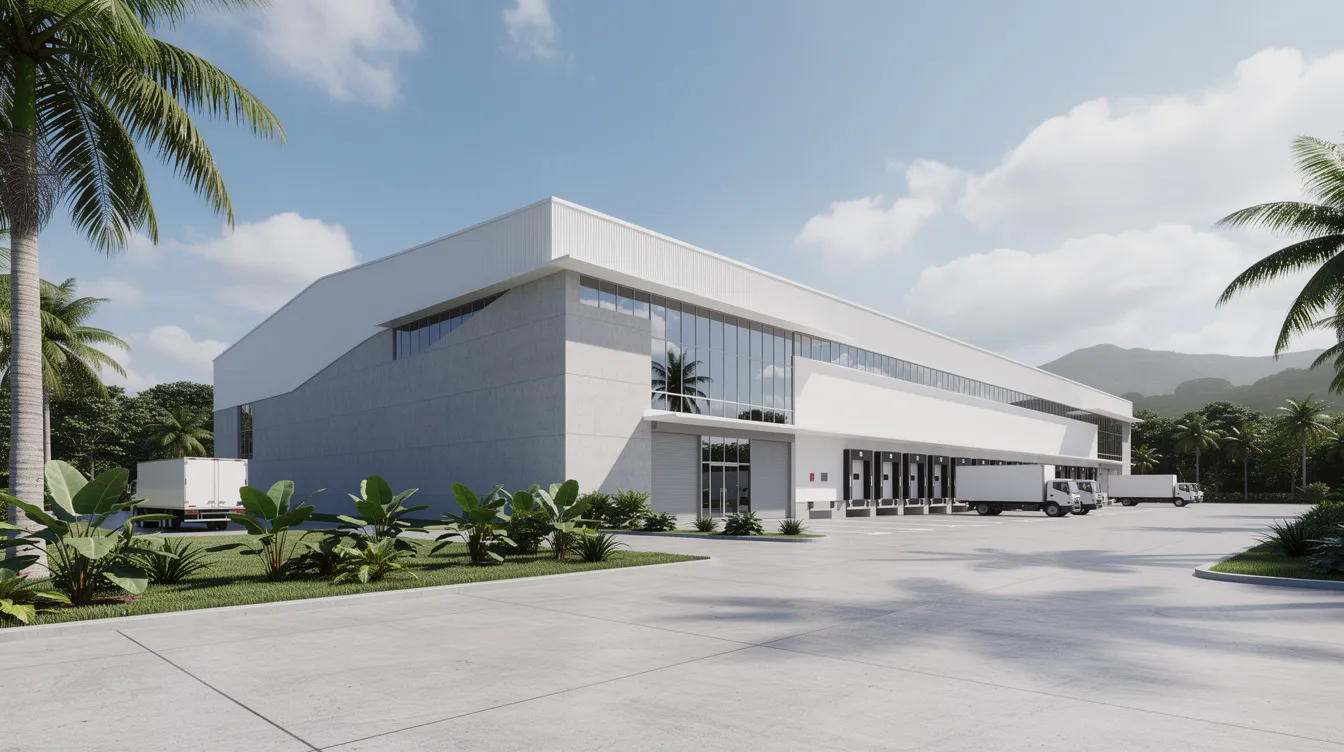
High-spec B1 industrial refers to premium-grade light industrial properties engineered with enhanced technical infrastructure, controlled environments, and compliance-ready systems that go well beyond standard flatted factory specifications. These industrial units are purpose-built – or retrofitted – to serve tenants whose core industrial activities demand precision, contamination control, and operational resilience.
Under Urban Redevelopment Authority (URA) zoning guidelines, B1 zoning is for clean and light industrial activities only. At least 60% of gross floor area must be for core industrial activities, while the remaining 40% of GFA can be used for ancillary purposes such as office space, meeting rooms, staff canteens, or approved limited commercial functions like showrooms and offices, so long as they remain within URA limits. This is commonly known as the 60/40 rule. Core industrial activities include manufacturing and R&D, while permissible activities include software development, data processing, and logistics services. B1 units cannot be used for pure retail or residential purposes, and violating the 60/40 rule can lead to fines or lease termination.
Singapore’s relevance as a regional biomedical and technology hub is no accident. The Economic Development Board (EDB) has committed S$800 million toward semiconductors under RIE 2030 flagship programmes, with further investment flowing into biotech, advanced modality manufacturing, and platforms like BioPIPS. Government research and innovation funding supports growth in high-tech industrial sectors, making high-spec B1 space a strategic infrastructure layer for the nation’s economic ambitions.
Enhanced Infrastructure Requirements
The infrastructure gap between standard and high-spec B1 industrial buildings is significant. High-spec B1 spaces require robust floor-load capacities – typically 15–25 kN/m² or higher – to support heavy laboratory equipment, cleanroom installations, and precision manufacturing lines. Automation-ready flooring in B1 assets should exceed 12 to 15 kN/sqm. For reference, JTC nanoSpace @ Tampines supports floor loading up to 20 kN/m², while SKYE @ Tuas pushes to 25 kN/m².
Ceiling height is equally critical. Standard B1 light industrial units typically offer 3.5–5 m clear heights, but cleanroom R&D and pharmaceutical manufacturing often need 7–9 m to accommodate complex HVAC ductwork, interstitial spaces, and bulky process equipment. SKYE @ Tuas demonstrates this with ceiling heights up to approximately 12.95 m on selected levels.
Advanced electrical infrastructure is non-negotiable. High-spec B1 measures include higher electrical capacity and enhanced air-conditioning. Where standard industrial units may offer 100–200A single or low three-phase power supply, biomedical and semiconductor tenants require higher amperage three-phase systems – sometimes 400A or more – with redundant feeds, backup generators, and uninterruptible power for process lines. Advanced manufacturing requires continuous power and specialized environment management.
|
Parameter |
Standard B1 Industrial |
High-Spec B1 / Lab-Grade |
|---|---|---|
|
Floor loading |
7.5–10 kN/m² |
15–25 kN/m²+ |
|
Ceiling height |
3.5–5 m |
7–9 m+ (up to ~13 m) |
|
Power supply |
100–200A single/low 3-phase |
400A+ 3-phase, redundant, backup |
|
Environmental control |
Basic air-conditioning |
Precision HVAC, HEPA filtration, cleanroom |
|
Certifications |
Basic NEA, fire safety |
GMP, ISO 14644, HSA licensing |
|
Typical rent (PSF/month) |
S$1.80–$2.50 |
S$3.50–$5.50+ |
Environmental Control Systems
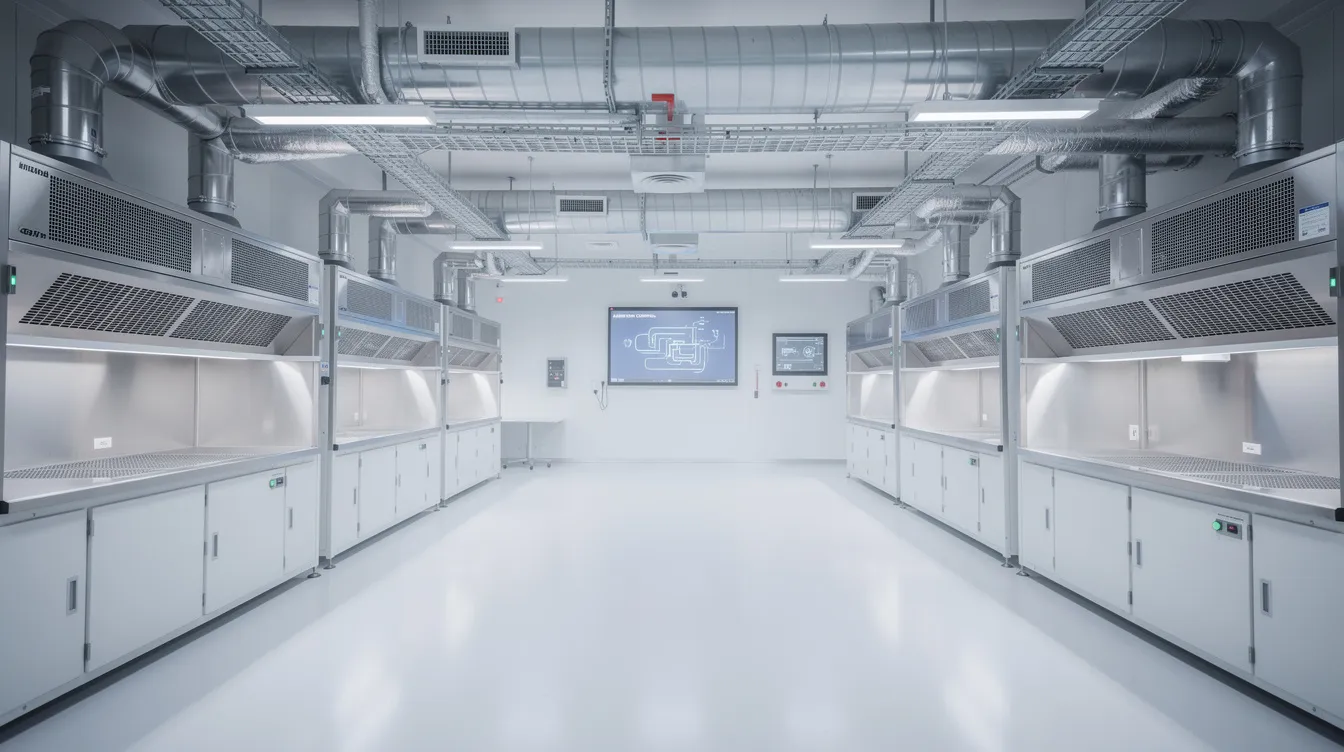
Environmental control is where high-spec B1 industrial properties definitively separate from standard stock. HVAC systems must deliver precise temperature control (±1–2°C) and humidity regulation (±5% RH) with high air change rates, positive pressure differentials, and HEPA/ULPA filtration. According to NEA’s best practice guide, cleanroom ACMV can consume upwards of 17% of total electrical use in clean spaces, excluding chillers.
Vibration dampening technology is essential for precision manufacturing and research – semiconductors, optics, and high-resolution imaging cannot tolerate micro-vibrations. JTC nanoSpace @ Tampines offers vibration-controlled space to VC-B standard, a benchmark increasingly expected by tech firms and biomedical tenants operating sensitive instruments.
High-spec B1 assets are critical for cleanroom and contamination-controlled environments in the biomedical sector. Cleanrooms must adhere to ISO 14644 standards for design, classification, and testing. Many tenants demand ISO Class 6–7 (Class 1,000–10,000) for medical device assembly and electronics packaging, while sterile biologics manufacturing may require ISO Class 5 or stricter.
These environmental systems are what make high-specification assets outperform conventional industrial properties in the current market – and they are precisely what 2026’s most active tenant profiles require.
2026 Market Dynamics and Biomedical/Tech Demand Drivers
Singapore’s industrial sector in 2026 reflects the convergence of government strategy, global supply chain realignment, and sustained demand from high-value manufacturing. The B1 industrial property price index rose 4.6% year-on-year in 2026, and high-tech properties are seeing stronger rental growth than generic warehouses – a clear signal of where tenant demand is concentrating.
Biomedical Sector Expansion
Singapore has cemented its position as a leading APAC biomedical manufacturing hub. As of recent data, biopharmaceutical output exceeded S$12.1 billion, with over 60 manufacturing plants covering biologics, small molecules, and emerging modalities including cell and gene therapies. Biomedical manufacturing alone represented S$4.4 billion – approximately 36% – of total manufacturing fixed asset investment in a single observed period.
The biomedical and technology sectors benefit from close proximity to research institutions and complementary companies. Clusters like Tuas Biomedical Park provide purpose-built infrastructure with shared utilities and plug-and-play design. EDB incentives including the Development and Expansion Incentive (DEI), Pioneer Certificate, and Research & Innovation Scheme for Companies (RIS(C)) reduce the financial barrier for pharmaceutical manufacturers establishing or expanding operations.
Specialized space requirements for drug manufacturing, medical device assembly, and R&D facilities drive the need for cleanroom-ready industrial space with GMP compliance, HSA licensing readiness, and environmental monitoring systems. Supply chain diversification has led firms to seek high-spec B1 spaces to bypass heavy industrial zoning restrictions imposed on B2 industrial zones.
While the biomedical manufacturing cluster did contract approximately 24.1% year-on-year in the first quarter of 2026 due to softer demand in certain medical devices and pharmaceuticals, the structural investment pipeline remains robust through government incentive schemes and anchor tenant commitments.
Technology Sector Evolution
The technology side of tenant demand is equally compelling. Semiconductor back end operations requiring controlled environments and precision manufacturing capabilities are expanding rapidly – the precision engineering cluster grew approximately 8.9% year-on-year in Q1 2026, while electronics modules and components rose 18%.
AI and robotics companies need industrial-grade testing facilities with specialized infrastructure. These tech firms increasingly require high power supply, vibration control, and environmental precision that only high-spec industrial assets can provide. Data processing operations, while sometimes housed in dedicated data centres, also seek B1 space for supporting hardware development, light assembly, and prototyping, unlike B2 zones built for heavy manufacturing with greater noise, pollution, and infrastructure demands.
The shift toward operational efficiency is a major factor influencing industrial demand. A NMRK leasing report from 4Q25 confirms a clear “flight-to-quality” trend: modern, high-specification industrial assets outperform aging stock in both rent growth and vacancy performance. Business park rents rose 2.6%, while multi-user factory rents grew approximately 1.8% year-on-year – but high-spec modern units consistently outperformed these averages.
Key demand drivers summary:
-
Biomedical manufacturing investment pipeline at scale (S$4.4B FAI)
-
Semiconductor and precision engineering expansion
-
AI/robotics facility requirements
-
Flight-to-quality tenant behaviour favouring modern industrial buildings
-
Government incentive programmes reducing barriers to entry
Technical Specifications That Unlock Premium Tenant Demand
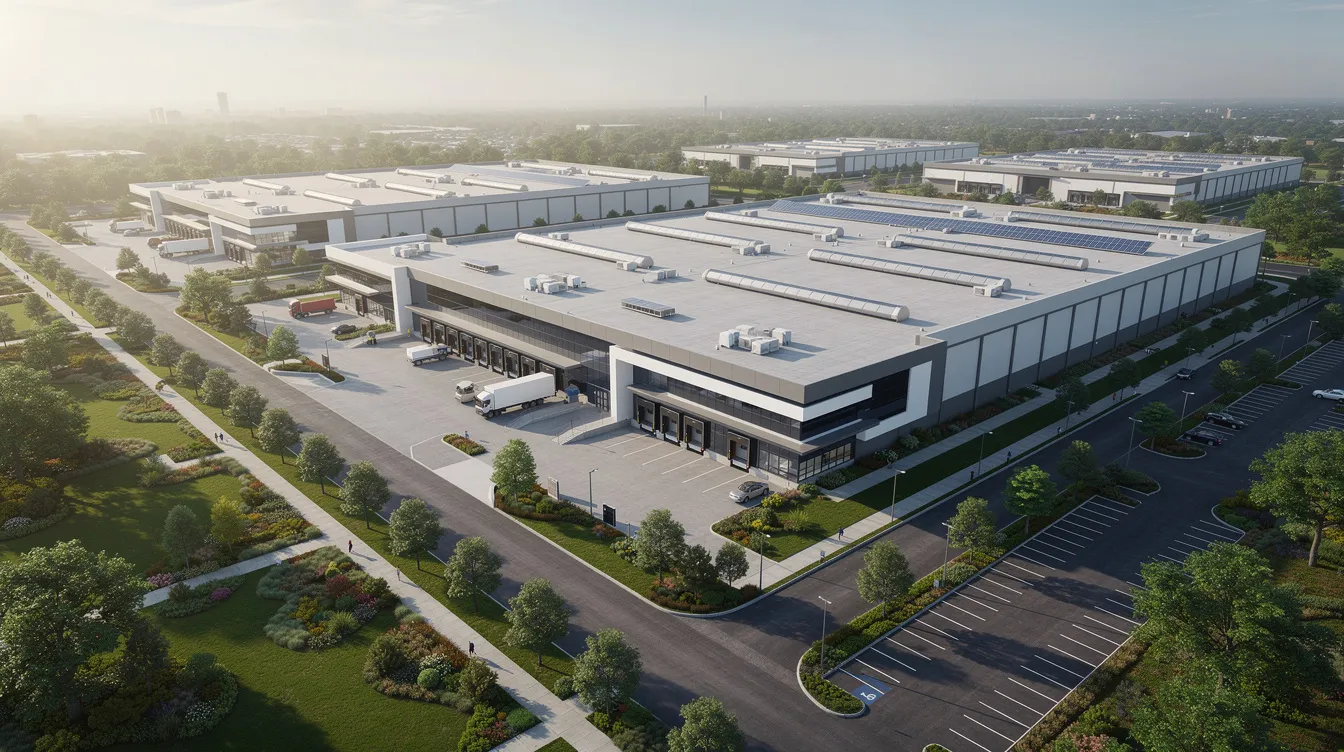
The rental premium high-spec B1 industrial properties command is directly tied to specific technical features that translate into tenant willingness to pay. Developers should design B1 spaces around specific biomedical and tech workflows – not generic factory layouts. Investors can capitalize on demand by upgrading structural specifications to match automation needs.
Compliance and Certification Requirements
Biomedical and tech tenants operate in heavily regulated environments. The compliance infrastructure built into a property directly determines the tenant pool it can attract.
ISO 14644 cleanroom classifications form the foundation. Implementation requires engineered air handling, particle monitoring, gowning room provisions, and ongoing testing protocols. For pharmaceutical operations, FDA and HSA manufacturing compliance adds another layer – GMP-grade finishes, validated cleaning processes, environmental monitoring systems, and comprehensive data logging capabilities are table stakes.
Fire suppression systems must be compatible with sensitive equipment and processes. Cleanroom environments often require FM-approved sprinkler systems, inert gas suppression in server or chemical areas, and four-hour fire-rated walls. A real-world example: Cushman & Wakefield lists a B2 unit in Marsiling Industrial Estate with an ISO Class 6 cleanroom targeted to biomedical and pharmaceutical uses.
High-spec B1 industrial spaces must adhere to the Urban Redevelopment Authority’s 60/40 zoning rule. At least 60% of B1 space must be for core industrial use. This means compliance-ready design must maximise production and R&D floor plates while carefully allocating the remaining area for ancillary purposes – offices, meeting rooms, recreational spaces, and staff canteens – without triggering non compliance issues with relevant authorities.
Environmental considerations are equally important. Proper chemical waste handling, biohazard containment (where applicable), air emissions management, and noise control must be designed in. B1 zoning permits clean and light industries – those with minimal significant noise and no pollution – but the nuisance buffer requirements still apply, with light industries potentially needing 50 m buffers from residential properties.
Infrastructure Comparison Analysis
Understanding the specification gap helps investors quantify the ROI justification for high-spec features and assess whether existing industrial land or buildings can be upgraded.
|
Specification |
Standard B1 Industrial |
High-Spec B1 Industrial |
|---|---|---|
|
Power capacity |
100–200A |
400–800A+, 3-phase redundant |
|
HVAC system |
Basic air-conditioning |
Precision temp/humidity, HEPA, high ACH |
|
Floor loading capacities |
7.5 kN/m² |
15–25 kN/m²+ |
|
Ceiling height |
3.5–5 m |
7–9 m+ |
|
Vibration control |
None |
VC-B or better |
|
Cleanroom readiness |
None |
ISO Class 5–7 capable |
|
Environmental monitoring |
Basic |
Continuous data logging, validated |
|
Typical rental rate |
S$1.80–$2.50 PSF |
S$3.50–$5.50 PSF |
|
Rental yield |
3–4% |
4–6% |
B1 properties achieve rental yields of 4% to 6% when equipped with high-spec features, compared with lower returns on standard flatted factory stock. In 2026, net yields for B1 units hit 4% to 6%, and B1 properties often achieve rental yields of 5% or more when positioned for the right tenant profiles.
B1 properties have lower entry costs than residential properties while offering comparable or superior yields. B1 industrial property has 0% Additional Buyer’s Stamp Duty, making this industrial property in Singapore particularly attractive to both individual investors and institutional capital. B1 properties are preferred due to 0% Additional Buyer’s Stamp Duty, removing a significant barrier that affects residential properties.
Case studies illustrating the premium:
-
SPACE 18 (18 Lorong Ampas): Freehold B1 clean industrial with floor loading of approximately 7.5 kN/m², floor heights of 6–7 m, and 200A 3-phase power – representing the upper mid-tier of B1 light industrial geared toward R&D and clean tech.
-
JTC nanoSpace @ Tampines: Multi-tenanted cleanroom facility with 20 kN/m² floor loading, ceiling height up to approximately 9 m, VC-B vibration control, and large contiguous floor plates of approximately 4,500 square foot (per floor plate) for custom lab or production layouts.
-
JTC SPACE@ Tuas Biomedical Park: Lab and clean-type units command significantly higher rental rates – lab unit rents quoted at approximately S$16.13 per sqm versus standard flatted factories at lower rates, demonstrating a 2–3× rent differential for clean readiness.
High-spec B1 developments are increasingly integrating wellness zones and communal layouts, recognising that attracting skilled biomedical and tech workforces requires more than just technical specifications – the built environment matters for talent retention.
Common Challenges in Securing High-Spec Industrial Space
Despite strong sustained demand, securing appropriate high-spec B1 space presents real obstacles. Singapore’s industrial market occupancy was 89.1% in Q3 2025, climbing to 88.9% in Q1 2026 for industrial properties – indicating a tight supply environment where new supply of premium stock is quickly absorbed.
Limited Supply and Long Lead Times
The absolute supply of high-spec B1 clean industrial units with cleanroom readiness remains constrained. Some new supply is entering the market – developments like SKYE @ Tuas demonstrate what advanced industrial space looks like in the pipeline – but the rate at which such spaces can be certified and built falls short of demand from biopharma, semiconductor, AI, and robotics tenants. Total Singapore industrial stock stands at approximately 585.6 million square foot as of 1Q 2026, with single-user factories comprising about 48.9%, but only a fraction meets high-spec requirements.
Solution: Early engagement with developers and pre-commitment strategies for new developments. Working with specialised industrial real estate advisors provides pipeline access to upcoming B1 and business park developments before they reach the open market. Pre-leasing arrangements allow tenants to influence fit-out specifications and secure competitive rates. Key locations to monitor include Tuas Biomedical Park, Jurong Innovation District, and Woodlands North – all seeing active industrial development aligned with biomedical and tech operational requirements.
Higher Upfront Costs and Fit-Out Requirements
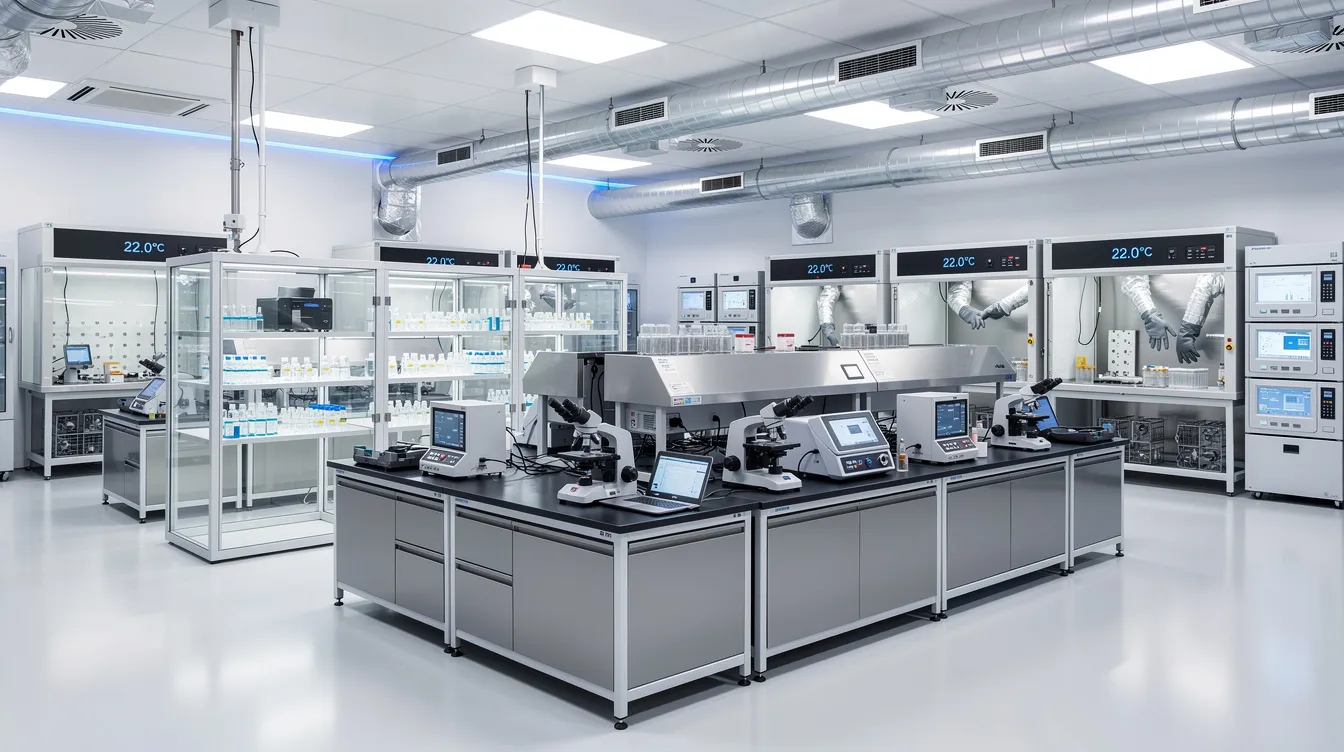
Entry cost for high-spec B1 industrial space is materially higher than standard light industrial. Cleanroom fit-out – including air handling systems, gowning rooms, validated finishes, and environmental controls – represents significant capital expenditure. Operational costs for HVAC, filtration, regulatory compliance, and energy consumption run substantially above standard lease obligations.
Solution: Structured lease negotiations with tenant improvement allowances and phased payment terms can distribute costs. Sustainable buildings help reduce operating expenditures and provide resilience – the Energy Efficiency Grant (EEG) supports up to 70% of qualifying energy-efficient equipment costs for SMEs, extended through March 2027. Additionally, EDB incentive programmes such as the Development and Expansion Incentive for manufacturing and the Refundable Investment Credit (RIC) can offset capital investment. Understanding total cost of ownership – base rent plus operational expenses plus compliance costs – is essential for accurate due diligence.
Complex Compliance and Approval Processes
Achieving and maintaining GMP, ISO 14644, HSA licensing, and environmental approvals involves multiple relevant authorities – URA for use approval and zoning compliance, NEA for environmental impact controls, HSA for product licensing, and potentially FDA or EMA for export-oriented manufacturing. Lead times for regulatory approvals can extend significantly, particularly for bespoke cleanroom builds.
Solution: Engaging regulatory consultants early and maintaining comprehensive documentation streamlines the approval process. Ensuring URA 60/40 rule compliance while maximising operational efficiency requires careful space planning from the outset. For biomedical tenants, IRAS provides GST relief mechanisms for importation of certain research materials and therapeutic products, reducing the financial complexity of cross-border operations.
Developers who pre-commit anchor tenants – particularly pharmaceutical companies or semiconductor firms – and build to spec may command greater capital values, while older industrial assets that retrofit to add environmental controls, higher power, and cleanroom capacity will see meaningful value uplift.
Conclusion and Next Steps
High-spec B1 industrial properties have become essential infrastructure for Singapore’s biomedical and tech sector growth in 2026. The convergence of government investment, global supply chain reconfiguration, and tenant flight-to-quality is creating a structural premium for industrial assets that deliver precision environments, robust power, and compliance readiness. High-specification assets are outperforming conventional industrial properties in the current market across rental growth, occupancy, and risk profile stability.
For investors:
-
Conduct detailed market analysis of pipeline developments in Tuas Biomedical Park, Woodlands North, and Jurong Innovation District
-
Evaluate retrofit potential of existing B1 stock near transport hubs and biomedical clusters – proximity to research institutions drives sustained tenant demand
-
Model total returns incorporating the 0% Additional Buyer’s Stamp Duty advantage and net yields of 4–6%
-
Engage specialised industrial real estate advisors for off-market pipeline access and tenant pre-commitment opportunities
For tenants:
-
Define required cleanroom classification, environmental tolerances, floor loading, ceiling height, and power needs before beginning your space search
-
Initiate regulatory compliance assessments with HSA, NEA, and URA early – lead times are substantial
-
Evaluate total cost of space: base rent plus operational costs (HVAC, filtration, utilities) plus fit-out capital
-
Consider location trade-offs between fringe areas near the central business district (higher rent, better talent access) versus purpose-built clusters like Tuas Biomedical Park (lower rent, specialised infrastructure)
Related topics worth exploring: Industrial REIT investments targeting high-spec B1 and B2 industrial assets, cross-border manufacturing strategies leveraging Singapore as an APAC hub, sustainability compliance requirements under evolving NEA and BCA Green Mark frameworks, and the growing intersection of e commerce logistics with light industrial uses.
Additional Resources
-
URA Development Control Guidelines for B1 Industrial – allowable industrial uses, use quantum, gross floor area controls, and goods lift/loading bay requirements
-
EDB Incentives and Facilitation Programmes – Development and Expansion Incentive, RIS(C), Pioneer Certificate, and BioPIPS for biomedical manufacturing
-
NEA Energy Efficiency Grant – up to 70% support for qualifying energy-efficient equipment, extended through 31 March 2027
-
Singapore Standards for Cleanrooms (ISO 14644) – design, construction, and start-up specifications for cleanrooms and controlled environments
-
NMRK Singapore Industrial Leasing Reports – quarterly market data on rental rates, vacancy, and demand trends across the industrial sector

