

Introduction
Choosing between a freehold shophouse and a 99-year leasehold shophouse is one question that defines how Singapore property investors think about long-term wealth. Over a 20-year holding period, which tenure type actually preserves and grows your capital better – and which scenarios flip the conventional wisdom on its head?
This article focuses on Singapore conservation and non-conation shophouses, comparing freehold and 99-year leasehold from a wealth-preservation and investment lens. We examine tenure decay mechanics, capital appreciation patterns, rental yield dynamics, financing constraints, and exit liquidity – everything that determines whether your shophouse will be a legacy asset or a depreciating one. The target readers are business owners, family offices, and investors comparing properties across tenure types, including owner-occupiers deciding whether a shophouse is a better long-term asset than a commercial property or residential home.
The direct answer: Over 20 years, location, entry price, rental profile, and buyer pool often matter more than tenure alone. Freehold properties offer greater long-term value retention and generally preserve wealth better beyond 30–40 years. However, well-located 99-year leasehold shophouses with 80+ years remaining can match or outperform freehold in total return over a focused 10–20 year window, thanks to lower entry price and higher yield. The deciding factors are the remaining lease at exit, the depth of the buyer pool at that future point, and the strength of micro-location fundamentals.
Here is what you will learn:
-
How tenure decay actually affects 99-year shophouse values in the first 20 years – and when it accelerates dangerously.
-
Historical performance patterns of freehold versus 99-year shophouses in central vs fringe districts.
-
Implications for financing, exit strategies, and en bloc sales potential.
-
How to evaluate a specific shophouse for 20-year wealth preservation using a structured framework.
-
Where freehold tenure truly matters – and when the premium is overpriced in this reference post.
Understanding Shophouse Tenure in Singapore
Tenure is the legal duration of your right to hold the land beneath a shophouse. Unlike a condo or HDB flat – where strata title and collective lease structures dominate – shophouses sit on individual land parcels with their own tenure profile. This makes tenure analysis for shophouses more consequential: you are buying land, not just a unit in a larger development, and the differences between freehold and leasehold play out directly in value, financing, and exit options.
What is a Freehold Shophouse?
A freehold shophouse grants perpetual title to both the land and the building. Freehold properties allow for perpetual title to land and building, meaning there is no expiry date on ownership. In Singapore, 999-year leasehold shophouses are treated by most investors as effectively freehold, since the lease horizon extends well beyond any practical planning timeframe.
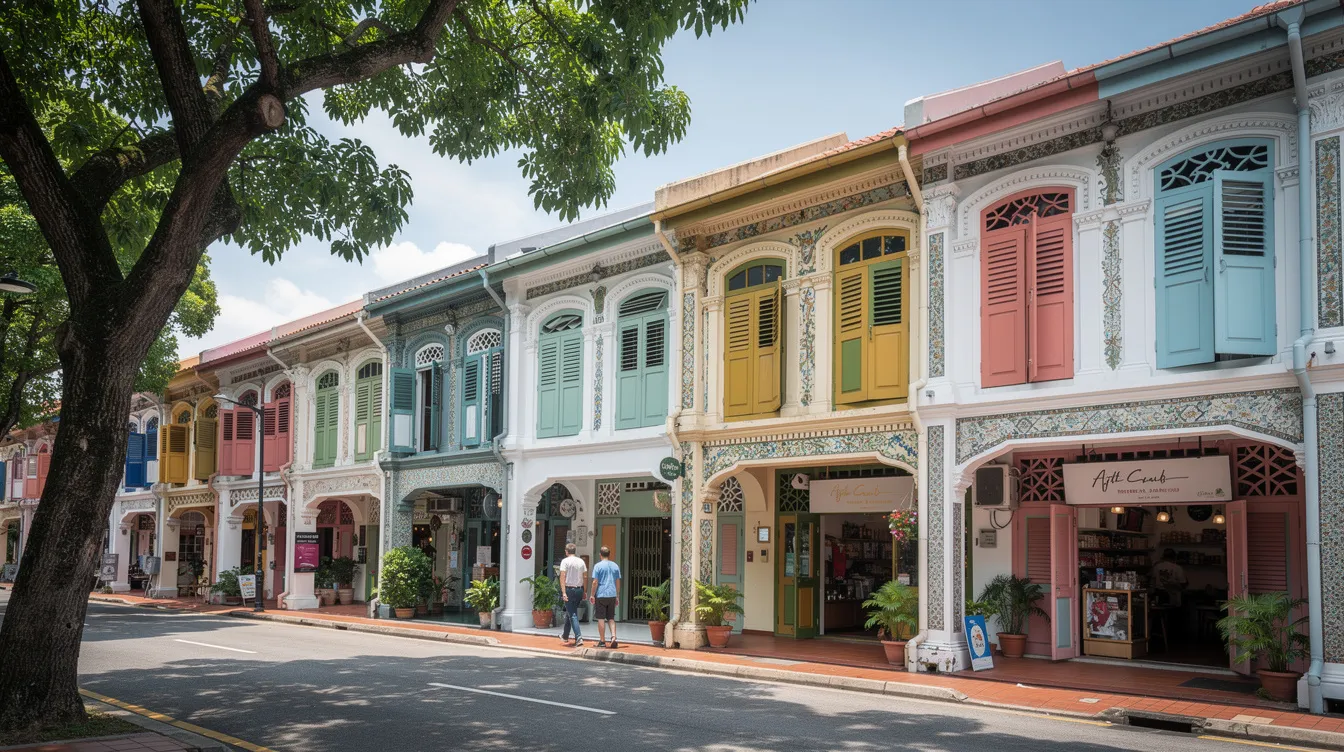
Freehold shophouses are concentrated in Districts 1, 2, 7, 8, 14, and 15 – areas like Chinatown, Tanjong Pagar, Kampong Glam, and Katong. Many are gazetted conservation shophouses with heritage facades, though non-conservation freehold stock also exists. In recent years (2022–2026), freehold conservation shophouses in prime areas have transacted at price ranges from approximately $4,200 to over $17,000 psf on land, with landmark deals in streets like Keong Saik Road pushing the upper boundary.
The perception of a freehold shophouse as a “legacy asset” is well-founded: it can be passed to the next generation without any erosion of underlying land tenure. This is why family offices and ultra-high-net-worth buyers disproportionately favour freehold – it aligns with inter-generational wealth transfer and avoids the structural risks that leasehold introduces over time.
What is a 99-Year Leasehold Shophouse?
A 99-year leasehold shophouse is held under a State lease that counts down from 99 years. These leases typically arise from Government Land Sales or historical State grants, and some owners have obtained lease top-ups from the Singapore Land Authority to extend remaining tenure.
The remaining lease bands investors commonly encounter today vary widely. Some 99-year shophouses still have 80–90 years left – essentially “young” leases with plenty of runway. Others sit in the 40–60 year range, where the dynamics change substantially. For a 20-year hold, the critical question is: what will the remaining lease be when you sell?
Tenure decay is straightforward in concept – the same building, the same location, but with less time left on the clock. A fresh leasehold property typically has less immediate lease decay risk compared to an older leasehold. The decay is non-linear: gentle in the early decades, then accelerating as remaining lease drops below widely recognised thresholds.
Note that many 99-year shophouses sit in increasingly prime business districts – city-fringe B1 zones, gentrifying corridors near MRT lines, areas where rental demand is strong and growing. This means tenure is only one variable in a complex equation.
How Tenure Interacts With Shophouse Fundamentals
Tenure cannot be analysed in isolation for shophouses. Land zoning (commercial, mixed-use, B1 industrial), allowable use, plot ratio, and conservation status all interact with tenure to determine a shophouse’s investment profile. A freehold shophouse in a low-plot-ratio zone with weak tenant demand may underperform a well-located 99-year leasehold in a high-footfall commercial corridor.
The critical link: tenure determines the long-term floor for value – the lowest point your asset can theoretically reach. Fundamentals like location, rentability, and supply drive 10–20 year outcomes above that floor. To judge 20-year wealth preservation, we must quantify how each tenure type tends to perform at different points on the lease curve, which is where the next section turns.
How Freehold vs 99-Year Shophouses Behave Over 20 Years
With the foundational concepts established, the question becomes practical: what happens to the value of each tenure type during a 20-year holding period? The answer depends on tenure decay mechanics, capital appreciation in different districts, and the total return picture when rental income is included.
Tenure Decay: What Really Happens Between Year 0 and Year 20
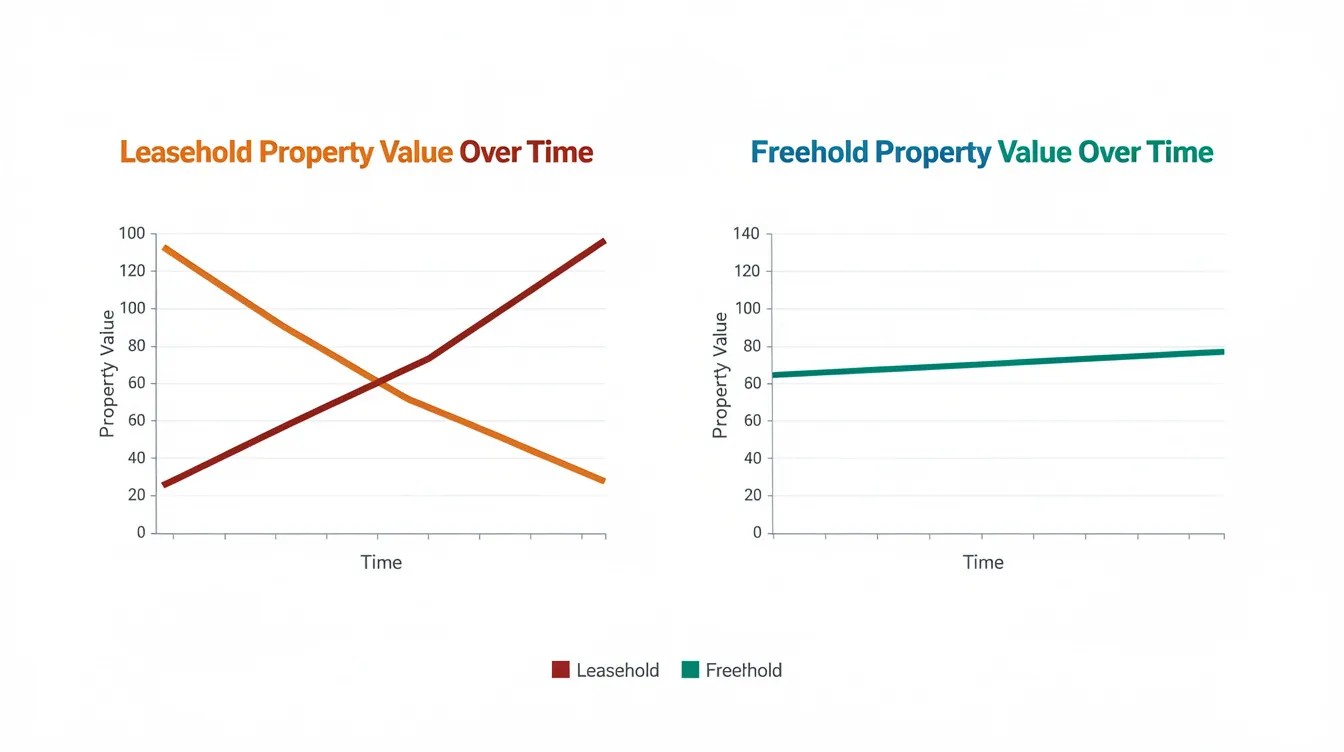
The official framework used by Singapore’s Land Authority to value remaining leasehold land is commonly known as Bala’s Table (or Bala’s Curve). It maps the relationship between remaining lease years and the property’s value relative to a comparable freehold. The decay is non-linear – slow at first, then accelerating as the lease shortens.
Key reference points from Bala’s Table and empirical transaction data:
-
99 years remaining: ~96% of freehold value
-
79 years remaining: ~90–91% of freehold value
-
60 years remaining: ~80% of freehold value
-
50 years remaining: ~75–77% of freehold value
-
20 years remaining: ~32% of freehold value
A study using 70,500 resale caveats confirmed that market transactions track Bala’s Table closely: young leaseholds (85–94 years remaining) trade at approximately 93% of freehold, while those with 60 years left trade at roughly 81%.
What does this mean practically? If you buy a 99-year shophouse with 80 years remaining, the lease-decay drag over 20 years is modest – you move from approximately 90–91% of freehold value down to approximately 80% (at 60 years remaining). That is roughly a 10–12% erosion attributable purely to tenure decay, before accounting for any market appreciation. If location fundamentals are strong and rental growth is healthy, this drag can be more than offset by capital gains and income.
However, freehold shophouses do not suffer lease decay at any point. Their value floor remains intact regardless of holding period. That said, a freehold shophouse can still stagnate or decline if rental demand weakens, the neighbourhood deteriorates, or regulatory changes constrain its use. Tenure is not a guarantee of appreciation – it is a guarantee against one specific category of depreciation.
Properties with fewer than 60 years remaining on lease may face severe depreciation risks, as both the theoretical curve and market evidence confirm that decay accelerates sharply beyond this threshold.
Capital Appreciation: Historical Patterns in Core vs Fringe Areas
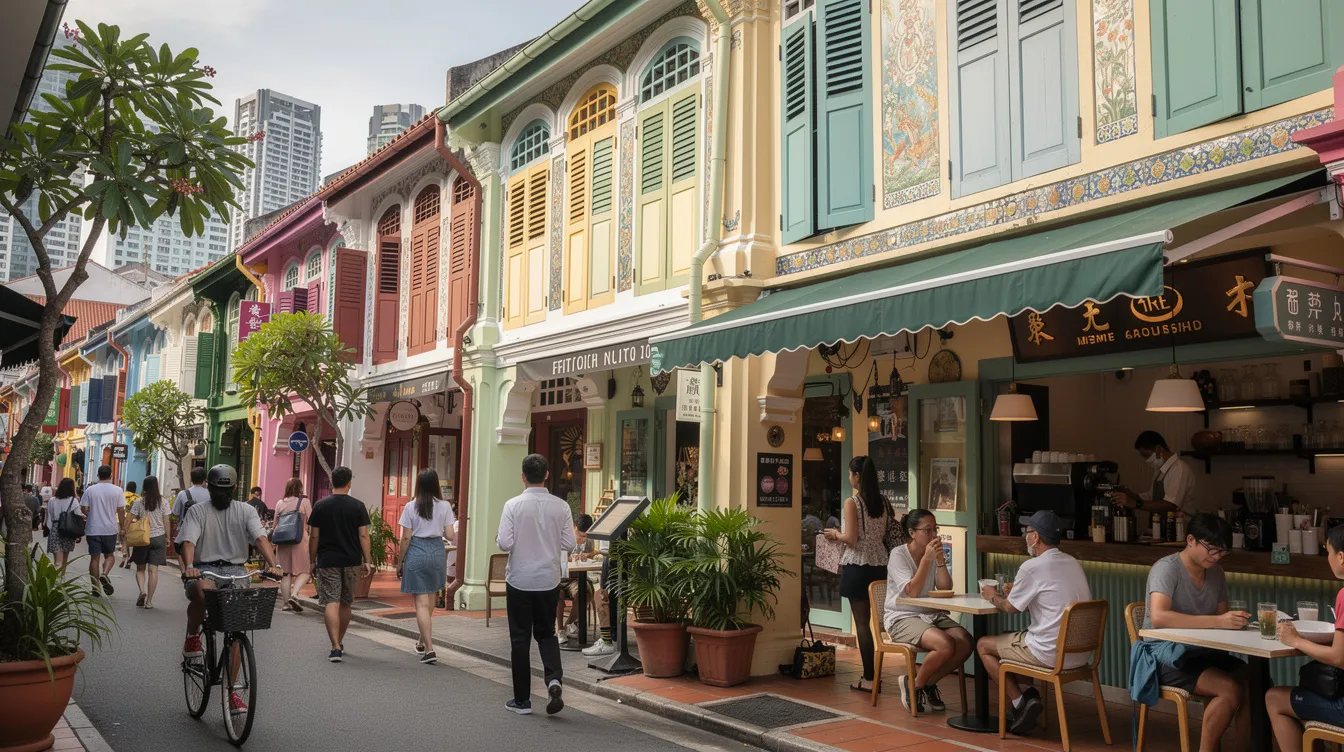
Historical transaction data from 2006–2026 reveals divergent patterns depending on district and tenure. Freehold conservation shophouses in CBD and Chinatown (Districts 1–2) have shown steady, resilient appreciation off a high base. In Q2 2022, freehold and 999-year shophouses in Districts 1–2 averaged approximately $7,747 psf on land. These assets rarely fall sharply in downturns – their scarcity value and deep buyer pool provide a cushion.
In gentrifying fringe areas – Jalan Besar, parts of Geylang, Little India – the story is different. Some 99-year shophouses purchased at much lower entry prices 10–20 years ago have delivered sharper percentage gains due to yield compression, improved rental demand, and neighbourhood transformation. ERA’s 1H 2026 report noted multiple freehold and long-lease shophouse sales in Districts 8 and 15 attracting strong buyer interest, confirming that location and demand can outcompete tenure in specific circumstances.
Leasehold properties appreciated 45.9% from 2013 to 2023, compared to freehold properties which appreciated 35.9% over the same period. While this data comes from the broader condo market rather than shophouses specifically, it illustrates a pattern: 99-year leasehold condos yield returns three times higher than freehold in certain periods, largely because lower entry prices amplify percentage returns. Leasehold condos yielded returns three times higher than freeholds over that decade. The price gap between freehold and leasehold properties is approximately 1.3% in some segments, though freehold properties command a 15–25% premium over leaseholds in most direct comparisons.
For shophouses, the contrast is starker because the asset class is smaller and more heterogeneous. In 1H 2026, average psf for freehold shophouses rose to approximately $6,500, while average psf for leasehold shophouses dropped significantly – partly due to composition effects (which specific properties transacted), but also reflecting genuine tenure-related pricing dynamics. In H2 2023, leasehold shophouse land-area unit prices dropped 34.2% quarter-on-quarter versus a modest 1.0% gain for freehold – a vivid illustration of how leasehold stock absorbs market stress differently.
The takeaway: freehold provides steadier, more predictable appreciation in prime locations. Leasehold can deliver higher percentage gains in fringe areas undergoing transformation, but with higher volatility and path dependency.
Rental Income, Yield, and Total Return Over 20 Years
Rental yields for 99-year leasehold shophouses can be higher than for freehold properties if bought at a discount. Because 99-year shophouses trade at lower prices in the same location, and tenants typically do not value property tenure when renting, the same absolute rent generates a higher yield on the leasehold asset.
Consider a simplified illustration:
-
Freehold shophouse: Purchase at $8 million. Annual rent $320,000. Gross yield: 4.0%.
-
99-year shophouse (80 years remaining), same area: Purchase at $5.5 million. Annual rent $300,000. Gross yield: 5.5%.
Over 20 years, the cumulative rental income from the leasehold shophouse represents a larger proportion of its purchase price. If rental growth runs at 2–3% annually for both, the total rental income narrows the gap in overall wealth accumulation.
Mixed-use shophouses – combining retail, office, and F&B – tend to show rent resilience because income is diversified across tenant types and use classes. For tenants, what matters is frontage, footfall, layout, amenities, and on-site business performance – not whether the landlord treats the asset like a legacy holding or a second home. Rental yields for leasehold condos can be significantly better due to lower entry prices, and this dynamic applies to shophouses as well.
The 20-year total return picture must account for entry price, cumulative rental income, capital appreciation (or depreciation from lease decay), and exit price. Over 20 years, total return is often driven more by entry price and rent trajectory than by tenure alone – as long as the remaining lease at exit stays above bank-financeable thresholds (generally above 60 years). The moment remaining tenure dips below those thresholds, the dynamics shift against the leasehold holder.
Advanced Comparison: Financing, Buyer Pool & Exit Liquidity
Even if headline returns between freehold and 99-year shophouses look similar over 20 years, wealth preservation depends heavily on practical factors: who can buy your shophouse at exit, on what financing terms, and how deep the market is during your selling window. These factors often determine whether paper gains translate into realised wealth.
Financing and Bank Appetite
Banks in Singapore adjust loan tenure and loan-to-value (LTV) ratios based on remaining lease of the property. Financing for freehold properties is not subject to lease-decay restrictions – banks will lend on standard terms regardless of holding period. For 99-year leasehold assets, the picture changes as the lease shortens.
Key financing thresholds to keep in mind:
-
80–99 years remaining: Financing terms are generally comparable to freehold. Most banks offer full LTV and standard loan tenures.
-
60–79 years remaining: Banks become more cautious. LTV may be reduced, loan tenure shortened, and some lenders may impose additional conditions.
-
Below 60 years remaining: Financing restrictions become tight. Maximum loan tenures shrink significantly, LTV drops materially, and some institutional buyers cannot participate at all.
-
Below 30 years remaining: Many banks will not extend financing. Cash buyers only in most cases.
As a lease nears expiration, financing restrictions become more tight for leasehold properties. For an investor buying a 99-year shophouse with 78 years remaining today, the asset will have approximately 58 years remaining at the 20-year exit point. That positions it right at the threshold where financing conditions begin to tighten meaningfully – a critical factor in planning your exit strategy.
Buyer Pool and En Bloc Sales: Owner-Occupiers, Investors, and Institutional Capital
Freehold conservation shophouses in core districts attract the deepest buyer pool: family offices, UHNW individuals, legacy-focused families, and institutional capital. These buyers value certainty, prestige, and the ability to hold across generations. They are often less price-sensitive and more focused on capital preservation and inter-generational wealth transfer.
The 99-year leasehold buyer pool is different. It tends to consist of yield-driven investors, owner-operators running F&B or boutique retail businesses, and SMEs seeking commercial premises. These buyers are more price-sensitive and more focused on making the numbers work on a cash-flow basis.
The buyer pool for 99-year stock stays strong as long as:
-
Remaining lease exceeds 60 years
-
The asset sits in a high-rent, high-footfall corridor
-
Rental yields remain meaningfully above financing costs
In 1H 2026, approximately 84% of shophouse transaction value came from freehold or 999-year stock – just 16% from 99-year tenure. This concentration reflects both supply composition and buyer preference. Commercial properties in prime locations attract higher investor interest, especially freehold properties. In market downturns, the buyer pool for freehold shophouses tends to remain deeper and more resilient, while leasehold stock can see sharper discounts as buyers pull back.
Transaction evidence illustrates this: Knight Frank’s H2 2025 data showed four freehold/999-year shophouse transactions with returns exceeding 100% over average holding periods of approximately 18 years – translating to CAGRs of 5–6%+ for well-located freehold stock. Leasehold shophouses did not consistently show comparable figures unless situated in fringe/gentrifying areas with strong rental growth and low entry prices.
Capital Appreciation vs Wealth Preservation: A 20-Year Lens
It is important to understand the distinction between capital appreciation and wealth preservation – they are related but not identical:
-
Capital appreciation measures how fast prices grow in nominal or percentage terms.
-
Wealth preservation measures how well real value is defended across economic cycles, inflation, policy shifts, and market shocks.
Over 20 years, a high-yield 99-year asset in a gentrifying area may beat freehold in total percentage return. Leasehold condos can yield more profit in en bloc sales in certain scenarios, and lower entry prices amplify percentage gains. But a well-located freehold shophouse may better hold value through crises, policy shifts, and rental downturns – its floor value does not erode with time.
Wealth preservation in real estate often favours freehold properties over a long time horizon. The freehold shophouse acts as an insurance policy: you may not achieve the highest possible return, but you avoid the tail risk of lease decay compounding with a cyclical downturn at exactly the wrong moment.
This sets up the practical question: how do you decide between the two for your specific situation?
Practical Framework: Choosing Between Freehold and 99-Year Shophouses
Rather than defaulting to “freehold is always better” or chasing the highest yield number, investors benefit from a structured evaluation. The framework below guides decision-making for anyone comparing properties across tenure types over a 20-year horizon.
Step-by-Step Evaluation Method
-
Confirm your use case: Pure investment, own business use, or mixed? This determines whether you are optimising for rental yield, capital security, or operational flexibility. Some buyers are also weighing a shophouse against tying up capital in a home, which changes how they judge preservation versus yield. Each shifts the tenure calculus.
-
Map remaining lease at entry and projected lease at year-20 exit: Check what financing rules will apply at that future lease length. If the remaining lease at exit will be below 60 years, factor in significantly tighter financing conditions and a shallower buyer pool.
-
Analyse micro-location fundamentals: MRT access, business catchment quality, URA Master Plan projections, adjoining plots’ zoning, and gentrification trajectory. A strong micro-location can overcome tenure disadvantages; a weak one can negate freehold benefits.
-
Underwrite realistic rentals: Current passing rent, achievable market rent, and sensitivity to tenant type (F&B, offices, hostels, co-working). Tenants do not care about your tenure – they care about frontage, footfall, and layout.
-
Model total 20-year return under 2–3 scenarios (base, optimistic, stress) separately for your freehold and 99-year candidates. Keep assumptions transparent and conservative on exit pricing for leasehold.
-
Stress-test exit liquidity: Identify who the likely buyer is in year 20, what financing they can obtain, and whether tenure will be a deal-breaker at that point. This is where many investors fail to plan adequately.
-
Overlay personal and organisational goals: Legacy planning for the next generation, gearing tolerance, desire for potential redevelopment or en bloc sales, and willingness to actively manage the asset.
Side-by-Side Comparison: Freehold vs 99-Year Shophouses for 20-Year Wealth Preservation
|
Criterion |
Freehold Shophouse |
99-Year Shophouse (80+ yrs remaining) |
|---|---|---|
|
Entry price |
15–25% premium over comparable leasehold |
Lower entry cost; capital deployed is reduced |
|
Typical gross yield |
3.0–4.5% (office-heavy streets) to 4.0–5.0% (F&B corridors) |
4.5–6.5% due to lower purchase price |
|
20-year value floor risk |
Minimal; no structural depreciation from tenure |
Moderate; ~10–12% decay from 80 to 60 years remaining |
|
Financing at purchase |
Full LTV, standard terms |
Comparable to freehold if lease >80 years |
|
Financing at projected resale (year 20) |
Unchanged; no lease-related restriction |
Tighter if remaining lease approaches 60 years |
|
Buyer pool depth |
Deep: family offices, UHNW, institutional, legacy buyers |
Adequate if remaining lease >60 years; thins below |
|
En bloc / redevelopment flexibility |
Higher; developers prefer freehold land |
Lower; lease remainder constrains redevelopment economics |
|
Suitability as legacy asset |
Excellent; pass to next generation with full tenure |
Limited; each generation inherits a shorter lease |
Freehold properties have smoother en bloc sale processes, while leasehold condos can yield more profit in en bloc sales when developers see redevelopment potential with long remaining leases. Location significantly influences en bloc sale success rates for both tenure types. En bloc sales can be affected by property age and condition, regardless of tenure.
When the table clearly favours freehold: if you are buying for multi-generational wealth transfer, if the entry premium is modest (under 20%), or if the asset is in a prime conservation street with deep institutional demand. When a 99-year deal is compelling: when the entry yield is significantly higher, the remaining lease at exit will comfortably exceed 60 years, and the micro-location has strong rental growth prospects.
Illustrative Case Studies
Case 1 – Freehold Conservation Shophouse, District 1–2, Held 20 Years
A family office acquired a freehold conservation shophouse on a prime Chinatown street in the mid-2000s at approximately $3,500 psf on land. Over 20 years, the asset appreciated to approximately $7,500 psf – a total capital gain of roughly 114%, or about 3.9% CAGR. Rental income was consistent at 3.5–4.0% gross yield throughout. The family refinanced twice at favourable terms and eventually decided to hold for the next generation, viewing it not as a replacement for a home but as a long-duration wealth-preservation vehicle. Total return including rent exceeded 6% annualised. The asset’s value never declined meaningfully during the 2008–2009 or 2020 downturns, demonstrating strong wealth preservation.

Case 2 – 99-Year Shophouse, Fringe Business Hub, Bought 2005, Sold 2025
An investor purchased a 99-year leasehold shophouse near an MRT-linked fringe business corridor with approximately 82 years remaining for $1.8 million (~$1,200 psf). Over 20 years, the area gentrified substantially: new F&B operators, co-working tenants, and boutique retailers transformed the street. The shophouse was sold in 2025 for $4.1 million (~$2,700 psf) with 62 years remaining – a 128% capital gain, approximately 4.2% CAGR. Gross rental yield averaged 5.5–6.0% over the holding period. Total return including rent comfortably exceeded 8% annualised, outperforming many freehold comparables in percentage terms.
Case 3 – 99-Year Shophouse Bought With ~60 Years Remaining, Held 20 Years
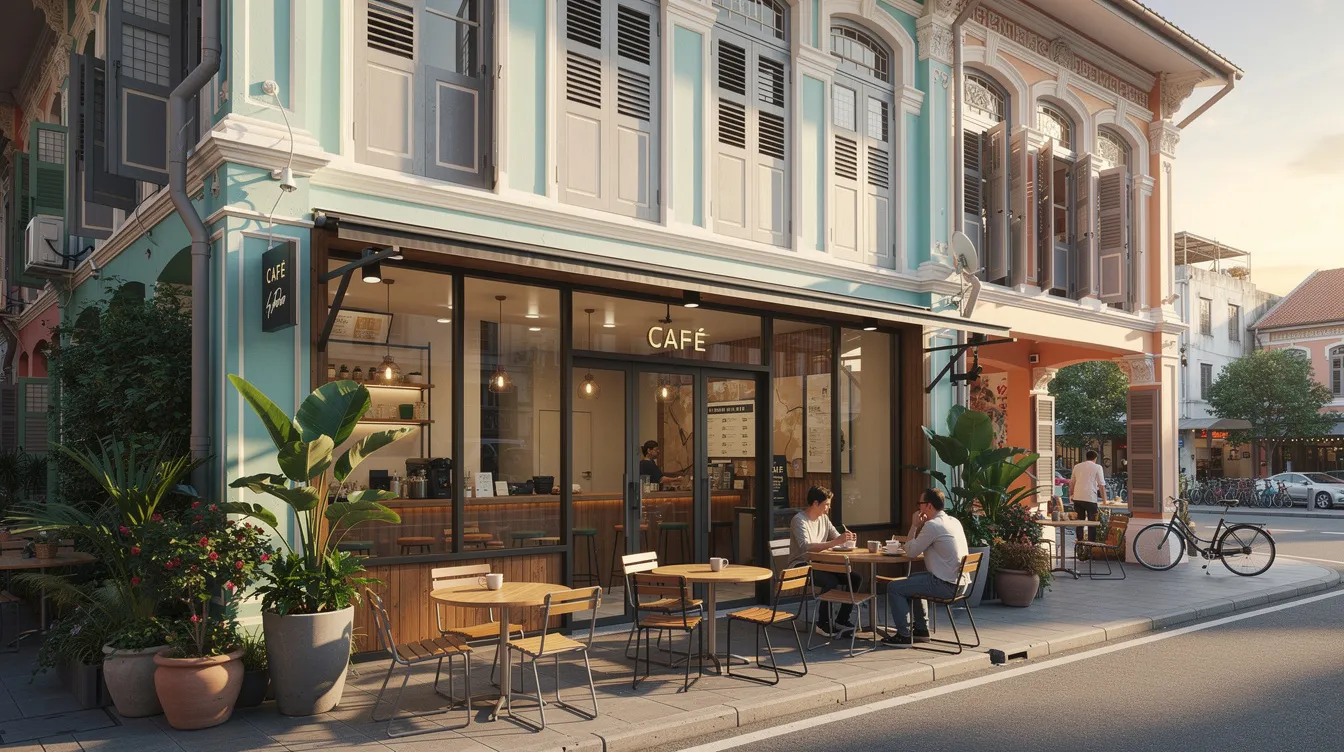
An owner-operator bought a 99-year shophouse with only 58 years remaining for $1.2 million to run an F&B business. After 20 years, the remaining lease stood at 38 years. Despite strong rental income during the holding period, the exit proved challenging: buyers were scarce, no bank would finance the purchase at standard terms, and the eventual sale price was $850,000 – a capital loss of approximately 29%. Only the cumulative rental income (self-occupied, so effectively rent savings) made the overall position marginally positive. This case illustrates the squeeze from financing constraints and a shrinking buyer pool when remaining lease drops well below 60 years.
Common Pitfalls and How to Avoid Them
Many people misjudge tenure impact because they focus only on today’s headline price or default to a generic “freehold is always better” view. Both approaches can lead to poor outcomes. Here are the most common mistakes and how to avoid them.
Overpaying for the “Freehold” Label
Buyers sometimes accept a 25–30% premium for freehold shophouses in secondary locations where rental demand is weak, effectively paying for a label rather than for economic fundamentals. If you afford a freehold shophouse but its gross yield falls below 3.0% and the location lacks strong tenant demand, the freehold premium becomes very difficult to justify over a 20-year horizon.
Only 603 freehold units are expected to launch soon across the Singapore market, which creates scarcity pressure – but scarcity alone does not guarantee returns if fundamentals are absent.
Remedy: Benchmark your target freehold against recent 99-year comparables in the same or adjacent streets, not just against other freehold assets. If the freehold premium exceeds 25% and the yield differential is large, the leasehold may deliver better risk-adjusted total returns over 20 years.
Ignoring Remaining Lease at Exit
The most common and most costly mistake: buying a 99-year shophouse with 65–70 years remaining without mapping what that means after a 20-year hold. At 45–50 years remaining, the buyer pool shrinks, bank appetite diminishes, and the value discount relative to freehold steepens sharply. The Singapore Centre for Liveable Cities provides frameworks for assessing leasehold property values that investors can reference when planning their exit.
Solution: Always underwrite a conservative resale price and financing assumption based on the projected remaining lease at exit, not at entry. If remaining lease at exit will be below 55 years, build in a significantly larger discount to freehold when modelling your exit value.
Underestimating CAPEX and Regulatory Constraints
Both freehold and 99-year shophouses carry significant maintenance, conservation compliance, and upgrading costs that can erode returns if ignored. URA conservation guidelines restrict modifications – facade restoration, roof works, timber element preservation, rear extension limits, signage rules – all of which translate into higher capital expenditure. These costs apply regardless of tenure.
Industrial and commercial zoning rules further constrain change of use and rental upside. A shophouse zoned for limited commercial use may not be convertible to the higher-yield F&B or hospitality uses that drive premium rents.
Solution: Build a realistic CAPEX schedule into your 20-year model, including cyclical restoration works every 8–12 years. Consult URA, BCA, and conservation guidelines early in the evaluation process.
Conclusion and Next Steps
Freehold shophouses generally preserve wealth better beyond 30–40 years, providing a permanent floor against lease decay and maintaining deep buyer pools across market cycles. For a focused 20-year horizon, well-chosen 99-year shophouses with strong fundamentals – long remaining lease, high rental demand, gentrifying location – can match or outperform freehold in total return. Tenure is a key input but not the deciding factor; entry price, rental strength, remaining lease at exit, and buyer pool depth drive outcomes. Freehold properties offer greater long-term value retention than leasehold properties, but the right leasehold asset bought at the right price in the right location can be the superior wealth-building tool over two decades.
Your next steps:
-
Clarify your holding period and legacy intentions – a 20-year investment horizon calls for a different calculus than multi-generational wealth transfer to the next generation.
-
Shortlist 2–3 actual shophouses (a mix of freehold and 99-year) and run a comparable 20-year cash-flow model using transparent assumptions.
-
Stress-test exit scenarios and financing at the projected remaining lease – find the point where your returns break down and ensure you are comfortable with that risk.
-
Engage a specialist advisory to validate assumptions, assess zoning risks, review conservation compliance requirements, and build realistic rental projections.
Adjacent topics worth exploring next: industrial shophouse-style assets and B1/B2 zoning considerations for business owners seeking operational premises, and comparing shophouses with strata commercial units for investors and SMEs evaluating different commercial property structures in Singapore.
Additional Resources
-
URA Master Plan and Conservation Guidelines: Essential reference for understanding allowable use, restoration requirements, and planning parameters for any conservation shophouse.
-
Bala’s Curve and Lease Decay Charts: Non-technical investors can use online lease decay calculators to model how remaining lease affects property value over any holding period. Understanding this curve is fundamental to making informed leasehold decisions.
-
Shophouse Inspection Checklist: Before committing, evaluate structural condition, fire safety compliance, layout efficiency, conservation compliance status, and verified lease tenure documentation. These factors interact directly with both maintenance costs and exit value.
-
Specialist Consultation: For investors evaluating specific freehold and 99-year shophouses in Singapore, a professional advisory can provide micro-location analysis, rental underwriting, and scenario modelling tailored to your objectives and risk tolerance.

