

Introduction
Yes, foreigners can buy shophouses in Singapore-but only certain types. Whether a foreign buyer can freely acquire a shophouse depends entirely on its URA zoning and approved use, not on its heritage charm or conservation status. If you’re searching “can foreigners buy shophouse Singapore,” the short answer is that fully commercial shophouses are open to foreign ownership without restriction, while residential and mixed-use shophouses trigger the Residential Property Act’s restrictions and require government approval.
This article unpacks the critical distinction between commercial vs residential zoning as it applies to Singapore shophouses, explaining how zoning determines eligibility, stamp duties, property tax, financing, and long-term investment strategy. The scope covers both conservation and non-conservation shophouses across key districts, with practical guidance on verifying zoning, structuring ownership, and avoiding costly mistakes.
The target audience is foreign investors, family offices, overseas business owners, and non-resident buyers evaluating shophouses for wealth preservation, business premises, or portfolio diversification. Whether you’re a first-time prospective buyer or an experienced investor expanding into Singapore’s heritage property market, zoning literacy is essential before committing capital.
The direct answer: Foreigners can buy fully commercial shophouses in Singapore without SLA Land Dealings Approval Unit permission and without Additional Buyer’s Stamp Duty (ABSD). However, shophouses zoned “Residential” or “Commercial & Residential” are classified as residential property under the Residential Property Act, triggering ownership restrictions, potential ABSD of 60%, and the need for prior government approval.
What you’ll learn:
-
Which types of Singapore shophouses foreigners can buy freely in 2026
-
The difference between URA zoning and “approved use,” and why property listings can be misleading
-
How commercial vs residential zoning affects ABSD, buyer’s stamp duty, property tax, and goods and services tax
-
Practical steps and a due diligence checklist to verify if a specific unit is foreigner-eligible before making an offer
-
How AESTHETIC HAVENS can advise on shophouse selection, zoning verification, and risk checks
The article references real conservation areas-Chinatown, Boat Quay, Joo Chiat, Kampong Glam, and Tanjong Pagar-and includes example scenarios and market data to illustrate how zoning works in practice.
Foundations: What “Shophouse” and “Zoning” Really Mean in Singapore
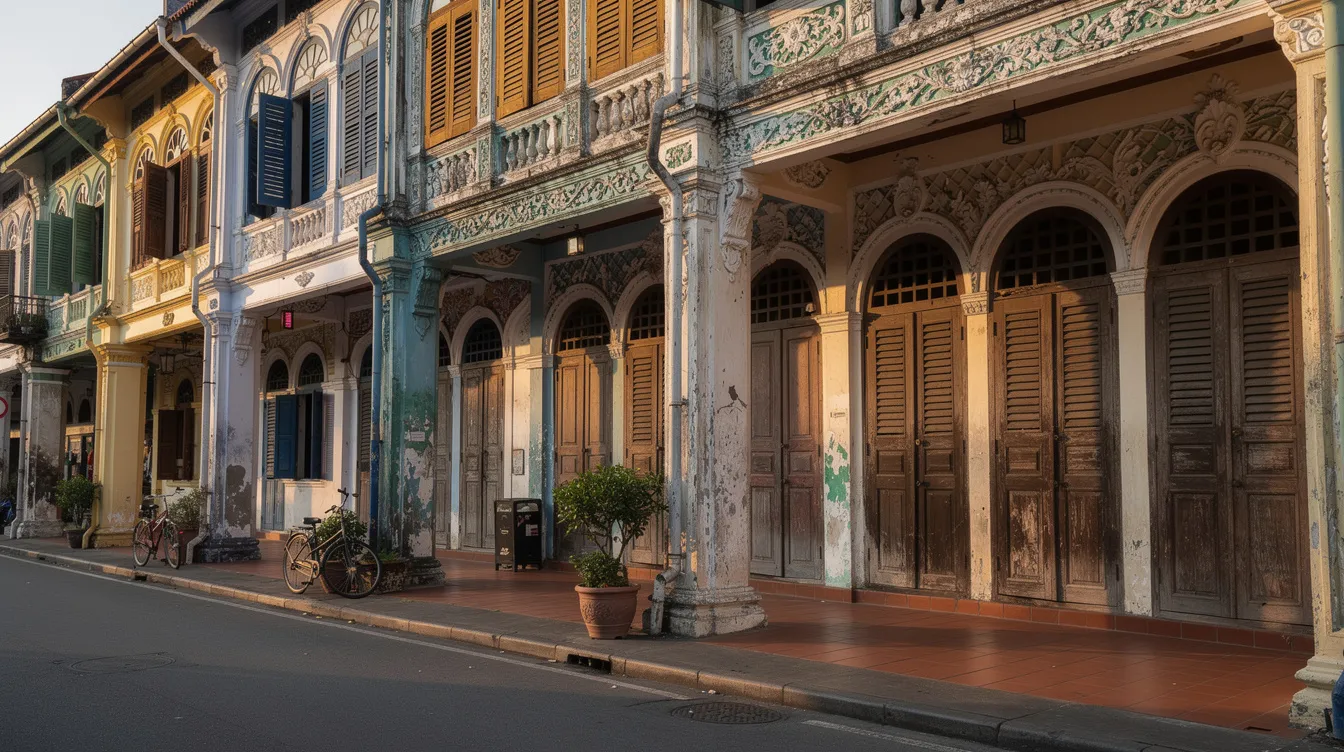
A shophouse in Singapore is a terraced, party-wall building typically two to five storeys high, built between the 1840s and 1960s. These older buildings feature a commercial ground floor frontage, residential quarters on upper floors, narrow lot widths, covered five-foot ways, timber shutters, and rear courtyards. Many have been gazetted under URA conservation areas and are prized as heritage assets. But for foreign buyers, what matters most is not the building’s age or architectural character-it is the legal zoning assigned to the land parcel under the URA Master Plan, which determines foreign ownership eligibility, permitted uses, and the tax regime.
What Counts as a Shophouse in 2026?
Conservation shophouses sit within URA-designated historic conservation areas such as Chinatown, Boat Quay, Little India, Kampong Glam, Joo Chiat, Tanjong Pagar, Blair Plain, and Emerald Hill. Properties under conservation rules cannot be altered without permission from URA-façade materials, rooflines, window styles, and colour schemes must be preserved. Non-conservation shophouses outside these zones may offer more renovation flexibility but are still governed by the URA Master Plan for land use.
Ownership structure is equally important. Many shophouses are whole-building assets with a single land title covering the land and all floors. Others are subdivided into strata-titled lots-for example, a retail shop on the ground floor owned separately from a strata unit flat upstairs. This distinction matters because a strata unit with a residential component may be classified differently under the Residential Property Act than the commercial portion of the same building. Conservation status affects what you can do with the building physically, but foreign ownership hinges on zoning and land classification, not on the conservation label alone.
How URA Zoning and Approved Use Work
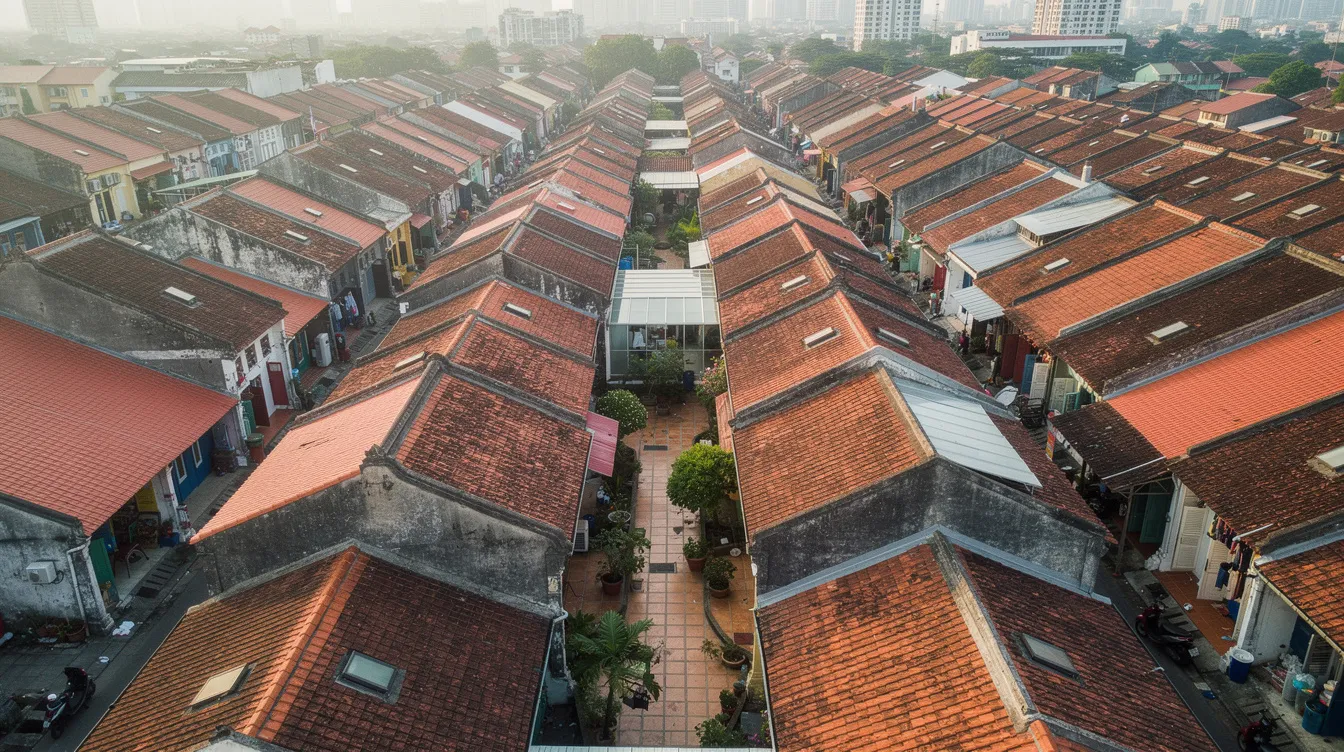
Singapore’s land-use zoning and foreign ownership regulations are governed by SLA and URA. The URA Master Plan assigns zoning categories to every land parcel. For shophouses, the relevant categories are:
-
“Commercial” – all floors intended for non-residential approved uses (offices, retail shops, F&B, services)
-
“Residential” – land designated primarily for dwelling purposes
-
“Commercial & Residential” – mixed-use zones allowing both commercial and residential development, with URA caps on commercial quantum
-
Occasionally “Hotel” or “White” sites where shophouse-form buildings appear
Crucially, zoning under the URA Master Plan is not the same as the “approved use” of each floor. A building may sit on commercially zoned land but have floors individually approved for different activities-shop, office, restaurant, or even residential use-via URA change-of-use permissions. Foreign ownership restrictions derive from the Residential Property Act (RPA) and SLA’s interpretation of what constitutes “residential land,” not from URA zoning alone. Shophouse eligibility depends on the legal land zoning and approved use working in combination.
With these foundational concepts established, the next section explains exactly which shophouses foreigners can buy without restriction-and which ones trigger legal barriers.
Can Foreigners Buy Shophouses in Singapore? The Direct Answer
The question of whether foreigners buy shophouses in Singapore has a clear but conditional answer. Foreign buyers have full access to commercial shophouses where zoning and title are genuinely non-residential. But any shophouse with a residential land classification-whether fully residential or mixed-falls under the Residential Property Act and requires prior government approval that is rarely granted for pure investment purposes.
Shophouses Foreigners Can Buy Freely
Under the Residential Property Act as applied in 2026, foreigners (both individuals and foreign-controlled companies) can freely purchase:
-
Shophouses zoned “Commercial” under the URA Master Plan where the entire land parcel is treated as non-residential property
-
Commercial strata shophouse units within buildings or developments classified entirely as commercial
-
Freehold, 999-year, and 99-year commercial shophouses-tenure does not affect foreign eligibility
Foreigners can buy commercial shophouses without Residential Property Act approval. These commercial property purchases do not require Land Dealings Approval Unit (LDAU) permission. Commercial-use shophouses are exempt from Additional Buyer’s Stamp Duty, and seller’s stamp duty does not apply to commercial properties. Foreign ownership restrictions do not apply to fully commercial shophouses, making them one of the few property types in Singapore where overseas investors face no nationality-based barriers.
For example, conservation shophouses at Tanjong Pagar and Outram Park zoned commercial have been explicitly marketed to foreign investors with no ABSD exposure-units like 91 Tanjong Pagar Road, priced at S$10.2 million, are fully foreign-eligible.
Shophouses That Trigger Restrictions or Approvals
The following scenarios typically fall within the Residential Property Act’s restrictions:
-
Shophouses zoned “Residential” under the URA Master Plan
-
“Commercial & Residential” shophouses where the title includes a residential land interest-for instance, an upstairs flat with independent access or a residential portion designated in the land description
-
Landed shophouses classified as residential land even if the ground floor has decades of commercial use
Foreign individuals have limited ability to purchase landed residential properties in Singapore. Foreigners require prior approval to purchase residential or mixed-use shophouses, and shophouses with residential components may require Land Dealings Approval. The 2023 RPA amendments clarified that Commercial & Residential zoned sites are included as “residential properties” for ABSD and approval triggers, even if actual use is commercial.
Marketing descriptions like “mixed-use shophouse” or “commercial shophouse” are not legal definitions. The title and land classification in SLA records are decisive. A foreigner who unknowingly acquires a restricted residential-interest shophouse faces forced disposal and penalties under the RPA.
Quick Checklist: Is This Specific Shophouse Foreign-Eligible?
Foreign investors must check a property’s approved use and zoning before purchase. Use this due diligence checklist before making any offer:
-
Pull URA Master Plan zoning using URA SPACE or URA Map Services to identify whether the parcel is zoned Commercial, Residential, or Commercial & Residential
-
Review the title search – check the land description, lot number, tenure (freehold vs leasehold), and land use classification
-
Engage a conveyancing lawyer to confirm whether the land constitutes “residential property” under the RPA
-
Clarify approved use of each floor with URA (e.g., office, shop, F&B, or residential)
-
If any residential interest is present, obtain a legal opinion on whether LDAU approval is required
AESTHETIC HAVENS can help coordinate these checks and filter listings upfront so that foreign buyers only view viable, genuinely commercial units-saving time and avoiding regulatory surprises.
Now that eligibility is clear in principle, the next section unpacks commercial vs residential zoning in depth and how each category affects tax, permitted use, and returns.
Commercial vs Residential Zoning in Detail
Zoning does not just determine who may buy a shophouse. It controls what the building can be used for, what taxes apply, how banks assess financing, and what operating rules govern the property day to day. Understanding each zoning category is essential for any foreign investor evaluating a shophouse purchase.
What “Commercial” Zoning Means for Shophouses
Commercial zoning is designated for business activities such as retail and offices. Shophouses zoned fully commercial can be used for retail, F&B, professional services, wellness studios, co-working spaces, and private clubs across all floors-subject to URA planning permissions and, in conservation areas, heritage guidelines.
For foreign buyers, the implications are straightforward:
-
No RPA restrictions – foreigners buy commercial property freely
-
No ABSD – commercial shophouses are exempt from additional buyer’s stamp duty as of 2026
-
Flat 10% property tax on Annual Value, classified alongside other commercial and industrial properties
-
Broader use flexibility – the property can serve multiple commercial purposes over its holding period
Common locations for fully commercial shophouses attractive to foreign investors include Boat Quay, Circular Road, Telok Ayer, Amoy Street, Club Street, sections of Tanjong Pagar Road, Kampong Glam, and parts of Chinatown. These districts concentrate conservation shophouses in prime central locations where well-located shophouses can yield comparable returns to prime office space.
What “Residential” Zoning Means for Shophouses
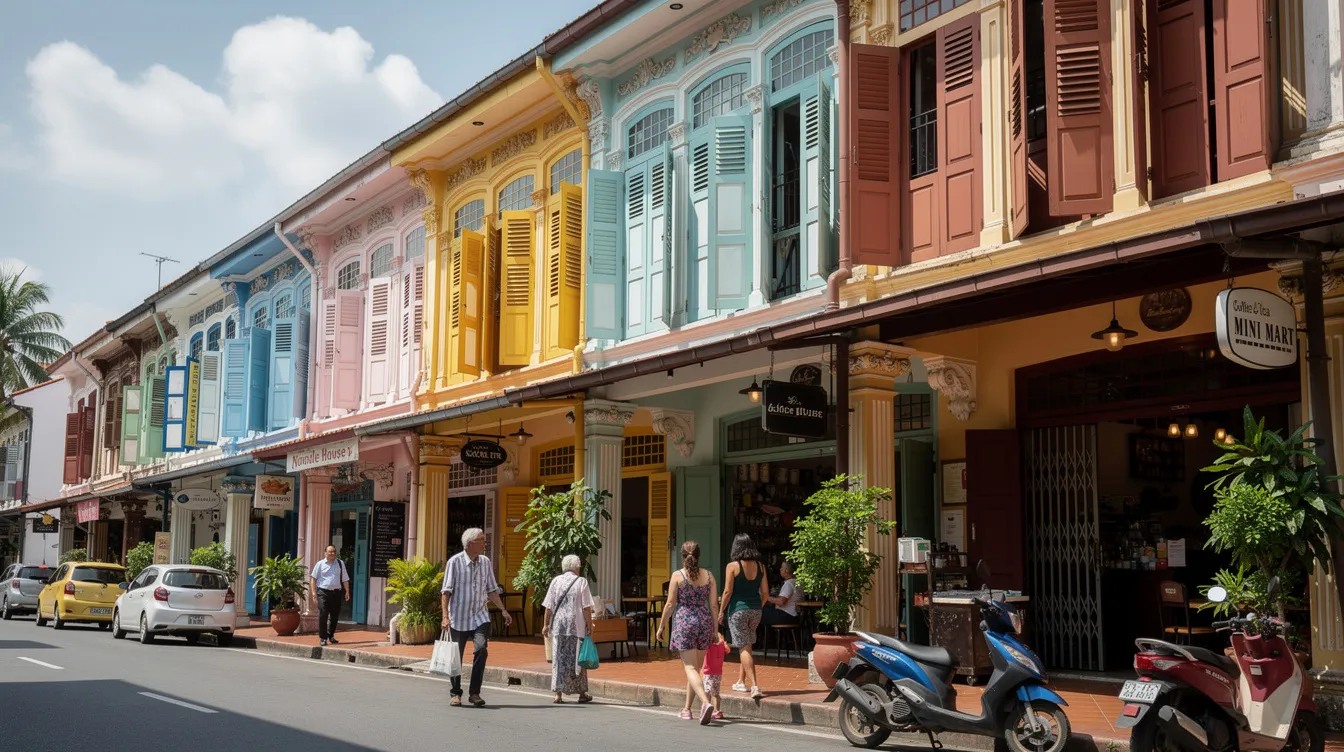
Residential-zoned shophouses are found in areas like Joo Chiat, Emerald Hill, and Blair Plain, where terraced units serve as single-family homes or boutique apartments. Some shophouses that originally had a shopfront have been converted back to purely residential use.
The foreign-ownership implication is stark: these properties are treated as landed residential property under the RPA. Foreigners generally cannot buy such restrictions-bound properties unless approved by the Land Dealings Approval Unit-approval that is rarely granted unless the applicant demonstrates strong ties to Singapore and intends owner-occupation. Restricted residential properties require government approval for foreign buyers.
For non-foreign buyers, ABSD exposure applies based on the residential classification (currently 60% for foreigners on any residential purchase), and progressive residential rates govern property tax rather than the flat 10% commercial rate.
“Commercial & Residential” (Mixed-Use) Zoning
Mixed-use shophouses typically feature commercial use on the ground floor and residential quarters above. This layout is common in Joo Chiat, Geylang, Serangoon Road, Balestier, and parts of Tiong Bahru.
For tax purposes, IRAS and SLA may apportion value between the commercial and residential components. Each component is assessed separately:
-
ABSD applies to the residential portion only-buyer’s stamp duty is apportioned for mixed-use shophouses
-
BSD is calculated at different rate bands for the residential vs non-residential portions
-
Property tax splits between progressive residential rates on the residential component and the flat 10% rate on the commercial component
The foreign-ownership implication: even if the ground floor is fully commercial, the residential upper floors constitute residential land. Foreigners usually cannot buy the whole title without LDAU approval. Mixed-use shophouses may require approval for residential components regardless of the commercial ground-floor tenant.
Some strata schemes carve out residential units separately. In those cases, foreigners may purchase only the purely commercial strata lots-but the documentation must clearly show that the residential use is excluded from the title being acquired.
With zoning distinctions laid out, the next section compares commercial vs residential shophouses side-by-side for foreign investors evaluating investment potential.
Commercial vs Residential Shophouses: Side-by-Side for Foreign Buyers
Understanding the practical differences between commercial and residential zoning is essential for any foreign investor calculating total costs, projected returns, and exit strategy. This section translates zoning rules into tangible financial and operational impacts.
Key Differences at a Glance
|
Criterion |
Commercial Zoning |
Residential / Mixed Zoning |
|---|---|---|
|
Foreign eligibility |
Foreigners can buy freely, no approval needed |
Requires LDAU approval; generally restricted for foreigners |
|
ABSD (foreigners) |
Exempt – 0% |
60% on residential portion or full purchase price |
|
BSD |
Tiered non-residential rates (1%–5% based on property value) |
Tiered residential rates on residential portion |
|
Seller’s stamp duty |
Does not apply to commercial properties |
Applies within holding period for residential purchases |
|
Property tax |
Flat 10% of Annual Value |
Progressive residential rates (owner-occupied or non-owner-occupied) |
|
Financing (LTV) |
Typically 70–80%, assessed on tenant quality and income |
Subject to residential LTV limits; CPF funds cannot be used for commercial property purchases |
|
Typical use |
F&B, retail space, offices, wellness, creative studio |
Dwelling, boutique apartment, serviced residence |
|
Exit liquidity |
Family offices, corporates, international private wealth |
Primarily Singapore citizens and PRs |
Commercial zoning enables easier cross-border capital deployment. Residential zoning suits Singapore citizens and PRs seeking unique heritage homes but creates significant barriers and costs for foreign buyers.
Impact on Investment Returns and Risk
Rental yields for shophouses vary by location and tenant profile. Commercial shophouses in prime districts-Boat Quay, Telok Ayer, Club Street-can deliver good rental yields driven by F&B demand, tourism foot traffic, and office tenants willing to pay premiums for heritage settings. Shophouses in conservation areas have seen strong price appreciation since 2021, with psf prices in Ann Siang and Chinatown reaching S$2,500–S$4,000+ in recent transactions.
However, commercial yields are often more volatile than residential yields, influenced by F&B cycles, tourism patterns, and office market sentiment. Vacancy risk, fit-out capital expenditure, and tenant default are key considerations for commercial units. Banks assess shophouse loans based on tenant quality and income-properties with strong covenanted tenants command better financing terms.
From a foreign investor’s viewpoint, direct residential shophouse exposure is typically obtained indirectly-via local partners, funds, or REITs-rather than through direct title ownership, given such restrictions under the RPA.
How Zoning Shapes Use Flexibility and Exits
Commercial zoning allows a wider range of trades subject to URA, NEA, and SCDF approvals, enabling repositioning over time-for example, converting from an office to upscale F&B or a wellness concept. This flexibility supports resale liquidity because the buyer pool includes both local and international capital.
Residential zoning constrains future use to dwelling, serviced apartments, or boutique hotel only where explicitly permitted under the Hotels Act and relevant licensing. Change-of-use from residential to commercial is substantially harder to obtain.
Exit dynamics differ significantly. Commercial conservation shophouses in prime clusters-such as the portfolio of approximately 50 conservation shophouses offered for sale at around S$500 million-attract family offices and institutional buyers. Residential shophouses appeal mostly to high-net-worth locals and PRs, limiting the foreign resale market.
With this comparison established, the next section walks through the step-by-step process for a foreign buyer to safely acquire a commercial shophouse.
How a Foreign Investor Should Approach Buying a Commercial Shophouse
Even when zoning is clearly commercial, shophouses are complex assets. Conservation property requires navigating heritage rules, tenant arrangements, structural conditions, and financing nuances. A structured process reduces legal, tax, and operational surprises.
Step-by-Step Buying Process for Foreigners
-
Clarify objectives – Are you seeking wealth preservation, high rental yields, business premises, or family office diversification? Your intended use shapes location, budget, and structure.
-
Shortlist precincts and budget – Entry points range from approximately S$8–15 million for Chinatown, Telok Ayer, and Tanjong Pagar, with lower tickets available in Jalan Besar or Kampong Glam. The total acquisition cost for a property includes taxes and various legal fees beyond the purchase price.
-
Preliminary rule-out – Use URA SPACE and basic title information to exclude residential and Commercial & Residential sites immediately.
-
Engage advisors – AESTHETIC HAVENS as your commercial shophouse advisor, plus a conveyancing lawyer and tax advisor familiar with conservation and mixed-use assets.
-
Detailed due diligence – Verify zoning, approved use, tenure, conservation controls, structural condition, and existing tenancies. Compliance with URA conservation requirements is necessary for historic shophouses.
-
Financing and structure – Decide between direct individual ownership vs a Singapore-incorporated SPV company. Obtain term sheets from banks. Loan-to-value ratios for shophouses typically range from 70% to 80%, though foreign buyers may face higher equity contributions for loans.
-
Negotiate, secure Option to Purchase (OTP), and complete legal checks before exercising the option. Zoning affects financing and stamp duty treatment for shophouses, so all clearances should precede commitment.
Many overseas investors make offers before verifying zoning. Reverse that order-verify first, offer second.
Verifying Zoning, Approved Use, and RPA Treatment in Practice
Concrete steps for due diligence include:
-
Check zoning via URA SPACE (URA Master Plan zoning and plot boundary layers). Look for the exact zoning notation: “Commercial,” “Commercial & Residential,” or “Residential.”
-
Title search through a conveyancing lawyer: examine the land description, lot number, encumbrances, and land use classification recorded with SLA.
-
Floor-by-floor approved use: request URA’s written permission or change-of-use history to confirm whether each floor is approved for shop, office, F&B, or residential use.
-
SLA/LDAU clarification: even if preliminary checks suggest commercial-only classification, approach SLA for confirmation when any ambiguity exists-especially in fringe conservation areas.
Structuring Ownership: Individual vs Company vs Fund
Foreign buyers have several structuring options:
-
Individual ownership – straightforward, lower setup costs, but limited estate planning flexibility and personal liability exposure
-
Singapore-incorporated company – offers tax planning possibilities (17% corporate tax rate with partial exemptions), ring-fences liability, and can simplify multi-investor arrangements. However, using a company does not bypass RPA restrictions; the underlying land classification still governs eligibility
-
Family office or investment vehicle – suitable for multi-asset strategies combining shophouses with other investment properties; offers succession planning advantages
AESTHETIC HAVENS works with specialist legal and tax partners for complex mandates where structuring and cross-border considerations intersect.
With process and structure outlined, the next section explores the tax and cost implications specifically for foreign shophouse investors.
Taxes, Duties, and Ongoing Costs for Foreign Shophouse Investors
“Commercial = no ABSD” is only part of the cost picture. Foreign investors must budget comprehensively for stamp duty, goods and services tax, property tax, rental income tax, and capital expenditure.
ABSD, BSD, and Other Upfront Costs
Buyer’s Stamp Duty (BSD) applies to all commercial property transactions in Singapore. Buyer’s stamp duty rates range from 1% to 5% based on property value, applied on a tiered basis. For a commercial shophouse at a purchase price of S$10 million, BSD is calculated progressively across value bands.
Additional Buyer’s Stamp Duty (ABSD): Commercial shophouses are exempt from Additional Buyer’s Stamp Duty regardless of buyer nationality or number of properties owned. Foreigners pay ABSD of 60% only on residential property. For mixed-use titles, ABSD applies to the residential portion-IRAS may apportion based on relative floor area or valuation of each component.
Beyond stamp duty, typical acquisition costs include legal fees, valuation fees, agency commissions, structural and conservation surveys, and-where the seller is GST-registered-GST on the purchase. GST applies to commercial property transactions if the seller is GST-registered.
Property Tax, Rental Income Tax, and GST
-
Property tax on commercial shophouses is levied at a flat 10% of Annual Value (AV), consistent with the rate applied to commercial and industrial properties. If a property has both residential and commercial components, IRAS splits the assessment: the residential portion is taxed at progressive residential rates, while the commercial portion is taxed at 10%.
-
Rental income from commercial use is taxable in Singapore. Individual foreign owners are subject to progressive income tax rates; companies pay 17% corporate tax with potential partial exemptions. Rental yields for commercial shophouses are directly affected by this tax treatment.
-
Goods and services tax at 9% applies to rent collected from commercial space if the landlord is GST-registered (annual taxable turnover exceeding S$1 million). Residential rents are GST-exempt. For illustration: if you collect S$600,000 per year in rental income from a commercial shophouse as a GST-registered company, you would charge tenants an additional S$54,000 in GST and remit it to IRAS.
Financing Considerations for Foreigners
Banks in Singapore treat commercial property lending differently from residential home loans:
-
Loan-to-value ratios for shophouses are typically 70–80%, depending on borrower financial strength, remaining lease duration, and asset quality. Foreign buyers may face higher equity contributions for loans.
-
Interest rates are generally higher and tenors shorter than residential home loans. Financing terms for shophouses vary more than residential loans.
-
MAS’s Total Debt Servicing Ratio framework applies broadly to individual borrowers. Companies are assessed on cash flow and balance sheet strength.
-
CPF funds cannot be used for commercial property purchases.
-
Banks assess shophouse loans based on tenant quality and income. Conservation status, narrow tenant pools, and shorter remaining lease periods can make some banks more cautious, affecting loan to value ratios or pricing. Loan terms depend on property location and remaining lease duration.
With financial implications clarified, the next section addresses the most common pitfalls foreigners encounter when dealing with zoning and mixed-use titles.
Common Zoning and Ownership Pitfalls (and How to Avoid Them)
Many foreign buyers rely on listing descriptions rather than legal definitions, leading to misclassification, unexpected stamp duty ABSD bills, or ownership restrictions that only surface after funds are committed.
Problem 1: Misreading “Commercial” Listing Labels
The issue: Property portals and agent brochures frequently label a unit “commercial shophouse” even if URA zoning is actually “Commercial & Residential” or “Residential”-simply because the ground floor has been used as a shop for decades. Marketing descriptions are not legal definitions.
The solution: Always cross-check the URA Master Plan zoning and title documents before proceeding. Do not rely solely on agent marketing tags or portal filters. Engage a conveyancing lawyer before paying even the option fee, especially for fringe conservation areas like Joo Chiat, Geylang, and Balestier where mixed zoning is common. Prospective buyers should treat every listing as unverified until confirmed by official records.
Problem 2: Underestimating Mixed-Use Stamp Duty and Tax
The issue: A common mistake is assuming ABSD is zero because a shopfront exists, only to discover a substantial ABSD bill on the upstairs residential portion. For Singaporean or PR co-investors partnering with foreign investors, this miscalculation can materially change investment returns and deal viability.
The solution: Request a clear written breakdown from your lawyer or tax advisor on BSD, ABSD, and property tax apportionment before committing. Buyer’s stamp duty is apportioned for mixed-use shophouses, and each property type component carries different rates and treatment. Never assume the commercial ground floor exempts the entire building.
Problem 3: Ignoring Conservation and Use Restrictions
The issue: Some buyers assume they can add floors, change the façade, or convert an entire building to a hotel, hostel, or co-living concept without checking URA Conservation Guidelines and the relevant licensing regime under the Hotels Act. Conservation shophouses require approval for facade alterations, and many intended uses (medical clinic, nightclub, backpacker hostel) have specific zoning and licensing requirements.
The solution: Review URA conservation control plans and the building’s addition & alteration (A&A) history. Confirm whether the intended use-whether F&B, retail, wellness, or hospitality-is permitted for that specific street and zoning designation. Verify fire safety, exhaust, and structural capacity requirements when planning intensive commercial uses. Properties under conservation rules cannot be altered without permission from URA.
With these pitfalls identified, the conclusion provides a concise roadmap for foreign investors ready to act.
Conclusion and Next Steps
Foreigners can buy fully commercial shophouses in Singapore without RPA approval or ABSD, provided the zoning and title are genuinely non-residential. This makes commercial conservation shophouses one of the most accessible premium asset classes in Singapore for international capital-a rare non-residential property type that combines heritage value, rental income potential, and wealth preservation in prime central districts.
Residential and Commercial & Residential titles introduce ownership restrictions, approvals via the Land Dealings Approval Unit, and additional buyer’s stamp duty of 60% that must be understood before any financial commitment. The distinction between zoning categories is not academic-it directly determines legality, cost, and investment returns.
Your next steps:
-
Decide whether your priority is ABSD-free exposure, long-term wealth preservation, own-business premises, or a legacy asset for your family office
-
Shortlist one to two precincts and budget brackets aligned with your goals-for instance, Chinatown and Telok Ayer for prime commercial conservation, or Kampong Glam and Jalan Besar for emerging value
-
Engage AESTHETIC HAVENS to pre-screen shophouses for zoning, RPA eligibility, and due diligence complexity before you travel or commit capital
-
Work with a Singapore-based conveyancing lawyer and tax advisor experienced in conservation property and mixed-use assets
-
Consider whether individual, corporate, or fund-level ownership best serves your investment horizon and succession needs
Related topics worth exploring: comparing shophouses vs strata offices for foreign investors, industrial properties available to overseas buyers, and conservation renovation guidelines for heritage buildings.
Frequently Asked Questions
Can a foreigner buy any shophouse in Singapore, or only commercial ones? Foreigners can only freely buy shophouses that are zoned fully commercial under the URA Master Plan and have no residential land interest in the title. Residential and mixed-use shophouses are restricted under the Residential Property Act and typically require LDAU approval, which is difficult to obtain for investment purposes alone.
Do foreigners pay ABSD when buying a commercial shophouse in 2026? No. Commercial-use shophouses are exempt from Additional Buyer’s Stamp Duty. ABSD of 60% applies only to residential property purchases by foreigners. Buyer’s stamp duty applies on a tiered basis for commercial properties, but this is separate from ABSD.
How do I quickly check if a shophouse is zoned Commercial or Commercial & Residential? Use URA SPACE or URA’s online Master Plan map to look up the specific land parcel. The zoning notation will indicate “Commercial,” “Commercial & Residential,” “Residential,” or another category. Always confirm with a title search and legal opinion before relying on this initial check.
Does buying a commercial shophouse qualify me for Singapore PR or work passes? No. Purchasing commercial property in Singapore does not confer immigration benefits. PR applications and work passes are assessed under entirely separate frameworks managed by ICA and MOM respectively.
What is the minimum investment size foreigners should expect for a commercial shophouse? Entry-level commercial conservation shophouses in less central districts may start from approximately S$5–8 million, while prime locations such as Boat Quay, Telok Ayer, or Tanjong Pagar typically command S$10–30 million or more. A Neil Road shophouse sold for S$7.2 million (approximately S$3,000 psf) in late 2024 with about 62 years of remaining lease.
Are freehold commercial shophouses treated differently from 99-year ones for foreign buyers? Foreign eligibility is the same regardless of tenure-freehold, 999-year, and 99-year commercial shophouses are all accessible. However, remaining lease significantly affects bank valuations, financing terms, and long-term investment potential. Many conservation shophouses are 99-year leasehold with 60–70 years remaining, and lease expiry risk should be factored into pricing and exit strategy.
Can I convert a commercial shophouse into a residence as a foreign owner? Converting a commercial shophouse to residential use would reclassify the property as residential land, triggering RPA restrictions and making foreign ownership illegal without LDAU approval. Such a change of approved use also requires URA planning permission, which may not be granted.
How can AESTHETIC HAVENS help me as an overseas investor shortlisting units from abroad? AESTHETIC HAVENS can conduct zoning verification, URA and SLA checks, and ownership eligibility assessments on specific shophouses before you visit Singapore. This includes filtering listings by commercial property type, coordinating with conveyancing lawyers, and providing photo-based condition assessments-ensuring that every unit on your shortlist is genuinely foreigner-eligible and aligned with your investment objectives.
Ready to verify whether a specific shophouse is eligible for foreign purchase? Contact AESTHETIC HAVENS for a zoning and ownership eligibility review, including URA/SLA checks and a comprehensive due diligence assessment tailored to overseas investors.

