


The best family neighborhood in Singapore is the one that fits your child’s school plan, your commute, your housing type and your budget at the same time. There is no single winner. Woodlands, Serangoon, Bukit Timah, Marine Parade and the east coast each suit a different kind of household, and the 1km primary school rule is changing for 2027. At Aesthetic Havens, we help families match an area and a home to those priorities before they commit, and this guide shows you the logic we use.
TL;DR
- Decide your fixed points first: school, commute, housing type and budget. Then shortlist areas, not the other way round.
- For Primary 1 (P1), living within 1km of a school gives Singapore Citizens the top distance priority only if the school is oversubscribed. It is not a guaranteed place.
- From the 2027 P1 Registration Exercise, almost all schools will reserve 60 Phase 2C places instead of 40, and 12 schools will use a two-track system with no distance priority inside either track.
- A child admitted on distance must live at the registered address for at least 30 months, so buy or rent with that horizon in mind.
- Compare areas on what your family will use weekly: parks, a pool, a supermarket, a preschool, and a realistic door-to-door commute.
Table of Contents
- What “best” means for a family
- Family neighborhoods and what defines each
- What to compare beyond the postcode
- Living within 1km of a primary school
- Matching neighborhood to family situation
- Where we can help
- FAQ
- Sources
What “best” means for a family
Search results for this topic tend to list the trendiest areas: Tiong Bahru, Katong, Holland Village. Those are lovely places to walk around. A family choosing where to live for the next five to ten years asks different questions. Will my child get into a school we can reach on foot? Is there a park for weekend mornings? Can both parents commute without losing two hours a day? Can we afford the type of home we need?
So start with four fixed points and rank them:
- School access. Which primary schools do you realistically want, and does your timeline match the P1 registration calendar?
- Commute. The MRT line or expressway each working adult relies on matters more than the postcode’s reputation.
- Housing type. HDB flat, condominium or landed home. Each is a different purchase with different rules and costs. Our HDB vs private property guide walks through that decision.
- Budget. Your price ceiling, plus the cost of any renovation and the cash you want to keep in reserve.
Once those are ranked, the area usually narrows itself.
Family neighborhoods and what defines each
The Singapore Economic Development Board (EDB) publishes neighborhood profiles for families relocating to Singapore. Combined with Housing & Development Board (HDB) town planning information, they give a reliable first picture.
Woodlands
EDB describes Woodlands as a family suburb with Marsiling Park, Admiralty Park and Treehaus Park for strolls and cycling, plus landed houses with gardens at reasonable prices as an alternative to apartment living. It also notes a large American expat community around the Singapore American School. Woodlands suits families who want green space and room, and who can accept a longer trip to the city centre.
Serangoon
EDB notes that French and Australian expat families favour Serangoon because of nearby French and Australian international schools. If your child will attend one of those schools, a short school run can outweigh almost every other factor.
Bukit Timah
EDB describes Bukit Timah as nature- and school-oriented, with costlier housing. Bukit Timah is one of the three estates HDB lists alongside its 24 towns, and it is among the areas named in the 2027 P1 changes covered below. Families weighing a freehold home near the Novena side against a leasehold home in Bukit Timah can read our comparison of The Serra Residences and Dunearn House. If landed living is the goal, start with our guide to buying landed homes.
Holland Village
EDB calls Holland Village a lively food and nightlife hub. Families who like walkable dining and an international feel will find it appealing. Newer private developments there, such as One Holland Village Residences, a 99-year leasehold District 10 project that reached temporary occupation permit in July 2024, include family facilities like a 50m lap pool. That project is fully sold, so it illustrates what the area offers rather than what is available.
Katong, Marine Parade and Tiong Bahru
Katong and Tiong Bahru are heritage areas. The Urban Redevelopment Authority records that Tiong Bahru was Singapore’s first comprehensively planned modern housing estate. Katong’s preserved pre-war shophouses support a community of heritage businesses, which the Katong-Joo Chiat Business Association champions. Marine Parade is another of HDB’s three estates, and a school area named in the 2027 changes. These areas reward families who value character and food within walking distance. For the east side, our look at the Bedok Rise new launch shows how a new development sits next to Tanah Merah MRT.
Tampines and the new-town option
Families who want a mature new town with a mixed-use hub nearby can look at Tampines West, where the Pinery Residences mixed-use development is part of the area’s future. For a broader overview of expat and local favorites, see our guide to the best neighborhoods in Singapore.
A quick comparison
| Area | What stands out | Best for |
|---|---|---|
| Woodlands | Parks, landed homes with gardens, American school nearby | Families wanting space and greenery |
| Serangoon | Near French and Australian international schools | Expat families tied to those schools |
| Bukit Timah | Nature and schools, higher prices | Families prioritising school-led living |
| Holland Village | Dining and nightlife hub, private developments | Families wanting a lively, walkable base |
| Katong, Tiong Bahru | Heritage character | Families who value atmosphere and food |
| Marine Parade | HDB estate, school area in 2027 changes | East coast families focused on schools |
The descriptions come from EDB’s neighborhood profiles and the planning information cited above. Prices change constantly, so treat every area as a starting point and check current listings before you decide.
What to compare beyond the postcode
Two areas can look identical on a map and live very differently. Compare these on foot, at the times your family will actually be out.
Daily amenities. A new HDB project shows what a good family precinct includes. HDB’s December 2023 brochure for Jurong Arcadia lists a supermarket, an eating house, a residents’ network centre and a preschool within the project, across 716 flats from 2-room Flexi to 5-room. Use that as a template: what is within a five-minute walk of the block you are considering?
Swimming and sports. Many Singapore families build weekend routines around public pools. Parents new to the system will find the ActiveSG pool rules for families a handy primer on how pool visits work, and a pool within easy reach is worth weighing alongside parks.

Commute. Test the route at 8 a.m. on a weekday, not on a Sunday viewing.
Housing stock. Older estates tend to have larger flats, while newer ones offer modern layouts and lifts. Private condominiums bring facilities such as pools and function rooms. Our guide to the best condos in Singapore sorts options by lifestyle.
Affluent districts. If prime areas are on your list, District 9 and District 10 are the usual starting point. Our District 9 vs 10 comparison explains how they differ for residents.
Living within 1km of a primary school
Families often search for homes within 1km of a primary school. Here is what that means in practice.
How the priority works
When a school has more applicants than places in a registration phase, the Ministry of Education (MOE) ranks them. According to MOE’s P1 distance page, priority follows six tiers: Singapore Citizens living within 1km, Singapore Citizens at 1 to 2km, Singapore Citizens beyond 2km, then the same three distance bands for Permanent Residents. Distance is based on the address used for registration.

If a school is not oversubscribed in a phase, distance does not matter. And even inside the 1km band, a place is not guaranteed, because many children may qualify for the same few places.
The 30-month rule
A child admitted through the distance category must live at the registered address, the registering parent’s NRIC address, for at least 30 months from the start of the P1 Registration Exercise. For a new property the clock starts at move-in, and for a resale property from the start of the P1 term. If the condition is not met, MOE can transfer the child to any school at its discretion. Buyers should build this into their plans: do not sell or move within that window.
What changes in 2027
MOE announced on 10 September 2026 that, from the 2027 P1 Registration Exercise (for children starting P1 in 2028), Phase 2C places rise from 40 to 60 at almost all schools. Smaller schools with intakes under 180 pupils are excluded, and leftover places from earlier phases are added to Phase 2C.
There is a second change. Twelve schools in areas where public housing is under 40% of homes within 2km, including schools in Bukit Timah and Marine Parade, will split their 60 Phase 2C places into two equal tracks: 30 for children within 2km and 30 for those beyond. There is no home-school distance priority inside either track, so a child at 800m has no edge over one at 1.8km.
The practical effect is that paying a premium for a home just inside 1km of a popular school buys less certainty than it used to, particularly at those 12 schools. A PropNex research head told The Straits Times it is too early to tell how the property market will respond, but expects a slight moderation or redistribution of school-driven demand around them. Registration also runs in phases, with dates that shift each year, so confirm the current calendar on MOE’s site before you plan a purchase.
Checking a property’s distance
Before you commit, confirm the distance for the exact unit and the exact school using MOE’s official guidance on its distance page. Do it before the option fee, not after. An agent who has handled school-sensitive purchases can check this with you as part of the shortlist. Our guide on timing your move around P1 registration sets out the sequencing for upgraders with young children.
Matching neighborhood to family situation
Here is how the ranking exercise plays out for typical households.
Toddler now, P1 in three years. You have time. Prioritise the commute and housing type first, then pick the area that will have several acceptable schools within reach. With the 2027 changes, flexibility beats betting on a single school.
Child entering P1 within a year. Check the school’s recent registration patterns and the 30-month rule before anything else. If you are buying a new launch, remember that the 30 months begin at move-in, and construction takes years.
Expat family with international schooling. Let the school pick the area. Serangoon and Woodlands both appear in EDB’s guidance for that reason.
Upgraders with a larger budget. Compare condominium living in a district such as 9 or 10 against landed options. Our Singapore new launches buying guide covers how launches work.
Investors who also want a family home. Look at areas with steady rental demand and good schools. Both goals point to similar neighborhoods, but the exit strategy should be planned from day one.
Our view: pick the life first, then the address
We see the neighborhood question as an objectives question. Families who start with a postcode often end up chasing a name. Families who start with where they want to be in ten years, whether that is an own-stay home, a first step toward a larger portfolio or a legacy property, make steadier decisions.
Our background spans engineering and real estate, and we use both: engineering for how a building and its surroundings will hold up, real estate for the numbers and the exit. We guide clients on their objectives and exit strategies, and we support them after purchase with renovation and regulatory advice. For a family, that means the school rules, the 30-month stay and the resale route are all discussed before you sign, not after.
The 2027 P1 changes are a good example. They reduce what a few metres of distance can buy, so the smarter move is to choose an area with strong overall liveability and several school options.
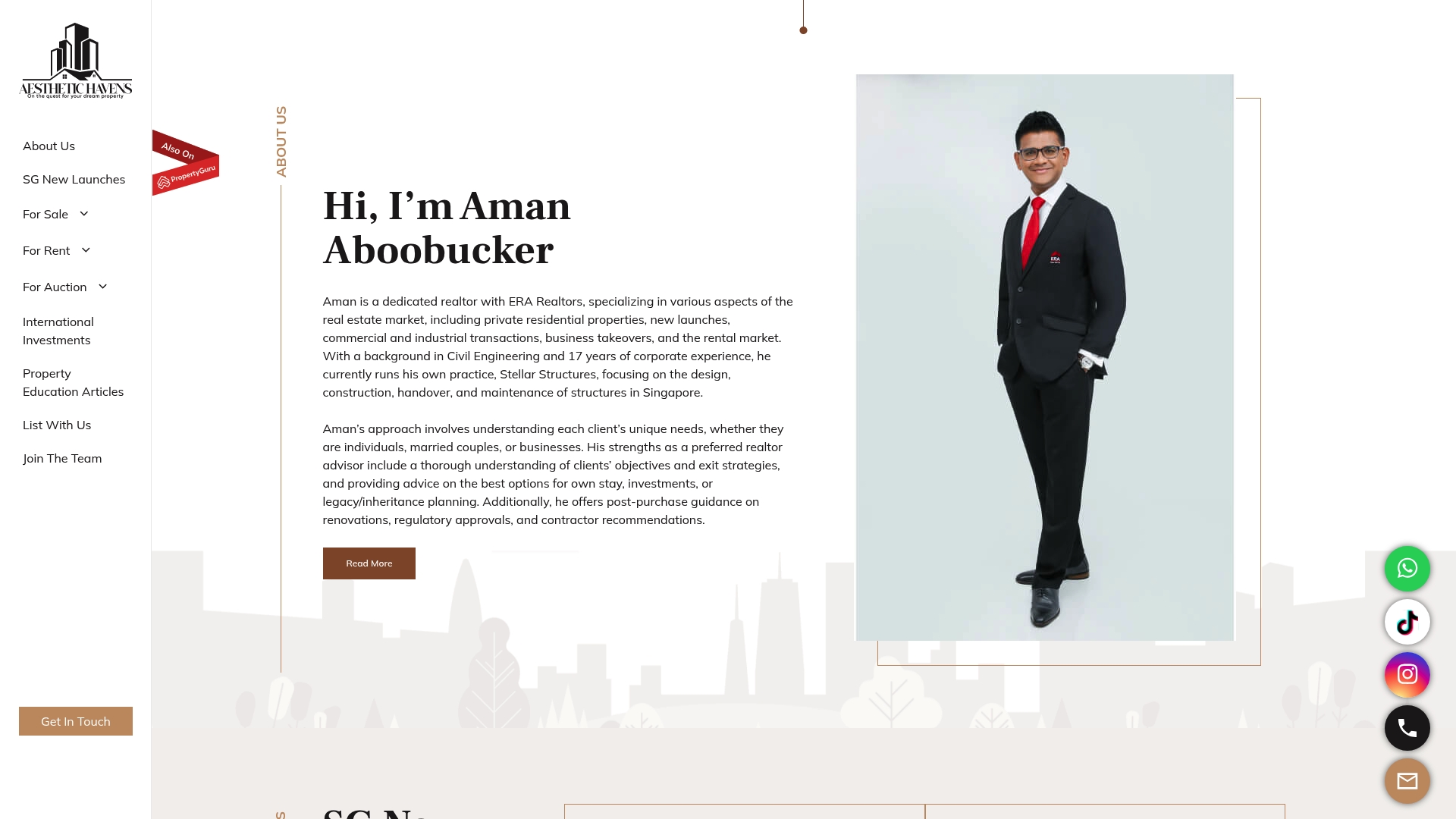
Aman
Where we can help
If you are ready to turn a shortlist into viewings, we cover residential listings, new launches and property valuation for owners planning to sell before upgrading. Aesthetic Havens operates under ERA Realtors, and our consultancy covers buying, selling, renting and investing across residential, commercial, industrial and international property.
To discuss your family’s priorities and which areas fit them, start from our consultancy page. It also helps to read why a property consultant benefits buyers before your first viewing.
FAQ
Does living within 1km guarantee a primary school place?
No. Distance only matters when a school is oversubscribed in a phase, and many families may qualify for the same places. MOE ranks Singapore Citizens within 1km first, ahead of those at 1 to 2km and beyond, with Permanent Residents ranked after in the same bands.
Will the 2027 P1 changes affect where I should buy?
Potentially. Phase 2C places rise from 40 to 60 at almost all schools, and 12 schools will use two tracks with no distance priority inside either. Families targeting a specific school should confirm that school’s status on MOE’s site before buying.
How long must we stay at the address after a distance-based admission?
At least 30 months from the start of the P1 Registration Exercise. For new properties the count starts at move-in, and for resale properties from the start of the P1 term. Failing to meet it lets MOE transfer your child to another school at its discretion.
Which areas suit expat families?
EDB points to Woodlands for American families, near the Singapore American School, and to Serangoon for French and Australian families, near their international schools. Bukit Timah and Holland Village are also popular for their schools and lifestyle.
Sources
- Moving to Singapore: Which Neighbourhood is for You (EDB)
- What You Need to Know About Living in Singapore (EDB)
- Tiong Bahru Conservation Area (URA)
- Katong-Joo Chiat Business Association
- One Holland Village Residences (Far East Organization)
- HDB Jurong Arcadia sales brochure, December 2023
- How distance affects priority admission for P1 registration (MOE)
- How will the P1 registration changes affect children (The Straits Times)
- New rules for P1 registration could widen home search (The Straits Times)


