

Introduction: A Complete Guide
As 2026 draws to a close, the Singapore new launch market is thinning out fast. Many of the year’s marquee projects have already moved 60–80% of their inventory, and the window to secure well-priced balance units is narrowing. This is Aman Aboobucker’s year end guide – a focused, data-driven assessment of which 2026 launches still offer genuine value before the 2027 pipeline resets the playing field with higher land costs and fresh competition.
This complete guide does not attempt to review every project that launched this year. Instead, it zeroes in on unsold balance units across mass-market to upper-mid private condos in Singapore’s OCR, RCR, and selected CCR segments – excluding ECs, landed, and ultra-luxury trophy plays. The focus is on fundamentals that hold up under stress, not showflat aesthetics or promotional noise. Property evaluation should consider structural quality beyond marketing appeal, and that principle drives every recommendation here.
Aman’s direct answer on the best new launch to buy now: five concrete projects still look attractive going into 2027 – Lucerne Grand (Jurong Lakeside, OCR), Thomson Reserve (Upper Thomson, RCR fringe), Vela Bay (Bayshore, OCR), Dunearn House (Bukit Timah, CCR), and Hudson Place Residences (one-north, RCR). Each clears at least three of four value anchors: psf vs land cost, MRT proximity, school catchment, and 7–10 year exit potential.
This guide is built for HDB upgraders, business owners, and investors who want one defensible decision – not a speculative flip. Here is what you will walk away with:
-
A clear understanding of Aman’s 2026 value framework covering psf, MRT access, schools, and exit potential
-
A side-by-side comparison of all five remaining 2026 picks with hard numbers
-
Specific stacks and bedroom types to prioritise and which to avoid at each project
-
A practical decision framework for whether to pull the trigger now or wait for 2027
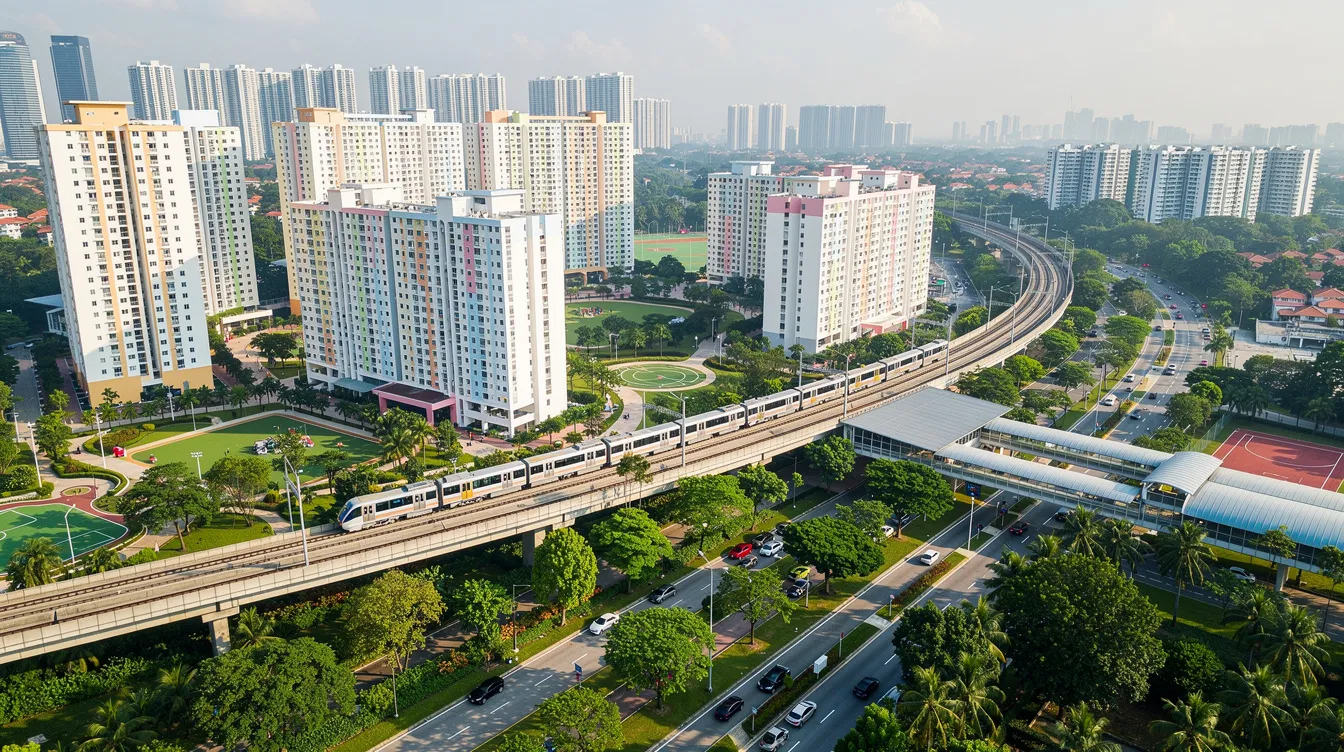
Understanding Aman’s 2026 “Still Worth Buying” Framework
By November 2026, most 2026 launches have cleared their prime inventory. What remains are balance units – and “value” at this stage means unsold stock that still stacks up on fundamentals, not units sitting around because of weak demand dressed up with headline discounts. The property supply is tightening in the new launch market heading into 2027, which means buyers need to be sharper than ever about what they are actually getting.
AESTHETIC HAVENS builds an independent, data-driven view that draws on Aman Aboobucker’s background in industrial and commercial property advisory, applied here to residential new launches. The approach overlays URA Master Plan signals, GLS pipeline data, MRT infrastructure maps, school catchment analysis, and cost metrics – land cost psf ppr, launch psf, and comparable resale psf – to arrive at defensible picks rather than sentiment-driven ones. Five key Singapore property projects are recommended for evaluation in late 2026 using this methodology.
The Four Value Anchors: MRT, $psf, Schools, Exit Potential
Each anchor is evaluated not as it looked on launch day, but as it stands at year-end 2026 with updated transaction data and inventory levels.
MRT Proximity: Aman Aboobucker evaluates properties based on MRT accessibility as a non-negotiable filter. MRT access should ideally be within 500 to 600 meters of a station – sub-10 minutes of actual walking, with preference for operational lines (TEL, CCL, EWL) over future-only stations. Operational MRT access directly affects rentability and price resilience in downturns, making it the single strongest anchor for both own-stay and investment buyers.
$psf vs Land Cost and Resale: Properties are assessed for launch price per square foot relative to land cost. The comparison runs three ways: developer’s land cost psf ppr, current asking or transacted launch psf, and resale transactions within 1 km on the same MRT line as at Q3/Q4 2026. When launch psf runs far ahead of nearby resale without better connectivity or amenities to justify it, the risk of overpaying rises sharply. There is a lower launch price bracket in the Outside Central Region, while Core Central Region properties have higher price expectations due to location scarcity.
Schools Within 1 km: Proximity to popular primary and secondary schools is a key evaluation criterion. Projects within 1 km of MOE primary schools with historically strong P1 demand – names like Ai Tong, Rulang, Nanyang, Shuqun – carry a demand buffer that holds regardless of market cycle. School-belt pricing is sticky; it compresses less in downturns and recovers faster.
Exit Potential: Exit potential considers capital appreciation and resale viability over 7 to 10 years, looking into the early-to-mid-2030s. This factors in URA Master Plan precinct transformations, GLS pipeline for competing supply, and lease decay dynamics for 99-year sites launched in 2026. Buyers should evaluate future project supply within 1 km to assess potential resale value – a step most skip but one that separates informed buyers from hopeful ones.
Aman only shortlists projects that are defensible on at least three of the four anchors.
Who This Year-End Guide Is For (and Who Should Wait for 2027)
Profiles that should actively consider buying from 2026 inventory:
-
HDB upgraders whose Minimum Occupation Period ended in 2025–2026, sitting on S$600k–1M in equity, with children approaching P1 registration in the next 2–4 years. For these buyers, school catchment and MRT convenience are immediate lifestyle needs, not abstract selling points.
-
Business owners needing a stable home base near specific industrial or employment clusters – Jurong, one-north, Changi, Bayshore – who benefit from reducing commute cost and aligning their residence with operations. These owners also gain from hedging against rising commercial rents by securing a well-located residential asset.
-
Yield-focused investors who prioritise MRT proximity and proven tenant pools near business parks, ports, R&D hubs, and industrial nodes. The interest here is stable capital preservation, not speculative flipping.
Profiles better off waiting for 2027:
-
Buyers fixated on very specific CCR micro-locations where 2026 has no good remaining stock – certain ultra-luxury belts where inventory is either sold out or priced at levels that stretch sustainable returns.
-
Those with unstable income, unclear 7–10 year plans, or high sensitivity to ABSD exposure and additional loan risk. Cashflow risk from mortgage resets, vacancy, and property tax increases weighs heavily on short-horizon buyers.
With this lens established, Aman narrows the field to a handful of 2026 launches that still make the cut going into 2027.
Aman’s 2026 Shortlist at a Glance: Best New Launches to Buy Now
For busy readers who want the cheat sheet before the deep dives, here are Aman’s remaining 2026 favourites – each tied directly to MRT, psf, and school fundamentals. Full project breakdowns with stack-level analysis follow in the next section.
-
Lucerne Grand (Jurong Lakeside, OCR): Value-entry western family node with Lakeside MRT at the doorstep (~130–150 m walk), Rulang and Shuqun Primary within 1 km, and unsold units available in the S$2,270–2,650 psf range. Lucerne Grand is positioned for capital appreciation due to Jurong Lake District development.
-
Thomson Reserve (Thomson View Redevelopment, RCR Fringe): Central-north school belt play near Ai Tong and Catholic High, dual MRT access via Upper Thomson TEL (~2-minute walk) and Bright Hill CCL, with indicative pricing at S$2,450–2,810 psf. Thomson Reserve appeals to families due to its proximity to Ai Tong Primary School.
-
Vela Bay (Bayshore Waterfront, OCR): First-mover TEL-integrated site with partial sea views and strong rentability to Changi, Suntec, and CBD workforce. Vela Bay offers waterfront living and direct connectivity to Bayshore MRT, with median psf at ~S$2,867 and approximately 24% inventory still available.
-
Dunearn House (Bukit Timah / Turf City, CCR): Legacy CCR school-belt buy near Nanyang Primary and Hwa Chong, with Sixth Avenue MRT access and future Turf City MRT station. Median psf ~S$3,107 with a long-term holding bias. Dunearn House targets affluent families with access to elite schools.
-
Hudson Place Residences (one-north / Media Circle, RCR): Investor-tilted project near the tech and biomedical cluster. Hudson Place Residences is positioned near the one-north tech hub, with median psf ~S$2,480 and solid rental prospects from knowledge workers. Approximately 80% sold with ~67 units remaining.
All price bands and distances reflect latest Q4 2026 developer pricing and URA transaction data.
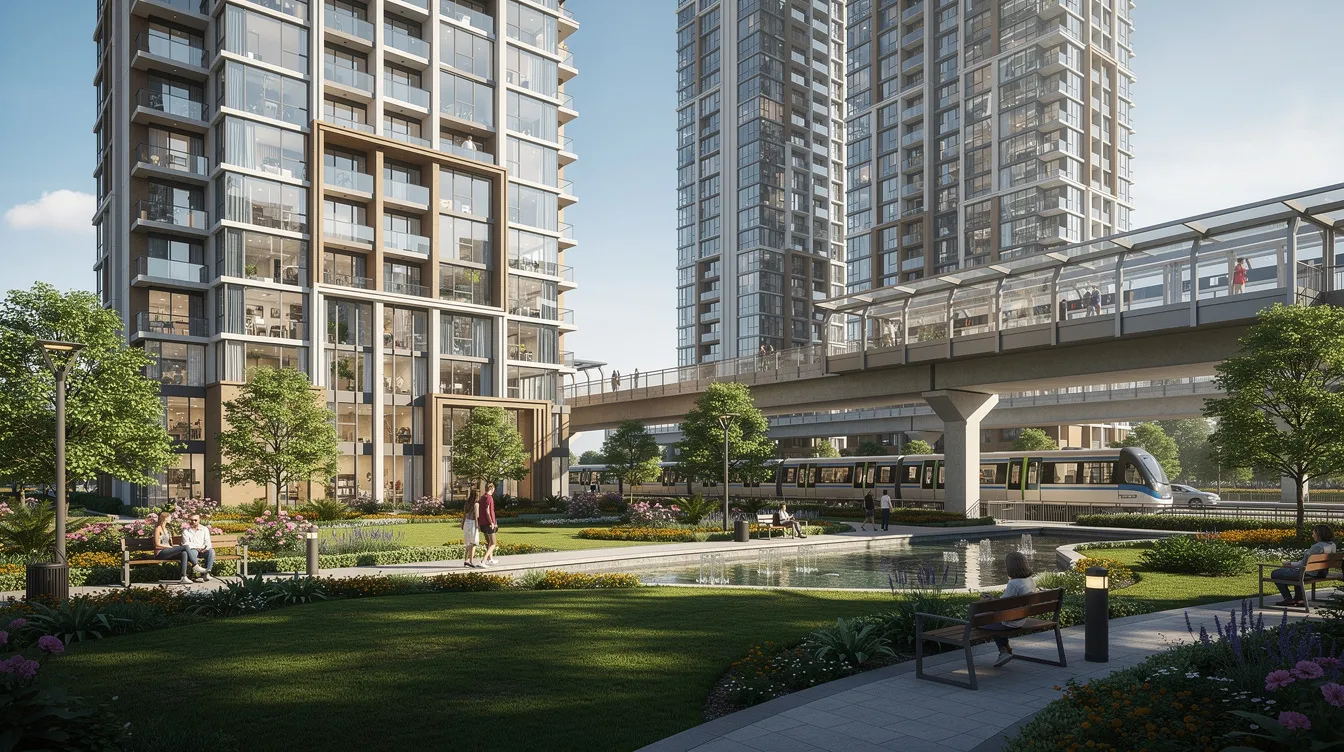
Project Deep Dives: Why These 2026 Launches Still Offer Value Before 2027
At year-end, smart selection is stack-by-stack and unit-type specific, not just “project good / project bad.” The following deep dives cover each project’s key stats, psf context, MRT and school proximities, target buyer profile, and exit risks – everything needed to make a defensible call on the best new launch to buy now.
Lucerne Grand and Aman Beverly Hills (Jurong Lakeside, D22, OCR)
Lucerne Grand is a 570-unit, five-tower mixed-use development by CDL with units ranging across 2, 3, and 4-bedroom configurations. The project previewed from 18 September 2026, with booking day on 3–4 October. Expected TOP falls around Q3/Q4 2029 to 2031. The 99-year leasehold site sits directly opposite Jurong Lake Gardens, a magnificent urban green space that gives the project genuine lifestyle substance beyond its residential function. Mixed-use components including retail and F&B at podium level appeal to the Jurong industrial and port workforce as well as families.
Land cost and psf logic: The land was acquired via GLS in June 2025 at approximately S$1,132 psf ppr. Launch weekend average psf came in at ~S$2,480, with unsold units currently listed between S$2,270–2,650 psf. Two-bedrooms start from ~S$1.498M (~S$2,400 psf), three-bedrooms from ~S$1.988M (~S$2,251 psf), and 4-bedroom premiums from ~S$2.788M (~S$2,420 psf). The margin between land cost and launch psf is healthy but not excessive – a good sign for exit value.
MRT access: Direct connection to Lakeside MRT (East-West Line) within approximately 130–150 m, under a 3-minute walk. This provides seamless connectivity to the Jurong Lake District – URA’s major transformation precinct – and onward to Tuas industrial estates, CBD, and Changi.
Schools: Within 1 km sit Rulang, Shuqun, Lakeside, and Boon Lay Garden Primary – schools with consistent P1 Phase 2C demand. An address at Lucerne Grand confers catchment priority in balloting, making it especially attractive for west-side families with young children.
Who should consider Lucerne Grand in Q4 2026:
-
HDB upgraders from Jurong West, Yuhua, and Boon Lay who want to stay near family and work
-
Investors targeting rents from engineering, logistics, and industrial employees needing MRT access
Main risks: Transformation timing for Jurong Lake District may lag forecasts. Potential GLS competition from future OCR western sites could pressure resale values. Lease decay for 99-year tenure becomes more relevant for buyers with exit horizons beyond 20 years.
Stack advice: Focus on efficient 2BR and compact 3BR units, low-to-mid floors for quantum management, north-south facing stacks to reduce afternoon heat. Avoid top-floor trophy units or large 4-bedrooms that carry high quantum with longer holding periods and greater sub-market exposure.
About 221 units remained unsold out of 570 after launch weekend (~39% inventory) as of early October 2026.
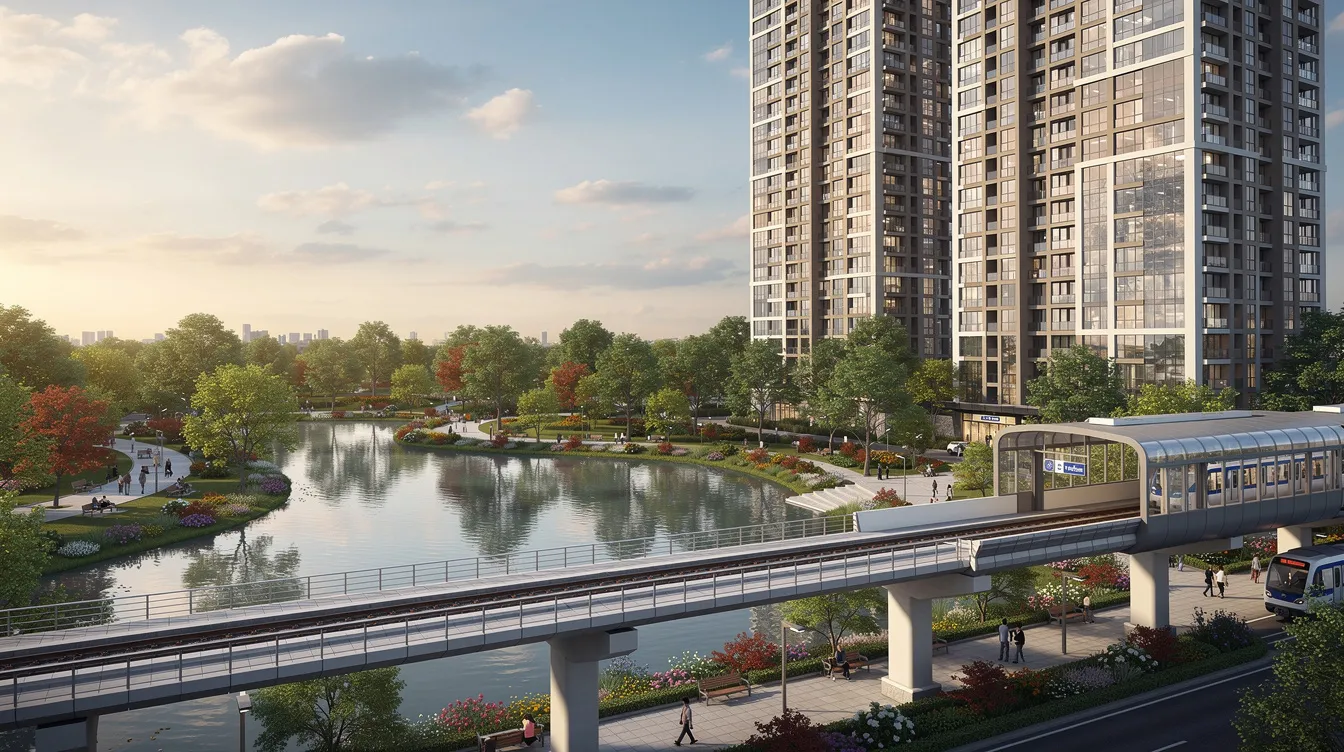
Thomson Reserve and Aman Nai Lert Bangkok (Thomson View Redevelopment, D20, RCR Fringe)
Thomson Reserve is the redevelopment of the former Thomson View, brought forward by a consortium of UOL, CapitaLand Development, and Singapore Land Group. At approximately 1,268 units with 1,014 carpark lots, it is one of the largest 2026 launches. The 99-year leasehold project offers 2 to 5-bedroom configurations. Showflat preview began mid-October 2026, with booking day on 31 October. TOP is expected in the early 2030s.
Pricing and psf: Indicative launch psf ranges from S$2,450 to S$2,810, with starting quantum from around S$1.59M for smaller units. Some premium blocks and stacks push toward S$2,750–3,200 psf. This positions Thomson Reserve at the upper end of RCR fringe pricing, but the school belt and dual MRT access provide rational support.
MRT and connectivity: Approximately 2-minute walk to Upper Thomson MRT (Thomson-East Coast Line), with Bright Hill MRT (Circle Line) also within a 10–15 minute walk. This dual-line access enables fast commutes to Orchard, CBD, one-north, Novena, and Marina Bay – a connectivity profile that few RCR fringe projects can match.
Schools and environment: Ai Tong Primary sits within approximately 1 km, with Catholic High and other prominent schools in the Upper Thomson/Bishan corridor within realistic catchment. Proximity to MacRitchie Reservoir and Windsor Nature Park adds lifestyle premium – a lush green belt that appeals to families seeking both academic advantage and natural surroundings that evoke a sense of tropical serenity.
Target buyers:
-
Families upgrading from Bishan or Ang Mo Kio, already planning for Ai Tong or Catholic High P1 entry
-
Dual-income professionals needing fast access to CBD and Novena while staying in the north-central corridor
Risks: Psf nearing CCR levels makes larger 4BR and 5BR stacks very high quantum, potentially limiting the resale buyer pool. Competition from future GLS plots and ageing nearby freeholds could also weigh on exit pricing.
Stack advice: Focus on regular 3BR layouts with good efficiency and north-south orientation in mid-floor positions. Avoid oversized 4–5 bedroom units unless holding for 20+ years. Stacks facing busy roads or full west-facing afternoon sun should be deprioritised.
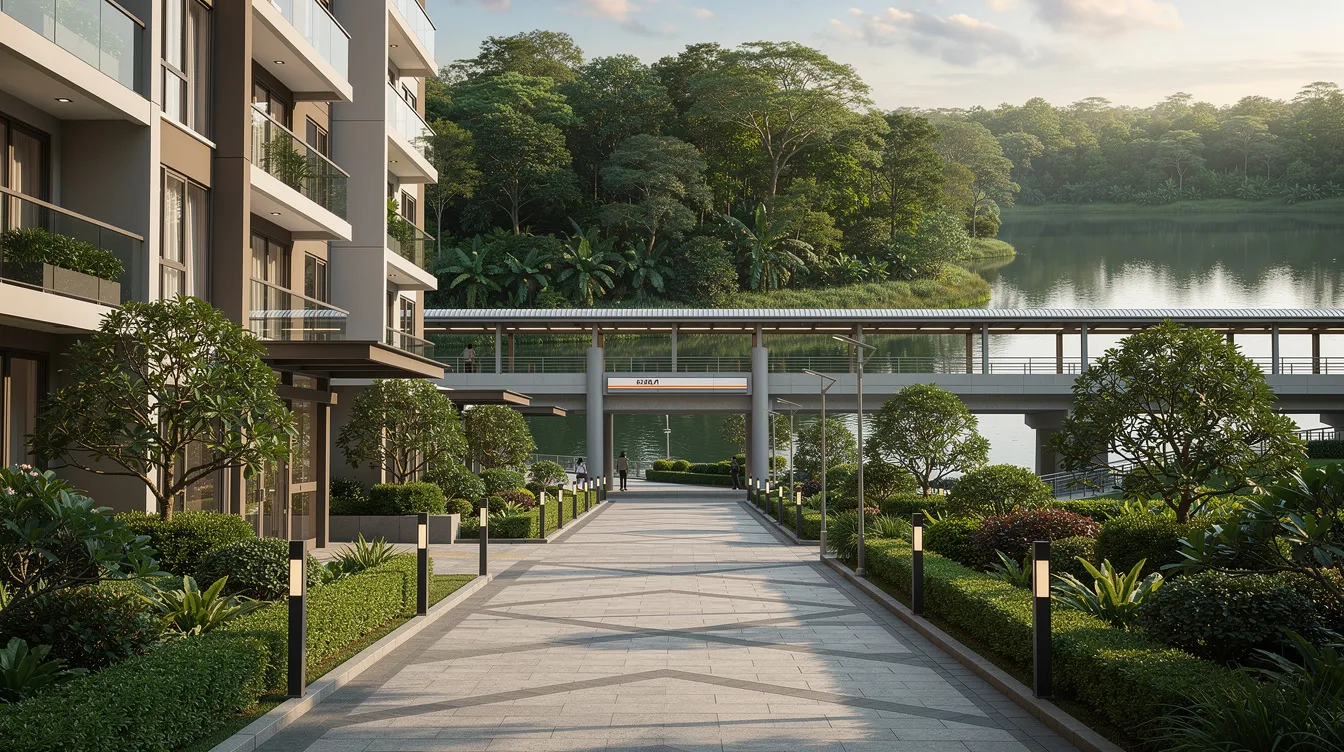
Vela Bay (Bayshore Waterfront Precinct, D16, OCR)
Vela Bay is the first private residential development on the Bayshore GLS site – a first-mover in a precinct that URA has master-planned as a major waterfront residential node. The 99-year leasehold project comprises approximately 515 units across 1 to 5-bedroom configurations, with an estimated TOP around December 2030. The site area spans roughly 10,497 sqm.
Pricing and psf: Median transacted psf sits at approximately S$2,867. Entry-level 1-bedrooms start from ~S$1.466M, 2-bedrooms from ~S$1.695M, with premium units pushing above S$2.8M. These figures run above older East Coast resale condos, but the TEL integration, waterfront positioning, and precinct newness provide structural justification for the premium.
MRT and infrastructure: Adjacent to Bayshore MRT (TEL), which connects directly to CBD, Orchard, Marine Parade, and Changi Airport. The Bayshore precinct is a new master-planned area with future retail and lifestyle amenities. East Coast Park access adds genuine lifestyle value – an accessible coastal environment that few OCR projects can claim.
Schools and lifestyle: Temasek Primary falls within 1 km, with secondary institutions including Victoria School, Temasek Junior College, and SUTD in reasonable catchment. The East Coast lifestyle – dining, cycling, parks – draws both local families and expatriate tenants.
Ideal buyers:
-
East-side upgraders from Bedok, Siglap, and Marine Parade wanting TEL benefits
-
Investors eyeing long-run tenant pool from Changi Airport, Changi Business Park, and downtown offices
Risks: Future clustering of Bayshore GLS sites may cap capital upside if units are bought at top-end psf. Coastal precinct development could bring construction noise and traffic in the medium term.
Stack advice: Prefer mid-floor partial-sea or waterfront view stacks at reasonable quantum. Avoid high-floor trophy units with stretched psf and back-of-tower positions far from MRT access.
Approximately 76% of units were sold as of late Q3 2026, leaving roughly 123 units (~24% inventory) still available.
Dunearn House (Bukit Timah / Turf City, D11, CCR)
Jointly developed by Frasers Property, CSC Land Group, and Sekisui House, Dunearn House is a 380-unit, 99-year leasehold development in the prestigious Turf City precinct – the first private residential project in that masterplan. Preview began 10 July 2026, with booking from 25 July. The location near the Swiss Club landed enclave and along the established Bukit Timah corridor carries legacy CCR weight. Prices start from S$1.475M.
Pricing and psf: Median developer sales psf sits at approximately S$3,107. CCR school-belt assets rarely transact much below S$3,000 psf in 2026, and the combination of Bukit Timah address, dual MRT access, and elite school proximity provides rational support for the premium.
MRT and location: Sheltered walk to Sixth Avenue MRT (Downtown Line), with a future Turf City MRT station that will add further connectivity. The Bukit Timah corridor offers established infrastructure, mature greenery – practically a garden city enclave within the CCR – and proximity to both nature reserves and the botanical gardens precinct.
Schools: The school belt here is arguably Singapore’s deepest: Nanyang Primary, Raffles Girls’, Methodist Girls’, Hwa Chong Institution, and National Junior College all sit within realistic catchment. This multi-generation school-belt advantage is a pricing anchor that transcends market cycles.
Target buyers:
-
Affluent families likely to hold 10–20 years or more
-
Owners upgrading from older Bukit Timah freeholds or downsizing from landed property
Risks: High entry quantum limits both buyer and tenant pool. Yields may be modest relative to RCR or OCR alternatives. Medium-term impact of Turf City transformation is still evolving, with potential construction noise and traffic.
As of September 2026, approximately 237 of 380 units had been sold (~62%), leaving about 143 units in unsold inventory.
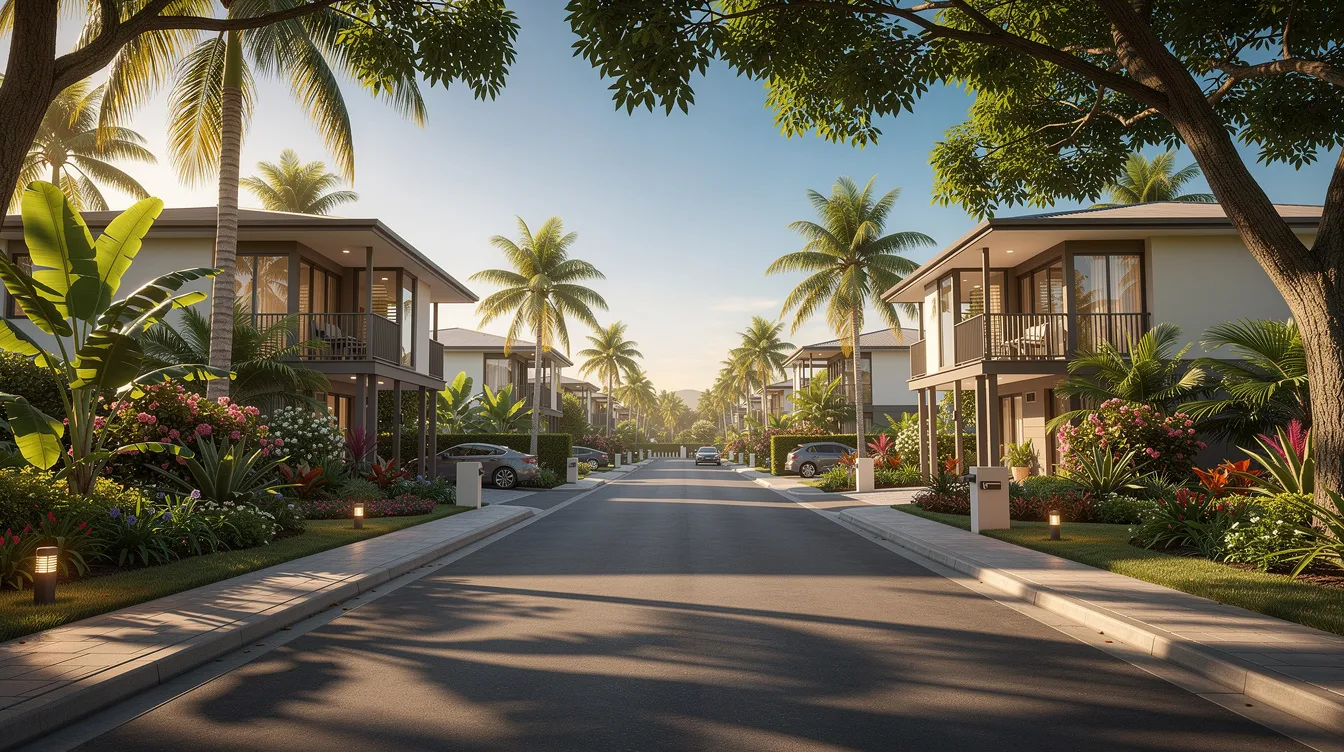
Hudson Place Residences and Aman Singapore (Media Circle / one-north, D5, RCR)
Hudson Place Residences launched in May 2026 with approximately 327 units across 1 to 3-bedroom configurations. The 99-year leasehold project sits in Media Circle, directly adjacent to one-north – Singapore’s dedicated R&D, biomedical, and tech employment cluster encompassing Biopolis, Fusionopolis, and the NUH/Kent Ridge education precinct.
Pricing and psf: Median launch psf comes in at approximately S$2,480, with starting quantum likely in the S$1.7–2.0M range for smaller units. The value proposition here leans heavily toward yield and employment-node proximity rather than school belt or prestige.
MRT and employment nodes: Walking access to one-north MRT (Circle Line), with Buona Vista interchange nearby for East-West Line connections. Bus links to NUS and Science Park are frequent. The tenant base is enormous: R&D staff, tech workers, medical professionals, academic personnel, and knowledge-economy employees who need short commutes.
Schools and demographics: Not in the strongest primary school belt, but decent options exist nearby. The real demand driver is the employment base – rental interest from young professionals, researchers, and tech workers who prioritise commute convenience over school catchment.
Ideal buyers:
-
Investors seeking 3–3.5% gross yield with upside from further one-north densification
-
Young professionals or couples working around one-north or CBD needing efficient 2BR or compact 3BR units
Key risks: Localised congestion and noise from AYE and ongoing Media Circle construction. Risk of micro-market saturation if multiple launches cluster in the same RCR fringe corridor. Tenant turnover may be higher given the transient professional demographic.
Approximately 80% of units have been sold (224 of 327), leaving roughly 67 units (~20%) remaining as of October 2026.
MRT, $psf, Schools and Exit Potential Compared Side-by-Side
A side-by-side comparison strips away narrative and forces the trade-offs into the open – cheaper OCR versus central school belt, waterfront TEL versus CCR legacy, RCR yield versus long-horizon capital preservation.
|
Project |
Region |
Nearest MRT & Walk Time |
Typical PSF Band (Q4 2026) |
Key Schools Within 1 km |
Exit Angle |
|---|---|---|---|---|---|
|
Lucerne Grand |
OCR (D22) |
Lakeside MRT (EWL), ~2 min / ~150 m |
S$2,270–2,650 psf |
Rulang, Shuqun, Lakeside, Boon Lay Garden Primary |
Jurong Lake District transformation + OCR affordability + strong school belt |
|
Thomson Reserve |
RCR Fringe (D20) |
Upper Thomson MRT (TEL), ~2 min; Bright Hill (CCL), ~10-15 min |
S$2,450–2,810 psf |
Ai Tong Primary (~1 km), Catholic High nearby |
School belt + dual-line central connectivity + nature corridor premium |
|
Vela Bay |
OCR (D16) |
Bayshore MRT (TEL), adjacent |
Median ~S$2,867 psf |
Temasek Primary within 1 km |
Waterfront lifestyle + TEL first-mover + Changi/CBD tenant pool |
|
Dunearn House |
CCR (D11) |
Sixth Avenue MRT (DTL), sheltered walk; future Turf City MRT |
Median ~S$3,107 psf |
Nanyang Primary, Raffles Girls’, Hwa Chong |
Legacy CCR prestige + deepest school belt + long-term capital preservation |
|
Hudson Place Residences |
RCR (D5) |
one-north MRT (CCL), walking; Buona Vista interchange nearby |
Median ~S$2,480 psf |
Adequate but not top-tier |
Strongest rental yield via tech/biomedical tenant pool + one-north densification |
Key synthesis:
-
Lowest psf for genuine MRT-fronting convenience: Lucerne Grand, with launch averages at ~S$2,480 psf and unsold units available from S$2,270 psf – the most accessible entry among the five.
-
Strongest school-driven resale story: Thomson Reserve and Dunearn House, where school-belt demand creates a pricing floor that holds through downturns.
-
Purest yield play: Hudson Place Residences, benefiting from one-north’s deep and diversified tenant pool of knowledge workers.
-
Best long-horizon capital preservation: Dunearn House, where CCR legacy positioning and elite school access combine for multi-generational holding power.
How to Decide Which of Aman’s 2026 Picks Fits You
The comparison data only becomes useful when filtered through personal circumstances – budget, income stability, schooling timeline, business location, and holding power. The right approach moves from self-profile to primary filter to shortlist to stack-level selection.
Step-by-Step Shortlisting Process
-
Define your main objective and holding period. Are you buying for own-stay school planning, lifestyle upgrade, yield, or a hybrid? Fix your realistic holding period: 5 years, 7–10 years, or more than 10 years. A 7–10 year window aligns with most TOP-to-profitable-exit cycles for 2026 launches.
-
Fix your all-in budget. Include ABSD scenario checks, BSD, legal fees, renovation, and a 20–30% cash buffer. For a typical upgrader family, this often means working within a S$2.0–2.8M total outlay. Model what happens if interest rates reset 100–150 basis points higher than your current assumption.
-
Choose your primary filter. This is where the five projects diverge:
-
Schools → Thomson Reserve or Dunearn House
-
MRT + affordability → Lucerne Grand
-
Waterfront lifestyle + TEL → Vela Bay
-
Yield + tenant pool → Hudson Place Residences
-
-
Benchmark psf. Compare the launch or current asking psf against 3–5 year old resale transactions within 1 km, adjusting for tenure, MRT integration, and facilities. A project priced 15–25% above nearby resale with clearly better connectivity is reasonable; 40%+ above without structural advantages is a red flag.
-
Visit showflats and actual sites. Go during both day and night, weekday and weekend. Measure real walking routes to MRT, assess traffic noise, sun exposure, and surrounding industrial or commercial activity. What the showflat presents and what the actual site delivers can differ meaningfully.
-
Stress-test your exit. Model conservative exit psf and yields using URA Master Plan data and GLS pipeline information. Assess how your job, business, and family plans align with a 7–10 year lock-in horizon. If you cannot hold for at least 7 years, the risk profile changes significantly.
Worked Profiles: Matching Buyer Types to 2026 Launches
Profile 1 – West-side HDB upgrader family: A couple in their early 40s with two children aged 5 and 8, currently living in Jurong West. Both work in the Jurong Island / Tuas industrial corridor. Their MOP passed in mid-2026, and they hold approximately S$800K in equity. Lucerne Grand’s compact 3BR units at S$1.9–2.2M fit their budget while keeping them within the Rulang/Shuqun Primary catchment – critical with their younger child approaching P1 in 2028. The Lakeside MRT connection means the commute to Jurong industrial estates stays under 30 minutes door-to-door. This is a decision where location, school, and budget converge cleanly.
Profile 2 – Central professionals targeting school belt: A dual-income family currently in Ang Mo Kio with P1 entry needed in 3 years. Combined income supports a S$2.6–3.0M purchase. The choice narrows to Thomson Reserve’s 3BR (indicative S$2.45–2.65M quantum for regular stacks) versus Dunearn House’s smaller 3BR (starting higher at S$3,107 median psf but with deeper prestige). Thomson Reserve offers dual MRT, Ai Tong catchment, and lower absolute quantum. Dunearn House delivers Nanyang Primary access and CCR legacy but requires greater financial commitment and a longer holding horizon. For families prioritising P1 timing over prestige, Thomson Reserve is the stronger near-term play.
Profile 3 – Investor business owner: An SME owner with S$1.5–2.0M investment budget and offices in the one-north cluster. A 2BR at Hudson Place Residences (~S$1.7–1.9M) offers immediate proximity to tenants – R&D staff, tech workers, biomedical researchers – with gross yields projected at 3–3.5%. A comparable 2BR at Vela Bay would cost more at ~S$1.7–2.0M with a different tenant profile (Changi/CBD workers, expatriates). For this owner, Hudson Place is the best new launch to buy now because it aligns investment location with business operations and offers a deeper, more diversified tenant pool within walking distance.
Common Pitfalls When Chasing Late-2026 New Launches
As December approaches, developers may tweak pricing and agents push “last chance” narratives. The pressure to act creates fertile ground for emotional decisions that override careful analysis.
Over-Indexing on Discounts Instead of True Value
Late-stage star-buy discounts or “developer rebate days” can look compelling on paper but often apply to weaker units – poor stack orientation, noisy facing, or inconvenient distance from MRT. Recalculate effective psf after all rebates, then compare that adjusted number against better-located non-discounted units or nearby resale options. A 3% discount on a bad stack is not value; it is a markdown for good reason.
Ignoring 2027 Supply and GLS Pipelines
Buying into clusters like Bayshore, Lentor, or Media Circle without checking URA’s 2027+ GLS pipeline creates blind-spot risk. Additional supply in the same precinct can pressure resale values for years. Overlaying residential launches with industrial and commercial development timelines – something AESTHETIC HAVENS does systematically – reveals whether genuine demand depth exists or whether you are buying into a supply glut.
Underestimating Holding Power and Cash Flow
Common mistakes: forgetting interest rate resets at year 3–5 of the loan, underestimating property tax increases, ignoring maintenance fees, and modelling zero vacancy. Use conservative projections – 10–15% below optimistic rent estimates and at least 1 month vacancy per year – before committing to any 2026 launch. The cost of carry over a 7–10 year hold is substantial and must be modelled, not guessed.
Buying a Launch That Doesn’t Match Your Life Timeline
A TOP in 2031 does not help if your child’s P1 registration is in 2028 – you need to be residing at the registered address by then. Similarly, buying far from business operations to chase a perceived “better deal” often leads to resale under time pressure when the commute proves unsustainable. Align your selected 2026 project – especially CCR and school-belt ones – with realistic 7–10 year family and business plans. Misalignment is the most expensive mistake because it forces a sale at the wrong time.
Conclusion and Next Steps
As 2026 closes, Lucerne Grand, Thomson Reserve, Vela Bay, Dunearn House, and Hudson Place Residences remain Aman Aboobucker’s highest-conviction new launches still worth considering. Each clears at least three of four value anchors, carries defensible psf relative to land cost and nearby resale, and serves a distinct buyer profile – from west-side family upgraders to CCR legacy holders to yield-focused investors near tech hubs.
The best new launch to buy now is not a universal answer. It depends on whether your primary driver is schools, MRT convenience, rental yield, or long-term capital preservation – and whether you have the holding power to see a 7–10 year thesis through. What is universal: buying on fundamentals rather than FOMO, and stress-testing every assumption before signing.
Practical next steps:
-
Shortlist 1–2 projects from Aman’s list based on your primary filter (schools, MRT, yield, or legacy)
-
Arrange showflat and on-site visits before year-end with a prepared psf and resale comparison sheet
-
Engage AESTHETIC HAVENS for a structured consultation covering cashflow modelling, exit scenarios, and industrial/commercial proximity analysis
-
Make a clear decision on whether to commit before 2027 launches or wait, based on both numbers and personal timelines
Looking ahead, AESTHETIC HAVENS will update Aman’s picks as 2027 GLS sites launch and industrial corridors evolve. Land cost inflation remains high – many 2027 launches will carry even higher base psf, meaning buyers who lock in now at defensible 2026 pricing may benefit from cost-anchoring advantages that erode with each new tender cycle.
Additional Resources and Tools
-
2026–2028 new launch pipeline map by region – with overlays of MRT lines and key industrial/business nodes for spatial context
-
Downloadable MRT & school proximity checklist – designed for comparing projects like Lucerne Grand vs Thomson Reserve on the same evaluation grid
-
Interactive psf benchmarking sheet – plug in launch psf vs nearby resale data to see margin multiples and breakeven scenarios
-
HDB upgrader guides – covering MOP timelines, ABSD scenarios, bridging loan strategies, and equity deployment frameworks
-
Quarterly industrial and commercial market briefings – for investors wanting to align residential buys with business trends and employment cluster shifts
Frequently Asked Questions about Aman’s 2026 Year-End New Launch Guide
Which is the cheapest entry point among Aman’s 2026 picks? Lucerne Grand and Hudson Place Residences both carry median psf around S$2,480, but Lucerne Grand offers unsold units from as low as ~S$2,270 psf. For smallest absolute quantum, a 2BR at Lucerne Grand starts from approximately S$1.498M, while Hudson Place smaller units begin around S$1.7M. Budget-constrained buyers get the most MRT-proximate value at Lucerne Grand.
If my main goal is P1 school entry by 2030, which project should I prioritise? Thomson Reserve places you within ~1 km of Ai Tong Primary with a booking day already in late October 2026. Dunearn House provides access to the Nanyang Primary / Hwa Chong belt. Both require residence at the registered address before P1 registration – check TOP timelines carefully against MOE intake schedules. Thomson Reserve’s earlier booking window may suit tighter school timelines better.
For pure investment, which offers stronger rental prospects: Hudson Place Residences or Vela Bay? Hudson Place benefits from the one-north tech and biomedical cluster’s deep, diversified tenant pool – researchers, tech staff, medical professionals – at a lower median psf (~S$2,480 vs ~S$2,867). Vela Bay draws tenants from Changi Business Park, CBD, and expatriate families who value coastal lifestyle. Hudson Place offers lower entry cost and higher yield potential; Vela Bay offers stronger capital appreciation prospects if the Bayshore precinct develops as planned. For yield-first investors, Hudson Place has the edge.
Is it smarter to wait for 2027 launches instead? Land cost inflation is real – GLS sites tendered in late 2026 and 2027 will likely carry higher psf ppr, translating to higher launch psf for buyers. Construction costs continue rising. Waiting is rational only if your target micro-location has no good 2026 stock, or if your financial position improves meaningfully in 2027. For buyers whose fundamentals align with one of the five shortlisted projects, the cost-anchoring benefit of buying at 2026 pricing is tangible.
How close to MRT is “close enough” for resilience? Aman’s framework draws clear thresholds: truly integrated or sub-200 m distance (Lucerne Grand, Vela Bay) scores highest. Walking distance of 200–600 m (Thomson Reserve, Dunearn House, Hudson Place) is strong. Beyond 600–800 m, resilience drops; bus-reliant locations face steeper resale discounts and weaker rental demand. All five shortlisted projects clear the 600 m threshold.
What if interest rates fall in 2027 – should I delay for cheaper financing? Lower rates reduce monthly servicing but do not reduce purchase price. If 2027 launches carry higher psf due to land cost inflation, cheaper financing may be fully offset by higher quantum. Buy based on total cost over the holding period, not near-term rate movements. Model multiple rate scenarios (current, +100 bps, -100 bps) and ensure the investment works across all three before committing.
How does AESTHETIC HAVENS charge for its advisory? AESTHETIC HAVENS operates on an independent, fee-based model that is transparent and separate from standard agency commissions. Advisory covers cashflow modelling, exit scenario stress-testing, and industrial/commercial proximity analysis – structured to serve the buyer’s interest rather than transaction volume.
Can AESTHETIC HAVENS also help with industrial or commercial properties in the same area? Yes. Cross-asset advisory is a core strength, particularly for business owners who benefit from aligning home location with industrial and commercial footprints. Whether you are evaluating a residential unit near your Jurong warehouse or an investment property adjacent to your one-north office, the advisory framework integrates both asset classes.


