

Introduction
Chuan Park sold 76% of its units at launch weekend in November 2024, moving 696 of 916 homes at an average price of S$2,579 psf. Now, One Chuan Grove is preparing to enter the same Lorong Chuan micro market with approximately 1,055 units and a projected launch price of S$2,600 to S$2,850 psf. The core question for buyers and investors: can Chuan Grove repeat Chuan Park’s success, or do the numbers tell a different story?
This article is a data-led comparison of land cost, launch psf, MRT distance, demand drivers, and supply conditions between these two neighbouring projects along Lorong Chuan. All figures reflect Q3 2026 data and are subject to revision once the official price list for Chuan Grove is released. The scope is residential investment and own-stay decision-making in District 19; general Singapore market commentary falls outside this piece.
Based on current numbers, Chuan Grove is unlikely to replicate Chuan Park’s 76% launch weekend sell-through. Chuan Grove’s breakeven price is around S$2,596 psf, which leaves thin margin at the lower end of analyst estimates. If the average launch price lands between S$2,700 and S$2,850 psf, that represents a 5–10% premium over Chuan Park’s launch average. At the lower end of that range, strong absorption over several weeks is plausible. At the higher end, demand from price-sensitive HDB upgraders will thin out.
Target readers include HDB flat upgraders weighing their MOP window, existing private owners comparing resale versus new launch value, and investors modelling rental yield and exit timing. Timing, psf levels, and school or MRT access make this a high-stakes decision for all three groups.
Here is what you will take away from this comparison:
-
Clear numeric comparison of land price and expected launch psf for both projects.
-
Side-by-side MRT distance and connectivity analysis following the Circle Line Stage 6 completion.
-
Breakdown of demand drivers, buyer profiles, and supply conditions for each project.
-
Data-anchored guidance on which profiles should favour which project, and at what price bands.
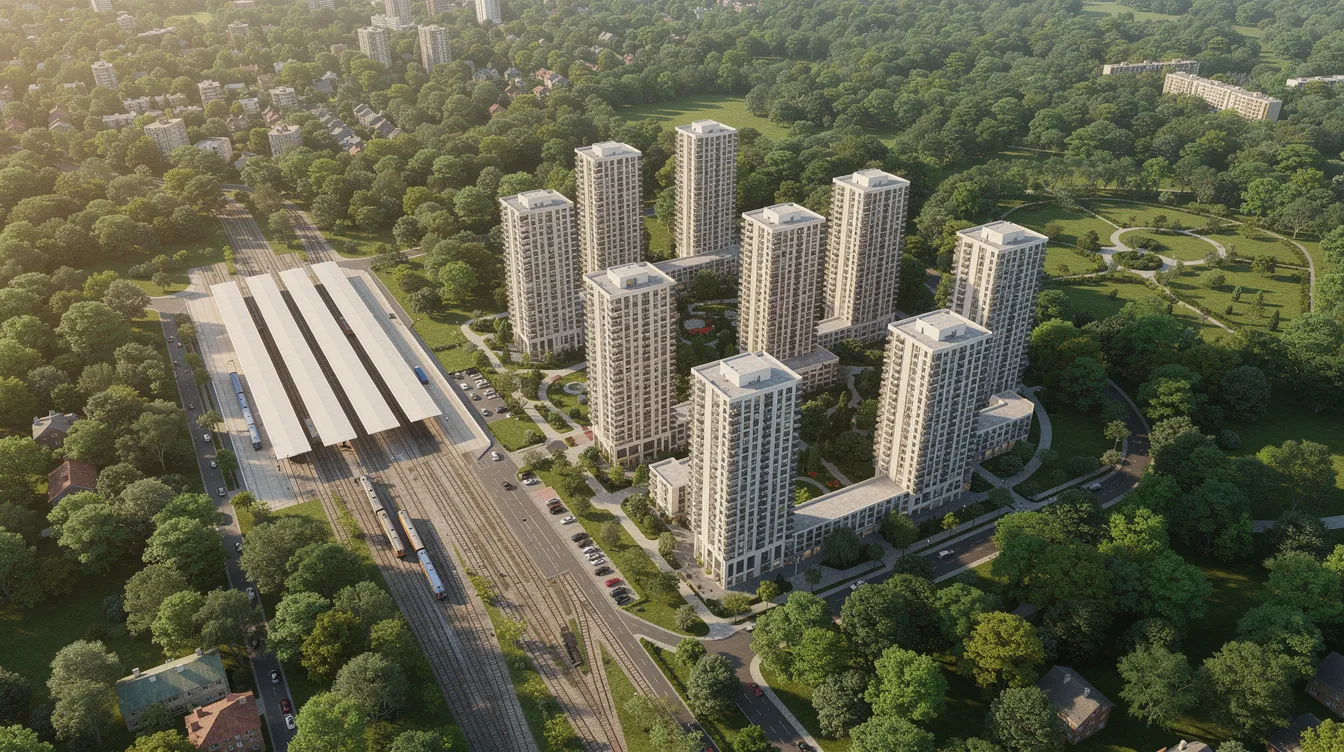
Understanding the Lorong Chuan Micro‑Market
Lorong Chuan sits on the Circle Line within District 19’s school belt, a node where MRT connectivity, primary school proximity, and mature-estate amenities overlap. Both Chuan Park (launched November 2024) and Chuan Grove (launch targeted Q1 2027) draw on the same location fundamentals. The difference between success and overpricing lies in land cost, quantum, and timing.
District 19: From heartland to city‑fringe hybrid
District 19 spans Serangoon, parts of Ang Mo Kio, Hougang, and the Bishan fringe. In pricing behaviour, it functions more like a city-fringe market than a suburban one. NEX @ Serangoon sits two MRT stops away on the Circle Line, providing a major retail anchor. Bishan Junction 8 is accessible via Bishan interchange. New Tech Park, a mixed-use commercial cluster along Lorong Chuan, adds employment within walking distance.
Older Lorong Chuan condominiums like Chiltern Park and The Scala traded in the S$1,200–S$1,600 psf range for years. Chuan Park’s launch at S$2,579 psf reset the pricing reference for the entire Lorong Chuan area. By September 2026, Chuan Park had reached approximately 98.3% take-up, with around 850 units sold since launch. That absorption record is the benchmark against which Chuan Grove prices will be measured.
The Circle Line and the school belt effect
The “school belt” label refers to a cluster of popular primary schools within roughly 1 km of Lorong Chuan MRT station. Educational proximity influences resale demand in property markets where primary school registration priority is tied to residential address. The schools within range include St Gabriel’s Primary (approximately 290 m from the first Chuan Grove parcel), Kuo Chuan Presbyterian Primary (approximately 600 m), CHIJ Our Lady of Good Counsel (approximately 870 m), and Yangzheng Primary (approximately 970 m). Nanyang Junior College and Australian International School are also in the broader catchment.
This combination of a Circle Line station plus four primary schools within 1 km is uncommon in the outside central region. It creates resilient upgrader demand from surrounding HDB estates in Bishan, Serangoon, Toa Payoh, and Ang Mo Kio. Both Chuan Park and Chuan Grove tap the same locational story; the difference lies in their land pricing, quantum, and timeline.
Chuan Park: The Benchmark (2024–2026)
Chuan Park is the live experiment. It was the first major private new launch on Lorong Chuan after a 14-year drought of new launches, providing hard transaction data on what buyers will pay for this micro-location.
Project snapshot and launch results
Chuan Park comprises 916 units on 99-year leasehold tenure. It launched on 10 November 2024 adjacent to Lorong Chuan MRT. Chuan Park sold about 696 units during its launch weekend, a 76% take-up rate at Chuan Park’s launch average of S$2,579 psf. By September 2026, the project had reached approximately 98.3% sold, with around 850 units moved since launch.
These absorption numbers matter because Chuan Park launched in the outside central region at psf levels previously associated with city-fringe or even Rest of Central Region projects. The market’s willingness to pay at that level confirmed underlying demand for the Lorong Chuan micro market. Expected TOP is around 2028, giving buyers a clear timeline for key collection and, for families, Primary 1 registration.
What drove Chuan Park’s outperformance
Four factors combined to produce the launch weekend result:
A 14-year drought of new launches helped Chuan Park capture pent-up demand. The last comparable private project in the immediate area was The Scala, which launched around 2010. That scarcity compressed years of accumulated upgrader interest into a single sales event.
Chuan Park sits a short walk from Lorong Chuan MRT, roughly 150–200 m from the station entrance. The nearest MRT, Lorong Chuan, is on the Circle Line, which now forms a full 33-station loop following Circle Line Stage 6’s opening on 12 July 2026. That MRT adjacency is difficult to replicate; it translates directly into rental desirability and resale pricing power.
The upgrader pool was deep. HDB flats in Serangoon, Bishan, and Toa Payoh reaching MOP between 2023 and 2026 produced a wave of potential buyers with sale proceeds in hand. Competing new launch supply in 2024 was relatively thin compared to the over 9,000 new homes expected in the 2026 supply surge.
Pricing profile by unit type
At Chuan Park, smaller units commanded higher psf but lower absolute quantum. Units under 700 sq ft traded at approximately S$2,734 psf in the 12 months to October 2026. Mid-sized units of 1,100–1,499 sq ft averaged around S$2,704 psf. Larger units above 1,500 sq ft came in near S$2,557 psf.
Three-bedroom units ranged between roughly S$2,386 and S$2,784 psf depending on floor and facing. That variation matters: investors lean toward compact units with higher psf and lower quantum, while own-stay families absorb the larger layouts where per-square-foot pricing is lower but total outlay is higher. These real transaction numbers form the reference ladder against which Chuan Grove’s land cost and launch psf will be judged.
Chuan Grove: Land, Launch Window and Positioning
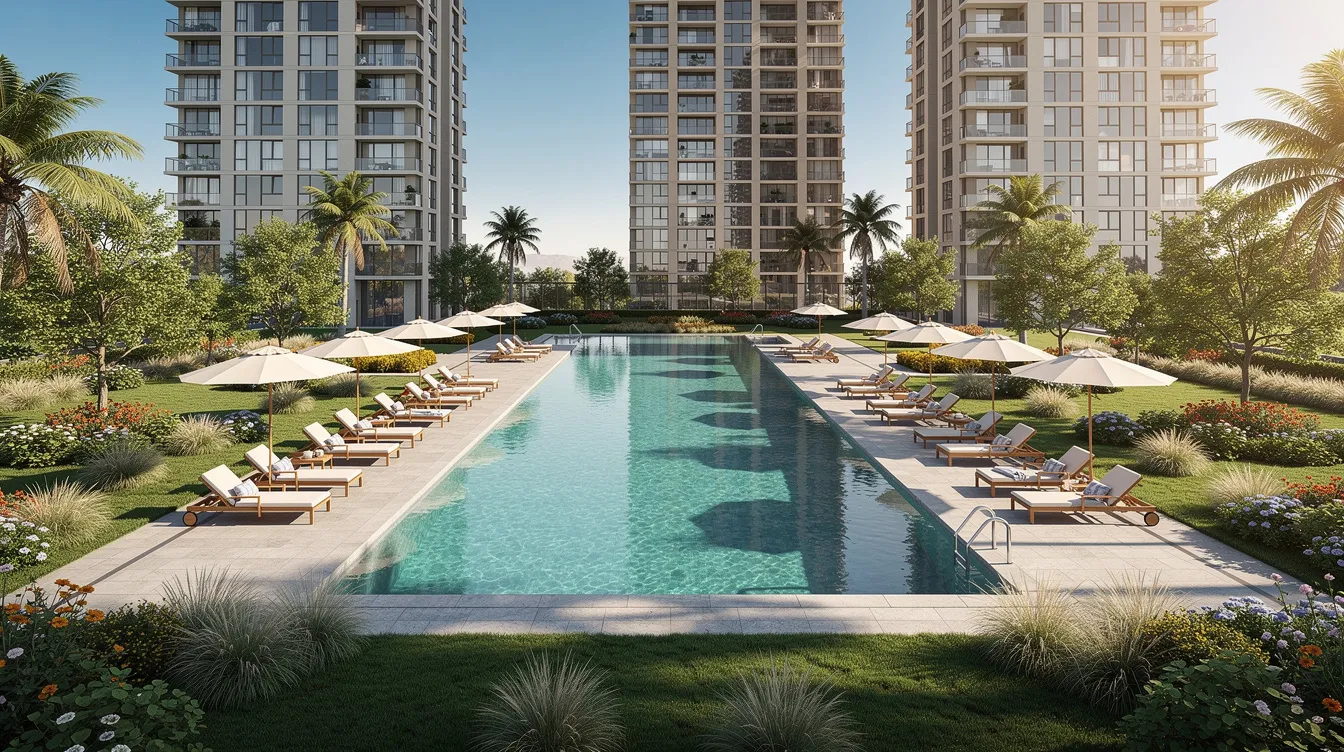
One Chuan Grove is the follow-up act: a larger project of approximately 1,055 units across two amalgamated Chuan Grove plots, acquired in 2025 by a joint venture of Sing Holdings and Sunway Developments. Execution and launch preparation are underway, with a target launch date around Q1 2027.
Land acquisition and cost structure
The Chuan Grove GLS site was tendered in two parcels through URA’s Government Land Sales programme.
The first Chuan Grove parcel (closer to the MRT station) was awarded on 17 July 2025 at S$703.6 million, translating to a land rate of 1,376 psf ppr. The bid price was 7.3% above the second-highest offer, which drew seven bids in total. Chuan Grove Parcel 2, an irregularly shaped plot further from the station, closed tender on 4 September 2025 and was awarded on 10 September 2025 at S$623.91 million, or 1,331 psf ppr.
Combined, the Chuan Grove cost for land across approximately 326,639 sq ft of site area and 979,924 sq ft of gross floor area works out to an average land rate of roughly 1,355 psf ppr. That blended figure makes the developers paid among the highest land costs ever recorded for an outside central region GLS site. When additional buyer’s stamp duty and buyer’s stamp duty are factored in (estimated at S$79.53 million plus S$66.38 million respectively), the all-in land and duties cost rises to approximately S$1,504 psf ppr.
The Sing Holdings Sunway joint venture structure (Sing Holdings Residential Pte at 65%, Sunway Developments Pte at 35%) ensures a single developer entity controls both adjacent sites. Sing Holdings, a Singapore listed property developer, and Sunway Developments bring complementary track records. Sing Holdings’ portfolio includes North Gaia EC. That unified control matters for coherent master-planning across what will function as a single mega-development.
Project scale, configuration and timeline
The site plan calls for roughly 1,055–1,056 homes across five blocks of up to 27 storeys, plus seven shops and a childcare centre. The project aims to create a coherent residential cluster with an average unit size of approximately 928 sq ft. Chuan Grove is part of a mature residential neighborhood, with the two parcels positioned to form an integrated precinct, and that broader cluster could expand further if the Chuan Grove site on the 2H 2026 Government Land Sale Reserve List is triggered.
Chuan Grove’s launch is slated for Q1 2027, with construction commencing from the second half of 2026. Expected TOP falls in the early 2030s, several years after Chuan Park’s 2028 completion. Buyers timing school entry for children starting Primary 1 in 2029 or 2030 will find Chuan Park’s earlier keys more useful. Those with younger children (P1 from 2031 onwards) have more flexibility.
No official price list has been released. All Chuan Grove prices discussed here are based on analyst estimates and land cost modelling.
Analyst expectations for launch PSF
Concrete analyst ranges for One Chuan Grove’s prices cluster around three tiers:
PropNex research (Wong Siew Ying) implies an average price of approximately S$2,600 psf. SRI’s Mohan Sandrasegeran estimates S$2,700–S$2,800 psf. Some market commentary places premium stacks at S$2,820 to S$3,190 psf for high floors with unblocked views.
Given a land cost of 1,355 psf ppr, land typically accounts for 50–60% of the selling price in outside central region launches. That ratio points toward a launch price in the S$2,600–S$2,850 psf range for the core product. Chuan Grove’s breakeven price is around S$2,596 psf when construction costs (estimated at roughly S$520 psf) and soft costs are layered onto the all-in land cost. Developer margin at a S$2,600 psf selling price would be razor-thin.
The key question is no longer “what is the psf” but “how large is the premium versus Chuan Park, and does the product justify it.”
Data‑Led Comparison: Can Chuan Grove Repeat Chuan Park’s Numbers?
The previous sections described each project individually. This section places them side by side on the metrics that drive buyer decisions: unit count, land cost, launch psf, MRT distance, and demand conditions.
Side-by-side project metrics
|
Metric |
Chuan Park |
Chuan Grove |
|---|---|---|
|
Total units |
916 |
~1,055 |
|
Tenure |
99-year leasehold (from mid-2024) |
99-year leasehold (from 2025) |
|
Land acquisition psf ppr |
En bloc at ~S$890M (2023); implied lower than Grove |
S$1,355 psf ppr blended (GLS 2025) |
|
All-in land + duties psf ppr |
Lower (en bloc structure, fewer duty layers) |
~S$1,504 psf ppr |
|
Average launch psf |
S$2,579 (Nov 2024) |
Estimated S$2,600–S$2,850 |
|
Breakeven psf (est.) |
Below S$2,200 (implied by strong margins) |
~S$2,596 |
|
Expected TOP |
~2028 |
Early 2030s |
|
Developer |
Kingsford & MCC Land |
Sing Holdings (65%) & Sunway Developments (35%) |
|
Units sold to date |
~850 (98.3% by Sep 2026) |
Pre-launch |
|
Walk to Lorong Chuan MRT |
~150–200 m (~2 min) |
~400 m (~5 min from Parcel 1) |
The high land cost for Chuan Grove leaves less margin between breakeven and expected selling price compared to Chuan Park. Chuan Park’s developers entered at a lower cost base and have already captured substantial profit at S$2,579–S$2,684 psf. One Chuan Grove’s developers must price above S$2,596 psf to break even; every dollar of psf below analyst mid-range estimates compresses their margin.
MRT distance and connectivity comparison
Both Chuan Park and Chuan Grove benefit from proximity to Lorong Chuan MRT station on the Circle Line. The difference is one of degree:
-
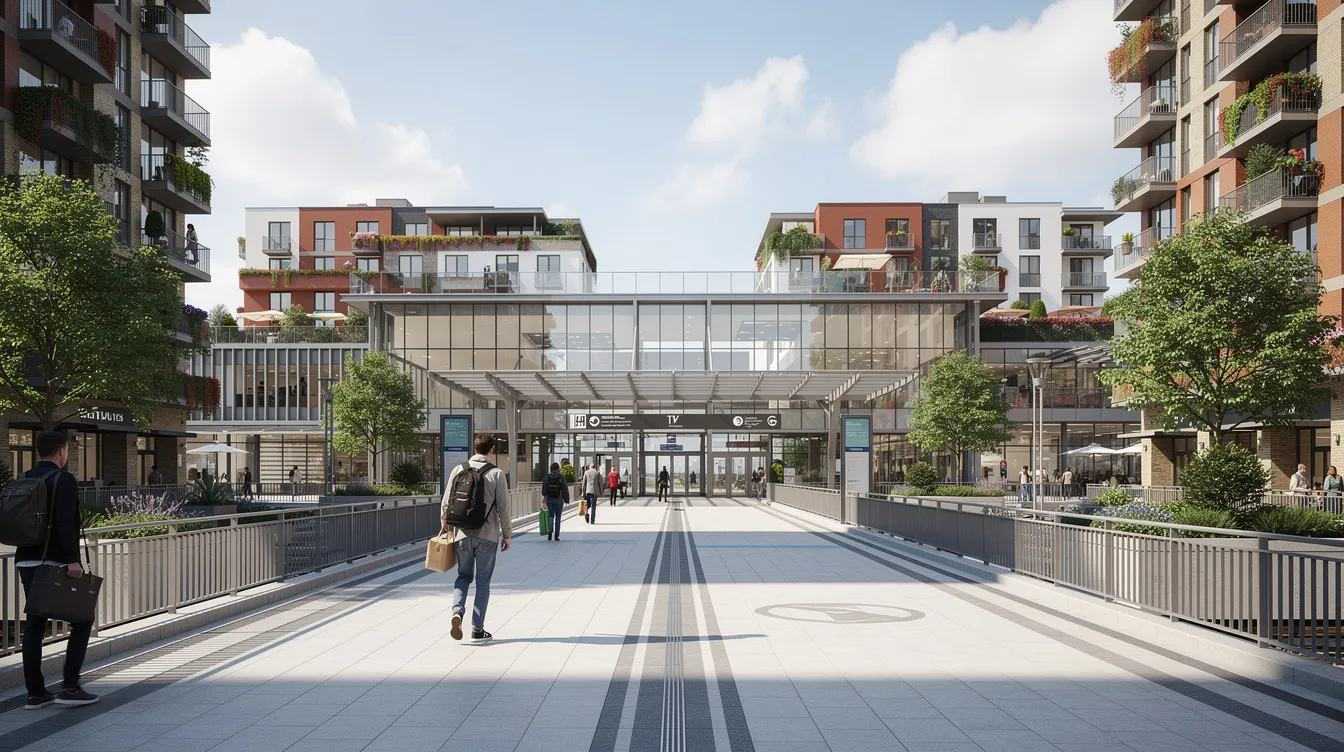
Chuan Park sits approximately 150–200 m from the station entrance, with portions of the walk sheltered. Residents reach the platform in roughly two minutes.
-
Chuan Grove is about 400 meters from Lorong Chuan MRT at Parcel 1. Parcel 2 blocks are further still, with typical walking times of 5–8 minutes depending on exit path and block.
Lorong Chuan MRT connects to Bishan and Serangoon interchanges. At Bishan, riders transfer to the North South Line. At Serangoon, the connection is to the North East Line. The completion of Circle Line Stage 6 on 12 July 2026 turned the Circle Line into a full loop with 33 stations and 12 interchange stations, enhancing connectivity for both projects. That improvement benefits the entire Lorong Chuan area rather than creating differentiation between the two developments.
In resale markets, a 200 m versus 400–600 m walk to the MRT station does produce measurable psf differences. Tenants and resale buyers consistently pay premiums for doorstep MRT access, particularly in a school-belt location where parents commute with young children.
Demand drivers: buyer profiles and supply conditions
Chuan Park buyers were predominantly early-mover HDB upgraders from Serangoon, Bishan, Toa Payoh, and Ang Mo Kio. Many needed keys by 2028 for Primary 1 registration or for near-term own-stay. The 14-year drought of new launches concentrated this demand into a single launch event. Potential buyer demographics, especially from HDB upgraders, were critical for Chuan Park’s absorption rate.
Chuan Grove buyers will be later-cycle upgraders: those who missed Chuan Park, families with children not yet approaching school age, and investors seeking newer product with a later completion date. The catchment extends to HDB estates in Ang Mo Kio, Serangoon, and landed enclaves near Braddell Heights and Mei Hwan.
The supply context is different. Chuan Park launched into a market with limited competing projects. Chuan Grove enters a competitive market with increased supply from various new developments. Over 9,000 new homes are expected in the 2026 supply surge across Singapore, and the Lorong Chuan area itself now has Chuan Park’s remaining resale inventory plus Chuan Grove’s ~1,055 incoming units. Macro-environmental and property market conditions impact buyer behavior and absorption rates; current property market sentiment influences buyers’ purchasing decisions and investment behavior.
A 76% launch weekend result required the convergence of scarcity, pent-up demand, competitive pricing, and thin competing supply. Chuan Grove will not have the first three of those conditions in the same measure.
Pricing Dynamics and Value Assessment
Success is not only sell-through speed. It includes whether buyers enter at a price that leaves room for resale appreciation, whether rental yields justify holding costs, and whether quantum fits the target buyer’s borrowing capacity.
Premium over Chuan Park: three scenarios
Analysts estimate Chuan Grove’s launch price between S$2,600 and S$2,850 psf. Here is how three price points compare against Chuan Park’s track record:
|
Scenario |
Chuan Grove Avg PSF |
Premium vs Chuan Park Launch (S$2,579) |
Likely Absorption |
|---|---|---|---|
|
A: At par |
~S$2,600 |
~0.8% |
Strong; close to Chuan Park’s pace over first month |
|
B: Moderate premium |
~S$2,750 |
~6.6% |
Healthy but slower; selective among upgraders |
|
C: High premium |
~S$2,900+ |
~12.5%+ |
Slower sell-through; investor-heavy, family demand thins |
At Scenario A, Chuan Grove offers newer keys and facilities at roughly Chuan Park’s average price. Buyer acceptance would be broad, though developer margin sits near breakeven given Chuan Grove’s breakeven price of around S$2,596 psf. At Scenario B, buyers paying the premium are those who value newer design, specific stack orientations, or have longer timelines. Repeating Chuan Park’s velocity is less likely but a 50–60% first-month take-up remains plausible. At Scenario C, the premium exceeds what most HDB upgraders can absorb under TDSR constraints, and the project would lean toward investor-driven sales with slower accumulation.
Data-driven analysis and projections are essential in evaluating property market performance. The developer’s pricing strategy at launch will determine whether Chuan Grove achieves momentum or faces a protracted sales period.
Absolute quantum comparison by unit type
PSF comparisons obscure what buyers actually write on the cheque. Here are worked examples:
A three-bedroom unit of roughly 1,000 sq ft at Chuan Park (S$2,600 psf resale) costs approximately S$2.6 million. The same-sized unit at Chuan Grove at S$2,800 psf costs approximately S$2.8 million. That S$200,000 gap translates to roughly S$800–S$900 per month in additional mortgage servicing on a 30-year loan, depending on interest rates. For a household with gross monthly income of S$15,000, that additional outlay pushes the TDSR ratio closer to its 55% ceiling.
Four-bedroom units of roughly 1,350 sq ft amplify the gap. At S$2,800 psf, a four-bedroom in Chuan Grove reaches S$3.78 million. Many upgrader families from HDB flat ownership will find that quantum challenging, particularly if they are also setting aside funds for renovation, stamp duties, and cash-over-valuation.
From an advisory standpoint, the decision often hinges more on total quantum and holding power than pure psf. Location advantages are vital in property marketing and sales strategies, but they do not override affordability limits.
Supply, competition and long-term liquidity
The combined new supply along Lorong Chuan is substantial:
-
Chuan Park: 916 units (nearly sold out, TOPing ~2028).
-
Chuan Grove Residences: ~1,055 units (launch Q1 2027, TOP early 2030s).
-
The Chuan Grove site in the same precinct could add about 935 homes.
If all parcels are developed, the Lorong Chuan area would absorb close to 3,000 new private homes within a decade. When Chuan Grove TOPs in the early 2030s, some Chuan Park owners reaching their five-year holding mark may list units for resale simultaneously. That overlap creates competition for the same buyer pool.
Unit selection (stack, facing, floor height) will be critical for both projects to maintain liquidity. Corner stacks with unblocked views and lower floors with garden access tend to hold resale value better in high-supply precincts.
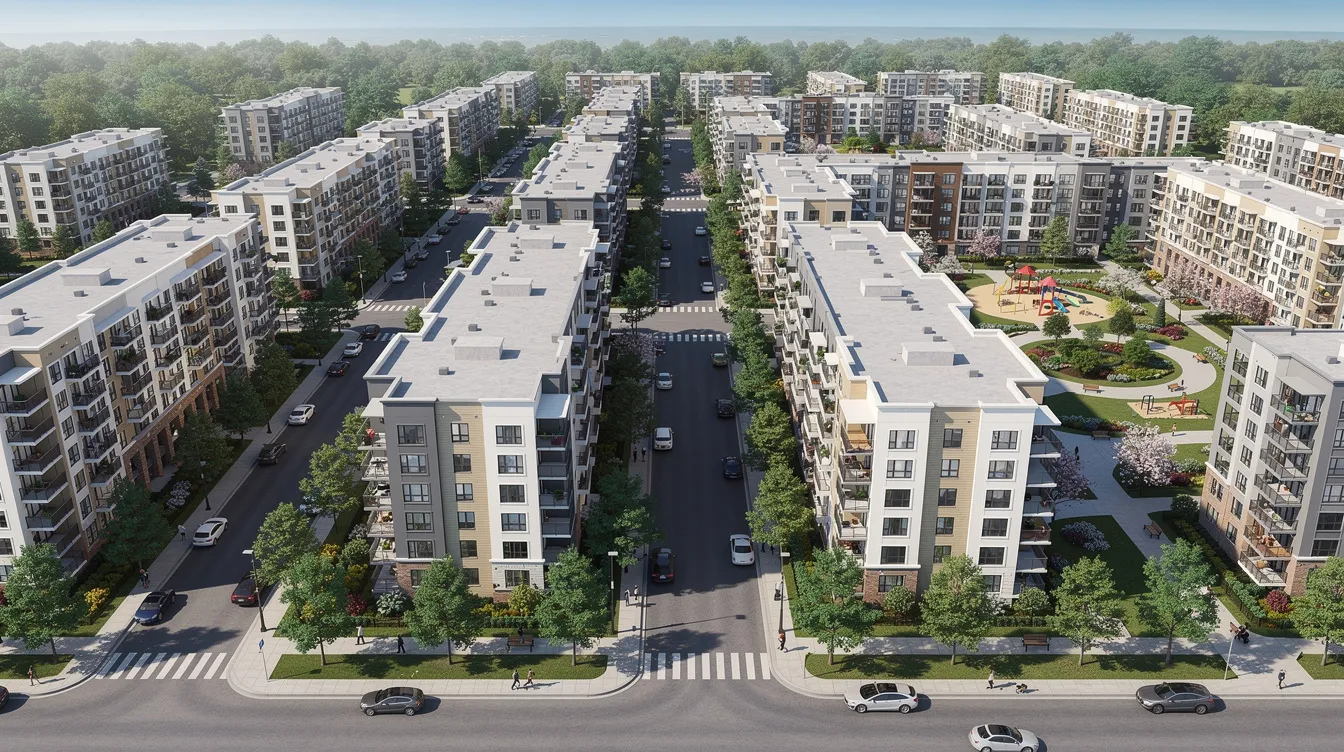
Choosing Between Chuan Grove and Chuan Park
Translating land price, psf, and MRT distance into a concrete decision requires a structured approach rather than impulse comparison.
Step-by-step decision process
Step 1: Fix your maximum comfortable quantum. Factor in income, TDSR limits, existing loans, and cash reserves for stamp duties and renovation. How many units you can afford to shortlist depends on this ceiling.
Step 2: Decide your move-in year. If your child needs to be registered for Primary 1 by 2029, Chuan Park’s 2028 TOP is the only option. If your timeline extends to 2031 or later, Chuan Grove’s early-2030s completion is workable.
Step 3: Compare psf and total quantum against the price ceilings identified in the scenarios above. If Chuan Grove launches at S$2,800 psf and your budget caps at S$2.5 million for a three-bedroom, the project does not fit regardless of product quality.
Step 4: Weigh MRT adjacency against newer completion and facilities. A two-minute walk versus a five-minute walk to Lorong Chuan MRT station produces different rental appeal and daily convenience, particularly for families with young children.
Step 5: Shortlist two to three stacks in each project and stress-test exit scenarios. Model rental yield at Year 1 post-TOP and resale value at Year 5–8, accounting for the supply from both projects and the potential reserve parcel entering the market.
Who should prefer Chuan Park?
Chuan Park fits buyers who need keys by or before 2028 for children’s school cycle. It suits those who place the highest value on MRT adjacency; the two-minute walk to Lorong Chuan MRT station is a durable competitive advantage over Chuan Grove’s five-minute distance. Investors prioritising earlier rental income will benefit from Chuan Park’s 2028 TOP, which allows cashflow roughly two to three years ahead of Chuan Grove.
If Chuan Park resale transactions remain below S$2,700 psf while Chuan Grove launches near S$2,850, the value gap favours Chuan Park. Buyers acquire a proven product with clear transaction history rather than paying a premium for later completion.
Who should prefer Chuan Grove?
Chuan Grove becomes attractive for buyers with longer timelines, no urgent school deadline, and a preference for newer design, landscaping, and the amenity mix of a larger project with integrated retail and childcare.
Specific stack orientations or layouts available only in Chuan Grove (five blocks, up to 27 storeys, with varied facing) may suit households with particular preferences. Investors who believe future GLS land in Lorong Chuan will trade above S$1,355 psf ppr have a replacement-cost argument: if the next parcel costs more, Chuan Grove’s entry price looks reasonable in hindsight.
A data-anchored threshold: if the average Chuan Grove launch price stays within 3–4% of Chuan Park’s prevailing resale psf (roughly S$2,680 in late 2026), repeating strong absorption is plausible. A premium above 10% over Chuan Park’s current numbers makes a repeat of that project’s velocity less likely.
Common Misconceptions and Buyer Pitfalls
Many buyers focus on headline psf or newness and overlook quantum, timeline, and supply risk.
“A newer launch always beats the earlier launch next door”
Chuan Park’s two-minute MRT access and 2028 TOP are structural advantages that do not depreciate. Paying a 10%+ premium for Chuan Grove’s later completion delays rental income by two to three years and extends the period during which the buyer services a mortgage without occupancy or rental offset. In a scenario where interest rates remain elevated, that gap erodes long-term returns.
Ignoring MRT distance within the same precinct
A 150 m walk and a 400 m walk to the same MRT station produce different rental and resale outcomes. Tenants comparing two units in the same neighbourhood will, all else equal, choose the one closer to the station or demand a rent discount for the further one. Buyers should map actual walking paths from specific blocks, not rely on straight-line distances in marketing brochures.
Underestimating future supply along Lorong Chuan
With 916 (Chuan Park) plus ~1,055 (Chuan Grove) plus a potential 935-unit reserve parcel, the precinct could house close to 3,000 new private units within a decade. Automatic capital gains should not be assumed. Disciplined entry price and careful stack selection determine whether a buyer captures appreciation or faces competition from hundreds of similar units listing simultaneously.
Conclusion and Next Steps
Chuan Grove is unlikely to replicate Chuan Park’s 76% launch weekend sell-through. The high land cost of 1,355 psf ppr, a larger project size of ~1,055 units, and an expected launch price of S$2,700 to S$2,850 psf enter a market with more competing supply and less pent-up scarcity than Chuan Park enjoyed in 2024. Chuan Park’s success was partly a product of timing that cannot be reproduced.
Chuan Grove can still perform well under specific conditions: pricing within a narrow band above Chuan Park’s current resale average (no more than 3–5%), offering attractive family-sized layouts, and disciplined phased release to avoid flooding the market. If actual prices land at the lower end of analyst estimates (around S$2,600–S$2,700 psf), absorption over the first one to two months could approach 50–60%.
Practical next steps for buyers:
-
Check the latest Chuan Park resale transactions psf by bedroom type to establish your reference baseline.
-
Monitor URA and developer announcements for Chuan Grove’s launch date and official price list.
-
Run a personalised affordability and breakeven analysis factoring in your gross monthly income, TDSR, and existing loan commitments.
-
Shortlist units in both projects before visiting showflats to avoid impulse decisions driven by showflat staging rather than data.
Related angles worth exploring include comparing Lorong Chuan versus Hougang Central or Woodleigh for upgraders, and evaluating how the completed Circle Line loop affects relative pricing across District 19 circle line station catchments.
Frequently Asked Questions
Can Chuan Grove realistically match Chuan Park’s 76% launch weekend sell-through?
Chuan Park sold 76% of its units at launch, a result driven by 14 years of no new launches, a deep upgrader pool, and thin competing supply. Chuan Grove enters a 2027 market with over 9,000 new homes projected in the 2026 supply pipeline, a higher expected launch price, and no scarcity premium. A steady absorption of 40–55% in the first month is more realistic than a single-weekend blowout matching Chuan Park’s record.
What price psf range would make Chuan Grove compelling versus Chuan Park?
An average launch price of S$2,600–S$2,750 psf keeps Chuan Grove within the range where upgraders and investors can justify the premium for newer product. Premiums above 8–10% over Chuan Park’s current resale average (approximately S$2,680 psf) push quantum beyond what many HDB upgrader households can support under TDSR.
How does MRT distance difference affect long-term value?
Chuan Park is roughly 150–200 m from Lorong Chuan MRT; Chuan Grove is about 400 m. That two-to-three-minute difference in walking time affects tenant convenience, rental competitiveness, and resale desirability. When a competing project sits closer to the same station, the further project typically trades at a measurable psf discount in the resale market.
Is either project suitable for buyers who do not prioritise primary schools?
Without the school-belt benefit, buyers are paying for a feature embedded in the land price that they will not use. Non-family buyers or those without school-age children may find better value in alternative District 19 locations (such as Hougang Central or Woodleigh) where land cost is lower and psf reflects connectivity and amenities rather than school proximity.
How can I get a personalised comparison between Chuan Grove and Chuan Park?
A data-driven comparison starts with stack-level analysis, financing calculations based on your income and existing obligations, and modelling of rental yield versus mortgage servicing at different psf entry points. Integrating this with broader portfolio considerations (including whether industrial or commercial holdings factor into your TDSR) produces a decision framework grounded in numbers rather than marketing material.

