

Introduction: The Short Answer HDB Upgraders Want First
If you’re an HDB upgrader with questions about a new launch, you’re not alone – and you’re smart to ask before you sign. Every week, Aman fields dozens of HDB upgrader questions about new launch condos from couples who are excited, anxious, and overwhelmed in equal measure. The single question behind every other question is always the same: “Can I safely upgrade from my HDB flat to a new launch condo without over-stretching my cash, CPF and timeline?”
The honest answer: yes, if you plan methodically around your minimum occupation period, additional buyer’s stamp duty, loan limits and the construction period. No, if you walk into a showflat on Saturday and book a unit by Sunday because the sales gallery music was nice.
This guide is written for Singapore HDB upgraders – primarily married Singapore citizen or SC/PR households in their 30s to 40s – whose main asset is an existing HDB flat and who are considering private new launches in the OCR, RCR or CCR, as well as executive condominiums, between 2026 and 2030. It does not cover BTO/SBF selections or overseas property purchases. If you’re reading this the night before a showflat visit, you’re in exactly the right place.
Here’s what you’ll walk away with:
-
Clear answers to the 10 most common new launch questions Aman hears from HDB upgraders
-
Simple mental models and rules of thumb for affordability, ABSD and timelines
-
Specific 2026 numbers and examples for price, loan and stamp duties
-
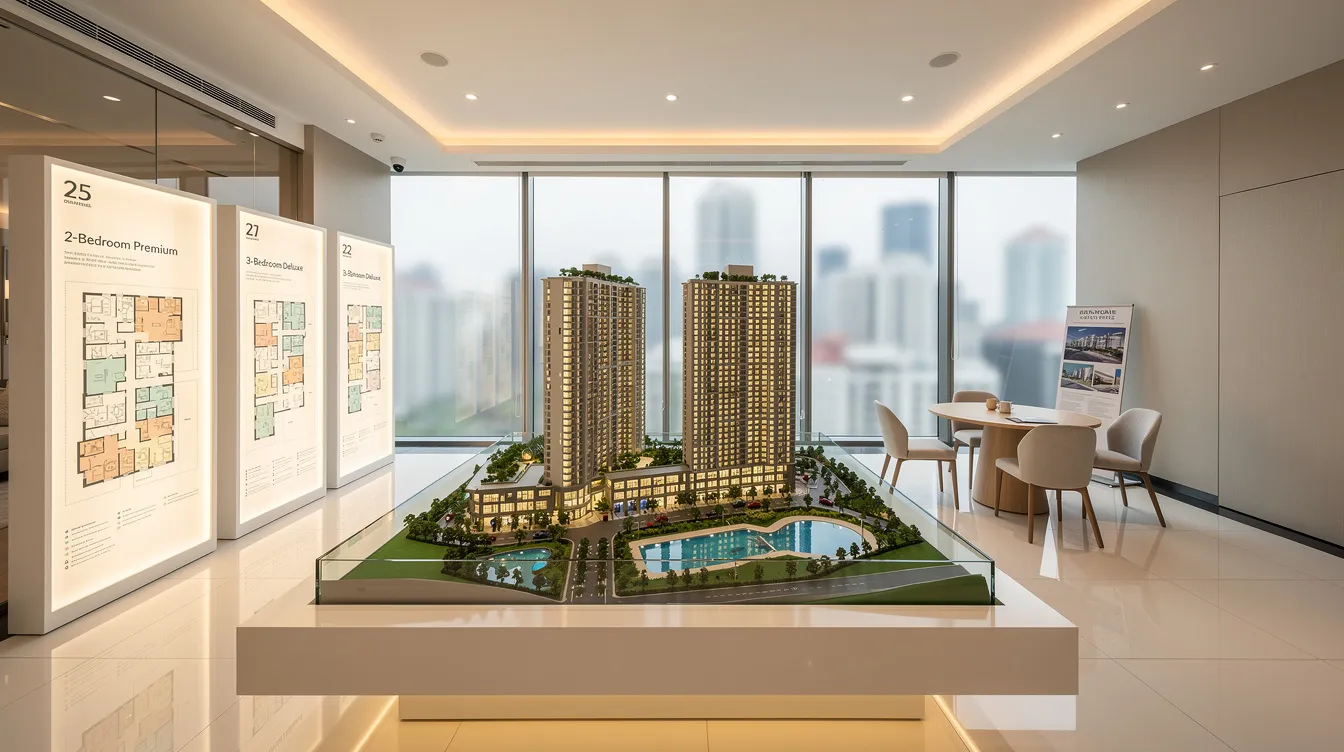
A showflat visit checklist with suggestions for what to photograph
-
An invitation to book a 1-to-1 consultation with Aman through AESTHETIC HAVENS
Understanding the HDB‑to‑New‑Launch Upgrade (Before the 10 Questions)
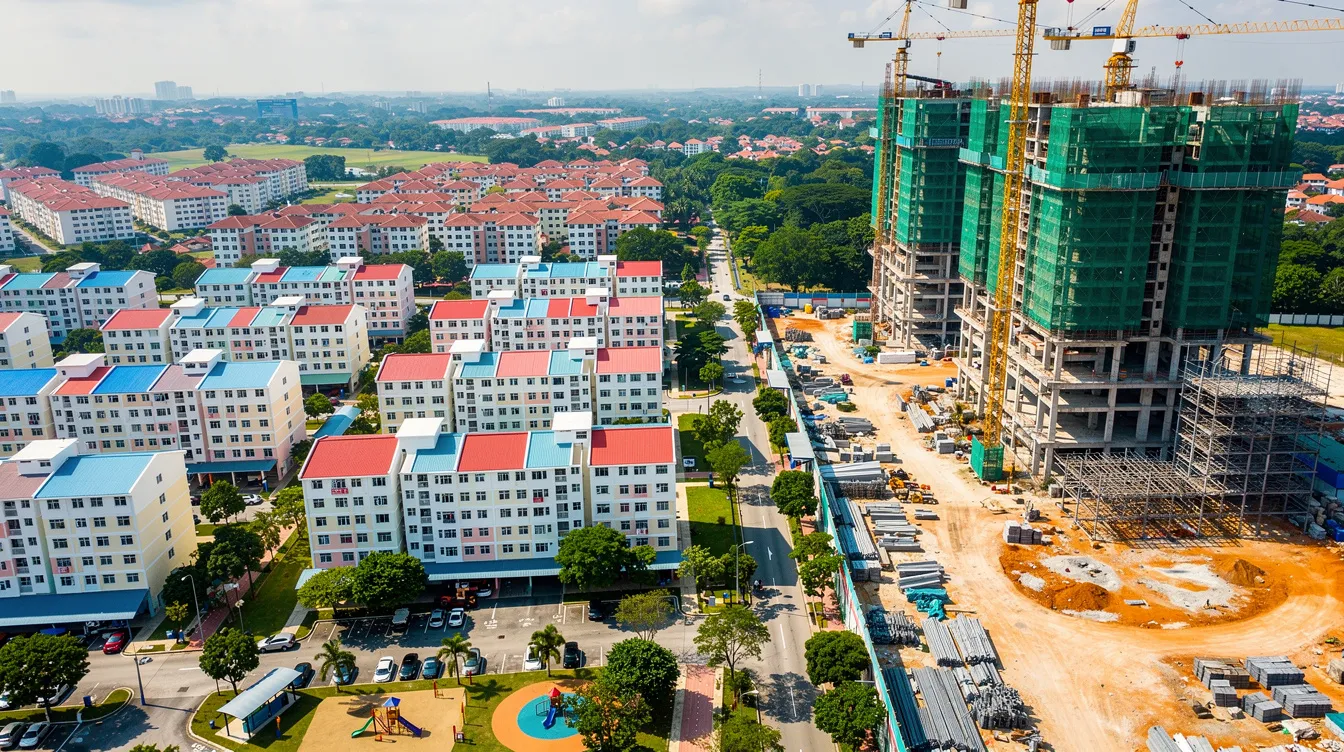
Before we dive into the ten questions, let’s make sure the foundations are solid. An “HDB-to-new-launch upgrade” means selling (or planning to sell) your existing HDB resale flat or BTO and purchasing a private residential property that is still under construction – a new launch condo or an EC launched by a developer. It is the single most consequential financial move most HDB upgraders will make.
New launches are attractive to upgraders for good reasons: the Progressive Payment Scheme disburses payments based on construction milestones, spreading your cash outlay over 3–5 years instead of demanding everything at once. You get brand-new facilities, developer warranties and modern energy-efficient designs. And if you pick the right location, there’s genuine potential for capital appreciation before and after the temporary occupation permit.
But the trade-offs are real. New launches typically take 3 to 5 years to complete in Singapore, which means you could face interim housing costs, ABSD exposure, showflat-versus-actual surprises and cash flow pressure as payments escalate toward TOP. Understanding these trade-offs is exactly what separates a confident upgrader from a stressed one.
The Three Typical HDB Upgrader Profiles Aman Sees
Most HDB upgraders Aman advises at AESTHETIC HAVENS fall into one of three profiles. Knowing which one you are helps frame every answer that follows.
-
Young Family Planner – Late 20s to early 30s, family of three or four, holding a 4-room standard HDB flat with MOP approaching around 2026–2027. Typically targeting a $1.6–$1.9M OCR new launch condo (3-bedder) near good primary schools and MRT. Their biggest concern: stretching the household income too thin.
-
Space Upgrader – Mid-30s to 40s with a 4- or 5-room HDB in a mature estate, kids already in primary school. They want a bigger 3-bedroom or compact 4-bedroom private condo – ideally in the same neighbourhood so the children don’t change schools. Their concern: whether sale proceeds from a mature-estate HDB actually cover the price gap.
-
Aspirational Investor – Late 30s to mid-40s, dual income, strong combined household income. Wants a unit for own stay with the flexibility to rent out rooms or eventually convert to rental income as a second property. Willing to take some ABSD risk if the numbers justify it. Their concern: opportunity cost, exit strategy and whether the premium over a resale condo makes sense.
The ten questions below are answered with all three profiles in mind.
The Key Moving Parts: MOP, ABSD, Loans and Construction Timeline
MOP. The Minimum Occupation Period for Standard HDB flats is 5 years, counted from key collection – not from the day you finished renovation. Plus and Prime HDB flats have a 10-year Minimum Occupation Period. You can only sell your HDB flat after fulfilling the Minimum Occupation Period, and during MOP, you, your spouse and all listed occupiers cannot acquire any private residential property – not even exercise an Option to Purchase.
ABSD. Additional buyer’s stamp duty applies when upgrading from HDB to private property in Singapore. Singapore Citizens pay 20% ABSD for second properties since April 2023. If at least one buyer is a Singapore citizen in a married couple, the ABSD can be remitted – but only if the existing home is sold within 6 months of the new private home’s purchase date (for completed properties) or TOP date (for BUC/new launches). For SC/PR couples, the ABSD rate on a second property is 30%.
Loans. The total debt servicing ratio caps total monthly debt repayments at 55% of gross monthly income. Banks apply an interest-rate stress test – typically 3.5–4% p.a. – regardless of the actual rate environment. For HDB resale flats and new executive condominiums, the mortgage servicing ratio typically caps monthly housing repayments at 30% of gross monthly income, while private property purchases are assessed under TDSR instead. If you still have an outstanding housing loan on your HDB, the maximum loan-to-value for the new private property drops from 75% to 45%.
Timeline. Most OCR and RCR new launches launched in 2024–2026 are projected for TOP between 2028 and 2030. That means if you book a unit today, you’re looking at roughly 3–4 years before the temporary occupation permit, followed by about 12 months until the certificate of statutory completion and legal completion.
The 10 Questions HDB Upgraders Ask Aman Most About New Launches
What follows is a curated FAQ drawn from hundreds of real consultations Aman has conducted through AESTHETIC HAVENS. Each question gets a headline answer, a practical rule of thumb, and guidance on when to book a call instead of going DIY.
Q1: “Can I Upgrade to a New Launch If My HDB Hasn’t Hit MOP Yet?”
Short answer: generally no. HDB rules are unambiguous – during the minimum occupation period, flat owners, spouses and occupiers listed on the flat cannot purchase any private residential property or sign any purchase agreement for a private home. This applies to BTO, resale HDB, and Prime/Plus flats alike. There is no workaround through trusts or nominee arrangements.
What you can do is plan. HDB upgraders should plan 12–18 months before purchasing a condo. If your MOP ends in mid-2027, start budgeting by early 2026: check your outstanding HDB loan balance, estimate your HDB’s open market value using HDB’s Flat Dashboard and recent transactions in your block, and monitor the pipeline of upcoming new launches in your target areas. Run a preliminary loan pre-check so you know your maximum loan capacity when the window opens.
Think of the timeline like this: MOP date → secure in principle approval → book new launch unit → progressive payments over 3–4 years → TOP → move in. If your HDB is a Plus or Prime flat with a 10-year MOP, the planning window is longer but the discipline is the same – start early, act when ready.
Q2: “How Much Can I Really Afford for a New Launch Without Being House‑Poor?”
Affordability isn’t just about what the bank will lend you. It’s about what you can sustain through a construction period, a potential career change, rising rates and the daily cost of raising a family in Singapore.
Define your ceiling using three pillars:
-
Bank loan capacity based on total debt servicing ratio – 55% of gross monthly income is the hard cap across all debts, stress-tested at 3.5–4% p.a.
-
Available CPF OA and cash after refunding all CPF funds used for your HDB flat, including 2.5% accrued interest, back to your CPF ordinary account upon HDB sale
-
Emergency buffer – at minimum 12 months of mortgage instalments plus basic family expenses in cash savings
Worked mini-example: A couple with a combined gross income of $15,000/month owns a Punggol 5-room HDB valued at $720,000 with a $350,000 outstanding HDB loan. After selling and refunding CPF (say $90,000 principal + accrued interest), net cash proceeds from the sale are roughly $280,000. They target a $1.9M OCR new launch condo. At 75% LTV (no outstanding housing loan after HDB sale), the bank loan is ~$1,425,000; the 25% down payment is ~$475,000 (of which 5% or $95,000 must be cash at booking). Monthly instalment at 4% over 25 years: approximately $7,500. That’s 50% of gross income – workable on paper, but leaves thin margin for shocks.
Red flags you’re over-stretching:
-
Monthly instalment exceeds 40% of gross income even at the stress-test rate
-
Zero cash buffer after down payment and stamp duties
-
Your plan only works if HDB sells at the top-end valuation or if your bonus arrives on time
Q3: “Should I Sell My HDB First or Buy the New Launch First?”
This is the question that keeps most HDB upgraders awake at 2 a.m. It comes down to managing two competing risks: the ABSD cash outlay risk (buy first) versus the interim housing and unit-availability risk (sell first). Both paths have sharp edges.
Sell-then-buy: You sell the HDB first, park the family in interim housing (rental or with family), then purchase the new launch as your first property – 0% ABSD for a Singapore citizen. Your full 75% LTV is available, and the HDB sale proceeds and CPF refund are already in hand. Selling your HDB flat first avoids paying additional buyer’s stamp duty. The downside: renting during the gap can cost $2,500 to $5,000 monthly, and you might lose your preferred specific unit or stack while waiting.
Buy-then-sell: You book the new launch condo while still living in your HDB flat. Comfort and no interim housing – but you must pay 20% ABSD upfront on the purchase price, and your LTV drops to 45% if you have an outstanding housing loan. ABSD remission requires selling HDB within 6 months of condo purchase (for completed property) or within 6 months of TOP (for BUC). Miss that window, and the ABSD is gone – permanently.
Q3.1 Comparison: Sell‑Then‑Buy vs Buy‑Then‑Sell for New Launches
|
Criterion |
Sell‑Then‑Buy |
Buy‑Then‑Sell |
|---|---|---|
|
ABSD payable |
0% (first property for SC) |
20% paid upfront; remission only if HDB sold within 6 months of TOP/purchase |
|
Interim housing needed? |
Yes – rent or stay with family for 3–4 years until TOP |
No – remain in HDB flat until TOP |
|
Cash/CPF needed at booking + S&P |
~25% of purchase price (5% cash booking + 15% S&P from cash/CPF) |
~25% down payment plus 20% ABSD in cash; LTV capped at 45% if outstanding housing loan exists |
|
Stress level & flexibility |
Higher lifestyle stress; greater financial flexibility |
Lower lifestyle stress; much higher cash exposure and ABSD deadline pressure |
Aman’s recommendation: If you have a large cash buffer (enough to cover ABSD + down payment + 12 months of dual costs), and your HDB is in a high-demand resale market with strong liquidity, buy-then-sell can work. For most HDB upgraders, especially Young Family Planners with thinner reserves, sell-then-buy is the safer route – as long as you lock in interim housing plans early.

Q4: “What Exactly Happens to My CPF and Outstanding Housing Loan When I Upgrade?”
This is where many upgraders get confused, so let’s walk through it step by step.
CPF refunds must include principal plus 2.5% accrued interest. That means if you used $150,000 from your CPF ordinary account to pay for your HDB flat over 10 years, you’re refunding that $150,000 plus roughly $20,000 in accrued interest – all returned to your OA before you see any net cash proceeds. A couple selling their HDB must return CPF funds before receiving cash. Moving to private property also generally means giving up access to HDB subsidies such as the CPF Housing Grant for a later eligible HDB resale flat purchase. Outstanding loans must be paid off before selling your HDB flat – your outstanding HDB loan (or bank loan for HDB) is fully redeemed from sale proceeds at completion.
The sequence, step by step:
-
Complete HDB sale – buyer pays, sale is legally completed. Outstanding HDB loan is redeemed from the sale proceeds.
-
CPF refund – all CPF used (principal + 2.5% accrued interest) flows back to each owner’s CPF ordinary account. CPF refunds take about 2 to 3 weeks to process after HDB sale.
-
Net cash proceeds released – whatever remains after loan redemption and CPF refund is your net cash proceeds, deposited to your bank account.
-
Redeploy CPF and cash – refunded CPF amounts used for an HDB flat can be redeployed towards a new property. Use CPF OA for down payment (up to Valuation Limit) and buyer’s stamp duty. ABSD must always be paid in cash.
-
Bank loan drawdown begins – the bank disburses loan amounts according to the progressive payment schedule for the new launch condo.
Edge case to watch: If your HDB’s sale price barely covers the outstanding loan plus CPF refund, your net cash proceeds could be near zero – or even negative, requiring you to top up cash at completion. Run the numbers before listing your HDB, not after.
Q5: “Are New Launches Really Better Than Resale for HDB Upgraders?”
Not always. “New” does not automatically mean “better,” and the data bears this out. In 2026, overall private residential prices rose by 1.4%, and resale homes accounted for 62% of private residential transactions in 2026 – a clear sign that many buyers, including upgraders, are choosing resale. The price gap between new launches and resale private homes sits at roughly 50% in some OCR corridors, which is a significant premium.
|
Criterion |
New Launch Condo |
Resale Condo / Older Condo |
|---|---|---|
|
Upfront cash needed |
Lower initially (progressive payments) |
Higher (full purchase price at completion) |
|
Timeline to move in |
3–5 years from booking |
Immediate (within weeks of completion) |
|
Renovation cost |
Lower (newer finishes) but still $40k–$120k for ID, curtains, aircon |
Potentially higher if unit is dated |
|
Liveable space per $ spent |
Often smaller per PSF – efficient but compact |
Often larger floor area at same quantum |
|
Rental yield / exit options |
Strong if location and unit size are well-chosen; newer units attract premium tenants |
Proven rental track record; existing tenancy data available |
|
Remaining lease risk |
Full 99-year lease (or freehold) |
Must check remaining lease; affects CPF usage and loan tenure |
When resale beats a new launch: when the resale condo is near your children’s school or aging parents’ HDB, when liveable space matters more than new finishes, when you want certainty of move-in and no construction period risk, or when a well-maintained older condo in the same development offers better value per square foot.
At AESTHETIC HAVENS, Aman uses actual transaction data and URA caveats rather than listing prices to compare apples to apples – because advertised “from” PSF and achieved PSF are often very different numbers.
Q6: “How Do I Judge If a New Launch Price Is ‘Fair’ or Overpriced?”
Price benchmarking is essential. The Core Central Region saw a 1.8% price increase in 2026, while OCR prices have been flatter – context matters enormously depending on where you’re looking. Never evaluate a launch price in isolation.
Start by comparing the new launch’s $PSF against recent transactions of resale condos within a 500m–1km radius. A new launch at $2,250 psf versus a neighbouring resale block built in 2019 trading at $1,750 psf represents a ~28% premium. That premium needs to be justified by tangible differences: newer fittings, higher ceiling heights, better facilities, closer MRT access or confirmed URA Master Plan upgrades. If the premium climbs above 30–35% without strong fundamentals, proceed with caution.
Aman’s 5 checks before accepting a new launch price:
-
Gap vs resale, adjusted for age: Compare PSF against resale units of different vintages – a 5-year-old resale condo vs a 15-year-old one will tell you how much “newness” premium erodes over time
-
Developer track record: Check how past launches by the same developer performed post-TOP – did prices hold, appreciate or soften?
-
URA Master Plan & GLS sites: If three more GLS plots in the same precinct are confirmed, future supply could cap your unit’s appreciation. 9,320 private residential units are on the 2026 Confirmed List – know what’s coming near your shortlisted project.
-
Transport and amenity pipeline: A confirmed MRT station within 400m adds genuine long-term value; a “possible future station” does not
-
Freehold vs 99-year lease: This affects remaining lease, CPF usage, loan tenure and long-term exit – never ignore tenure type when comparing PSF
Q7: “What Layout and Stack Should I Choose for Future Resale and Everyday Living?”
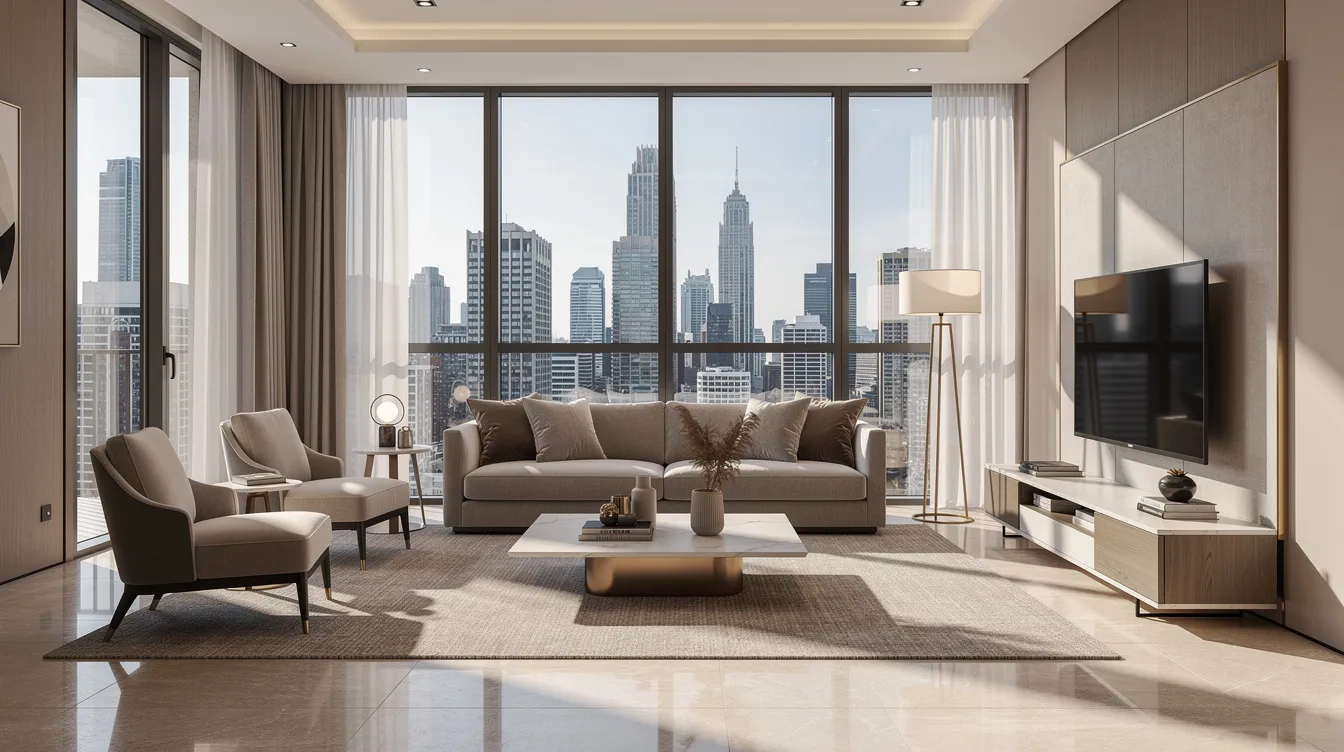
Not all 3-bedroom units are equal. A 3-bedder with a dumbbell layout (bedrooms on opposite sides of the living area) offers more privacy but less efficient circulation than a corridor layout. A foyer or entry alcove adds a sense of arrival but eats into unit size. An oversized balcony looks lovely in the showflat but reduces your liveable space – and future buyers in 2030+ will notice.
Key stack considerations:
-
Facing: Afternoon west sun dramatically increases aircon costs and discomfort. North-south facing is generally preferred. Check the site plan’s north arrow – not the developer’s marketing brochure orientation.
-
Floor level: Higher floors command premiums (2–5% per tier for views and breeze) but the price jump from, say, floor 10 to floor 20 rarely returns proportional resale value. Low floors near the pool or garden can be noisy.
-
Proximity to disamenities: Units facing the bin centre, electrical substation, pump room or guardhouse often trade at a discount at resale. Ask the sales team to point these out on the site plan – they won’t volunteer the information.
What to photograph at the showflat:
-
The scale model with your shortlisted stacks highlighted
-
Site plan showing the north orientation, facilities and surrounding roads
-
Material board (tiles, kitchen countertop, bathroom fittings)
-
Brochure fine print – payment schedules, developer’s conditions, any subvention clauses
Aman always reviews clients’ showflat photos afterwards to catch details they missed – a column intrusion behind a mirror, a bay window eating into the master bedroom, or an AC ledge blocking a future view.
Q8: “How Does the Progressive Payment Scheme Affect My Cash Flow?”
The Progressive Payment Scheme disburses payments for private properties based on construction milestones – you don’t pay 100% upfront. Here’s the standard schedule for a new launch condo:
|
Stage |
% of Purchase Price |
Cumulative % |
|---|---|---|
|
Booking fee (OTP) |
5% |
5% |
|
Signing S&P (~8 weeks later) |
15% |
20% |
|
Foundation works |
10% |
30% |
|
Reinforced concrete framework |
10% |
40% |
|
Partition walls |
5% |
45% |
|
Roof / ceiling |
5% |
50% |
|
Doors, windows, wiring, plumbing |
5% |
55% |
|
Car park, roads, drains |
5% |
60% |
|
Temporary Occupation Permit (TOP) |
25% |
85% |
|
Certificate of Statutory Completion |
15% |
100% |
The 5% booking fee must be paid upfront entirely in cash – CPF funds cannot be used. The 15% at S&P signing can come from CPF ordinary account and/or cash. From foundation stage onward, your bank loan starts disbursing, and you begin paying monthly mortgage instalments that gradually increase as more of the loan is drawn down.
Year-by-year illustration for a $1.8M unit booked in 2026:
-
2026: $90k booking (cash) + $270k at S&P (cash/CPF) + BSD and legal fees. Monthly instalment: minimal (loan not yet disbursed)
-
2027: Foundation + framework stages trigger ~$360k in loan drawdowns. Monthly instalment begins – roughly $800–$1,200 depending on rate
-
2028–2029: Partition, roof, doors/windows stages. Monthly instalment climbs to ~$2,500–$3,500 as cumulative loan grows
-
2029–2030 (TOP): 25% ($450k) disbursed. Full monthly instalment kicks in: ~$7,000–$7,500 at 4% stress rate over 25 years
Critical risk: If you still have an outstanding housing loan on your HDB while progressive payments are running, both instalments count toward your TDSR. That dual-burden window is where most HDB upgraders feel the squeeze – budget for it explicitly.
For a personalised cash-flow projection, Aman builds customised spreadsheets for clients. Request one here.
Q9: “What Are the Hidden or Overlooked Costs of Upgrading to a New Launch?”
HDB upgraders often need to budget for hidden costs like legal fees and maintenance fees. Here’s the full list Aman walks through with every client:
-
Buyer’s Stamp Duty (BSD): Buyer’s Stamp Duty is calculated on the purchase price or market value based on tiered residential rates. On a $1.8M condo purchase, BSD is approximately $49,600.
-
Additional Buyer’s Stamp Duty (ABSD): If buying before selling HDB – 20% of purchase price for SC second property ($360,000 on $1.8M). Must be paid upfront in cash.
-
Legal fees: Legal fees for property transactions range from $2,500 to $4,500 for the condo purchase, plus similar for the HDB sale conveyancing. Budget $5,000–$9,000 total.
-
Valuation and bank processing fees: $300–$600 combined.
-
Property agent commission: For your HDB sale, typically 2% of sale price. A licensed property agent will also help with pricing strategy and marketing.
-
Renovation and furnishing: Even a new launch condo needs ID work, curtains, aircon installation and appliances. Typical range: $40,000–$120,000 for a 3-bedder depending on finishes.
-
Interim housing: If you sell the HDB before TOP, renting during the gap can cost $2,500 to $5,000 monthly – over 3 years, that’s $90,000–$180,000. Factor in storage and moving fees too.
-
Ongoing occupancy costs: Private condo maintenance fees ($300–$600/month), sinking fund contributions, higher property tax than HDB S&CC.
-
Bridging loans (if needed): Bridging loans typically charge 5–6% interest per annum – an expensive stopgap if your HDB sale timeline doesn’t align with your condo purchase.
Aman stress-tests every client’s plan at 4% interest and includes all-in monthly costs – mortgage, maintenance, sinking fund and property tax – before greenlighting any upgrade.
Q10: “Is Upgrading to a New Launch Still Worth It in 2026 – Or Should I Wait?”
Private residential prices rose by 0.5% quarter on quarter in 2026 – modest, but not falling. Interest rates remain relatively elevated, cooling measures are firmly in place, and the price gap between new launches and resale in OCR is wide. So: is it worth it now?
It makes sense to act now if:
-
Your MOP has recently been reached and there’s strong resale demand for your HDB flat type in your estate
-
You’ve identified a specific new launch in your ideal location, budget and layout – not just a vague desire to “upgrade”
-
Your household income is stable, with at least one spouse holding portable, in-demand skills
-
Your numbers work comfortably at 75% of maximum loan, with 12+ months of buffer
Waiting may be wiser if:
-
You have no clear target project and are buying mainly out of FOMO or showflat pressure
-
Your income is unstable, your cash buffer is thin, or you carry heavy other debts
-
An upcoming EC in your town offers a much lower entry quantum. Executive condominiums are available for HDB upgraders but come with stricter income ceilings – but if you qualify, the savings can be substantial. Executive Condominiums have a 10-year Minimum Occupation Period, with full privatization of Executive Condominiums occurring after 15 years.
-
You’re early in MOP with a large outstanding loan – time is your ally, not your enemy
Aman’s rule of thumb: “If your numbers only work at the maximum loan, you’re not ready. If they work comfortably 10–20% below maximum, we can talk upgrade.”
Putting It Together: Aman’s 5‑Step New Launch Game Plan for HDB Upgraders
Now that we’ve answered the ten most common questions, here’s how to convert knowledge into action. This is a simplified version of the customised roadmap Aman builds for every client at AESTHETIC HAVENS.
Step‑by‑Step Roadmap (From “Thinking About It” to Booking a Unit)
-
12–18 months before target purchase: Confirm your MOP date on the HDB Flat Dashboard. Calculate your outstanding HDB loan, total CPF usage plus accrued interest, and get an indicative HDB valuation from recent transactions in your block.
-
9–12 months before: Run a full affordability check – gross monthly income, TDSR headroom at stress-test rates, CPF OA projections, and cash savings after emergency buffer. Include both spouses’ incomes but model what happens if one income drops.
-
6–9 months before: Shortlist 2–3 new launch projects and 2–3 resale condo options. Study the URA Master Plan for each precinct, check GLS pipeline, and compare PSF using actual caveats – not brochure prices.
-
3–6 months before: Commit to sell-then-buy or buy-then-sell. If sell-first, engage a property agent and begin HDB marketing. If buy-first, ensure cash reserves cover ABSD upfront plus 12 months of dual costs. Plan interim housing if needed – get vacant possession timelines in writing.
-
1–3 months before launch: Secure your in principle approval from the bank, engage a conveyancing lawyer, and finalise your HDB sale pricing strategy based on the latest comparable HDB resale transactions.
-
Launch period: Visit the showflat with annotated floorplans and your checklist below. Do not make a same-day booking decision. Compare the nett price after discounts, not the headline “from” PSF. Sleep on it – the right unit will still be there tomorrow morning.
Showflat Visit Checklist (With Pictures to Look Out For)
The Numbers:
-
$PSF of your shortlisted unit – confirm it matches the price list, not just the “from” price
-
Total quantum including parking (if not included) and estimated maintenance fees
-
Payment schedule printout showing progressive payment milestones and estimated TOP date
-
Buyer’s stamp duty ABSD calculation if applicable
The Unit:
-
Ceiling height (standard 2.8m vs premium 3.15m makes a visible difference)
-
Column intrusions – check corners of bedrooms and living room
-
Window type and AC ledge dimensions – do they block natural light or views?
-
Actual room sizes versus the furniture in the show unit (show unit sofas are often undersized)
-
Balcony proportions – is it genuinely usable or just inflating the stated unit size?
The Surroundings:
-
Traffic noise – visit on a weekday afternoon, not just a quiet Sunday
-
Future construction sites visible from your stack (cross-check with URA plot maps)
-
Walking distance to MRT, bus interchange, nearest primary school and supermarket
-
Neighbouring developments – what’s the density and height of the same development and adjacent blocks?
Photos to take:
-
Scale model with your shortlisted stacks marked (use a sticky note)
-
Site plan with north orientation, facilities layout and entrance/exit points
-
Material board showing actual tile samples, kitchen countertop and bathroom finishes
-
Brochure fine print: payment terms, defect liability period, handover conditions
Aman regularly reviews clients’ showflat photos to catch what the excitement of the visit causes them to miss.
Common Challenges and How Aman Solves Them for HDB Upgraders
Upgrading is emotional. You’re juggling fear of missing out against fear of making a million-dollar mistake – and both fears are rational. Here are the challenges Aman encounters most often, and how he helps clients cut through.
Challenge 1: Conflicting Advice from Friends, Agents and Online Groups
Everyone has an opinion. Your colleague says OCR is dead. Your brother-in-law swears by a RCR launch. A Facebook group insists you should only buy freehold. The noise is paralysing.
Aman’s solution: Build a numbers-first framework – cash flow capacity, risk tolerance, target holding period – and only then fit projects into it. At AESTHETIC HAVENS, Aman provides neutral, data-driven comparisons across developers and precincts with no single-developer bias. The property advice is rooted in your specific financial position, not someone else’s anecdote.
Challenge 2: Fear of Additional Buyer’s Stamp Duty (ABSD) Deadlines and Missing Remission
ABSD remission requires selling HDB within 6 months of condo purchase (for completed property) or TOP. Missing this window on a $1.8M property means losing $360,000. The anxiety is understandable.
Practical mitigation strategies:
-
Start marketing your HDB flat early – even before TOP – once your HDB sale timeline becomes reasonably certain
-
Price your HDB realistically based on recent transactions, not aspirational peak prices. Overpricing by $20,000 and missing the deadline costs you 18x more.
-
Have your buyer’s financing pre-verified. A last-minute loan rejection by the HDB buyer can torpedo your timeline.
Challenge 3: Juggling Family Needs, School Locations and Aging Parents
Non-financial constraints often derail otherwise solid plans. A spouse who insists on staying east, school registration priority tied to a specific 1km radius, elderly parents who need weekly visits – these aren’t minor details.
Aman’s approach: Map “must-haves vs nice-to-haves” on a simple worksheet before looking at any project. Then run scenario planning – “What if we stay east versus move north?” – with projected commute times, school options and weekend visit logistics. Property decisions are life decisions; treat them that way.
Challenge 4: Uncertainty About Future Market (2027–2030)
Nobody can predict exact prices in 2028 or 2030. But you can plan for ranges.
Focus on controllables:
-
Can you hold this property for at least 8–10 years if the market softens?
-
Do your stress-tested instalments (at 4%+ interest) remain manageable even if rental income doesn’t materialise?
-
Do you have genuine exit options – own stay, rent out individual rooms, rent the entire unit, or sell without distress?
AESTHETIC HAVENS tracks URA data, GLS pipeline and rental trend analysis to advise clients on holding power – not to predict the market, but to ensure you survive whichever direction it moves.
Conclusion: Your Next Step Before Signing Any New Launch Option
Upgrading from an HDB flat to a new launch condo isn’t about chasing the hottest project or the biggest showflat discount. It’s about aligning these 10 key questions with your numbers, your family’s life plans and your risk tolerance. Get those right, and the specific project almost chooses itself.
Core principles to carry forward:
-
Know your MOP date and ABSD position before stepping into any showflat
-
Decide sell-first versus buy-first based on cash flow and data, not emotion or convenience
-
Use progressive payment timing and smart layout choices to your advantage – don’t let them use you
-
Refuse to be rushed without at least one full numbers run-through at stress-test rates
Your three immediate next actions:
-
List your current HDB details: block, flat type, remaining lease, loan outstanding, CPF usage with accrued interest
-
Draft a rough affordability range using your combined household income, down payment capacity and the ABSD & BSD calculator
-
Shortlist 2–3 potential new launch or resale areas aligned to your family’s must-haves – not 10 random projects from Instagram ads
Invite: Book a 1‑to‑1 “Ask Aman” New Launch Upgrade Call
In a single session, Aman reviews your HDB flat details, CPF position, income structure and family priorities. He then builds a side-by-side comparison of 2–3 shortlisted new launches versus nearby resale options using AESTHETIC HAVENS’ transaction data – real caveated prices, not listing estimates. You walk away with a clear recommendation on timing, price ceiling and the specific unit types to target.
The consultation is obligation-free, designed for Singapore HDB owners planning to upgrade within the next 24 months. No hard sell, no developer kickback – just honest, in depth property advice grounded in your numbers.
Click here to schedule your “Ask Aman” session before you visit your next showflat this weekend.
Additional Resources for HDB Upgraders (Optional Reading)
These resources extend – rather than repeat – the core content above:
-
Tool: HDB Upgrader’s ABSD & BSD Calculator (2026 Edition) – interactive calculator to model stamp duties on various purchase price scenarios
-
Guide: Understanding Progressive Payment for New Launches in Plain English – deeper walkthrough of each milestone and what triggers bank loan drawdowns
-
Case Study: From Sengkang 4-Room to OCR New Launch 3-Bedder – A 2025–2029 Real-Life Upgrade Journey – an actual client’s timeline, numbers and decision points
-
Market Insight: Quarterly New Launch vs Resale Price Summary (OCR/RCR) – updated data on PSF trends relevant to HDB upgraders evaluating the central region, OCR and RCR
This guide is educational and reflects regulations and market conditions as of October 2026. Rules change – always verify the latest policies with HDB, IRAS, CPF Board and the Monetary Authority of Singapore before making any financial commitments.

