

Introduction
Moving from a condo to a landed property in Singapore is one of the most significant financial decisions a homeowner can make – and timing it right separates a wealth-building move from an overextension. The condo to landed upgrade only makes financial sense when three conditions converge: your deployable equity covers at least 35–45% of the target landed purchase price, your household income comfortably services the larger mortgage within safe debt ratios, and you hold enough liquid reserves to buffer 12–24 months of elevated holding costs.
This guide is written for Singapore condo owners in 2024–2026 who are weighing whether now is the right moment to enter the landed market. It is a numbers-led, asset-progression framework – covering the typical HDB flat → condo → landed property journey – rather than a lifestyle lookbook. We approach the question from an advisory and investment perspective, examining the financial implications of each pathway so you can make a decision grounded in data, not aspiration alone.
Here is what you will gain from reading through:
-
How to quantify whether your current condo equity is sufficient to enter the landed market safely.
-
How to separate land value from depreciated building value when comparing condos and landed homes.
-
What monthly and annual holding costs – loan repayments, property tax, maintenance costs – to expect for landed vs condo living.
-
How lifestyle and business-use needs (home office, multi-generational living, small business) change the financial equation.
-
A simple decision framework to determine whether you should upgrade now, wait, or take an intermediate step.
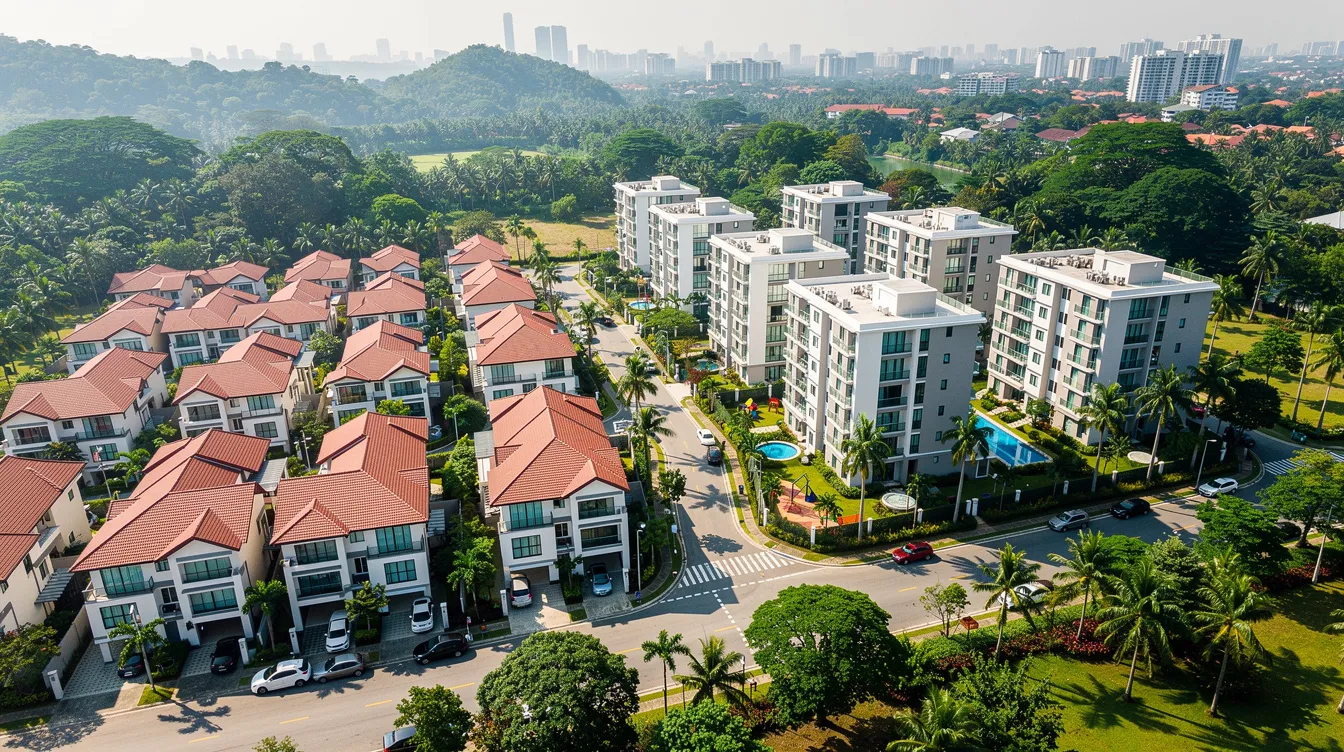
Understanding The Condo-To-Landed Asset Progression
Singapore’s residential property market follows a well-worn wealth escalator. Most households begin with an HDB flat, upgrade to a private property – typically a mass-market condominium – and, if financial capacity allows, eventually move into landed homes. Understanding where the condo to landed step sits in this property journey is essential before running any numbers.
From HDB To Condo To Landed: The Typical Upgrade Path
The classic sequence looks like this: a couple buys an HDB flat in their late 20s, sells it in their early-to-mid 30s with accumulated equity, and upgrades to a condo in the Outside Central Region (OCR) or Rest of Central Region (RCR). The condo years – typically spanning 7–15 years – are used to build equity through mortgage repayment and modest capital appreciation, often in the range of 2–5% per annum depending on location and market trends.
By their 40s or early 50s, households with combined gross monthly income in the S$25,000–S$40,000+ range and net worth crossing S$2.5–3 million begin seriously considering the landed market. Landed housing in Singapore accounts for only around 5% of total housing stock, making land scarcity a persistent driver of long-term value. In Q1 2026, median terrace prices were S$4.44 million and median semi-detached prices reached S$5.75 million, according to ERA’s Q1 2026 landed report – placing the entry point several million dollars above most condo transactions.
Skipping directly from an HDB flat to landed property is rare. The quantum gap is enormous, financing is more complex (banks cap loan to value limits for landed property financing at 75%), and only Singapore citizens can freely purchase mainland landed homes. Under the residential property act, permanent residents must seek approval through the Land Dealings Approval Unit to buy mainland landed properties, while foreigners cannot buy them at all in Singapore (though strata landed properties can be purchased by permanent residents). These constraints mean that most readers are now at the condo-to-landed decision point, not the HDB-to-landed one.
A rough timeline of the typical upgrade path:
-
Late 20s–early 30s: HDB resale owners, combined household income ~S$150–250k/year, first property worth S$500k–S$800k.
-
Mid 30s–early 40s: Condo owners (OCR/RCR mass market), income ~S$300–450k, condo value S$1.5–2.5M, mortgage significantly paid down.
-
Mid 40s–50s: Considering landed, income S$450k–S$1M+, net worth across multiple asset classes, equity and reserves built up.
Defining “Financial Sense” For A Condo-To-Landed Upgrade
“Financial sense” is not the same as “bank will approve.” It means sustainable debt servicing, sufficient buffers for shocks, reasonable opportunity cost compared to alternative investments, and resilience to interest rate changes. The financial outcome of upgrading to landed property depends on various market and personal conditions – a careful financial planning approach requires four objective tests:
-
Loan-to-value and TDSR comfort. MAS caps the Total Debt Servicing Ratio at 55% of gross household income. But comfort lies well below the cap – your new mortgage payment plus all other debt obligations should stay under ~30–35% of gross income. A transition to landed property should consider borrower financial resilience with larger mortgages.
-
Equity threshold. After selling your condo and clearing the outstanding loan, CPF refunds, legal fees, and agent commissions, you should have deployable equity equivalent to at least 35–45% of your target landed purchase price. This covers the down payment, stamp duty, renovation costs, and a contingency reserve.
-
Holding-cost buffer. Maintain liquid reserves sufficient to cover 12–24 months of all property-related outflows – mortgage instalments, property tax, insurance, maintenance costs, and utilities. Landed homes tend to have far more variable upkeep costs than condos.
-
Time horizon. Plan to hold the landed property for 10+ years. Transaction costs such as Buyer’s Stamp Duty can significantly impact financial viability of upgrades – and each financial aspect of moving to landed homes should be compared over a long-term horizon to amortise those upfront costs and smooth out cyclical price swings.
Using these tests prevents overextending just because a bank is willing to lend. To apply them properly, though, you need to understand what you are actually buying in a landed home – which is, overwhelmingly, land.
Land Vs Building: What Changes When You Go From Condo To Landed Property In Singapore
When you own a condo, your purchase bundles strata floor area, shared facilities, and a fractional interest in common land into a single per square foot price. In a landed house, land value and building value separate far more distinctly – and the difference matters enormously for long-term appreciation and capital expenditure planning.
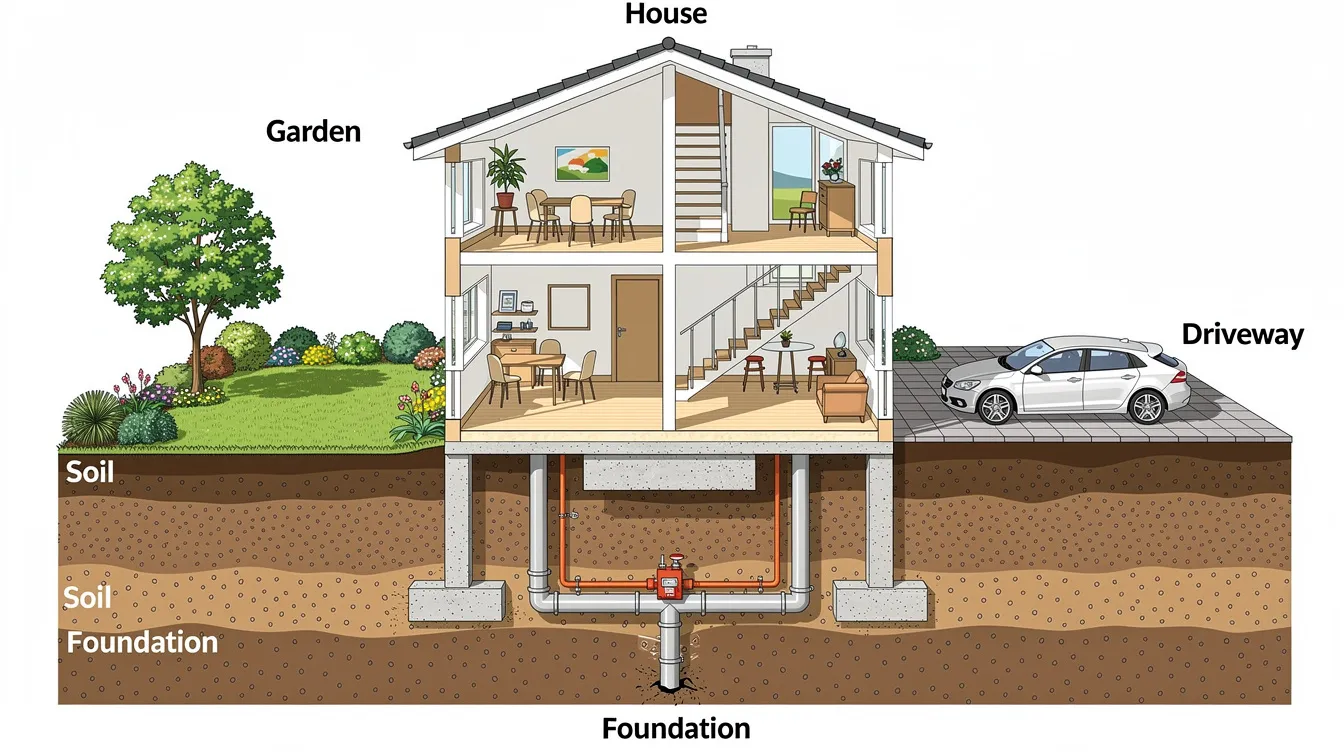
Land Value As The Real Asset
For landed property in Singapore, long-term performance is driven primarily by the land: its size, tenure (freehold land, 999-year, or 99-year leasehold), land shape, zoning, and rebuild potential. Land appreciates in value over time while buildings depreciate – this is the fundamental principle that makes land ownership financially different from condo ownership.
Land scarcity in Singapore drives appreciation potential of land compared to structured assets like condos. Landed property supply has plateaued at around 73,000 units since 2018, while demand from qualifying Singapore citizens continues. Landed homes appreciated 6.73% year-on-year in Q1 2026, and landed properties have appreciated faster than condominiums since 2020. Annualised returns for landed properties were 2.23% from 2013 to 2022, a period that included several cooling-measure cycles.
Consider a terrace house valued at S$4.5 million in the OCR. Of that purchase price, roughly 80–90% represents the land value – the plot itself, its tenure, its location. The remaining 10–20% accounts for the building, which may be 20+ years old and functionally adequate but depreciating. Freehold landed homes command a 30 to 50% premium over leasehold equivalents, further underscoring that what you are really buying is the dirt beneath the structure.
In contrast, condo buyers pay primarily for strata floor area, developer branding, facilities, and building condition. The direct land ownership component is diluted across all unit owners. Long-term land ownership is generally more financially beneficial with landed homes than condos.
Building Value, Depreciation, And Rebuild Potential
Older landed houses often trade close to “land value plus a modest building allowance,” especially when the building is 20–30 years old. This is the concept of depreciated building value – the structure has served its useful life and contributes little to the total price. Contrast this with condos, where unit condition and condo age are more tightly linked to per-square-foot pricing and the bank’s valuation.
The real upside of landed property represents the ability to rebuild. Depending on zoning, you may be able to convert a 2-storey home into a 3-storey dwelling, add an attic, extend the rear, or – in rare cases – explore subdivision. URA guidelines govern plot ratios and allowable built-up area, but the optionality is there. Landed properties often require budgeting for significant capital expenditures: a major renovation can run S$300,000–S$800,000 for structural, mechanical, and waterproofing works, compared to perhaps S$80,000–S$150,000 for a condo refresh of similar market value.
Why psf Comparisons Between Condo And Landed Mislead
One of the most common errors upgraders make is comparing price per square foot across property types as though the unit of measurement is the same. It is not. A condo’s psf is calculated on strata floor area (built-up space including a share of common areas). A landed home’s psf is typically quoted on land area – the plot footprint, not the built-up space.
Here is a quick illustration:
-
A 1,200 sqft condo at S$2,100 psf = S$2.52 million total cost.
-
A 2,000 sqft inter-terrace land plot at S$1,500 psf (on land area) = S$3.0 million total cost. The built-up floor area across multiple storeys might be 2,500–3,000 sqft, making the effective built-up psf considerably higher.
Even if landed seems “cheaper per square foot,” landed properties generally have higher absolute price tags than condominiums. And the recurring costs – which we will quantify next – are substantially steeper. To know if the move makes financial sense, you must run the numbers across entry costs, holding costs, and exit flexibility.
When The Condo-To-Landed Upgrade Numbers Work
This is where generalizations give way to your specific situation. Below is a concrete, step-by-step framework – similar to what a data-driven advisory approach would use – to test whether you are financially ready to make the jump.
Step-By-Step: Testing If You’re Financially Ready
Imagine a typical upgrading couple: early 40s, combined income S$350,000–S$450,000 per year, owning a S$2.0–2.2 million condo in the OCR with most of the mortgage paid down. Here is the process:
-
Estimate condo sale proceeds. Check recent caveats via URA’s property market data to value your unit. Subtract the outstanding loan redemption amount, CPF-OA refund (principal + accrued interest), agent commission (~1–2%), and legal fees. If your condo is worth S$2.2 million with S$400,000 remaining on the loan and S$300,000 in CPF refunds, your net proceeds are roughly S$1.4–1.45 million after all selling costs.
-
Define your target landed budget range. Based on 2025–2026 median landed property prices: terraces ~S$4.53 million, semi-detached houses ~S$6.36 million, detached houses ~S$11.50 million. For 99-year leasehold terraces with 60+ years remaining, median prices sit around S$3.0 million – offering lower entry prices but carrying significant risks of lease decay. Terrace houses typically range from 1,500 to 3,500 sqft in land area; semi-detached houses usually have land areas of 2,500 to 4,000+ sqft; detached houses outside GCB Areas usually range from 4,000 to 8,000 sqft.
-
Compute minimum equity requirement. For a S$5 million target, you need net deployable equity of roughly S$1.75–2.25 million (35–45% of the purchase price). Landed properties require a minimum down payment of 25% for loans – that alone is S$1.25 million. Add stamp duty, renovation costs, and reserves on top.
-
Run TDSR and instalment stress test. Model your mortgage at a realistic stress interest rate of 4.0–4.5%. On a S$3.75 million loan over 25 years at 4.25%, the monthly instalment is approximately S$19,300. Compare that to your current condo mortgage payment (likely S$6,000–S$9,000) and check that total debt obligations stay well under 35% of gross monthly income.
-
Layer in non-mortgage costs. Property tax rates for landed homes are typically higher due to larger annual values – IRAS progressive owner-occupied rates can push effective rates above 10% of AV at higher brackets. Add insurance, higher utility bills (larger spaces, external lighting, pool pumps if applicable), and routine maintenance. Annual maintenance costs for landed properties range from S$30,000 to S$120,000 depending on age and condition.
-
Check emergency buffer. Ensure at least 12–24 months of all property-related outflows – mortgage, tax, insurance, maintenance, utilities – in liquid, accessible savings. For a S$5 million landed home, this buffer might need to be S$250,000–S$450,000 in cash equivalents.
Condo Vs Landed: Core Financial Metrics Compared
The following table compares a S$2.2 million condo (own-stay) with a S$5.0 million terrace house (own-stay) as an illustrative 2026 case:
|
Metric |
Condo (S$2.2M, own-stay) |
Landed Terrace (S$5.0M, own-stay) |
|---|---|---|
|
Purchase price |
S$2,200,000 |
S$5,000,000 |
|
Loan size (75% LTV) |
~S$1,650,000 |
~S$3,750,000 |
|
Monthly mortgage (25-yr, 4.25%) |
~S$8,500 |
~S$19,300 |
|
Annual property tax (owner-occupied) |
~S$2,000–S$4,000 |
~S$8,000–S$15,000 |
|
MCST / direct maintenance per year |
~S$5,000–S$8,000 (maintenance fees + sinking fund) |
~S$30,000–S$120,000 (roof, façade, landscaping, structural reserve) |
|
Annual utilities |
~S$3,000–S$5,000 |
~S$6,000–S$12,000 |
|
Capex reserve per year |
~S$2,000–S$5,000 |
~S$10,000–S$30,000 |
|
Estimated 10-year total outlay |
~S$1.3–1.5M |
~S$3.5–4.5M |
The key takeaway: a landed upgrade can more than double your annual cash commitment. The rows that matter most for decision-making are monthly mortgage (the largest single line item), direct maintenance (far less predictable for landed), and the capex reserve (high maintenance costs for older landed homes can be unpredictable compared to condos). Landed property ownership eliminates recurring maintenance fees typical of condos, but replaces them with direct, often larger, and less predictable expenses.
Equity Thresholds: How Much Condo “Profit” Is Enough?
For a landed target in the S$4–6 million range, a useful rule of thumb is that you need at least S$1.5–2.5 million in net deployable equity after selling your condo and clearing all obligations, because the move comes with higher upfront costs tied to down payment, stamp duty, renovation, and a prudent cash buffer. Here is how that breaks down:
-
Down payment (25–35%): S$1.00–1.75 million on a S$4–5 million property. Landed properties require a much higher cash down payment and larger minimum cash outlays than condos.
-
Stamp duty: Buyer’s Stamp Duty on a S$4 million property is S$179,600. If you are buying a second property before selling the first, Singapore Citizens pay 20% Additional Buyer’s Stamp Duty on second properties – potentially adding S$800,000–S$1,000,000 on a S$4–5 million landed home. These are significant costs that must be factored into the total financial commitment.
-
Initial renovation budget: Even for a “move-in ready” landed house, expect S$200,000–S$300,000 minimum for refurbishment. Structural or layout changes push this higher.
-
Contingency reserve: 6–12 months of payments set aside at completion, roughly S$150,000–S$300,000.
Example scenario: A couple sells their S$2.1 million condo and nets S$950,000 after loan redemption, CPF refunds, and selling costs. For a S$4 million terrace, they need ~S$1.0 million for the down payment alone, plus ~S$180,000 in BSD, plus ~S$250,000 for renovation – totalling ~S$1.43 million before any buffer. Their S$950,000 in condo proceeds falls short by nearly S$500,000, meaning they need substantial additional cash savings or a lower target price. Sufficient savings beyond the condo equity is what separates a comfortable upgrade from a financially strained one.
Older landed homes may have a valuation gap below the purchase price, meaning the bank’s valuation could come in lower than what you agreed to pay, further increasing the cash you must bring to the table.
Beyond pure numbers, how you sequence the move and which pathway you choose also changes outcomes significantly.
Advanced Decisions: Pathways, Holding Costs, And Lifestyle Trade-Offs
Once you have confirmed basic financial readiness, the next layer of decision-making involves choosing the right upgrade pathway, understanding what holding costs really look like day-to-day, and honestly assessing whether the lifestyle benefits justify the higher initial investment.
Three Main Upgrade Pathways From Condo To Landed
There is rarely a single route from condo to landed. Here are three realistic, Singapore-specific pathways for 2024–2026:
Path 1: Sell condo, buy landed own-stay immediately. This is the simplest execution – one sale, one purchase, one move. You avoid carrying two properties simultaneously, eliminate additional buyer’s stamp duty exposure, and concentrate your equity into the landed home. The trade-off: highest monthly outlay from day one, full concentration of net worth in a single residential property, and no rental income from the former condo.
Path 2: Keep condo as investment, buy smaller landed for own-stay. This path preserves portfolio diversification and generates rental income from the condo to partially offset the landed mortgage. However, you face ABSD on the second property (20% for citizens), manage two properties, carry dual debt, and face dual property tax exposure. It works best when income is strong enough to absorb the ABSD hit and cash flow remains healthy.
Path 3: Upgrade to a better condo first, then landed in 5–8 years. For example, moving from a mass-market OCR condo to a mid-tier RCR or CCR unit, growing equity further while waiting for either the landed market to offer better entry points or your income to rise further. This approach has lower entry prices and spreads risk – but you may be priced out of the landed market if landed prices continue their upward trajectory.
|
Factor |
Path 1: Sell & Buy Now |
Path 2: Keep Condo + Buy Landed |
Path 3: Better Condo First |
|---|---|---|---|
|
Upfront cash/CPF needed |
High (down payment + stamp duty + reno) |
Very high (ABSD + dual down payments) |
Moderate |
|
ABSD exposure |
None (sell before buy or concurrent with remission) |
20% on second property for citizens |
None |
|
Portfolio concentration |
High (single asset) |
Diversified (two properties) |
Moderate (single condo, growing) |
|
Flexibility to exit/downsize |
Moderate (landed is less liquid) |
Higher (can sell either) |
High |
|
Best suited for |
High income, strong equity, decisive timeline |
Very high income, investment-minded |
Moderate income, longer horizon |
The buyer pool for landed properties is much smaller and more niche than for condos, which means landed properties are generally less liquid assets compared to mass-market condos. Factor this into whichever pathway you choose.
Holding Costs: What Really Changes Once You Own Landed
The shift from condo to landed fundamentally changes your cost structure. Here is what moves:
No more MCST fees – but full direct responsibility. Landed property ownership eliminates recurring maintenance fees typical of condos (typically S$400–S$680/month for mid-tier RCR condos). In their place, you take on direct responsibility for the façade, roof, driveway, drainage, fencing, gates, landscaping, pest control, and – if applicable – pool pumps and lifts. Landed properties typically incur higher ongoing maintenance costs than condos.
Higher property tax. Because annual value (AV) is calculated on potential rental value, and landed homes have larger built-up areas with higher market rents, property tax bills escalate. A S$5 million landed home’s AV can push you into the steeper brackets of the progressive owner-occupied rate schedule.
Higher utility bills. Larger spaces, garden irrigation, external lighting, and pool equipment mean electricity and water costs can easily double compared to condo living.
Insurance. Fire and structural insurance for a standalone building is more comprehensive (and expensive) than a condo unit’s contents-only policy.
Broad annual cost bands for comparison:
-
Condo MCST + unit maintenance + utilities: ~S$8,000–S$15,000/year
-
Landed direct maintenance + utilities + insurance + reserves: ~S$30,000–S$120,000/year
The gap is real and ongoing. Underestimating these recurring costs is one of the primary reasons an upgrade that “worked on paper” later feels financially tight.
Lifestyle And Usage: When Paying More Actually Delivers Value
There are situations where the higher financial commitment of a landed home is genuinely rational – not just aspirational:
Multi-generational living. Cost pooling and multi-generational living can be optimized with landed property ownership. Two generations who would otherwise need two separate condos can share a single landed house – eliminating one set of mortgage payments, property taxes, and maintenance fees entirely while gaining more space and privacy than any condo layout allows. Semi detached homes and detached houses are particularly suited to this arrangement.
Home-based business operations. Landed homes can allow for home-based business operations under certain zoning laws. If you run a consultancy, creative studio, or e-commerce operation requiring storage and workspace, a landed house with a dedicated ground-floor room or outbuilding can replace commercial rent. This shifts part of the holding cost from pure consumption into income-generating infrastructure, altering the ROI calculus compared to a purely residential condo.
Family space needs. Children needing outdoor play areas, proximity to specific schools in landed estates, or aging parents requiring ground-floor bedrooms and wheelchair-accessible layouts can all tip the equation. Terrace houses, semi detached houses, and cluster houses each offer different configurations of more space relative to condos.
However, lifestyle “upgrades” should not mask weak financial fundamentals. Consider two vignettes:
-
Justified: A dual-income household earning S$500,000 combined, netting S$1.8 million from their condo sale, buying a S$4.2 million freehold terrace with a 20-year hold horizon. They run a part-time consultancy from a converted ground-floor room. The numbers work, and the home partly generates income.
-
Not justified: A household earning S$300,000, netting S$900,000 from their condo, stretching for a S$4.5 million semi-D because “the children need space.” They exhaust all reserves on the down payment and renovation costs, leaving zero buffer. One job loss away from distress.
Even with careful consideration and good planning, common pitfalls can derail a condo-to-landed move.
Common Pitfalls And How To Avoid Them
Many upgraders fixate on headline landed prices and underestimate less visible risks. Here are the most frequent mistakes and how to sidestep them.
Over-Leveraging On Optimistic Interest Rate Assumptions
The mistake: modelling affordability at 2.5–3% interest because that is what a promotional floating package offers today. The reality: rates for large, long-tenured landed mortgages can shift significantly over a 25–30 year loan. MAS stress-test requirements already assume higher rates, but your personal comfort should go further.
Fix: Always run your numbers at 4.0–4.5% – at least 1.0–1.5% above the current best available rate. If the monthly instalment at 4.5% consumes more than 30–35% of gross monthly income, the landed home is too expensive right now.
Ignoring Valuation Gaps And Cash Top-Ups
Older landed homes may have a valuation gap below the purchase price. When the bank’s valuation comes in lower than the agreed transaction price, the loan-to-value ratio applies to the bank’s figure – not yours. The difference must be covered entirely in cash.
Fix:
-
Seek multiple indicative valuations early, before signing the Option to Purchase.
-
Set aside 5–10% of the purchase price as a potential valuation-gap buffer.
-
Avoid committing without a realistic cash plan for such gaps.
Underestimating Renovation Costs And Compliance Costs
Buyers frequently budget only for cosmetic refurbishment – paint, flooring, kitchen fittings – while ignoring structural, mechanical and electrical (M&E), waterproofing, and regulatory compliance works. Renovation costs for landed homes routinely exceed initial estimates, especially for properties over 20 years old.
Fix:
-
Engage an inspector or contractor for a pre-offer site walk before committing.
-
Obtain ballpark quotes for both light renovation (S$200,000–S$350,000) and heavy renovation (S$500,000–S$800,000+) scenarios.
-
Check URA, BCA, and SCDF rules for your intended use – especially if you plan attic conversions, additional floor area, or home-office setups.
Neglecting Exit Strategy And Portfolio Balance
Locking 70–80% of your net worth into a single landed house leaves almost no financial flexibility. Landed properties are generally less liquid assets compared to mass-market condos – if you need to sell quickly, the smaller buyer pool means longer time on market and potentially weaker pricing.
Fix:
-
Set a maximum percentage of net worth in your primary residence – ideally 50–60% for higher-income households.
-
Consider maintaining at least one property that can generate income – whether residential rental, industrial properties, or commercial assets.
-
Plan 10-year and 20-year exit options: downsizing back to a condo, shifting capital into income-generating investment opportunities, or unlocking equity through partial asset sales.
With careful consideration and proper planning, a condo-to-landed move can support broader investment and business goals – not just lifestyle ambitions.
Conclusion And Practical Next Steps
A condo to landed upgrade makes financial sense when – and only when – your equity, income, holding-cost buffers, and time horizon align with realistic landed costs and clear personal or business use cases. The landed market rewards those who enter with sufficient savings, patient capital, and an honest assessment of cash flow over the next decade.
Here are your immediate next steps:
-
Calculate your current condo equity and realistic landed budget range. Net your expected sale proceeds against all obligations and compare to the 35–45% equity threshold for your target property type.
-
Run a 10-year cost projection for staying in your condo versus upgrading to landed, using a 4.0–4.5% stress interest rate. Include property tax, maintenance costs, capex reserves, and higher utility bills.
-
Decide which of the three upgrade pathways fits your risk tolerance and life stage – sell and buy now, keep and buy, or intermediate condo step first.
-
Shortlist target estates and landed types – inter-terrace vs corner terrace house vs semi detached homes – based on both numbers and lifestyle priorities. Consider tenure carefully: freehold properties offer long term appreciation potential, while 99-year leasehold landed homes face significant risks of lease decay.
-
Book a consultation with a data-driven advisor to stress-test your plan, validate your timeline, and ensure your property appreciation assumptions are grounded in current property market data rather than optimism.
If you are also exploring how business-use real estate or industrial properties could complement a landed upgrade and help generate income alongside your primary residence, that is a dimension worth investigating as part of your broader portfolio strategy.
Frequently Asked Questions
These FAQs address the most common concrete questions Singapore condo owners ask before committing to a landed upgrade.
At What Net Worth Or Income Level Does A Condo-To-Landed Upgrade Usually Make Sense?
As broad guidance, a combined household income above S$300,000 per year and a net worth exceeding S$2.5–3.0 million (including your condo equity) puts you in the zone where a condo to landed upgrade becomes viable. However, headline numbers alone can mislead. The structure of your assets matters: someone with S$3 million in net worth but S$2.5 million locked in an illiquid first property and S$200,000 in CPF has far less flexibility than someone with S$2.5 million in net worth split across liquid savings, a partially paid-down condo, and investment holdings. Age, remaining working years, and existing debt all shape whether the financial commitment is sustainable.
Is It Smarter To Buy A Bigger Condo First, Then Landed Later?
This is Path 3 from the upgrade pathways above. It works well if your current equity is insufficient for a safe landed entry, if your income is still rising, or if the property market offers compelling value in the RCR/CCR condo segment. The risk is that landed prices continue climbing – landed homes appreciated 6.73% year-on-year in Q1 2026 – and you may find yourself further from the goal in 5–8 years. Weigh whether the lower entry prices and reduced risk of an intermediate condo step outweigh the chance of being priced out of the landed market.
Should I Keep My Condo As An Investment When I Buy Landed?
Keeping two properties simultaneously works when your income comfortably absorbs the ABSD (20% for Singapore citizens on a second property), the condo generates strong rental yields, and your total debt remains well within TDSR limits. It overstretches the balance sheet when rental demand for your condo type is soft, the combined mortgage burden pushes you close to regulatory caps, or you have limited liquid reserves. An alternative worth considering: sell the condo, deploy part of the proceeds into the landed down payment, and allocate a portion toward income-generating assets – such as non landed properties or industrial investments – to maintain cash flow diversification.
How Do Rising Interest Rates Impact The Condo-To-Landed Decision?
Rising rates magnify the already large jump in monthly cash flow when upgrading from condo to landed. On a S$3.75 million loan, every 0.5% increase in interest rate adds roughly S$1,000–S$1,200 per month to your instalment. This is why stress-testing at 4.0–4.5% (or higher) is non-negotiable. Options to manage rate risk include choosing a slightly longer loan tenure (up to MAS limits) to reduce monthly payments, maintaining capacity for partial prepayments when rates are favourable, or targeting a lower-quantum landed property type – a terrace house rather than a semi-detached, for instance – to keep the base loan manageable.
Can A Landed Home Support My Business Or Professional Practice?
Yes, within limits. Landed homes can allow for home-based business operations under certain zoning laws administered by URA and the Singapore Land Authority. Qualifying uses typically include consultancy, freelance professional services, tutoring, light creative work, and small-scale e-commerce storage. There are restrictions on client foot traffic, signage, and the proportion of floor area used for business. Mixed-citizenship couples must plan ownership carefully for landed properties, especially if the business use has implications for property type eligibility. When a landed home genuinely replaces commercial rent – even partially – it shifts part of the holding cost into productive use, improving the investment case compared to a non-productive condo that purely consumes capital.

