

Introduction
River Modern is a 99-year leasehold luxury development in District 9, located at 5 River Valley Green, that launched its official booking on 7 March 2026 – and by May 2026, roughly three months later, the project had already achieved approximately 93% sales. This River Modern review examines what living above Great World MRT was like 3 months after launch: how the direct MRT integration works in practice, what the River Valley lifestyle delivers day to day, and whether the premium pricing is justified by the numbers.
This article is scoped around the residential experience, MRT connectivity, sales performance through May 2026, and forward-looking rental and resale outlook. It is written for owner-occupiers weighing District 9 family living, investors assessing Core Central Region mixed-use potential, and corporate clients evaluating staff housing or portfolio diversification in Singapore’s prime district. We spend less time on non-residential components or feng shui analysis and more on hard data, liveability, and strategic fit.
The short answer: River Modern delivers among the highest everyday convenience available in the CCR – directly connected to Great World MRT station, sheltered access to Great World City mall, and bordered by the Singapore River and Kim Seng Park – at a launch average price of S$3,266 psf, with very strong take-up confirming market confidence and stable rental prospects for post-TOP occupation around 2030.
Here is what you will discover in this article:
-
What “living above Great World MRT” actually feels like – commute times, sheltered access, noise, and privacy
-
Exact sales data from March to May 2026 and what the rapid take-up signals for future buyers
-
Unit mix, layouts, and facilities tailored to families and professionals
-
Pricing benchmarks against nearby District 9 condos like Riviere, River Green, and Zyon Grand
-
Rental yield projections, resale outlook, and strategic advice for different buyer profiles
Understanding River Modern as an Integrated City-Fringe Home
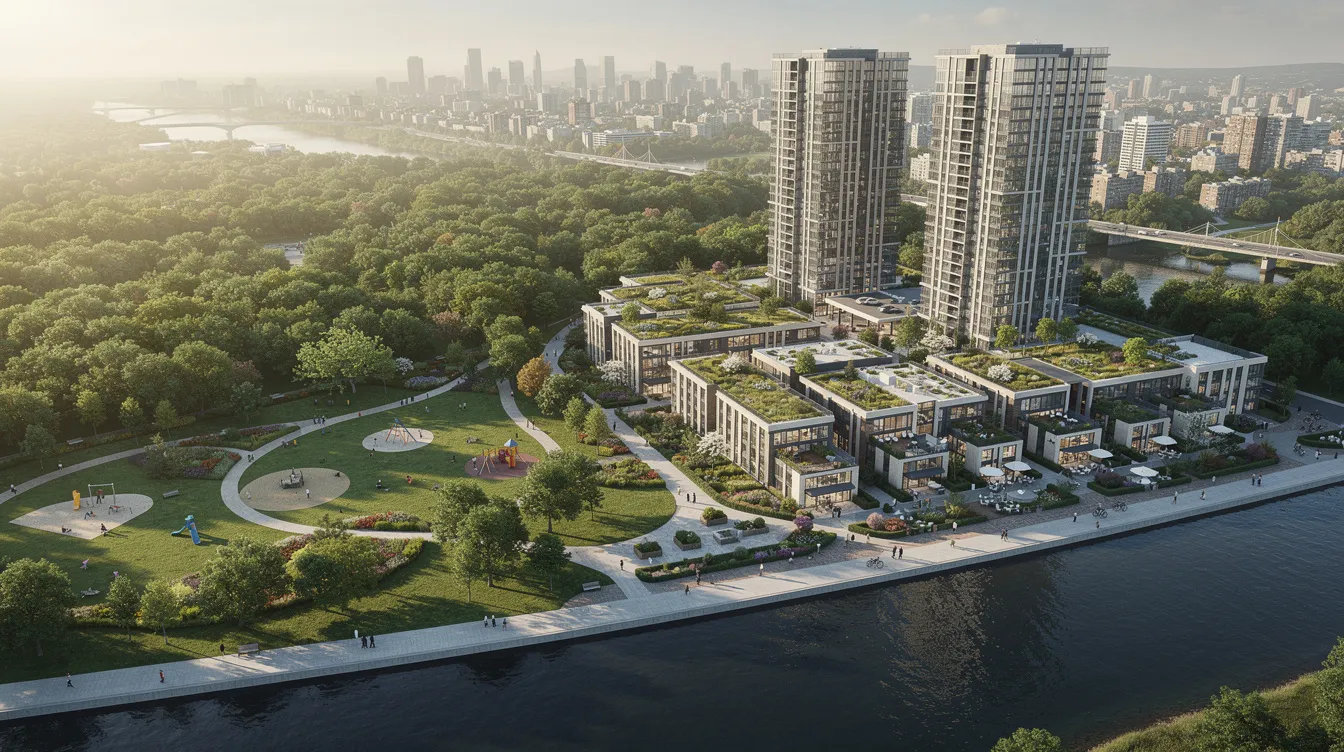
River Modern sits within Singapore’s River Valley area, one of the most established residential corridors in the Core Central Region. Launched in March 2026 by GuocoLand, the development is not a standard condominium – it is a riverfront integrated project where residential towers rise above a retail podium that includes the concourse of Great World MRT station. For buyers, this distinction matters: direct MRT linkage, mixed-use convenience, and District 9 branding collectively set it apart from purely residential projects in the neighbourhood.
Project Basics and Timeline
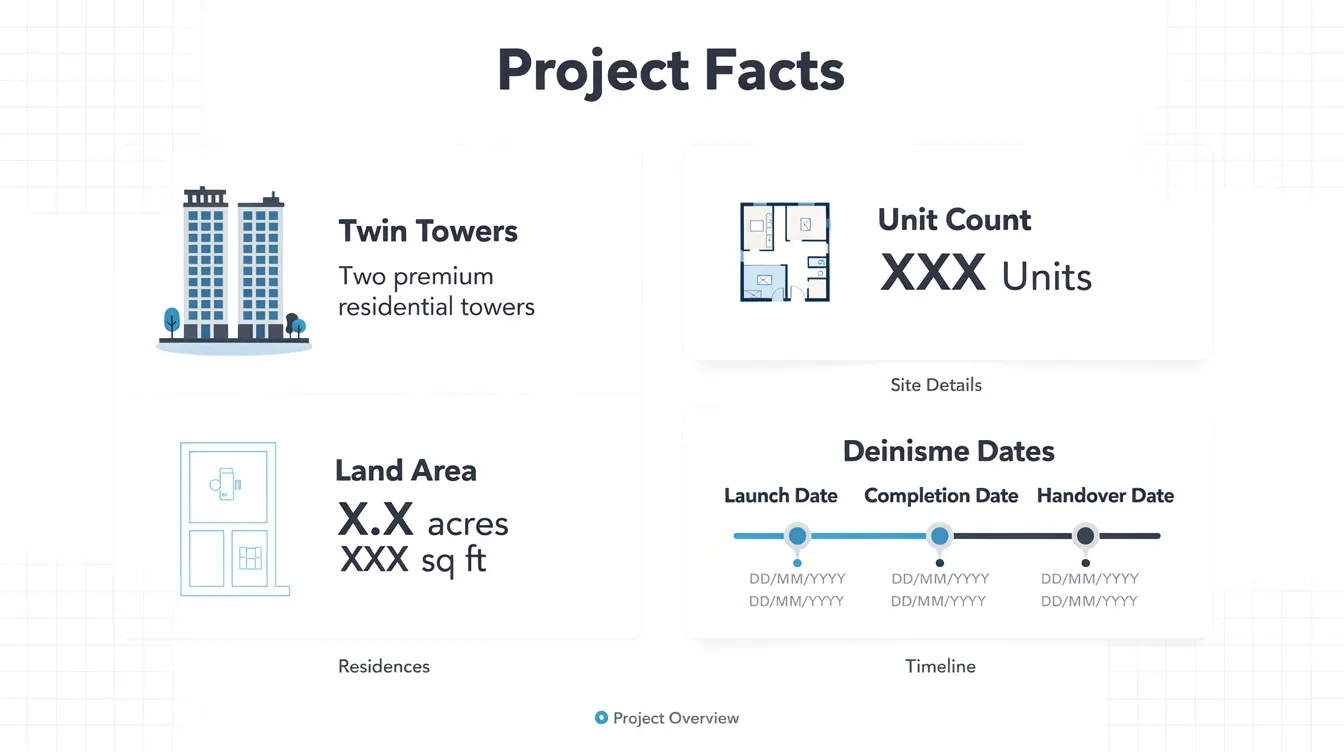
River Modern has 455 residential units across 36 storeys, arranged in twin towers spanning 13 stacks. The site spans 126,325 sq ft with over 80% landscaping, an unusually generous proportion for a city-centre development. The developer, GuocoLand, is known for integrated projects such as Guoco Tower and Midtown Modern.
Key dates frame the investment and occupation horizon:
-
Preview: 20 Feb 2026
-
Official booking / launch: 7 March 2026
-
3-month post-launch review point: May 2026 (the anchor date for this article)
-
Expected TOP: 2H 2030
-
Vacant possession: By 31 December 2032
The 99-year leasehold tenure may affect long-term investment considerations, particularly for buyers comparing freehold alternatives in District 9, but the fresh lease and integrated attributes provide a strong starting position for the first two to three decades.
What “Living Above Great World MRT” Actually Means
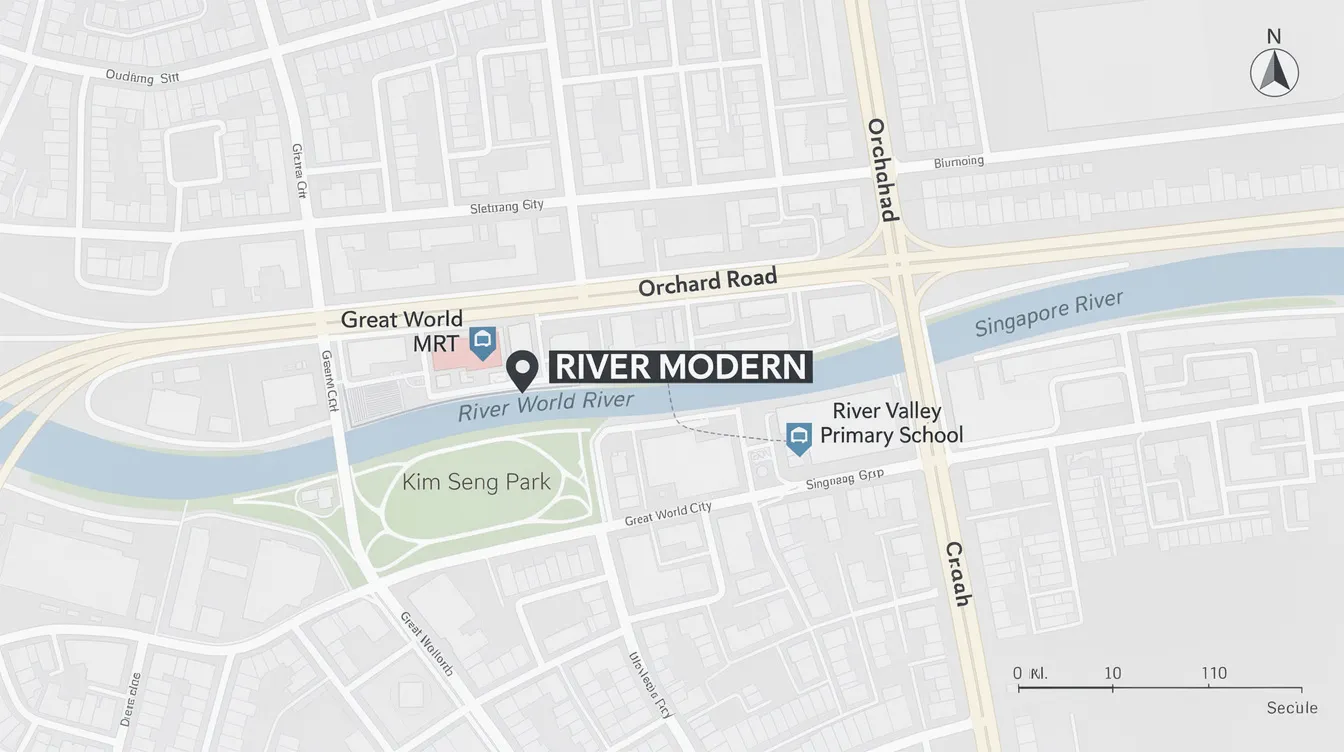
River Modern is directly connected to Great World MRT station (Thomson–East Coast Line, TE15) via an underground sheltered link at Exit 1. Great World MRT is 230 meters from River Modern – but the practical experience is even more seamless than that distance suggests, because residents never need to step outdoors.
The typical route from a mid-floor unit to the MRT platform looks like this: take the residential lift to the podium level, pass through the security-controlled lobby into the sheltered concourse, and descend via escalator to the platform. Estimated door-to-train timing ranges from approximately 3 to 6 minutes depending on your stack, floor, and lift waiting time.
Great World City is approximately 310 meters from River Modern, accessible via a fully sheltered walk. That means daily essentials – supermarket, F&B, clinics, enrichment centres – are effectively within the building’s extended footprint. Six retail shops on River Modern’s own first storey add further on-site convenience.
Design separation is a critical detail: the first storey is entirely non-residential, with residential units beginning from Level 2. Resident lobbies are segregated from public MRT and mall circulation, with access-card lifts and private drop-off areas. Daytime commuter and retail traffic flows through shared concourses below, but it does not penetrate the residential zones.
River Valley Lifestyle and Urban Context
The River Valley area is one of Singapore’s most sought-after residential corridors, blending expatriate-friendly dining along Robertson Quay, heritage charm near Fort Canning, and rapid access to both Orchard Road and the Central Business District. River Modern is located near key lifestyle and commercial hubs such as Orchard Road and Robertson Quay, placing residents at the intersection of culture, commerce, and green space.
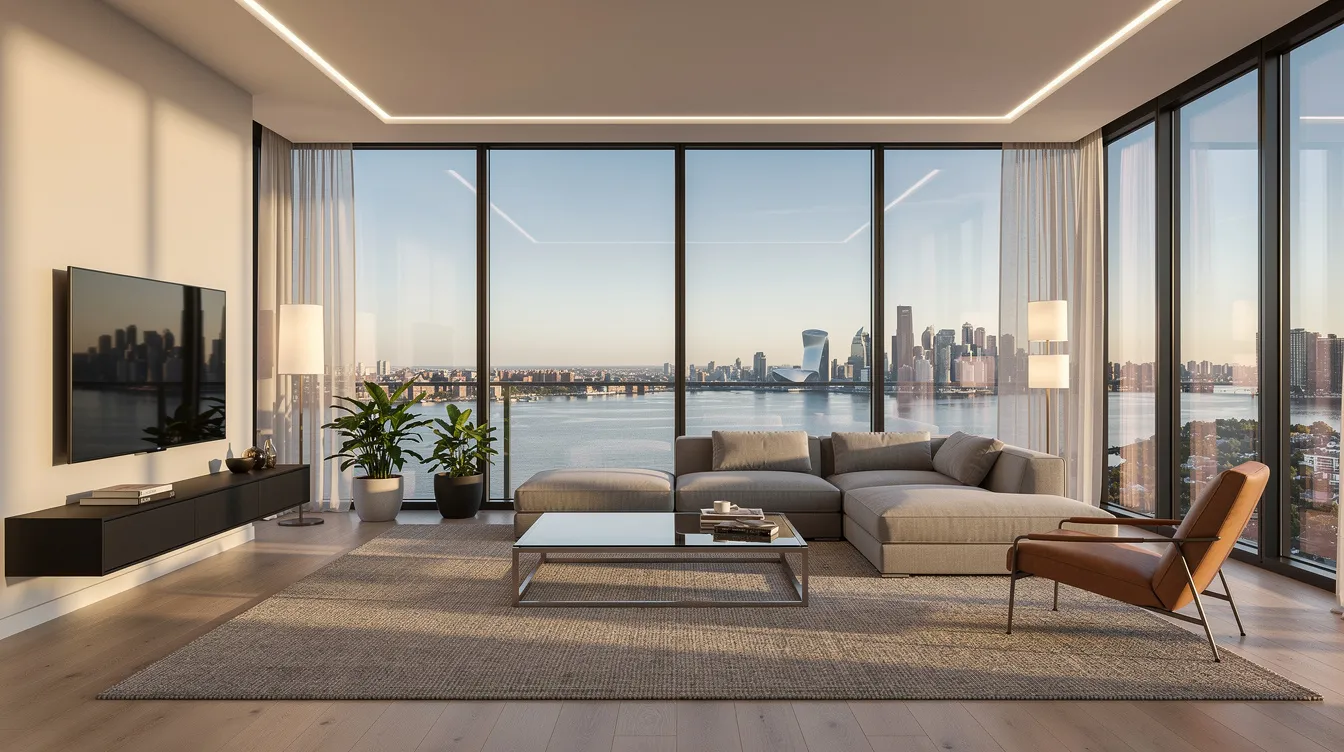
River Modern’s neighbours include Riviere, Martin Modern, and a mix of older condominiums and serviced apartments – but few of those neighbours offer the same level of MRT and mall integration. Over 70% of the units provide unblocked views of the Singapore River and Kim Seng Park, the latter literally bordering the site and offering a ~170 m nature trail accessible directly from the development’s grounds.
River Valley Primary School is 160 meters away from River Modern, essentially across the road – a major draw for families. Other schools within 1–2 km include ACS Junior and St Margaret’s Primary, reinforcing the neighbourhood’s education credentials.
Living Above Great World MRT: Day-to-Day Experience
Understanding the project data and site plan is one thing; imagining daily life is another. This section examines how the MRT integration, connectivity, and neighbourhood shape everyday routines – and where the trade-offs sit.
Connectivity and Commute Patterns
Orchard Road is one MRT stop away from Great World MRT – a roughly two-minute ride that makes lunchtime shopping or weekend browsing effortless. Three stops bring you to the Shenton Way / Marina Bay stretch of the CBD, and interchange options to the North-South Line, Downtown Line, and Circle Line are available within two to three transfers.
For residents working in the Central Business District or Marina Bay, the total door-to-desk commute typically falls between 15 and 25 minutes depending on the destination station and office walking distance. The project targets commuters with direct MRT access, and the weather-proof, sheltered journey from unit to platform is a genuine advantage during Singapore’s frequent afternoon downpours – especially for families with young children or elderly household members.
Beyond the MRT, bus services run along Kim Seng Road and Zion Road, and driving to the CBD or Orchard Road takes roughly 5–10 minutes outside peak hours. Private-hire wait times in this area are generally short given the density of the River Valley and Robertson Quay corridor.
Noise, Privacy, and Footfall Considerations
Living above an MRT station and adjacent to a mall raises legitimate questions about ambient noise and privacy. Here is a balanced assessment based on the development’s design and location:
Potential noise sources:
-
MRT train movement (largely underground and well-insulated)
-
Kim Seng Road vehicular traffic (moderate, typical of city-fringe arterial roads)
-
Weekend and evening crowds from riverfront dining and events
-
Mall loading bays and commercial activity on the podium level
Mitigating factors:
-
Residential floors begin at Level 2, with significant vertical separation from ground-level activity
-
Façade engineering and setbacks reduce noise transmission
-
River-facing and park-facing stacks experience noticeably less road and foot traffic than MRT-facing or podium-facing stacks
-
Separate residential lobbies, access-card lifts, and CCTV coverage keep public circulation firmly away from private living areas
Lower-floor, podium-adjacent units will naturally differ from high-floor, river-facing units in perceived quietness and privacy. Buyers sensitive to ambient noise should prioritise higher floors and stacks oriented towards Kim Seng Park or the Singapore River rather than the retail podium or Kim Seng Road frontage.
Everyday Convenience and Amenities
A typical weekday might look like this for different resident profiles:
-
Working couple: Wake up, take the lift to the podium, walk through the sheltered concourse to Great World MRT, and reach the CBD in under 20 minutes. Grab dinner at Robertson Quay on the way home, or pick up groceries at the Great World City supermarket without stepping outside.
-
Family with primary-school children: Walk the kids to River Valley Primary School – roughly 160 m, largely sheltered – then head to work via MRT. After school, children can attend enrichment classes at Great World City while a helper waits in the mall’s air-conditioned comfort.
-
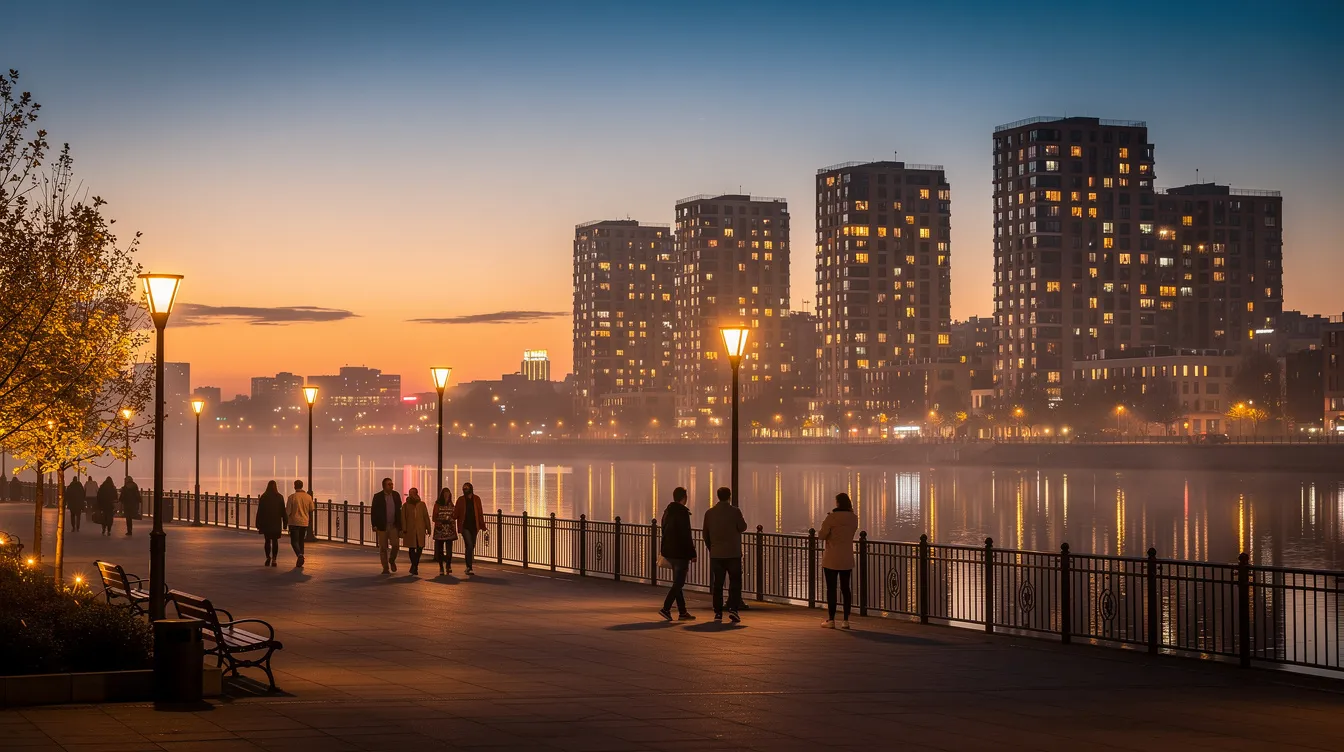
Retiree: Morning walk along the Singapore River promenade or Kim Seng Park nature trail, coffee at a Robertson Quay café, medical appointment at a Great World City clinic – all without needing a car.
The ability to function almost car-free is a significant lifestyle advantage. For younger professionals, ESG-conscious corporate tenants, and expat families on relocation packages, this integration removes much of the friction associated with city living in Singapore.
Unit Mix, Layouts, and Internal Living Quality
Location and connectivity establish River Modern’s external proposition. The internal proposition – unit types, layouts, and facilities – determines whether the homes themselves match the promise.
Unit Types and Stacks
The unit mix is deliberately skewed towards families and larger households. More than 60% of units are three- and four-bedroom homes:
|
Type |
Count |
Size Range |
|---|---|---|
|
2-Bedroom |
175 |
538–689 sq ft |
|
3-Bedroom |
210 |
797–1,109 sq ft |
|
4-Bedroom |
70 |
1,464–1,830 sq ft |
There are no one-bedroom or studio units. River Modern is designed with owner-occupiers in mind, and the absence of the smallest unit types reinforces this positioning. Each four-bedroom type includes a private lift, catering to buyers seeking multi-generational living or a level of exclusivity typically associated with landed homes.
The 13 residential stacks are distributed across the twin towers, with a high proportion facing either the Singapore River, Kim Seng Park, or the city skyline to the south east. Buyers should study the site and floor plans carefully to understand which stacks face the MRT podium versus the river – the difference in daily experience is material.
Layout Highlights and Liveability
The efficiency-led layouts are designed for modern urban living. Common features across unit types include:
-
Balconies sized for usable outdoor seating or dining, not merely token ledges
-
Flex rooms that can function as a study, helper’s room, or children’s play area
-
Junior master suites in larger three- and four-bedroom configurations
-
Household shelters usable as storage or a small utility room
-
Enclosed kitchens available in select layouts for serious home cooks, alongside open-kitchen variants for those who prefer visual openness
Space efficiency is high: corridors are kept short, AC ledges are positioned to minimise wasted internal area, and natural cross-ventilation is achievable in several stack orientations. For professionals working hybrid schedules – common in the CBD workforce – a bedroom can be readily converted into a home office overlooking the river or park.
A budget of approximately $3 million typically secures a 3-bedroom layout, making the three-bedroom category the volume sweet spot for families and investors alike.
Facilities, Podium, and Vertical Community Spaces
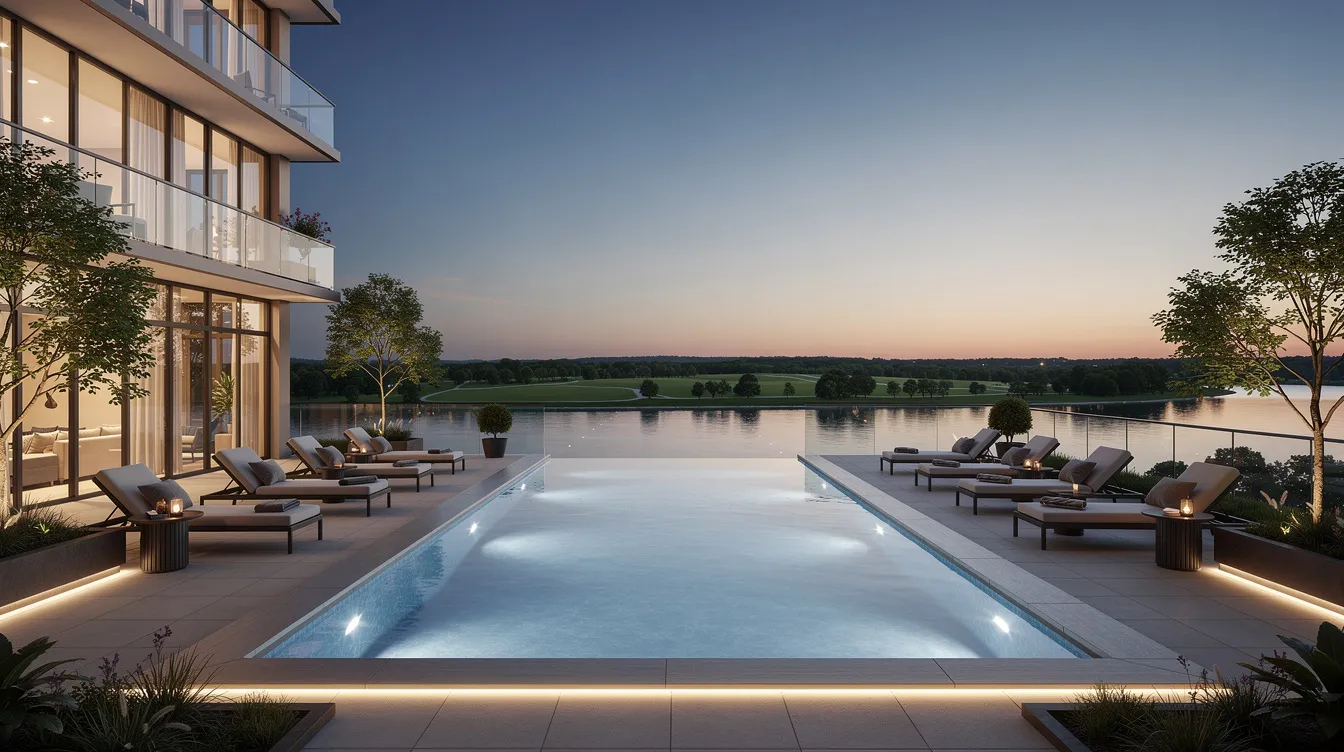
The development includes a 50-metre infinity pool and gym, but the amenity list extends well beyond those headliners:
-
Kids’ pool, tennis court, and Grand Lawn
-
Gym facing greenery, steam rooms, and wellness zones
-
Allotment gardens for urban farming enthusiasts
-
Clubhouse with function rooms and a viewing deck
-
~170 m nature trail integrated with Kim Seng Park
Car parking comprises 355 standard lots, 5 accessible lots, and 12 EV-charging lots for 455 homes – a ratio of approximately 0.79 lots per unit. For a development positioned around car-free living, this is adequate, though car-owning households should note the sub-1:1 ratio.
Facilities are layered thoughtfully: quieter zones like the allotment garden and nature trail are oriented towards the park, while active amenities like the pool and gym sit on elevated podium decks away from MRT entry points. Sustainability features include PPVC construction and an expected BCA Green Mark Platinum (Maintainability) certification – relevant for institutional investors and corporate tenants with ESG mandates.
Sales Performance 1–3 Months After Launch
Numbers tell a story that marketing brochures cannot. River Modern’s sales data from March to May 2026 provides hard evidence of market reception – and signals for future pricing.
Launch Weekend and March 2026 Performance
Booking opened on 7 March 2026. On launch weekend alone, approximately 410 of 455 units were sold – over 90% of the entire project – at an average price of S$3,266 psf. URA caveat data for March 2026 shows 416 units transacted (91% of the project) at a median of approximately S$3,220 psf.
Most buyers were Singaporeans and permanent residents, with the buyer profile skewing towards owner-occupiers: families seeking proximity to River Valley Primary School, professionals wanting direct MRT access, and upgraders from older River Valley condos. The scale and speed of absorption was exceptional even by CCR new-launch standards, where sell-through rates of 50–70% in the first month are more typical.
Progress by May 2026 (3 Months After Launch)
By May 2026, 423 of 455 units had been sold – approximately 93%. The median psf of new sales rose to around S$3,464, up from S$3,220 in March. Only about 32 units remained unsold, predominantly larger-ticket units or those on lower floors with less favoured orientations.
The rising median psf reflects a combination of factors: later releases typically include higher floors with better views, developer pricing adjustments tracking demand, and the natural premium that scarcity creates as inventory thins.
|
Period |
Units Sold / Total |
% Sold |
Median PSF (New Sales) |
|---|---|---|---|
|
March 2026 (Launch) |
~416 / 455 |
~91% |
~S$3,220 |
|
May 2026 (3 months) |
~423 / 455 |
~93% |
~S$3,464 |
|
August 2026 (6 months, est.) |
~430 / 455 |
~95% |
~S$3,571 |
Implications of Rapid Take-Up for Future Buyers
A sell-through rate above 90% within three months carries clear implications. First, it supports pricing power in the future resale market: when the vast majority of units are in private hands rather than developer inventory, secondary market pricing is set by individual seller expectations, not bulk discounts. Second, limited remaining developer stock reduces bargaining room for late buyers – they may face higher psf for less ideal stacks or facings.
River Modern’s velocity also reflects its positioning as arguably the last river-facing plot with full MRT and mall shelter in the River Valley area. GuocoLand’s track record with integrated developments (Guoco Tower, Midtown Modern) lends credibility, and buyers appear to have priced in a scarcity premium accordingly. For corporate and private clients, this level of liquidity at launch signals strong exit potential – a critical factor when modelling holding-period returns.
Pricing, Value, and Comparison With Nearby Condos
Sales volume confirms demand, but the harder question is value: is River Modern fairly priced, expensive, or actually attractive relative to its District 9 peers?
Launch Pricing Structure and Quantum Examples
River Modern’s starting price is S$2,877 psf for the smallest two-bedroom (538 sq ft). Three-bedroom units started at approximately S$2,883 psf, and four bedroom units at around S$3,134 psf. River Modern’s average price reached S$3,266 psf after launch weekend.
Typical quantums by bedroom type:
-
2-Bedroom (538 sq ft): From ~S$1.55M
-
3-Bedroom (800–900 sq ft, mid-floor): ~S$2.6M–S$3.0M
-
4-Bedroom (1,464+ sq ft, private lift): ~S$4.8M–S$5.5M depending on floor and facing
Potential buyers should consider various costs beyond just the purchase price – buyer’s stamp duty (BSD), additional buyer’s stamp duty (ABSD) where applicable, legal fees, renovation, and ongoing maintenance contributions all affect the true cost of ownership.
Comparison With Surrounding District 9 Condos
How does River Modern stack up against its neighbours? Here is a data-driven comparison:
|
Project |
Tenure |
Direct MRT Link |
Average / Median PSF |
Key Draw |
|---|---|---|---|---|
|
River Modern |
99-yr LH |
Yes (Great World MRT) |
~S$3,266 psf (launch avg) |
Full MRT + mall integration, riverfront |
|
Riviere |
99-yr LH |
No (walk to Great World) |
S$2,857 psf |
River-facing, Frasers brand |
|
River Green |
99-yr LH |
No (walk to Great World) |
S$3,130 psf |
Newer launch, Wing Tai |
|
Zyon Grand |
Various |
No |
S$3,052 psf |
Recent CCR launch |
|
Older river-adjacent condos |
Mixed |
No |
~S$2,422 psf (median resale) |
Larger layouts, established estates |
River Modern’s starting ~S$2,877 psf is roughly 15–25% above the median resale psf of nearby older condos at S$2,422, but comparable to or slightly above other recent launches that lack direct MRT integration. Riviere, a nearby condo, is priced at S$2,857 psf – close to River Modern’s entry point but without the underground MRT link. River Green’s average price is S$3,130 psf and Zyon Grand’s average price is S$3,052 psf, both lacking River Modern’s integrated transit feature.
Is the Premium for Direct MRT and Riverfront Justified?
The premium over older stock reflects several compounding factors: direct MRT linkage, riverfront orientation, modern efficient layouts, brand credibility, and integrated retail convenience. No single factor justifies a 25% premium on its own – but combined, they create a product category that has no direct older equivalent in the neighbourhood.
Buyer psychology in the CCR supports this: willingness to pay for convenience, status, and lifestyle is demonstrably higher in District 9 than in suburban markets, and corporate tenants and expat families consistently prioritise transit-integrated developments when selecting homes. The premium is significant but defensible for buyers intending long-term occupation or holding through multiple property cycles. It is less suitable for short-term flippers seeking quick arbitrage, given the high entry quantum and ABSD constraints.
Investment, Rental, and Resale Outlook
Beyond the owner-occupier proposition, River Modern’s data tells an investment story worth examining in detail.
Rental Demand and Yield Projections
At launch quantums, estimated gross rental yields for River Modern fall in the range of approximately 2.3–2.7% for two-bedroom units, with slightly lower yields for larger three- and four-bedroom configurations due to higher absolute quantums and proportionally lower rental premiums per square foot.
Rental demand drivers are strong and multi-layered:
-
Expat professionals working in the CBD, Marina Bay, and Orchard Road corridor
-
Families seeking proximity to River Valley Primary and other neighbourhood schools
-
Tenants valuing “no car needed” integrated living – a growing preference among younger professionals and corporate relocations
-
Full operation of the Thomson–East Coast Line extensions, which will connect Great World MRT station to the East Coast and northern nodes, broadening the commuter catchment
The most attractive rental unit types are likely the efficient two-bedrooms (for singles and couples) and compact three-bedrooms (for young families) – both categories where River Valley’s expat tenant pool is deep and consistent.
Resale Prospects and Holding Strategy
The near-full sell-out by mid-2026 establishes a strong reference ladder for future resale pricing. By August 2026 (approximately six months post-launch), an estimated 95% of units were sold at a median new-sale psf of around S$3,571, confirming upward price trajectory.
Several capital appreciation inflection points lie ahead:
-
TOP in 2H 2030: Physical completion typically triggers a price step-up as buyers can see, touch, and move into the finished product
-
Full maturation of TEL: As the Thomson–East Coast Line achieves full operational reach, connectivity premiums embed more firmly
-
Singapore River and Orchard Road rejuvenation: Government master-planning for the river corridor and Orchard belt should lift area-wide values
Expected buyer pools for resale include upgraders from older River Valley condos seeking younger-lease CCR product, international buyers, and investors rotating into integrated developments. Typical recommended holding periods for investors are 7–10 years, sufficient to ride at least one full property cycle while the 99-year lease remains in its most valuable early decades.
Strategic Fit for Different Buyer Profiles
Owner-occupier families:
-
Strong fit: River Valley Primary School within 160 m, car-free daily routine, family-sized layouts with over 60% of homes being three or four bedrooms
-
Caution: High quantum (especially four bedroom units), leasehold vs freehold preference for legacy planning
Singles and professionals:
-
Strong fit: Direct MRT commute to CBD, vibrant Robertson Quay lifestyle, efficient two-bedroom layouts
-
Caution: Lower rental yield if purchasing as investment; ensure quantum aligns with income trajectory
Pure investors:
-
Strong fit: High liquidity demonstrated by launch take-up, strong tenant demand, capital appreciation potential
-
Caution: Gross yields of 2.3–2.7% are below suburban averages; returns are capital-gain driven rather than income-driven
Corporate purchasers (staff housing / long-stay):
-
Strong fit: Integrated convenience reduces relocation friction, strong corporate lease demand from MNCs in CBD, professional presentation for senior staff
-
Caution: ABSD implications for corporate entities; financial modelling for holding costs and exit strategy essential
The property appeals to urban professionals due to its strategic location and amenities, but each buyer profile should scenario-test financials – including ABSD, loan servicing, stamp duties, and holding costs – before committing.
Common Concerns and How to Evaluate Them
Integrated MRT and mall developments bring recurring buyer questions. Here are the three most common, with clear guidance.
Concern 1: Noise from MRT, Roads, and Riverfront Activity
MRT train movement is largely underground and well-insulated – residents are unlikely to hear trains. Kim Seng Road traffic and weekend riverfront activity are the more relevant noise sources. The development’s elevation (residential from Level 2 upward), façade engineering, and generous setbacks mitigate transmission significantly.
Practical tips: Choose higher floors (Level 15+) and park-facing or river-facing stacks. Visit the site and surrounding roads at different times – weekday morning rush, Saturday evening, Sunday afternoon – to calibrate your noise tolerance against actual conditions.
Concern 2: Overcrowding and Privacy in an Integrated Development
The fear that living above an MRT and mall means constant crowds at your doorstep is understandable but largely addressed by design. Residential lobbies are fully segregated from public MRT and mall circulation. Access-card lifts, private vehicle drop-off areas, and CCTV coverage ensure that public foot traffic does not penetrate residential zones.
Study the site plan carefully: ask your agent to walk you through the resident-only circulation paths versus public routes. The separation is deliberate and physical, not merely procedural.
Concern 3: Paying a High PSF for a 99-Year Leasehold
Discomfort with leasehold CCR prices above S$3,000 psf is common, especially among buyers who instinctively prefer freehold tenure. The framework for evaluation should focus on holding-period IRR rather than entry psf alone:
-
At 99 years from launch, lease decay is negligible in the first 20–30 years
-
Integrated, transit-linked developments historically retain value better than standalone leasehold condos of similar age
-
Compare the absolute quantum – not just psf – against suburban new launches, where three-bedroom units increasingly approach S$2M+ without the same connectivity or lifestyle premium
-
En-bloc potential decades out is speculative but possible given the site’s scale and location
Run the numbers on your specific holding period, financing costs, and projected exit value. A 10-year hold beginning at TOP in 2030, for example, captures the lease at 95+ years remaining – well within the comfort zone for both banks and future buyers.
Conclusion and Next Steps
River Modern delivers a compelling proposition for buyers who prioritise direct MRT integration, riverfront District 9 living, and family-oriented layouts. The premium psf – starting at S$2,877 and averaging S$3,266 at launch – reflects real, tangible advantages that few comparable developments in the River Valley area can match.
Four core insights from this three-months-after-launch review:
-
Sales strength is undeniable: ~93% sold by May 2026, with median psf rising from S$3,220 to S$3,464, confirming sustained demand and pricing power
-
Everyday convenience is exceptional: sheltered access to Great World MRT, Great World City, and River Valley Primary School – a genuinely car-optional lifestyle
-
Unit mix targets families and long-term occupiers: over 60% three- and four-bedroom homes, private lifts in four-bedroom units, no studio or one-bedroom stock
-
Rental and resale outlook is solid but capital-gain driven: gross yields of 2.3–2.7% are modest, but scarcity, integration, and CCR location support mid- to long-term capital appreciation
Actionable next steps:
-
Shortlist your preferred stack, facing, and bedroom type based on lifestyle priorities and noise tolerance – remaining inventory is limited to roughly 32 units
-
Compare River Modern’s entry quantum against at least two nearby CCR alternatives (Riviere, River Green, or older resale options) to stress-test value
-
Run financing and ABSD scenarios, including a clear exit strategy and projected yields over your intended holding period
-
Arrange a consultation or portfolio review to align River Modern – or alternatives – with your long-term financial and personal goals
-
If you are a corporate client, model the total cost of ownership including entity-level ABSD and operational housing budgets before committing
Related topics worth exploring next: analyses of other MRT-integrated projects in Singapore, CCR versus RCR investment frameworks, and diversified real estate strategies spanning residential and commercial assets.
Additional Resources
-
URA developer sales data for River Modern (March–August 2026) – verify the numbers cited in this article
-
GuocoLand’s official River Modern launch details – pricing, unit mix, and project specifications
-
River Modern floor plans and stack layouts – study individual unit configurations and orientations
-
Guide to evaluating MRT-integrated developments in Singapore – connectivity premiums, noise trade-offs, and long-term value retention
-
Explainer on buyer’s stamp duty (BSD) and additional buyer’s stamp duty (ABSD) for Singaporean, PR, and foreign buyers – essential reading before committing to any CCR purchase

