Introduction
If you’re booking a new launch condo in Singapore right now, the single biggest financing question you face is whether to go fixed or floating on your home loan. With 3M compounded SORA hovering around 1.12% as of August 2026 and two-year fixed rate packages quoted between 1.40% and 1.60% p.a., the gap between the two structures is narrow – but the consequences of choosing wrong can compound across three to five years of construction and beyond.
This article focuses exclusively on Singapore private property new launch (building-under-construction, or BUC) buyers – not resale buyers, not HDB home owners using HDB concessionary loans, and not refinancing scenarios for completed units. If you’re purchasing a new condo or executive condominium launching in late 2026 under the progressive payment scheme, the interplay between your rate type and your drawdown timeline creates dynamics that simply don’t exist for completed-property purchases.
The short answer: In late 2026, most risk-averse owner-occupiers buying new launches are better served by a 2–3 year fixed rate home loan, while investors or buyers with strong cash flow buffers may benefit from SORA-pegged floating rate home loans during the progressive payment phase – provided they actively plan to reassess before TOP.
Here’s what you’ll gain from reading further:
-
A clear understanding of how fixed and floating home loans work in Singapore’s 2026 rate environment
-
Concrete numbers showing how the progressive payment scheme shapes your actual interest cost under each rate type
-
Decision frameworks tailored to first-time buyers, upgraders, and investors
-
Late-2026 market benchmarks – mortgage rates, SORA levels, lock-in norms – to anchor your expectations
-
A refinancing and repricing strategy to execute around your project’s TOP date
Understanding Home Loan Types in Singapore (2026 Context)
Singapore property buyers have two broad categories of housing loan: HDB loans (available only for eligible HDB flat purchases) and bank loans from local banks or foreign lenders. For new private condo launches, only bank loans apply. The HDB concessionary loan rate remains at 2.60% per annum in 2026 – pegged at 0.1% above the CPF ordinary account rate – and is irrelevant for private property purchases. Switching from HDB loans to bank loans is irreversible, an important consideration for HDB home owners contemplating an upgrade, but our focus here is squarely on bank financing for new launches.
Before diving into rate structures, three MAS rules shape every borrower’s options. The total debt servicing ratio (TDSR) caps total monthly debt repayments at 55% of gross monthly income. Banks assess affordability using a stress test rate of 4%, far above current market rates, which limits maximum loan amount even when today’s interest rates are low. And the standard loan-to-value ceiling for a first residential property loan is 75%, provided tenure does not exceed 30 years and the borrower’s age at final repayment is 65 or below.
These rules matter for the fixed-versus-floating decision because they determine how much headroom you have. Buyers already near the TDSR ceiling face greater vulnerability to floating-rate increases, while those well within limits have more latitude to ride SORA movements.
Fixed-Rate Home Loans in Late 2026
A fixed rate home loan locks your home loan interest rate for a defined period – typically two or three years, occasionally five – regardless of how the Singapore Overnight Rate Average (SORA) or global rates move during that window. After the lock in period ends, the loan reverts to a floating or bank board rate, usually expressed as SORA plus a significantly wider spread.
In late 2026, major Singapore banks are quoting two-year fixed rates in the range of approximately 1.40% to 1.65% p.a. for new private condo loans. Jumbo loans above S$1.5 million in the Core Central Region (CCR) may secure rates closer to 1.35%–1.40% from banks like HSBC or Citi, while smaller-quantum Outside Central Region (OCR) purchases typically see quotes of 1.50%–1.65%. Fixed rate packages often carry penalties if borrowers refinance or sell during the lock-in period – commonly around 1.5% of the outstanding loan amount – plus potential clawback of legal and valuation fees subsidised at origination.
For new launch buyers, fixed rates provide certainty in monthly repayments for 2–3 years, which is especially valuable when income might be stretched by renovation costs, additional buyer’s stamp duty (ABSD) for second-property upgraders, and transitional rental expenses. Fixed-rate mortgages tend to have higher initial rates compared to floating-rate loans, but in a market where the spread is only 10–25 basis points, many buyers view that premium as cheap insurance.
One critical detail: check the “thereafter” rate. After your fixed period expires, reversion spreads of SORA + 0.75% to 1.00% are common. If you don’t refinance or reprice promptly, you could be paying substantially more interest than necessary.
Floating-Rate (SORA & Board Rate) Home Loans in Late 2026
Floating rate home loans peg your loan interest rate to a market benchmark – overwhelmingly SORA in 2026, since MAS retired SOR and SIBOR years ago. SORA is the main benchmark for floating home loans. Packages reference 1-month, 3-month, or 6-month compounded SORA plus a fixed spread set by the bank. SORA-pegged loans reset rates every 1, 3, or 6 months, and your monthly repayments adjust accordingly.
As of Q4 2026, 3M SORA sits around 1.10%–1.20%. Competitive floating packages pegged to 3M SORA start at approximately 1.30% p.a., with the best-in-market offers from banks like Maybank quoting 3M SORA + 0.20% (an all-in rate of roughly 1.32%–1.39%). Broader market floating packages carry spreads of +0.30% to +0.70%, translating to all-in rates of 1.40%–1.90% depending on loan amount, borrower profile, and property types.
Floating-rate packages typically offer lower initial rates than fixed packages – the difference in late 2026 is roughly 10–40 basis points. On a S$1 million bank loan over 25 years, a 0.3% rate difference translates to approximately S$140–S$160 per month in lower monthly payments. That difference narrows during the construction phase when only a fraction of the loan is drawn, and widens dramatically after TOP when the full amount is outstanding.
The risk is straightforward: SORA rates can change at each reset period. If SORA drifts upward – UOB projects it could reach approximately 1.40%–1.50% by Q1 2027 – floating borrowers see their instalments rise automatically. Floating-rate loans can save money if interest rates decline but carry the risk of increases. Understanding market benchmarks is crucial for evaluating floating-rate loan options.
Bridge to New Launch Context: Why Rate Type Matters More for BUC Purchases
Here’s the crucial distinction for new launch buyers: under the progressive payment scheme, your bank loan is drawn down in stages matching construction milestones. You don’t owe interest on S$1.275 million from day one – you owe interest on whatever portion has been disbursed, which might be S$127,500 at the foundation stage and only reach full drawdown near TOP.
This means the fixed-versus-floating decision interacts with your project’s construction timeline and expected TOP year (typically 2029–2030 for projects launched in late 2026). A rate choice that looks optimal at booking may look quite different three years later when the full loan is live. The next section breaks down exactly how this works.
How Progressive Payments Shape Your Home Loan Choice
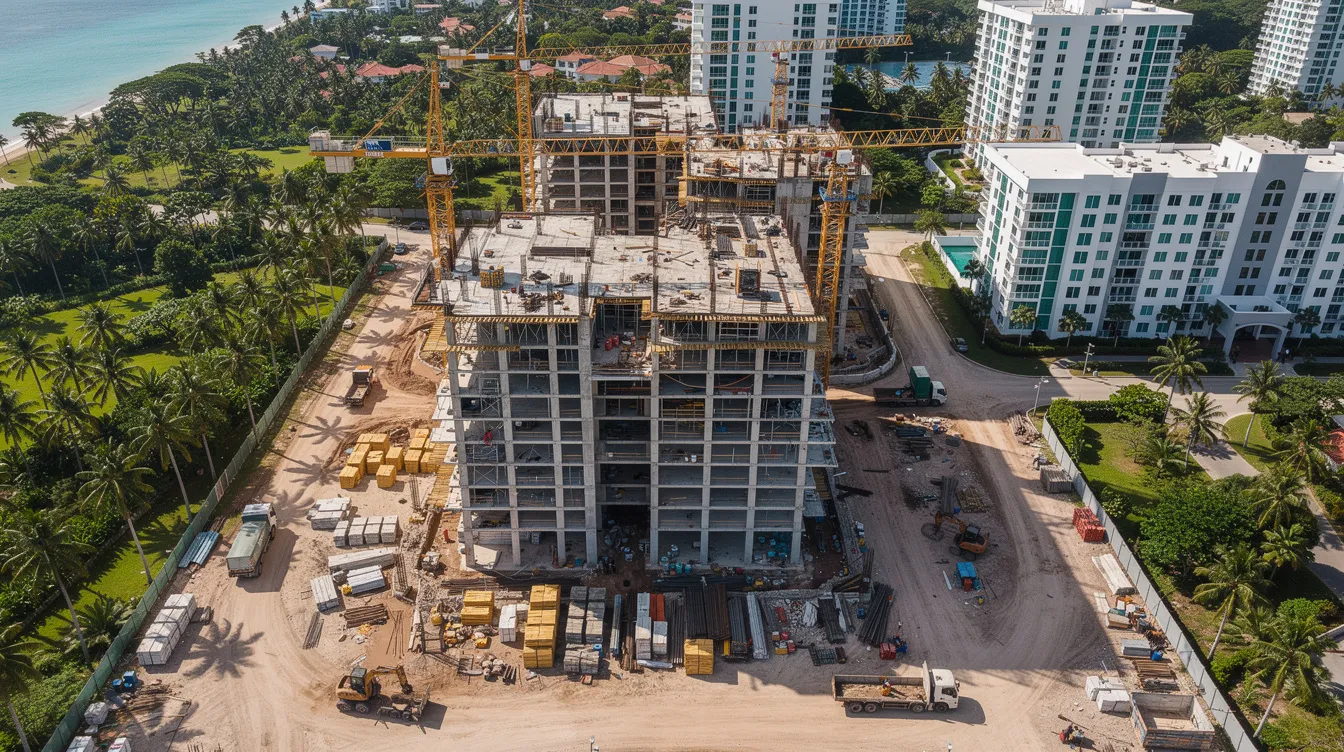
Almost all new private condos launched in 2026 use the Progressive Payment Scheme (PPS) as mandated by URA under the Housing Developers Rules. For new launch buyers, the rate choice is not just about absolute interest rate levels – it’s about when and how much of the loan is outstanding at each construction stage. Choosing between fixed and floating home loans involves cash-flow certainty versus cost flexibility, and that trade-off shifts as your drawn balance grows.
Progressive Payment Scheme (PPS) Milestones for 2026 New Launches
The statutory PPS payment structure breaks the purchase price into 10 stages:
|
Stage |
% of Purchase Price |
Cumulative % |
|---|---|---|
|
Booking fee (OTP) |
5% (cash) |
5% |
|
Sign S&P (exercise option) |
15% (incl. booking) |
20% |
|
Foundation completion |
10% |
30% |
|
Reinforced concrete framework |
10% |
40% |
|
Partition walls |
5% |
45% |
|
Roofing / ceiling |
5% |
50% |
|
Electrical & plumbing (M&E) |
5% |
55% |
|
Car park, roads & drains |
5% |
60% |
|
TOP (keys issued) |
25% |
85% |
|
CSC (legal completion) |
15% |
100% |
The first 20% (booking + S&P exercise) comes from your cash and CPF savings – this is the downpayment portion, not financed by the bank. The bank loan kicks in from the foundation stage onward.
Typical timeline: From booking to S&P is roughly 8 weeks. Construction from foundation to TOP takes about 2–3 years for mid-sized developments, with CSC following 6–12 months after TOP. For a project launched in Q4 2026, expect TOP around 2029–2030.
What this means for monthly payments: Consider a S$1.8 million OCR new launch condo, 75% loan (S$1.35 million), 30-year tenure. During the early construction stages, when only 10–20% of the loan is drawn (S$135,000–S$270,000), your monthly interest-only payments might be just S$150–S$350. By TOP, when ~65% of the financed portion is drawn, monthly repayments climb to S$2,500–S$3,500. Full amortising instalments of S$4,500–S$5,000 begin only after complete drawdown post-CSC.
Because principal is lower at the start, the absolute dollar saving from choosing floating over fixed is smaller in early years than after TOP.
Where Fixed Rates Shine Under PPS
Fixed rates protect buyers through the volatile macro window of 2026–2028 when your project is under construction and you may also be carrying additional costs – rent on your current home, an existing mortgage on an HDB you’re selling, or ABSD if you’re holding two residential properties simultaneously.
The lock in period on a 2-year fixed rate loan typically overlaps with most of the construction period. By the time your lock-in expires, you’ll be approaching TOP and can reassess market conditions. If mortgage rates have risen, you had protection during the most uncertain years. If rates dropped, the “overpayment” was modest because your drawn balance was small.
Fixed-rate loans are generally preferable for buyers with tight budgets or income instability. First-time buyers and HDB upgraders who have limited TDSR headroom – especially those servicing bridging loans or paying rental while waiting for TOP – benefit most from the predictability that fixed home loans provide.
Where Floating Rates Can Be Strategically Useful Under PPS
The progressive drawdown structure reduces exposure to SORA volatility during early construction years, making it relatively safer to run a floating rate mortgage when the loan quantum is still low. At foundation stage, even a 0.5% SORA increase on a S$135,000 drawn balance adds only about S$56 per month – manageable for most buyers.
For investors with strong spare cash reserves, floating rates offer a tactical advantage: if SORA drifts downward (say from 1.12% to 0.90% by 2027), their effective rate and loan interest cost fall automatically without needing to refinance. SORA-based loans can lower monthly repayments significantly when base rates decline.
Some banks allow free conversion from a floating rate package to a fixed rate within the lock-in for BUC loans – a valuable clause that lets you start floating and switch if SORA looks set to trend upward. Most bank loans for new launches from major banks include this feature, but terms vary; verify conversion fees, timing windows, and any restrictions before committing.
The risk intensifies near TOP: if SORA jumps above 2.0%–2.5%, your instalments will rise precisely when the loan reaches full drawdown and cash flow pressure is highest. Floating-rate loans adjust monthly repayments based on market conditions, and during the post-TOP phase, those adjustments hit your full outstanding balance.
Key Takeaways: PPS + Rate Type
-
Under PPS, rate choice impacts relatively small loan balances at first but becomes critical near TOP when 60–85% of the loan is drawn
-
Fixed rates prioritise certainty; floating prioritises potential interest savings and flexibility
-
The ideal strategy may be a hybrid over time: floating during early BUC years, then locking fixed closer to TOP if rates look set to rise
-
Decisions should be revisited at each major milestone – foundation completion, structural topping-out, and 6–12 months before TOP
With these mechanics clear, the next section provides step-by-step selection frameworks and concrete comparisons tailored to late-2026 pricing and buyer profiles.
Choosing Between Fixed and Floating in Late 2026: Practical Frameworks
There is no universal answer to the fixed or floating question. The right choice depends on your buyer profile, the purchase price and loan amount of your target property, your time horizon (own-stay versus investment), your risk tolerance, and your view on interest rates beyond 2027–2028. What follows is a structured decision process and worked comparison to help you arrive at a personalised answer.
Step-by-Step Decision Process for New Launch Buyers
-
Assess your financial resilience. Calculate your income stability, existing debts, and required cash buffer. You should hold at least 6–12 months of fully-drawn monthly repayments in accessible savings before committing. If your total monthly debt repayments (including car loans, credit cards, and the projected full mortgage) would consume more than 45% of gross monthly income at a 3% rate, think carefully before choosing floating.
-
Project your PPS cash flows from booking to TOP. Map out upfront costs (booking fee, buyer’s stamp duty, additional buyer’s stamp duty if applicable, legal fees, valuation fees) and then each progressive payment tranche against your expected income and CPF flows. Use conservative interest assumptions – stress-test at 2.5%–3.0%, not just today’s 1.3%.
-
Compare current fixed vs floating quotes across multiple lenders. Request term sheets from at least two local banks (DBS, OCBC, UOB) and two foreign/specialist lenders (HSBC, Maybank, Hong Leong Bank). Compare rates by looking beyond headline figures: examine spreads, lock-in lengths, conversion clauses, hidden fees, legal and valuation fee subsidies, and clawback terms. Property buyers should compare total loan packages, not just headline interest rates.
-
Define your pain threshold. Ask: “Can I still service my mortgage comfortably if SORA hits 2.5%–3.0% by 2028–2029?” If no, fixed rates reduce the chance of payment shock. If yes, floating may deliver meaningful interest savings over the construction period.
-
Choose your initial rate structure for the first 2–3 years, and pre-plan a refinancing or repricing checkpoint 6–12 months before your project’s expected TOP. Refinancing can save homeowners hundreds monthly on loans – but only if you act before the lock in period ends and the uncompetitive “thereafter” rate kicks in.
-
Document your strategy and review annually. Set a target SORA level that would trigger a conversion from floating to fixed (or vice versa). Review your position at each construction milestone.
Fixed vs Floating: Side-by-Side Comparison for Late 2026
|
Criterion |
2-Year Fixed Package |
3M SORA Floating Package |
|---|---|---|
|
Typical all in rate (Q4 2026) |
1.40%–1.65% p.a. |
1.30%–1.50% p.a. (SORA ~1.12% + spread) |
|
Payment stability (2027–2028) |
Unchanged monthly repayments during lock-in |
Resets every 3 months; could rise or fall |
|
If SORA rises +0.5% by 2029 |
No impact during fixed period |
All-in rate increases to ~1.80%–2.00% |
|
If SORA falls −0.3% by 2028 |
No benefit; you pay the locked rate |
Automatic savings; all-in drops to ~1.00%–1.20% |
|
Lock-in penalty (early sale) |
Typically 1.5% of outstanding loan |
Often 1.5% but some packages have shorter/no lock-in |
|
Thereafter rate (post lock-in) |
SORA + 0.75%–1.00% (can be ~2.0%+) |
Spread remains fixed; rate moves with SORA only |
|
Free conversion clause |
Some banks offer 1 free conversion |
More common; varies by bank |
|
Best for |
Risk-averse families, upgraders, low income buffer |
Investors, strong-buffer buyers, short-horizon holders |
How to read this table:
-
A 0.3% rate difference saves only S$30–S$50/month at 25% drawdown (early construction) but S$250–S$310/month after full drawdown on a S$1.275 million loan – the impact multiplies as principal grows
-
Floating rates tend to be cheaper than fixed rate packages at origination, but the gap can reverse within 12–18 months if global rates shift
-
Fixed loans may prevent benefits from lower rates after the fixed period ends if rates decline, but the cost of that insurance is modest in today’s environment
-
Buyers must consider their holding and lock-in horizon when choosing loan types
Worked Example: OCR New Launch Buyer in 2026
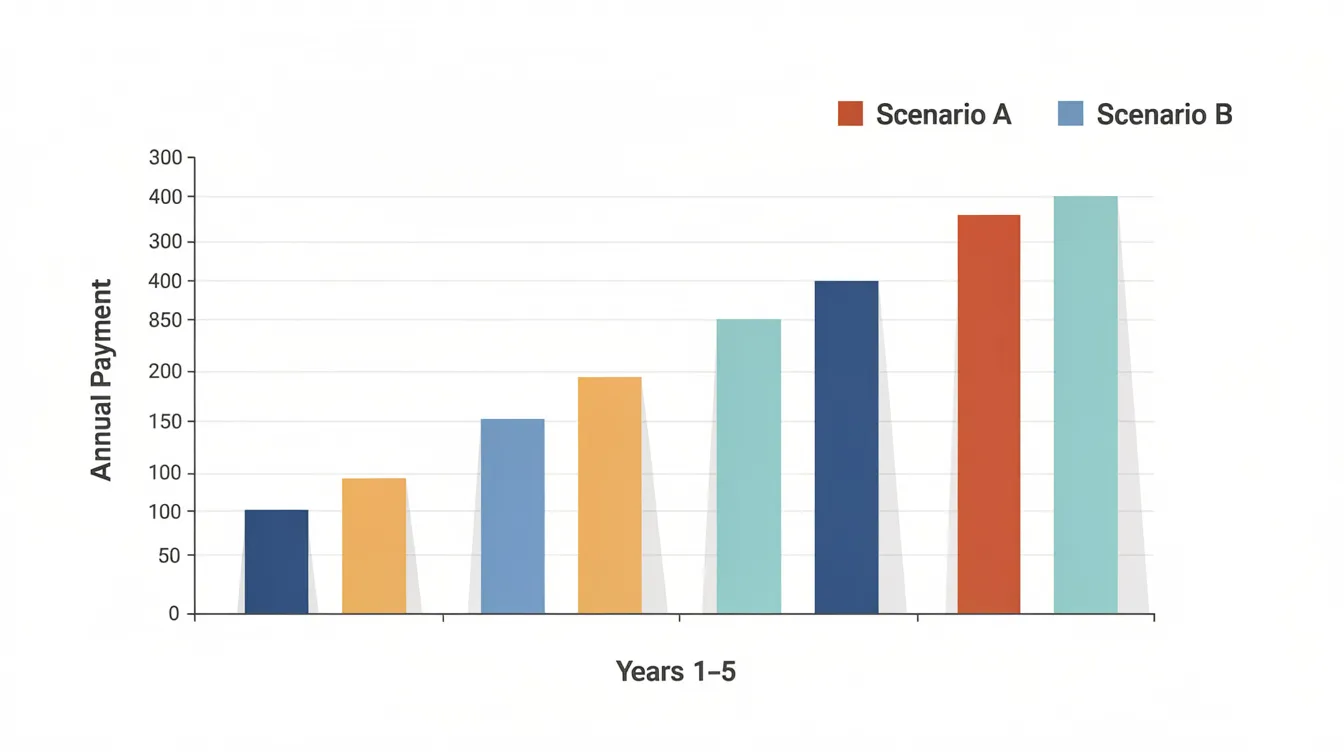
Scenario: A couple books a S$1.7 million OCR condo in November 2026. They take a 75% loan (S$1,275,000) over 30 years. The project’s expected TOP is mid-2030.
Option A – 2-Year Fixed at 1.55% p.a., reverting to SORA + 0.80% (estimated ~2.10% at reversion based on projected SORA of ~1.30%).
Option B – 3M SORA + 0.35%, starting at approximately 1.47% all-in (SORA at 1.12%). Stress scenario: SORA rises to 2.00% by 2029, making the all-in rate 2.35%.
|
Metric |
Option A (Fixed) |
Option B (Floating – Baseline) |
Option B (Floating – Stress) |
|---|---|---|---|
|
Monthly payment at 25% drawdown (~S$319K) |
~S$412 |
~S$398 |
~S$525 (if SORA at 2.0%) |
|
Monthly payment at 60% drawdown (~S$765K) |
~S$988 |
~S$956 |
~S$1,260 |
|
Monthly payment at 100% drawdown (post-TOP) |
~S$4,420 (at reversion ~2.1%) |
~S$4,380 (if SORA stable ~1.2%) |
~S$5,110 (at SORA 2.0%) |
|
Approx. interest during construction (3.5 yrs) |
~S$32,500 |
~S$30,800 |
~S$39,200 |
|
Approx. interest in first 2 yrs post-TOP |
~S$50,600 (at reversion) |
~S$41,800 (baseline SORA) |
~S$56,400 (stress SORA) |
Interpretation: Under the baseline SORA scenario, Option B saves roughly S$1,700 during construction and up to S$8,800 in the first two years after TOP – meaningful interest savings. But under the stress scenario where SORA reaches 2.0%, Option B costs approximately S$6,700 more during construction and S$5,800 more post-TOP compared to Option A’s fixed period.
Bottom line for this couple: If they have spare cash reserves exceeding 12 months of fully-drawn mortgage repayments and are comfortable monitoring market rates quarterly, floating offers an attractive risk/reward. If they’re also paying rent or servicing an existing HDB loan during construction, fixed provides the peace of mind to budget confidently. In 2026, bank mortgage rates range from 1.30% to 1.80%, and both paths sit comfortably within that band – making risk tolerance and cash flow the decisive factors rather than the rate differential alone.
Advanced Considerations: Policy, Market Outlook, and New Launch Timing
New launches purchased in late 2026 will be held through at least one full interest-rate cycle. Your financing decision should be robust across multiple scenarios, not optimised solely for today’s historically low SORA. This section addresses the policy guardrails, rate outlook, and stamp duty considerations that influence long term plans.
MAS Rules, TDSR Stress Tests, and Their Impact on Your Choice
MAS’s 4% stress test rate means banks assess whether you can afford mortgage servicing ratio obligations at roughly triple the current market rate. For a S$1.275 million loan, the difference between being tested at 1.5% (your actual rate) and 4.0% (the regulatory hurdle) reduces maximum borrowable amounts by roughly 20–25%.
This constraint bites hardest for:
-
High-quantum CCR/RCR purchases where even small shifts in assessed affordability reduce eligible loan amount by six figures
-
Upgraders still servicing an existing mortgage on an HDB or first condo – their existing monthly payments consume TDSR capacity, limiting headroom for the new loan
-
Business owners with variable income profiles whose banks may use lower income-averaging thresholds, further tightening the mortgage servicing ratio
Because banks already test at 4%, you might assume your buffer is built in. It isn’t – the stress test determines your maximum borrowing, not your comfortable borrowing. If you select a floating home loan and SORA moves to 2.5%–3.0%, you’ll still be within MAS limits but may find your actual cash flow uncomfortably tight. Conservative buyers should run their own stress tests at 3.0%–3.5% effective rate, especially if business income or rental yields are cyclical.
Interest Rate Outlook 2027–2030: What It Means for Late-2026 Buyers
Most analysts expect SORA to remain relatively low through 2027, with a modest upward drift. UOB’s house view projects 3M SORA rising from approximately 1.30% in Q4 2026 to about 1.50% in Q1 2027 and potentially 1.57%–1.63% by later 2027.
Three scenarios to plan around:
-
Baseline (most likely): SORA fluctuates in the 1.0%–2.0% range through 2029. Fixed and floating costs converge over a 5-year horizon; neither choice produces dramatically different outcomes. Refinancing discipline matters more than initial rate selection.
-
Upside risk: Global inflation re-accelerates due to energy shocks, supply disruptions, or geopolitical tension. SORA moves sustainably above 2.5%–3.0%. Bank fixed rates locked in 2026 at ~1.5% look very cheap in hindsight; floating borrowers face material payment increases on fully-drawn post-TOP balances.
-
Downside scenario: SORA dips below 1.0% on aggressive central bank easing. Buyers who locked fixed rates overpay modestly but enjoy certainty. Floating borrowers capture automatic savings.
The key insight: focus on resilience rather than perfect prediction. Refinancing flexibility at TOP – having your lock-in expire at the right time, knowing your thereafter rate, and having competitive offers ready – is as important as the rate you choose today. Refinancing can reduce total interest significantly over time.
How ABSD, SSD, and Holding Periods Interact with Loan Strategy
Additional buyer’s stamp duty adds a substantial capital outlay for second-property buyers and foreigners. Singapore Citizens purchasing a second residential property pay 20% ABSD on market value; Permanent Residents pay 30% on their second. These upfront costs strain cash reserves and amplify the importance of stable, predictable mortgage repayments during the construction period.
Seller’s Stamp Duty (SSD) applies to residential properties sold within 4 years of purchase. For new launch buyers hoping to exit at or shortly after TOP (roughly 3–3.5 years from booking), the SSD window may not have fully elapsed. Exiting early means paying SSD plus any lock-in penalties on your fixed rate loan – a double cost that can erase capital gains.
Example of misalignment: An investor books a new launch in November 2026 with a 3-year fixed rate (lock-in until November 2029). The project TOPs in June 2030 – but the investor wants to sell in early 2030, six months before the 4-year SSD window closes in November 2030. They’d face both SSD (4% of sale price for sale in year 4) and a lock-in penalty (~1.5% of outstanding loan) if they haven’t yet exited the fixed period, or a high thereafter rate if they have. Planning the loan’s lock-in expiry to align with both the SSD-free window and the TOP date avoids these avoidable costs.
Strategic implication: Private property owners planning to hold 7–10 years can afford to view the initial rate as less consequential – long-run refinancing discipline drives total interest cost. Shorter-horizon investors must align lock-in terms with SSD expiry and target exit dates.
Common Pitfalls New Launch Buyers Face (and How to Avoid Them)
Even sophisticated property buyers make systematic errors when comparing home loan packages. Here are the four most common mistakes in the 2026 new launch market and how to sidestep them.
Problem 1: Choosing Purely by Lowest Advertised Rate
The all in rate on a term sheet is seductive but incomplete. A floating rate package at 1.30% with a SORA + 0.90% thereafter spread and a 3-year lock-in may cost more over five years than a 1.45% fixed package with SORA + 0.55% thereafter and a 2-year lock-in.
Solution: Compare rates across the total 5–7 year cost horizon. Evaluate:
-
Initial rate versus thereafter rate (the spread that applies once the lock in period ends)
-
Lock-in penalties and whether free conversion or repricing is available
-
Legal and valuation fees: are they subsidised? What’s the clawback period if you refinance early?
-
Any hidden fees for partial prepayment or loan restructuring
In 2026, interest rates in Singapore remained stable around 1.3% to 1.5% for fixed and floating mortgages – meaning the differences between home loan packages are in the fine print, not the headline.
Problem 2: Underestimating Cash Flow During Construction
Buyers fixate on the post-TOP instalment figure and forget the interim costs: rent on a current home, ABSD holding costs for upgraders, progressive payment tranches from cash/CPF, and partial interest servicing during construction. These concurrent obligations can strain cash flow well before the full mortgage instalment begins.
Solution: Build a year-by-year cash flow projection covering every outflow from booking through to 12 months post-TOP. Stress-test with SORA at 2.5% (not just 1.12%). Hold emergency reserves of at least 6 months of fully-drawn monthly repayments on top of your regular savings. Buyers with low income buffers should seriously favour fixed rates to eliminate one variable from an already complex cash flow picture.
Problem 3: Ignoring Refinancing Timing Around TOP
Some buyers stay on their uncompetitive “thereafter” rates for years after the lock-in expires – simply because they never diarised a review. On a S$1.2 million outstanding balance, the difference between a thereafter rate of SORA + 0.90% and a refinanced rate of SORA + 0.25% is approximately S$650 per month – or nearly S$8,000 per year in more interest paid unnecessarily.
Solution: Set calendar reminders for two dates:
-
6–12 months before your lock-in expiry: Begin comparing loan packages from major banks, obtain in-principle approvals, and negotiate
-
6–12 months after TOP: Your property is now a completed unit; you qualify for the full range of refinancing offers, often at better spreads than BUC-stage packages
Problem 4: Over-Leveraging Based on Optimistic Interest Assumptions
Maxing out TDSR at today’s low Singapore home loan rates leaves zero buffer for rate increases, income disruption, or unexpected expenses. Borrowers who stretch to the 55% limit assuming bonus income or strong rental yields will always cover any shortfall are one adverse event away from financial stress.
Solution: Apply conservative planning:
-
Stress-test at 3.0%–3.5% effective rate even if you’re locking in a fixed rate at ~1.5% today
-
Limit all property-related outflows (mortgage + maintenance + property tax) to 35%–40% of net take-home pay, not gross
-
If you’re a business owner with variable income, budget based on your worst recent 12-month income period, not your best
Conclusion and Actionable Next Steps
For late-2026 new launch buyers, the best choice between fixed and floating hinges on risk appetite, progressive payment cash flow dynamics, and your plans around TOP – not just today’s rate gap of 10–25 basis points. In 2026, bank home loan rates range from 1.30% to 1.80%, and both fixed and floating structures sit within a historically favourable band.
Fixed rates (around 1.40%–1.65%) suit households seeking stability amid macro uncertainty, upgraders bridging two properties, and anyone whose cash flow cannot absorb a 0.5%–1.0% rate increase during the construction period. SORA-pegged floating rates (starting from approximately 1.30%–1.36% p.a.) can reward buyers with strong buffers, active refinancing discipline, and a willingness to monitor market rates quarterly.
Your next steps:
-
Step 1: Obtain in-principle approval from at least two banks and request a detailed PPS-based repayment schedule for your shortlisted project
-
Step 2: Compare at least two fixed and two floating home loan packages from major banks, focusing on spreads, lock-ins, thereafter rates, and conversion features – not just headline rates
-
Step 3: Run 2–3 interest-rate scenarios (baseline SORA ~1.2%, moderate rise to ~2.0%, stress case at ~3.0%) using a mortgage calculator or with a qualified mortgage advisor
-
Step 4: Decide on an initial rate strategy and document a clear refinancing plan timed to your project’s expected TOP date
Related topics worth exploring next include ABSD planning for upgraders holding two residential properties simultaneously, structuring property holdings for business owners, and comparing housing loan options across property types including industrial and commercial assets.
Additional Resources and FAQs for 2026 New Launch Buyers
What are typical fixed and floating home loan rates in Singapore in Q4 2026?
Two-year fixed rates start around 1.40% to 1.60% p.a. in 2026 for private condo new launches, while competitive floating packages pegged to 3M SORA start at 1.30% p.a. with the best spreads. 3M compounded SORA was around 1.12% in August 2026. Exact rates vary by loan amount, borrower credit profile, and the bank – compare rates across local banks and foreign lenders to find your best match.
Is it smarter to start with floating during construction and switch to fixed at TOP?
This hybrid approach works well for buyers with solid cash reserves and strong risk tolerance. Because progressive payments keep the drawn balance low during early construction, SORA volatility has limited dollar impact. Switching to fixed near TOP protects you when the full loan is drawn. However, this strategy requires a package with free conversion clauses and demands active monitoring. It’s less suitable for buyers with tight budgets or those already servicing existing debt.
How do progressive payments affect my TDSR and loan approval?
Banks assess your TDSR based on the full loan instalment at the 4% stress test rate – not the smaller partial payments during construction. Your maximum eligible loan amount is therefore unaffected by PPS staging. However, during construction you’ll also need to fund tranches from cash/CPF and may carry other obligations (rent, existing mortgage), all of which banks factor into your total debt servicing ratio assessment.
Can I mix fixed and floating for the same new launch property?
Split-loan structures – where part of the loan is fixed and part is floating – are offered by some major Singapore banks in 2026, though they are not universally available. They suit buyers who want partial protection while retaining some exposure to SORA movements. Check whether your lender supports split structures for BUC loans specifically, as terms may differ from completed-property offerings.
What should business owners or investors in commercial property consider differently?
Business owners with variable income should budget conservatively and avoid maximising TDSR at current low rates. Unlike residential loans, commercial and industrial property loans often carry different LTV limits, higher spreads, and shorter tenures. The HDB concessionary loan rate of 2.60% p.a. remains available only for eligible HDB flat purchases – HDB loans have no lock-in period, unlike most bank loans, and HDB loans allow full downpayment using CPF funds, but they are not relevant for private or commercial purchases.
When is the latest I should lock in my package for a 2026 launch?
Bank letters of offer for home loans typically remain valid for 30–60 days. You should secure your loan package before exercising the Option to Purchase (typically within 3 weeks of booking). Some buyers obtain in-principle approval before visiting the showflat to ensure their preferred fixed or floating package is still available at the quoted rate. Market rates can shift between booking and S&P signing – early preparation removes this risk.
How does refinancing work after TOP?
Once your project obtains TOP and the remaining lease is established, your property is treated as a completed unit. This unlocks the full range of refinancing offers from all lenders, typically at more competitive spreads than BUC-stage loan packages. Refinancing can save homeowners hundreds monthly on loans – but remember, refinancing from HDB loans to bank loans is irreversible, and switching between bank lenders incurs legal fees (often S$2,000–S$3,000, sometimes subsidised by the new bank).