

Introduction
For Singapore investors weighing their next property purchase in 2026, the strata office vs condo investment debate comes down to one decisive lever: strata offices attract 0% additional buyer’s stamp duty regardless of residency status, while private condominiums face heavy additional buyer’s stamp duty if buyers own multiple properties. This single regulatory difference can save a buyer hundreds of thousands of dollars upfront – reshaping which asset class delivers stronger risk-adjusted returns.
Since ABSD rates were last revised on 27 April 2023, no rollback has occurred. A Singapore citizen buying a second property pays 20% ABSD on a condo; foreigners pay 60% ABSD on property purchases since the April 2023 revision. Meanwhile, buying commercial property in Singapore does not count towards residential property ownership for tax purposes, making strata offices an increasingly popular path forward for investors who already own an existing property and want to deploy capital without a six-figure tax penalty.
The direct answer: In 2026, investors facing elevated ABSD on residential property often find strata offices compelling because they avoid ABSD entirely, offer higher gross yields, and carry a flat 10% property tax rate – but they demand larger cash downpayments, cannot utilise CPF, and have typically lower liquidity compared to residential condominiums. The best choice depends on your ownership profile, risk appetite, and exit plan.
This article covers the full comparison so you can make a data-driven decision. Here is what you will gain:
-
A clear understanding of what strata offices are versus private condos in the Singapore context
-
Side-by-side comparison of stamp duties, financing rules, rental yields, GST, and resale liquidity in 2026
-
Worked numbers for a typical $1.5M condo vs $1.5M strata office purchase
-
Profile-based recommendations for business owners, pure investors, foreigners, and retirees
-
Actionable next steps and questions to ask before committing capital

Understanding the Two Asset Types in 2026
The core contrast is straightforward: residential condos blend lifestyle with capital appreciation but carry ABSD, while commercial strata offices prioritise income generation and business use with no ABSD but higher entry friction. Both asset types are strata-titled – meaning individually owned units within a larger development – but they sit under different regulatory frameworks, tax regimes, and market dynamics.
What Is a Strata Office in Singapore?
A strata office is an individually-titled commercial office unit located within a larger commercial or mixed-use building. These units are typically found in the CBD (Raffles Place, Tanjong Pagar), City Fringe (Paya Lebar, Novena), and selected decentralised hubs. Floor plates commonly range from 500 to 2,000 sq ft, with shared lift lobbies, corridors, and building management.
Tenant types for strata offices are generally businesses or corporate entities – SMEs, law firms, accounting practices, medical clinics, and tech startups. Owners either occupy the space for their own operations or lease it to corporate tenants. Strata offices offer fewer regulatory and tenancy restrictions than residential properties; however, residential use is prohibited under URA commercial zoning.
From a tax standpoint, strata offices are exempt from ABSD. Buyer’s stamp duty (BSD) applies at commercial rates. If the seller is GST-registered, the purchase may attract 9% GST on the purchase price. Buying strata offices offers exposure to corporate tenants rather than solely relying on residential demand, which diversifies an investor’s income stream beyond the residential market.
Key pricing benchmarks in 2026 by grade, per ShiokNest’s strata office guide:
-
Grade A (core CBD): S$2,800–3,500 psf
-
Grade B (City Fringe): S$1,800–2,500 psf
-
Grade C (older 99-year stock): S$1,200–1,700 psf

What Is a Condo Investment in Residential Properties in 2026? (Post-Cooling Measures)
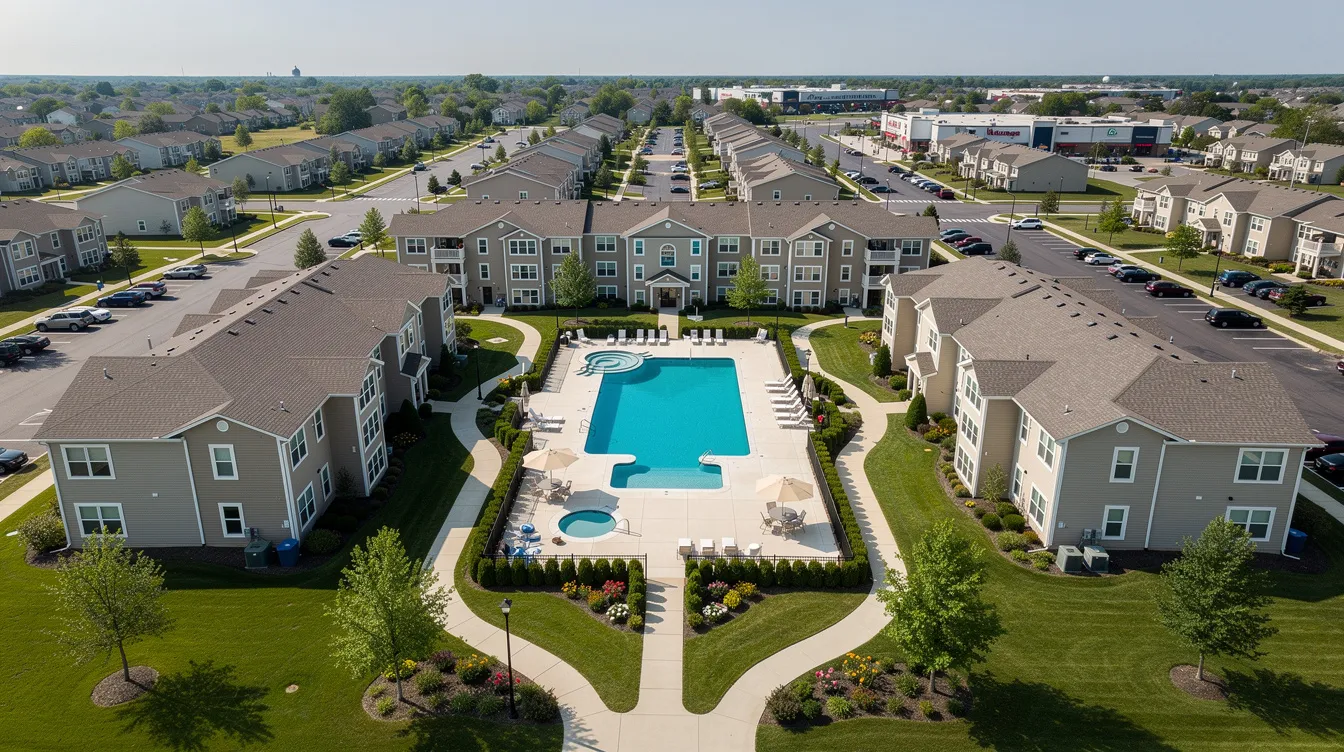
Private condominiums are strata-titled residential units offering common facilities – pools, gyms, function rooms, landscaped gardens. Buyers purchase them for own-stay with capital appreciation or as rental investments targeting families, singles, and expatriates. Condominiums typically face higher tenant turnover due to shorter leases (usually 1–2 years).
The 2026 regulatory landscape remains defined by the cooling measures introduced in April 2023. Current ABSD rates for residential property are steep:
-
Singapore citizen: 0% on first property, 20% on second property, 30% on third and beyond
-
Permanent Residents: 5% on first property, 30% on second, 35% on third+
-
Foreigners: flat 60% on any residential property
-
Entities/trusts: 65%
ABSD was first introduced in Singapore in 2011 and has been progressively tightened. On top of ABSD, BSD rates were adjusted upwards as of February 15, 2023, with a top marginal rate of 6% for residential purchases above S$3M. The Total Debt Servicing Ratio (TDSR) is capped at 55% of income, limiting how much buyers can borrow. Residential condominiums can utilize Central Provident Fund for downpayments, which is a meaningful advantage for cash-constrained buyers – but the ABSD burden on a second property or beyond often dwarfs that benefit.
For many investors already owning one home, a new condo purchase in 2026 triggers substantial ABSD and a large opportunity cost on locked-up capital.
Why “No Additional Buyer’s Stamp Duty (ABSD)” Has Shifted the Conversation Toward Strata Offices
The impact of ABSD escalation on residential investment returns is dramatic. On a $1.5M second-home condo purchase by a Singapore citizen, the ABSD alone is S$300,000 – money that earns zero return and cannot be recovered unless you sell the property at a gain that exceeds that tax. Annualised over a 10-year hold, ABSD adds roughly 2 percentage points of drag to net yield on equity.
This arithmetic has driven growing investor interest in commercial alternatives. According to Knight Frank research, 354 strata office units transacted in 2025 for approximately S$1.1 billion – up from around 330 units in 2024. The trend is clear: more buyers are exploring strata offices as an ABSD-free route to property investing in Singapore.
With that foundation established, the sections below break down the comparison across stamp duties, financing, yields, GST, running costs, and exit strategy.
Core Financial Comparison: Strata Office vs Condo in 2026
Investors must compare total quantum – including all taxes and fees – alongside financing constraints and ongoing cash flow. Headline PSF prices tell only part of the story. This section uses 2026 rules and typical bank lending practices; note that readers should verify current figures against updated IRAS and MAS notices before transacting.
Stamp Duties: No ABSD for Strata Offices, But Watch the Buyer’s Stamp Duty (BSD)
Buyer’s Stamp Duty (BSD) and Additional Buyer’s Stamp Duty (ABSD) apply differently here: BSD is payable on all property purchases – both residential and commercial. BSD is calculated on the higher of purchase price or market value. Buyer’s stamp duty must be paid within 14 days of signing the purchase agreement, and the same 14-day deadline applies to ABSD where it is payable.
Standard buyer’s stamp duty uses tiered bands. For a $1.5M property, BSD is approximately $44,600 under both residential and commercial schedules (since $1.5M falls below the thresholds where residential and non-residential BSD rates diverge at the top marginal tier). The critical difference is what comes on top of BSD.
Here is a worked example comparing a Singapore citizen who already owns one residential property and is now investing S$1.5M:
|
Scenario |
Strata Office (Commercial) |
Private Condo (Residential) |
|---|---|---|
|
Buyer profile |
SC, owns 1 existing home |
SC, owns 1 existing home |
|
Purchase price |
S$1,500,000 |
S$1,500,000 |
|
BSD payable |
~S$44,600 |
~S$44,600 |
|
ABSD payable |
S$0 (commercial – ABSD exempt) |
S$300,000 (20% on second property) |
|
Total stamp duty |
~S$44,600 |
~S$344,600 |
|
ABSD saving |
S$300,000 |
– |
ABSD is calculated on the higher of purchase price or market value, just like BSD. ABSD must be paid within 14 days of signing the agreement. For higher-ABSD profiles – foreigners facing 60%, PRs buying a second or third property, or entities at 65% – the tax saving from going commercial is even more substantial: potentially S$900,000+ on a S$1.5M purchase.
Note that some married couples can claim ABSD remission if buying jointly as spouses for residential property. Singapore citizens can claim ABSD remission under specific conditions, and decoupling allows one spouse to buy a new property at 0% ABSD by having the acquiring spouse take over the other’s share. ABSD remission applies if you sell your HDB flat within 6 months of purchasing a new property. But these strategies only apply to residential property transactions – for strata offices, the question is moot because ABSD simply does not apply.
Financing Rules: LTV, Tenure, and Stress Tests in 2026
Banks apply meaningfully different loan parameters for residential versus commercial property, including how much of the purchase price a bank will finance through the Loan-to-Value ratio. Here is the comparison:
|
Criteria |
Condo Investment (Residential) |
Strata Office (Commercial) |
|---|---|---|
|
Max LTV |
75% (1st loan); 45–55% (2nd loan) |
Loan-to-Value limits for strata office purchases are typically capped around 55%; some banks offer 60–70% for Grade A/B units |
|
Max Tenure |
Up to 30 years |
20–25 years (or limited by remaining lease) |
|
Typical Interest Rate (2026) |
~1.5–2.0% floating (SORA-based) |
~1.8–2.4% floating (100–150 bps above residential spreads) |
|
Stress Test Rate |
~4% floor |
~5% floor |
|
CPF Usable? |
Yes (for residential) |
No – full cash downpayment required |
|
TDSR Cap |
55% of income |
55% of income |
The practical impact: strata offices save massively on ABSD but require significantly larger upfront cash equity, because the remaining amount must be covered by downpayment—split between cash and CPF for condos, while strata offices require cash because CPF cannot be used. A buyer financing a $1.5M strata office at 55% LTV needs S$675,000 in cash (plus BSD, GST if applicable, and legal fees). For a condo, CPF can cover part of the downpayment, reducing the cash burden – but the 20% ABSD on a second property adds S$300,000 in non-recoverable cost.
Interest rates for commercial strata office loans carry a spread premium over residential home loans. All-in floating rates sit around 1.8–2.4% as of mid-2026, benchmarked to SORA. The shorter maximum tenure (often 20–25 years vs 30 for condos) increases monthly instalments, which investors must budget for carefully.
Rental Yield and Net Cash Flow Comparison
Strata offices typically yield higher gross rental returns than condominiums. Here are the 2026 benchmarks:
Private condo gross yields: ~2.5–4.0%, depending on segment. OCR condos tend toward 3.2–3.6%; CCR condos sit lower at 2.5–3.3%, per PropertyNet’s 2026 rental yield data.
Strata office gross yields: ~3.5–7.0% depending on grade. Grade A core CBD: 3.5–4.5%; Grade B fringe: 4.5–5.5%; Grade C older stock: 5.5–7.0%, per ShiokNest.
Here is a worked net yield example for a comparable city-fringe location at S$1.5M:
|
Item |
Condo Investment |
Strata Office |
|---|---|---|
|
Gross annual rent |
S$50,000 (~3.3% yield) |
S$70,000 (~4.7% yield) |
|
Property tax |
~S$9,000 (progressive 12–36% on AV) |
~S$7,000 (flat 10% on AV) |
|
MCST & maintenance |
~S$30,000 (~2% of value) |
~S$45,000 (~3% of value, incl. fit-out amortisation) |
|
Agency fees & vacancy |
~S$2,500 (5% of rent) |
~S$4,900 (7% of rent) |
|
Net rental income |
~S$8,500 |
~S$13,100 |
|
Approximate net yield on equity |
~1.1–1.5% |
~1.7–2.0% |
Strata offices generally have longer lease terms compared to condominiums (2–3 years vs 1–2 years for condos), providing more income stability when tenanted. However, commercial properties are influenced by business cycles and corporate demand, impacting rental stability. Office rents and vacancy are more correlated with economic cycles and hybrid work trends than residential demand.
Capital appreciation for strata offices tends to be steadier and more conservative than for condominiums, which can see sharper upswings in bull markets but also carry the dead weight of ABSD on entry.
GST, Running Costs, and Operational Considerations
Commercial property introduces GST and business-use considerations that residential investors may not be accustomed to. These costs can materially affect net returns if not planned for upfront.
GST Implications on Strata Office Purchases and Rentals
Commercial properties usually require payment of Goods and Services Tax if the seller is registered. In 2026, GST stands at 9%. This means a S$1.5M strata office purchased from a GST-registered vendor may cost an additional S$135,000 in GST.
However, the impact depends on the buyer’s structure:
-
Corporate buyers (GST-registered): Can claim input tax credit on the purchase GST, effectively recovering S$135,000 over time. Rental income on commercial space is also subject to GST if the landlord’s taxable supplies exceed S$1M annually – but input credits offset this.
-
Individual investors (not GST-registered): Cannot claim input tax credits. The S$135,000 GST becomes a real additional cost layered onto the purchase price.
Contrast with condos: No GST applies on resale residential property purchases or on residential rental income. This simplifies cash flows considerably for condo investors.
Property Tax, MCST, Fit-Out, and Other Running Costs
The 2026 property tax regime treats the two asset types very differently:
-
Residential investment units (non-owner-occupied): Progressive rates from 12% to 36% of Annual Value, calculated based on AV bands. Higher-value investment condos face punitive rates at the upper end.
-
Non-residential (strata offices): Flat rate of 10% of Annual Value. No progressive bands. This makes commercial ownership more tax-efficient at higher AV levels.
MCST and maintenance fees:
-
Condo: Higher landscaping, pool, gym, and facilities maintenance costs. Lifestyle amenities are a draw for tenants but add to the owner’s expense line.
-
Strata office: Business-hours usage means heavier lift and electrical wear. Fees can be sizeable in Grade A buildings, though lifestyle facility costs are absent.
Fit-out costs:
-
Office: Partitions, cabling, server infrastructure, meeting rooms – high upfront CapEx (often S$50–150 psf for a professional fit-out). Corporate buyers can partially recover through depreciation and higher rents.
-
Condo: Mainly furnishing and basic interior design. Lower complexity, lower cost.
Liquidity, Resale Market, and Exit Risks
Strata offices have a smaller buyer pool compared to residential properties, impacting liquidity. The condo resale market benefits from a large and diverse pool – own-stay buyers, local investors, foreigners (despite ABSD) – supported by multiple portals and agency networks. Strata offices attract a narrower set: business owners seeking own premises, seasoned commercial investors, and companies.
Residential prices tend to be supported by owner-occupier demand; corrections are typically shallower. Office prices and rents can swing more aggressively with global slowdowns, hybrid work adoption, and new supply from upcoming CBD and City Fringe projects completing in 2026–2028.
Strata offices do not incur Seller’s Stamp Duty, allowing flexible exit timelines – a meaningful advantage for investors who may need to sell within a short period. However, strata office deals may take longer to conclude; due diligence on existing tenancies, GST obligations, and building condition is more involved than a standardised condo resale process. Extra checks may also be needed for commercial and landed property title issues such as encumbrances, road-widening lines, and tenure.
Strata offices may experience prolonged vacancy during economic downturns, and older units with shorter remaining leases (below 30–40 years) face steeper financing restrictions and weaker resale prospects.
Practical Framework: Which Is Better for You in 2026?
The right choice depends entirely on your profile. There is no one-size-fits-all winner between strata office and condo.
Investor Profiles and Suitable Choices
1. High-income professional who already owns a home and is considering a second investment property:
-
Key constraint: 20% ABSD on a second condo (if SC), significantly eroding returns.
-
Strata office advantage: Zero ABSD, higher gross yield. But requires full cash downpayment – no CPF.
-
Recommendation: Strata office is often the better path forward if you have sufficient cash reserves and can afford vacancy risk. A condo makes sense only if you plan to sell your first property before buying (selling your first property before buying avoids ABSD) or are prioritising capital gains over yield.
2. SME owner looking to house own operations and build equity instead of paying rent:
-
Key constraint: Ongoing rental expense vs building equity in a depreciating-lease asset.
-
Strata office advantage: Owner-occupation eliminates rent expense, enables potential input GST recovery, and provides dual benefit of business cost savings plus capital appreciation.
-
Recommendation: Strong fit for strata office – especially if the business is stable and the unit is in a well-located Grade A or B building.
3. Foreign investor facing 60% ABSD on condos:
-
Key constraint: Foreigners pay 60% ABSD since the April 2023 revision, making condo investing prohibitively expensive.
-
Strata office advantage: ABSD applies at 0% regardless of residency status. The entire 60% ABSD cost is eliminated.
-
Recommendation: Strata office is the clear choice for foreigners seeking Singapore property exposure. Budget carefully for GST and ensure exit strategy accounts for the thinner buyer pool.
4. Retiree or near-retiree prioritising stable cash flow:
-
Key constraint: Lower risk appetite, need for predictable income, preference for liquid assets.
-
Condo advantage: More stable tenant demand, broader buyer pool for eventual sale, simpler ownership and financing.
-
Recommendation: Condo generally suits better, provided you are buying a first property (0% ABSD for SC) or can manage ABSD cost. If you already own a home and face high ABSD, a Grade A strata office with a strong existing tenancy can work – but engage a financial advisor to stress-test vacancy scenarios.
Step-by-Step Process to Evaluate a Specific Deal
Whenever you are comparing a specific strata office opportunity against a condo, follow this method:
-
Clarify your ownership profile and ABSD exposure: List all properties you currently own, confirm your residency status, and check the current ABSD rates applicable to your next purchase.
-
Calculate total initial capital outlay: Downpayment + BSD + ABSD (if condo) + estimated GST and legal fees (if strata office from a GST-registered seller). Note that BSD is calculated on the higher of purchase price or market value.
-
Model financing: Determine probable LTV, tenure, interest rate, and monthly instalments under 2026 TDSR rules. Remember that the Mortgage Servicing Ratio (MSR) is capped at 30% for HDB properties but does not apply to private property or strata offices. Verify your loan terms and projected cash flow against the legal completion date before committing.
-
Estimate realistic rent, vacancy, and running costs: Use recent comparable transactions for the specific grade and location to derive a conservative net yield.
-
Stress-test scenarios: Model interest rate increases of +1–2%, rental drops of 10–20%, and vacancy periods of 6–12 months.
-
Assess exit options: Identify who will buy from you in 5–10 years. Is the remaining lease sufficient? Are there URA incentive schemes or master plan catalysts that could re-rate the precinct?
Do not sign any booking form or purchase document at a showflat until you have confirmed loan eligibility, figures, and the relevant date assumptions.
Side-by-Side Summary Table: Strata Office vs Condo in 2026
|
Criterion |
Strata Office (Commercial) |
Private Condo (Residential) |
|---|---|---|
|
ABSD (2026) |
0% – exempt |
Up to 20–65% depending on profile |
|
BSD structure |
Commercial BSD rates (top marginal 5%) |
Residential BSD rates (top marginal 6%) |
|
Typical LTV & Tenure |
55–70% LTV; 20–25 years |
45–75% LTV; up to 30 years |
|
Typical Gross Yield |
3.5–7.0% |
2.5–4.0% |
|
Typical Net Yield |
~2.5–4.0% |
~1.5–2.5% |
|
GST Exposure |
9% on purchase (if vendor GST-registered) and on rent |
None on resale purchase or residential rent |
|
CPF Usable? |
No |
Yes |
|
Tenant Base |
Businesses, corporate entities |
Individuals, families, expatriates |
|
Lease Tenure |
Typically 2–3 years |
Typically 1–2 years |
|
Liquidity / Buyer Pool |
Narrower; longer time to sell |
Broad; higher transaction volume |
|
Sensitivity to Economic Cycles |
Higher – strata offices face higher market volatility tied to macroeconomic cycles |
Lower – demand supported by population and immigration |
How to interpret this table: Strata offices win on yield and tax efficiency; condos win on liquidity, financing flexibility, and demand stability. Your budget, cash position, risk tolerance, and holding period should determine which column matters more to you.

Common Pitfalls and How to Avoid Them
Both asset classes can underperform if investors overlook taxes, regulations, or structural demand shifts. Here are the most common mistakes.
Pitfall 1: Ignoring ABSD Remission and Assuming Condo Is “Safer by Default”
Many buyers default to condos out of familiarity, paying six-figure ABSD on a second or third property without calculating the drag on returns. For example, S$300,000 in ABSD on a S$1.5M condo effectively requires the property to appreciate 20% before you break even on that tax alone – before accounting for BSD, interest, and holding costs.
Solution: Always annualise and amortise ABSD over your intended holding period. Compare the resulting net yield on equity against a strata office alternative before signing a purchase agreement.
Pitfall 2: Underestimating Vacancy and Re-leasing Risk for Offices
Strata offices may experience prolonged vacancy during economic downturns. Remote-work adoption and new supply can compound the problem, particularly in older or fringe office stock where tenant demand is less resilient.
Solution: Focus on well-located assets with diversified tenant bases. Keep conservative vacancy assumptions (plan for 3–6 months vacancy between tenancies), and maintain a rental buffer reserve equivalent to at least 6–12 months of mortgage instalments.
Pitfall 3: Overlooking GST, Fit-Out, and Compliance Costs
GST at 9% on the purchase price, costly office fit-outs (S$50–150 psf), fire safety compliance, and renovation permits can materially erode returns. Individual investors who are not GST-registered bear the full GST cost with no input credit recovery.
Solution: Include all these items in your initial ROI calculations. Seek advice from a tax advisor on GST registration and structuring. Obtain detailed fit-out quotes before committing and factor the amortised cost into your net yield model.
Pitfall 4: Not Aligning Asset Choice with Exit Strategy
An investor nearing retirement who locks into an illiquid strata office with a thin buyer pool may struggle to exit when capital is needed. Conversely, a young business owner paying 20% ABSD on a condo “for safety” may sacrifice years of compounding returns.
Solution: Define your target holding period, capital recovery timeline, and succession plan before choosing. If you need liquidity within 5 years, a condo’s broader resale market may be more appropriate. If you can hold 10+ years and tolerate volatility, a strata office’s yield advantage compounds meaningfully.
Conclusion and Next Steps
In 2026, the “no ABSD” advantage gives strata offices a compelling tax edge – saving buyers potentially hundreds of thousands of dollars in upfront stamp duties. But condos retain strong liquidity, simpler financing (with CPF eligibility), and more stable tenant demand. Neither asset class is universally superior; the best choice is calculated based on your ownership status, cash reserves, risk tolerance, and time horizon.
Here are your concrete next steps:
-
Audit your property ownership: List all properties currently owned and confirm your ABSD profile for 2026 under IRAS rules. Check whether you are a sole owner or in a joint purchase arrangement, and whether your spouse owns property that affects your ABSD exposure.
-
Shortlist and compare: Identify 2–3 potential strata office and condo opportunities in your preferred districts. Request indicative bank financing terms for each.
-
Run projections: Build side-by-side cash flow models for at least a 10-year holding period, with and without ABSD. Stress-test for rate hikes, rental drops, and vacancy.
-
Seek professional advice: Speak with a tax advisor on GST implications and structuring if considering a purchase via a company. Engage a property lawyer familiar with commercial property transactions.
-
Contact Aesthetic Havens: Reach out to us for data-driven comparisons of specific strata office and condo options. Our advisory platform can help model yields, surface live listings, and connect you with vetted partners – brokers, lawyers, and fit-out contractors – to streamline your decision.
Related topics you may want to explore next include industrial B1 vs strata office investments for SMEs, navigating commercial property GST in Singapore, and financing strategies for new launch versus resale commercial units.
Additional Resources
-
IRAS: Official pages on Buyer’s Stamp Duty (BSD) and property tax rates for residential vs non-residential properties.
-
MAS: Guidelines on TDSR and LTV limits for residential and commercial loans (refer to MAS Notice 645 and related circulars).
-
URA: Data on office and residential supply pipelines through 2030, useful for contextualising future rental and price trends.
-
ZeroABSD: Guide to ABSD rates in Singapore 2026 and commercial loan parameters.
-
Knight Frank: Research on mixed-use developments and strata office market activity.
All information in this article is accurate as of Q4 2026. Regulatory rules, tax rates, and bank lending policies may change – always verify with IRAS, MAS, and your professional advisors before completing any property transaction.


