

Introduction
When ultra-high-net-worth families in Singapore evaluate good class bungalows vs freehold CCR condos for wealth preservation, the decision extends far beyond lifestyle preference – it shapes how dynastic capital is protected, distributed, and governed across generations. This comparison of good class bungalows vs freehold CCR condos wealth preservation for UHNW families addresses the core tension every family office managing S$30 million or more in Singapore residential assets must resolve: do you anchor capital in irreplaceable land, or do you prioritise portfolio liquidity and operational flexibility?
The scope of this article is deliberately narrow. We focus on Singapore’s prime residential segment – specifically the pinnacle of landed properties (GCBs) and freehold or 999-year strata homes in the Core Central Region (CCR). We compare these two asset classes across four critical dimensions: land scarcity, liquidity, holding cost, and legacy planning. This is not a guide for mass-market buyers, nor does it address foreigners who cannot purchase landed housing under current regulations.
The target reader is a Singapore-based family office principal, UHNW individual with deployable capital of S$10 million to S$100 million or more, a private banker structuring residential allocations, or a cross-border investor evaluating where to park significant wealth in residential assets.
Direct answer: GCBs tend to excel in long-term capital preservation and legacy signalling due to their finite, land-backed scarcity and immunity to lease decay. Freehold CCR condos tend to excel in liquidity, rental income, and portfolio flexibility, making them superior rebalancing and distribution tools. For most UHNW families, a deliberate combination of both produces the most robust wealth preservation outcome.
Key outcomes you will gain from this article:
-
Clarity on the risk, return, and wealth preservation profile of each asset class
-
Understanding of how land scarcity, transaction data from 2014–2025, and policy constraints drive long-term value
-
A framework to match GCBs and freehold CCR condos to family objectives – privacy, income, liquidity, succession, and governance
-
Illustrative portfolio structures combining both asset types for dynastic wealth in Singapore
-
Insight into common execution risks and how experienced advisory partners help families navigate them
Understanding Singapore’s UHNW Residential Asset Classes
Singapore’s UHNW residential market is defined by ticket sizes starting at S$10 million and frequently exceeding S$60 million in prime residential districts such as Districts 9, 10, and 11. For wealth preservation strategy, correctly classifying these assets – and understanding their structural differences – is the necessary first step before any capital deployment decision.
What Are Good Class Bungalows and GCB Areas in 2026?
A good class bungalow is the most exclusive category of landed property in Singapore. The Urban Redevelopment Authority (URA) defines a GCB by two simultaneous criteria: the property must be located within one of 39 gazetted GCB areas, and the plot must have a minimum land area of 1,400 square metres (approximately 15,070 square feet). Good Class Bungalows require a minimum land area of 1,400 square meters – a threshold that cannot be reduced through subdivision.
Regulatory caps preserve the low rise character of these enclaves. GCBs must comply with a maximum height restriction of two storeys, a site coverage limit of approximately 40%, and strict setback and greenery buffer requirements. These constraints are not bureaucratic inconveniences; they are deliberately designed to maintain the exclusivity and environmental quality that define GCB areas.
There are approximately 2,800 Good Class Bungalows in Singapore, spread across GCB areas in Districts 10, 11, 20, 21, and 23 – encompassing prestigious addresses along Nassim Road, Holland Road, Bin Tong Park, and surrounding neighbourhoods. Virtually no new GCB-zoned land has been released since the early 2010s, making this a genuinely supply-capped asset class.
Ownership of bungalows is restricted to Singapore citizens primarily, creating a closed pricing ecosystem for this asset class. Permanent residents must apply under the Global Investor Programme, and PRs must have at least five years of residency to apply. Foreigners can own GCBs with special government approval from the Singapore Land Authority (SLA), but approval is rarely granted and requires demonstration of significant economic contributions to Singapore.
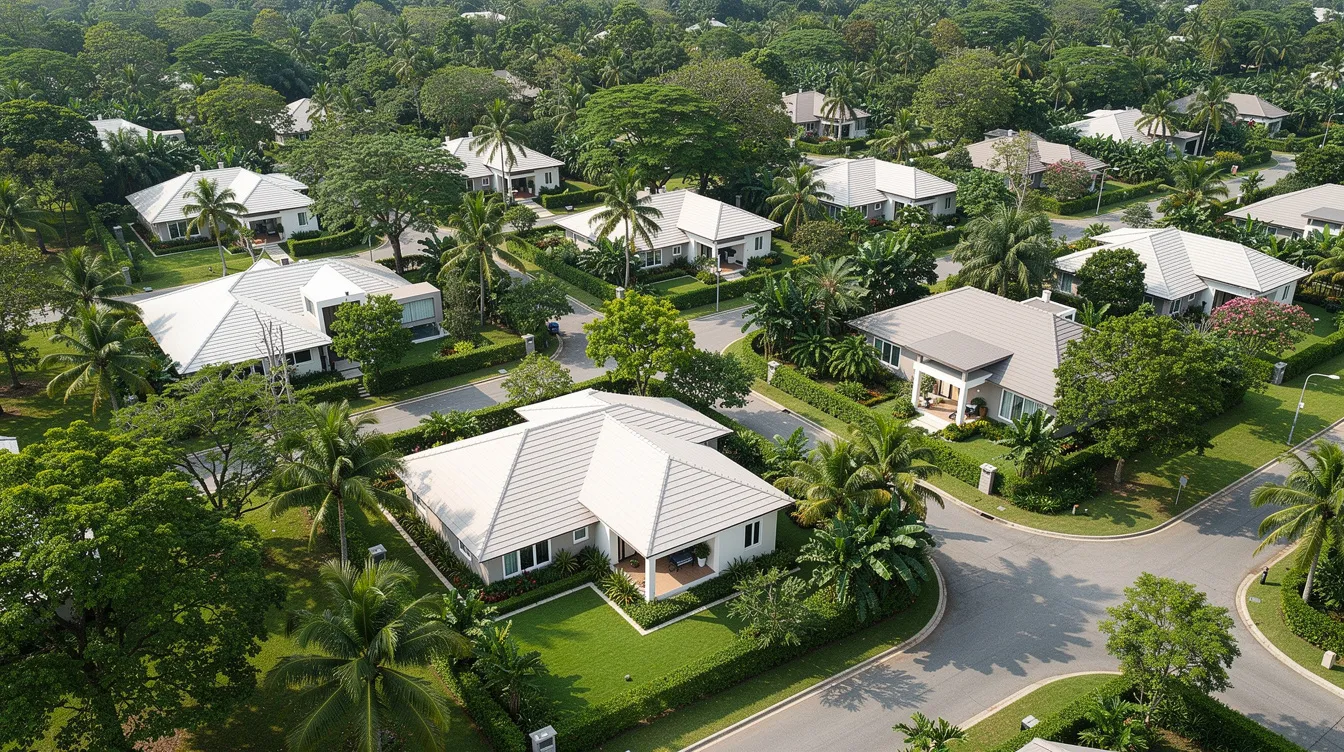
About 1,000 Singaporeans own the majority of GCBs, making this arguably the most concentrated real estate market in Asia. The combination of finite land, citizenship restrictions, and regulatory preservation makes GCBs the pinnacle of Singapore’s residential hierarchy – a land-backed, supply-constrained asset with high entry cost and a deliberately limited buyer pool.
What Are Freehold CCR Condos?
Freehold CCR condos are private strata apartments located in the Core Central Region – generally Districts 1, 2, 4, 6, 9, 10, 11, Sentosa, and the immediate downtown core – that carry freehold or 999-year leasehold tenure. These properties represent indefinite ownership, unlike 99-year leaseholds where value erodes as the remaining lease shortens.
Typical product profiles span a wide spectrum:
-
Luxury towers along Orchard Boulevard, Ardmore Park, and River Valley – high-rise developments offering panoramic views, concierge services, and branded residences
-
Boutique low-rise projects in Holland, Novena, and the Tanglin fringe – smaller developments with 20–80 units, often appealing to families seeking privacy without a landed footprint
-
Large integrated developments near Marina Bay and Beach Road – combining residential, retail, and hospitality components
The buyer profile for freehold CCR condos is materially broader than for GCBs. It includes Singapore citizens, permanent residents, and foreigners – though foreign buyers face substantial Additional Buyer’s Stamp Duty (ABSD). Since 2019, family offices and corporate buyers have become an increasingly visible segment of demand.
Why does tenure matter so acutely for wealth preservation? Data from Realvestor shows that over 5-year horizons in the CCR, freehold and 999-year leasehold condos delivered a resale PSF compound annual growth rate (CAGR) of approximately 3.1% per annum, compared with roughly 1.9% per annum for 99-year leaseholds. The gap widens dramatically once remaining lease years fall below 70–80 years, as financing constraints, CPF usage limitations, and buyer sentiment all deteriorate. For UHNW families planning across decades, freehold tenure eliminates this structural headwind entirely.
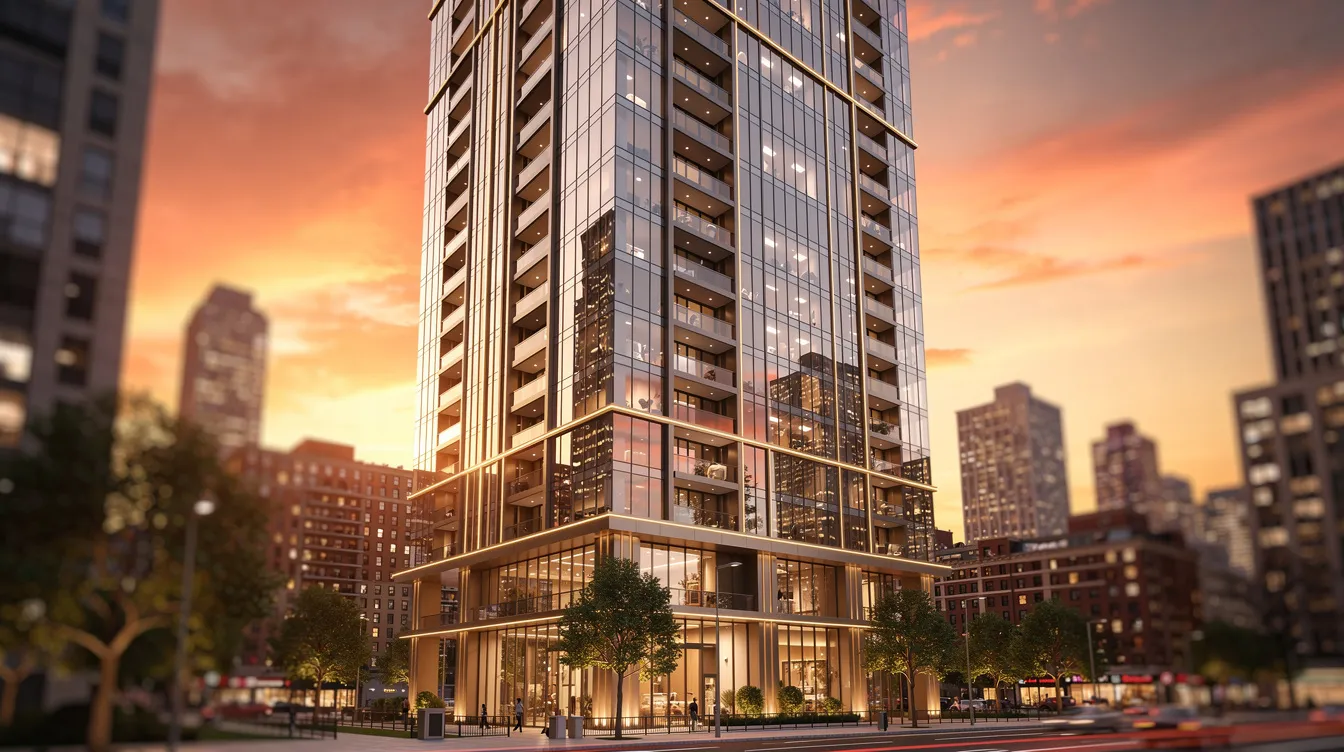
Although both GCBs and freehold CCR condos occupy Singapore’s “prime” label, their economics diverge sharply when analysed through the lenses of land scarcity, liquidity, holding cost, and legacy – the dimensions that matter most for dynastic wealth.
Land Scarcity and Long‑Term Capital Preservation
UHNW families typically care less about short-term rental yield and more about 20- to 50-year wealth retention and purchasing-power protection. Land in land-scarce urban centres has intrinsic, irreproducible value – and how that scarcity manifests differs fundamentally between GCBs and freehold CCR condos.
Land‑Backed Scarcity of GCBs
Good Class Bungalows sit at the absolute top of Singapore’s landed hierarchy. Landed housing stock is bounded by geography and zoning laws in Singapore, and GCBs represent the most constrained subset: only about 2,800 exist, located in 39 protected residential areas, with no realistic prospect of new supply entering the market. The URA Master Plan protections for GCB areas reflect a strong political and social consensus to preserve these enclaves, and there is zero appetite to intensify density within them.
The limited supply has driven substantial long-term appreciation. GCB transaction data from ShiokNest shows average land PSF rose approximately 36% from 2021 to mid-2026 across prime districts. GCB prices can exceed S$100 million in prime locations – a Nassim Road plot sold in April 2026 for S$64.90 million at roughly S$4,550 psf on land. For trophy locations such as Tanglin Hill, PSF rates have exceeded S$6,000 psf. At the other end, GCB prices start at around S$8 million for smaller plots in less central GCB areas.
Total GCB transactions reached approximately S$1.1 billion in 2024, with seventeen GCB transactions totaling S$827 million in the first nine months of that year alone. GCB prices in Districts 10 and 11 often exceed S$60 million, underscoring the concentrated capital required for entry.
Critically, landed properties typically demonstrate high emotional and financial holding power during economic contractions. During the 2008–09 Global Financial Crisis and the 2020 COVID disruption, GCB transaction volumes dropped but prices proved remarkably sticky – there was virtually no forced selling, because owners were not leveraged to distress levels and the asset’s irreplaceability discouraged panic disposals.
The benefits of bungalows include pure land value and potential for capital appreciation over time. GCB land behaves like trophy real-asset collateral that has historically outpaced core inflation over 20-plus-year periods, making it the sought-after foundation of any serious Singapore wealth preservation strategy.
Vertical Scarcity and Redevelopment Potential of CCR Condos
Freehold CCR condos experience a structurally different form of scarcity. There is no lease decay to erode their value over time, but physical buildings do age, and the land beneath strata developments can be unlocked through en-bloc (collective sale) processes.
Government planning initiatives – including increasing plot ratios for selected CCR sites and URA rejuvenation incentive schemes for the Orchard and CBD corridors – create a dynamic where older freehold condos sitting on under-utilised sites can command significant redevelopment premiums. En-bloc sales cycles roughly every 8–15 years inject potential upside that pure land holdings do not offer in the same way.
The demand floor for freehold CCR condos is also structurally supported. Potential buyers include smaller UHNW cheques (S$5–15 million), affluent expatriates seeking move-in-ready homes, and corporate entities parking capital. This breadth of demand means that even in soft market conditions, freehold CCR condos in prime locations tend to find buyers more readily than large landed plots.
However, the value of bungalows is closely tied to land ownership, while condominiums involve shared property interests. Per dollar invested, a freehold CCR condo delivers less “pure land” exposure and more exposure to building quality, management effectiveness, and strata governance – factors that introduce variables absent from landed ownership.
Scarcity alone, however, is only one dimension. For family offices, the trade-offs in liquidity and deal size matter just as much for effective wealth stewardship.
Liquidity, Transaction Dynamics, and Portfolio Flexibility
Exitability, bite-size, and market depth are not abstract concepts for UHNW wealth stewards – they determine whether a family can rebalance its portfolio, fund a distribution to heirs, or respond to a policy shock without destroying value.
Liquidity Profile of GCBs
Bungalows are typically illiquid due to high ticket sizes and a restricted buyer pool. In 2025, only 28 caveated GCB transactions were recorded island-wide, totalling approximately S$966 million – a figure representing fewer arms-length deals than many individual CCR condominium projects see in a single year. Many notable sales occur off-market through private treaty, brokered by a small circle of specialist agents.
The implications for UHNW families are significant:
-
Entry and exit timelines typically span 6 to 18 months, and can stretch longer during periods of policy uncertainty
-
Pricing gaps between buyer and seller expectations widen during global recessions or after cooling measure announcements
-
Partial liquidity is essentially impossible – a GCB is a single indivisible asset; you cannot divest “just S$10 million” when your property is worth S$60 million
Only Singapore citizens can own Good Class Bungalows, which further constrains the buyer pool. The market is defined by a small number of ultra-wealthy participants who transact infrequently, making GCBs among the most illiquid assets in Singapore’s investment landscape.
Liquidity Profile of Freehold CCR Condos
Freehold CCR condos offer vastly greater transaction depth. Across Districts 9 to 11 alone, hundreds of freehold condo resales are caveated annually, with unit prices ranging from S$2 million for compact apartments to S$40 million or more for trophy penthouses and strata mansions.
Multiple buyer segments support this liquidity:
-
Owner-occupiers upgrading from mass-market housing
-
Yield-seeking investors, including family offices structuring rental portfolios
-
Foreigners constrained from purchasing landed properties in Singapore, who channel capital into high-end strata instead
For UHNW families, the flexibility advantages are material. A family holding five freehold CCR condo units can stagger disposals by unit type and size, liquidating a two-bedroom investment unit to fund a trust distribution without touching the family’s penthouse residence. Units can be re-allocated among family members, transferred into trust structures, or sold to raise tactical liquidity – all without the complexity of divesting a single large landed asset.
In practical terms, freehold CCR condos function as “rebalancing chips” in a family balance sheet, whereas GCBs act more as core anchor holdings – essential for long-term preservation but difficult to move quickly. This distinction becomes especially important when considering holding costs and cash flow, which differ materially between the two asset classes.
Holding Costs, Cash Flow, and Tax Considerations
From a UHNW perspective, carrying cost and net yield shape how comfortably an asset can be held through multiple economic cycles without becoming a burden on the family’s broader financial position.
Cost and Income Profile of GCBs
Managing bungalows requires oversight for maintenance and capital expenditure, unlike condominiums where much of this responsibility is shared among owners through a management corporation.
Key cost components for GCB ownership include:
-
Property tax on high annual value, which increases substantially when the property is classified as non-owner-occupied
-
Grounds maintenance – landscaping, swimming pool upkeep, and private security for large compounds; annual budgets can reach mid-six figures in Singapore dollars
-
Periodic renovation and rebuilding every 15–25 years to keep the house contemporary, structurally sound, and code-compliant; bungalow owners have control over redevelopment and architectural decisions without needing unanimous consent from neighbours, but the cost can run into tens of millions
The rental market for GCBs is small and selective. Tenants are typically CEOs, ambassadors, or family office principals willing to pay premium rents. Bungalows have a lower dependence on rental yields compared to condominiums, focusing instead on long-term value retention. Gross yields as a percentage of capital value are often modest – perhaps 1.5% to 3% – though in absolute dollar terms, rental income from a S$50 million property can be substantial.
Many UHNW families use GCBs as primary residences or multi-generational family compounds rather than yield instruments. GCBs offer extensive gardens and outdoor areas for recreation, and bungalows provide a higher level of privacy and autonomy than condominiums, with less exposure to shared facilities. The cost is justified not by cash flow but by legacy value and lifestyle.
Cost and Income Profile of Freehold CCR Condos
Recurring costs for freehold CCR condos are more predictable and scalable:
-
Maintenance fees (MCST contributions) scale with unit size and the level of shared facilities – luxury developments with extensive amenities charge more, but economies of scale apply across larger developments
-
Property tax differs between owner-occupied and investment classification, with investment properties attracting higher rates on annual value
Rental dynamics are significantly more favourable on a percentage basis. The tenant pool is broader – bankers, expatriate professionals, medical specialists, and affluent locals all seek well-located, well-managed freehold CCR units. Gross yields for 1- to 3-bedroom units commonly reach 3% to 5%, and the depth of tenant demand means vacancy periods are typically shorter than for GCBs.
Freehold tenure supports long-term holding without lease-decay anxiety. Unlike 99-year leasehold properties – where bank financing, CPF usage, and buyer interest all deteriorate as remaining years shorten – freehold CCR condos allow families to focus on cash-flow management, opportunistic refinancing, and capital recycling without a structural countdown eroding their asset base.
Side‑by‑Side Financial Comparison
The following table provides directional guidance for an UHNW family comparing these two asset classes:
|
Criterion |
Good Class Bungalow (District 10) |
Freehold CCR Condo Portfolio (Districts 9–11) |
|---|---|---|
|
Typical deal size |
S$30m–S$120m per property |
S$2m–S$40m per unit; portfolio of 2–4 units: S$20m–S$80m |
|
Buyer pool depth |
Very narrow: UHNW citizens only; foreigners excluded |
Broad: citizens, PRs, foreigners (subject to ABSD) |
|
Transaction volume per year |
~30 or fewer caveated transactions island-wide |
Hundreds of resale transactions across CCR annually |
|
Gross yield range |
~1.5%–3% of capital value |
~3%–5% for smaller units; lower for penthouses |
|
Annual carrying costs |
High: property tax, landscaping, security, structural maintenance; mid-six figures S$ |
Moderate: MCST fees, property tax; more predictable and shared |
|
Financing ease |
Conservative: large down payments; limited bank appetite for very high-value landed |
Easier: banks comfortable with strata; staggered mortgages across units |
|
Sensitivity to cooling measures |
Indirectly affected through sentiment and cost of capital; buyer restriction provides some insulation |
More directly affected: higher transaction volumes mean ABSD and LTV changes impact market liquidity faster |
Synthesis: For an UHNW family deploying S$100 million into Singapore residential property, the data suggests that a GCB anchors long-term preservation and legacy status, while a diversified freehold CCR condo portfolio provides income, liquidity, and the flexibility to respond to changing family needs or market conditions. Cost and yield must be read together with scarcity, liquidity, and legacy intent – which is where governance and estate structuring become decisive.
Legacy, Governance, and Family Office Structuring
For multi-generational families, an asset’s role in legacy and governance can ultimately be more decisive than its internal rate of return. Ultra-high-net-worth families prioritize wealth preservation and legacy planning in real estate, and the structural characteristics of GCBs and CCR condos lead to very different governance requirements.
Good Class Bungalow (GCB) as Legacy and Identity Assets
A good class bungalow often evolves into a “family seat” – a physical location that anchors the family’s narrative, reputation, and identity in Singapore’s most prestigious residential districts. Bungalows serve as tangible, permanent family compounds that can be passed down generations, and bungalows allow for the adaptation of living spaces to changing family needs over generations – additional wings, ancillary buildings, or reconfigured gardens can accommodate expanding families without uprooting them.
Bungalows provide flexibility for multi-generational living and family office headquarters, with some families using the main house for the patriarch’s residence, a secondary structure for adult children, and converted spaces for a private family office.
However, the indivisibility of a GCB creates estate-planning complexity. When multiple heirs have different views on whether to retain, renovate, or sell the property, disputes can be costly and emotionally destructive. Common solutions include:
-
Holding the GCB via a family company with a shareholders’ agreement detailing usage rights, maintenance obligations, and buy-out mechanisms
-
Establishing trust structures that separate beneficial ownership from management decisions
-
Drafting family constitutions with veto rights on disposal, ensuring that no single heir can force a sale against the collective interest
Successive generations can benefit from intergenerational wealth through well-structured estate planning involving landed properties – but only if governance is established proactively, not reactively after a founder’s passing. GCB communities foster neighbourly respect and collaboration, which supports the social fabric that makes these addresses desirable across generations.
CCR Condos as Distribution and Flexibility Assets
A portfolio of freehold CCR condos serves a fundamentally different role in family wealth architecture. These properties help with:
-
Equitable distribution among heirs – units of varying value can be matched to individual needs without forcing liquidation of a core asset
-
Independent housing for adult children near the CBD, Orchard, or prime district schools
-
Funding liquidity for trusts through staggered disposals – selling one unit every few years to generate distributions without disrupting the broader portfolio
Freehold CCR condos are well-suited to various legal holding vehicles: segregated cell companies, single-purpose vehicles, or REIT-like family holding entities that allow professional management and transparent reporting.
In essence, CCR condos serve as the “financial plumbing” within a family’s Singapore real-estate stack – complementing a GCB anchor with modularity, income, and transactional flexibility. Combining both assets under a clear strategy typically produces the most robust wealth preservation outcome.
Building a UHNW Wealth Preservation Strategy with GCBs and CCR Condos
Moving from analysis to implementation, this section provides a practical framework for family offices developing a Singapore residential property strategy. Firms like AESTHETIC HAVENS support this process with independent, data-driven advisory and market access.
Step‑by‑Step Framework for Asset Allocation
This framework is most useful when setting a 10-year or longer Singapore property strategy for a family with S$50 million to S$200 million in deployable capital.
-
Define primary objectives: Establish whether the family’s priority is capital preservation, rental income, family housing, status signalling, or a weighted combination – each objective shifts the ideal GCB-to-condo ratio
-
Map regulatory constraints: Assess citizenship status of all family members, ABSD exposure under current and projected rates, and whether corporate or personal holding structures are more efficient
-
Ring-fence anchor capital for GCBs: If the family qualifies and objectives match, allocate 40–60% of residential capital to one or two marquee GCBs in a prime location such as Nassim Road, Cluny, or Holland Road
-
Build a diversified freehold CCR condo layer: Deploy remaining capital across 3–5 freehold CCR condo units of varying size and district for liquidity, rental income, and distribution flexibility
-
Design governance and exit rules: Establish written protocols for when a GCB can be sold, how condo units are distributed among heirs, and what approval thresholds apply
-
Establish monitoring cadence: Conduct annual valuation reviews, debt optimisation assessments, and tax planning updates, incorporating URA Master Plan changes and market data
Comparative Analysis Table: GCB vs Freehold CCR Condo for UHNW Families
|
Criterion |
Good Class Bungalow |
Freehold CCR Condo Portfolio |
|---|---|---|
|
Land scarcity and long-term appreciation |
Exceptional: finite supply, no new land release, land-backed value |
Strong: freehold tenure protects against decay; en-bloc upside possible |
|
Liquidity and market depth |
Very low: <30 transactions/year; 6–18 month exit horizon |
High: hundreds of annual transactions; weeks to months for exit |
|
Typical UHNW holding period |
15–40+ years; often multi-generational |
5–20 years; more tactical repositioning |
|
Fitness for multi-generational living |
Excellent: customisable compound; privacy; autonomy |
Moderate: individual units suit nuclear families; less communal |
|
Ease of estate distribution |
Difficult: indivisible; requires legal structuring |
Easy: units can be individually allocated or sold |
|
Visibility as status symbol |
Unmatched in Singapore: represents prestige and exclusivity at the highest level |
Significant but shared: luxury address conveys status, not singular ownership |
|
Operational complexity |
High: owner manages all maintenance, security, compliance |
Lower: MCST handles shared elements; owner manages unit interior |
Synthesis by family profile: A first-generation entrepreneur who has built wealth through business and values privacy, control, and legacy signalling will typically weight GCBs heavily – the property becomes an extension of personal identity and achievement. By contrast, an institutionalised third-generation family with diversified global assets may favour a heavier CCR condo allocation, valuing modularity, professional management, and the ability to distribute assets without emotional attachment to a single property. Most families in mind of long-term preservation will benefit from a calibrated mix.
Even well-designed strategies, however, encounter execution risks – and the most common challenges deserve explicit attention.
Common Challenges and How UHNW Families Can Address Them
Missteps in UHNW residential allocation usually arise not from picking the wrong asset class, but from misalignment between assets, family dynamics, and policy changes.
Over‑Concentration in a Single Trophy Asset
The risk of parking too much net worth in one GCB – particularly one purchased at a peak in the market cycle – is real. If 70% or more of a family’s Singapore property exposure sits in a single landed asset, any forced sale (due to divorce, business reversal, or estate dispute) could occur at a significant discount.
Solutions:
-
Cap GCB exposure to a defined percentage of total net worth – typically 30–50% of Singapore real estate allocation
-
Balance with income-producing freehold CCR condos and non-real-estate assets (bonds, equities, commercial property) to ensure liquidity buffers
Ignoring Policy and Tax Regime Shifts for Permanent Residents
Singapore’s property cooling measures have been abrupt and significant – ABSD hikes in 2018, 2021, and 2023 materially altered the economics of purchase and holding for both landed and strata assets. Landed properties are subject to strict regulatory restrictions in ownership, especially for foreign buyers, and any tightening of these rules narrows the buyer pool further.
Mitigation steps:
-
Stress-test every acquisition plan under scenarios of higher stamp duty, tighter financing caps, and reduced CPF eligibility
-
Work with advisors to maintain flexibility in holding structures – corporate vehicles may offer some insulation but introduce their own stamp duty and tax considerations
-
Monitor IRAS and MAS guidance on property-related duties and financing regulations
Family Governance and Succession Disputes
Typical conflict scenarios include: one heir wants to sell the family GCB to fund a business venture while siblings wish to retain it; or disagreement over renovation spending versus capital preservation. Without pre-agreed mechanisms, these disputes can destroy both family relationships and asset value.
Solutions:
-
Establish family charters with buy-out mechanisms that allow a dissenting heir to exit their interest at a formula-based valuation
-
Use the CCR condo portfolio as a “pressure valve” – liquidate one or more units to satisfy a liquidity demand without forcing sale of the GCB
-
Engage independent advisory early to facilitate difficult conversations and document governance protocols
Expert advisory can pre-empt many of these issues, making the difference between a strategy that endures for three generations and one that fragments within one.
Conclusion and Next Steps
Good Class Bungalows represent an unparalleled vehicle for long-term, land-backed wealth preservation and legacy signalling in Singapore. Their finite supply – only about 2,800 exist across 39 gazetted areas – combined with citizenship-based ownership restrictions and URA protections, makes them irreplaceable stores of value for families with multi-decade horizons and the resources to manage large, indivisible assets.
Freehold CCR condos are superior tools for liquidity, diversification, rental income, and inter-generational flexibility. Their broader buyer pool, higher transaction volumes, and modular nature allow UHNW families to rebalance, distribute, and optimise their property portfolios without the friction inherent in landed transactions. Landed properties in Singapore offer advantages over Core Central Region freehold condominiums in terms of pure land value, but CCR condos offer advantages in operational simplicity and exitability that no landed asset can match.
Most UHNW families do best with a deliberate combination – anchoring capital in one or two marquee GCBs while building a diversified freehold CCR condo layer for income, liquidity, and succession management. The optimal ratio depends on family size, governance maturity, risk tolerance, and the weight placed on prestige versus flexibility.
Practical next steps:
-
Audit existing Singapore property exposure by asset type, tenure, concentration, and holding structure
-
Define a 20- to 30-year family property vision, including desired presence in GCB areas and specific CCR districts
-
Engage an advisory partner like AESTHETIC HAVENS to model scenarios, source appropriate opportunities, and structure governance frameworks that will endure across generations
Related themes worth exploring next include industrial and commercial property for UHNW portfolio diversification, Singapore versus overseas luxury residential allocation, and cross-asset comparisons between prime residential and commercial REIT exposure.
Additional Resources for UHNW Singapore Property Investors
-
URA Master Plan and GCB Planning Guidelines – Essential reading for understanding development control parameters, building envelope restrictions, and conservation policies governing GCB areas
-
IRAS Property Tax and Stamp Duty Information – Detailed guidance on ABSD rates, SSD, and property tax brackets relevant to UHNW and corporate holding structures
-
MAS Financing and Macroprudential Regulations – Current LTV limits, total debt servicing ratio requirements, and financing guidance applicable to high-value residential purchases
-
AESTHETIC HAVENS Advisory Services – Independent, data-driven analysis comparing historical performance of prime landed versus prime strata assets, with operational cost modelling and family governance advisory for Singapore-based UHNW families

