


Most changes in how a property is used in Singapore need a nod from the Urban Redevelopment Authority (URA), and the first thing to check is whether your case qualifies for the instant Change of Use Lodgment scheme or needs a formal application filed through GoBusiness Singapore. If your proposed use sits outside the pre-approved list, run the SLA Land Betterment Charge estimator before you commit to anything, and never sign a tenancy or start renovation work until approval comes through.
TL;DR:
- The Change of Use Lodgment scheme applies only to specific pre-approved commercial zones and typically provides instant approval upon submission.
- Exemptions from planning permission are limited and must be confirmed against location restrictions, especially for conservation shophouses or areas near residential zones.
- Tenants and owners can apply directly through GoBusiness, but formal applications require about 10 working days and involve higher fees; lodgment is much faster and cheaper but more limited.
- Running the SLA Land Betterment Charge estimator early helps prevent unexpected costs if converting a low-value property into a higher-value use.
- Signing a lease or starting work before URA approval risks enforcement actions and additional reinstatement costs, especially in complex zoning or conservation areas.
Table of Contents
- What counts as a change of use and the common exceptions
- Change of Use Lodgment scheme: eligibility, instant approval, and risks
- How to apply through GoBusiness and URA SPACE: who files, fees, and timelines
- Documents and agency clearances to prepare before you submit
- Land Betterment Charge: what it is, how to estimate it, and who pays
- Practitioner tips: sequencing, QPs, and landlord negotiation
- Author perspective: how consultancy smooths change-of-use projects
- How we support change of use applications at Aesthetic Havens
- FAQ
- Sources
What counts as a change of use and the common exceptions
A change of use happens whenever a property shifts from its authorized purpose to something else, such as converting a retail shop into a restaurant, turning a beauty salon into a food outlet, or repurposing a shop into a commercial school. URA’s guidance sets out when planning permission applies and when it does not.
Some conversions are generally exempt from permission, though conditions still apply:
- Swapping between certain retail formats, such as shop to showroom, inside the same use class.
- Switching between some F&B formats where the building’s approved use already covers food and beverage activity.
- Minor internal changes that do not alter the overall use category or intensity.
Even exempt cases can trip up on location. Conservation shophouses, Approved Guest House (AGU) zones, and sites near residential blocks or congested traffic corridors often carry extra restrictions under the Master Plan. Always check URA SPACE and the Master Plan for your specific address before assuming an exemption applies.
Change of Use Lodgment scheme: eligibility, instant approval, and risks
The Change of Use Lodgment scheme covers a narrower set of situations than the formal process, but it moves fast when your case fits.
- Eligibility is limited to pre-identified uses within selected commercial buildings and first-storey shophouses in specified Master Plan zones.
- Lodgment is deemed approved the moment submission succeeds, and applicants receive a same-day acknowledgement slip.
- The lodgment fee sits below the formal application fee, which keeps straightforward swaps cheap and quick.
A Qualified Person’s declaration underpins the whole mechanism. The QP effectively certifies that the proposal meets lodgment conditions and fits the zone’s planning intent, which means the compliance burden lands squarely on the QP, owner, and operator rather than on URA. If the approved use later causes nuisance, such as noise, smell, or traffic complaints. URA can withdraw the authorization. Lodgment also does not apply universally. Some zones and building types fall outside its scope entirely, and re-lodgment rules kick in if the use lapses or changes again.
Pro Tip: Before assuming your shop qualifies for lodgment, search URA SPACE for the building’s planning history. A prior enforcement notice on the unit can disqualify it from the scheme entirely.
How to apply through GoBusiness and URA SPACE: who files, fees, and timelines
Both routes start the same way: a zoning check on URA SPACE, then submission through GoBusiness Singapore, which routes applications to URA and, where relevant, to other agencies.
Owners, tenants with the owner’s written consent, Qualified Persons, or appointed third-party agents can file. Corporate applicants typically log in with CorpPass, while individuals use Singpass to verify identity on the portal.
On fees and timelines, a formal Change of Use application is typically processed within 10 working days, carries an application fee (URA materials reference a figure around $500 for standard cases), and can take longer where multiple agencies need to weigh in. Lodgment, by contrast, is approved instantly on successful submission and carries a lower fee.
A practical sequence to follow helps ensure you handle all necessary steps properly and efficiently.
- Confirm the current authorized use and zoning for your address on URA SPACE.
- Run the SLA LBC estimator on OneMap if the new use could raise land value.
- Secure written consent from the property owner, or from HDB, SLA, or JTC where the lease involves a government landlord.
- Prepare the location plan and floor plan to scale, following URA’s sample formats.
- Submit through GoBusiness, selecting the lodgment or formal application pathway as applicable.
- Monitor application status on the portal and respond promptly to any requests for more information.
- Once approved, obtain any outstanding agency clearances before opening for business.
Extra points worth flagging:
- HDB-leased shops and offices follow a parallel process through GoBusiness with HDB-specific consent steps.
- Multi-agency consultation (SCDF, NEA, PUB) typically adds time rather than fees, so build buffer into your timeline.
Documents and agency clearances to prepare before you submit
Getting the paperwork right the first time avoids the back-and-forth that stretches a 10-working-day review into weeks. URA’s guidance lists the core submission set and the agencies that commonly get pulled in.
Mandatory documents:
- A location plan identifying the property within its surrounding area.
- A floor plan drawn to metric scale showing the proposed layout and use of each space.
- Written consent from the property or unit owner, or a landowner’s letter where the lease runs through SLA, HDB, or JTC.
Documents worth attaching even when not strictly mandatory:
- A short cover letter describing the business concept and operating hours.
- An Assumption of Liability Notice if a tenant, rather than the landlord, intends to carry any Land Betterment Charge.
- QP declarations, where the project involves structural or layout changes.
Depending on the proposed use, you may also need clearances from SCDF for fire safety, NEA for food shop registration, PUB for drainage or wastewater, or LTA where parking or access is affected. URA provides sample location plan and floor plan PDFs that make formatting straightforward, and attaching the fullest possible document set at first submission is the single best way to avoid a stalled file.
Land Betterment Charge: what it is, how to estimate it, and who pays
The Singapore Land Authority describes the Land Betterment Charge as a levy on the uplift in land value that follows a change or intensification of use. In practice, this means that converting a lower-value use into a higher-value one, say a warehouse into retail space, can trigger a charge even after URA approves the planning change.
SLA’s LBC Estimator on OneMap lets you test scenarios before committing to a deal, which matters because LBC assessment happens after URA’s planning decision, not before. Once a charge applies, SLA issues a Liability Order, and payment is due within one month of that order. Landowners can choose between the published Table of Rates or a site-specific valuation, depending on which produces a fairer outcome for the case.

Tenants who agree in a lease to shoulder LBC costs need to file an Assumption of Liability Notice with SLA; without it, SLA defaults to treating the landowner as the liable party regardless of what the lease says.
Practitioner tips: sequencing, QPs, and landlord negotiation
The single most common and costly mistake is signing a lease or starting fit-out works before URA formally approves the change of use. Enforcement action and reinstatement costs both land on the operator, not the landlord.
Engage a Qualified Person early if your use falls into a gray area between lodgment and formal application. A QP’s assessment often determines eligibility and carries real liability if the declaration proves wrong. When LBC is likely, raise it in lease negotiations upfront and settle who files the Assumption of Liability Notice before signing. A property consultancy earns its fee fastest in conservation areas, complex zoning, high-LBC scenarios, or any deal that needs SCDF, NEA, and PUB sign-off at once.
Pro Tip: Ask your landlord to share any prior change of use history for the unit before you negotiate rent. A unit with unresolved enforcement issues is rarely worth the discount.

Author perspective: how consultancy smooths change-of-use projects
Most delays I see trace back to one thing: skipping the zoning check before falling in love with a unit. Running an LBC scenario and a Master Plan check in the same week you view a property saves weeks of rework later. A consultant earns their keep most clearly when conservation status, multiple agencies, or an uncertain LBC bill are in play, which is where the next section picks up.
— Aman
How we support change of use applications at Aesthetic Havens
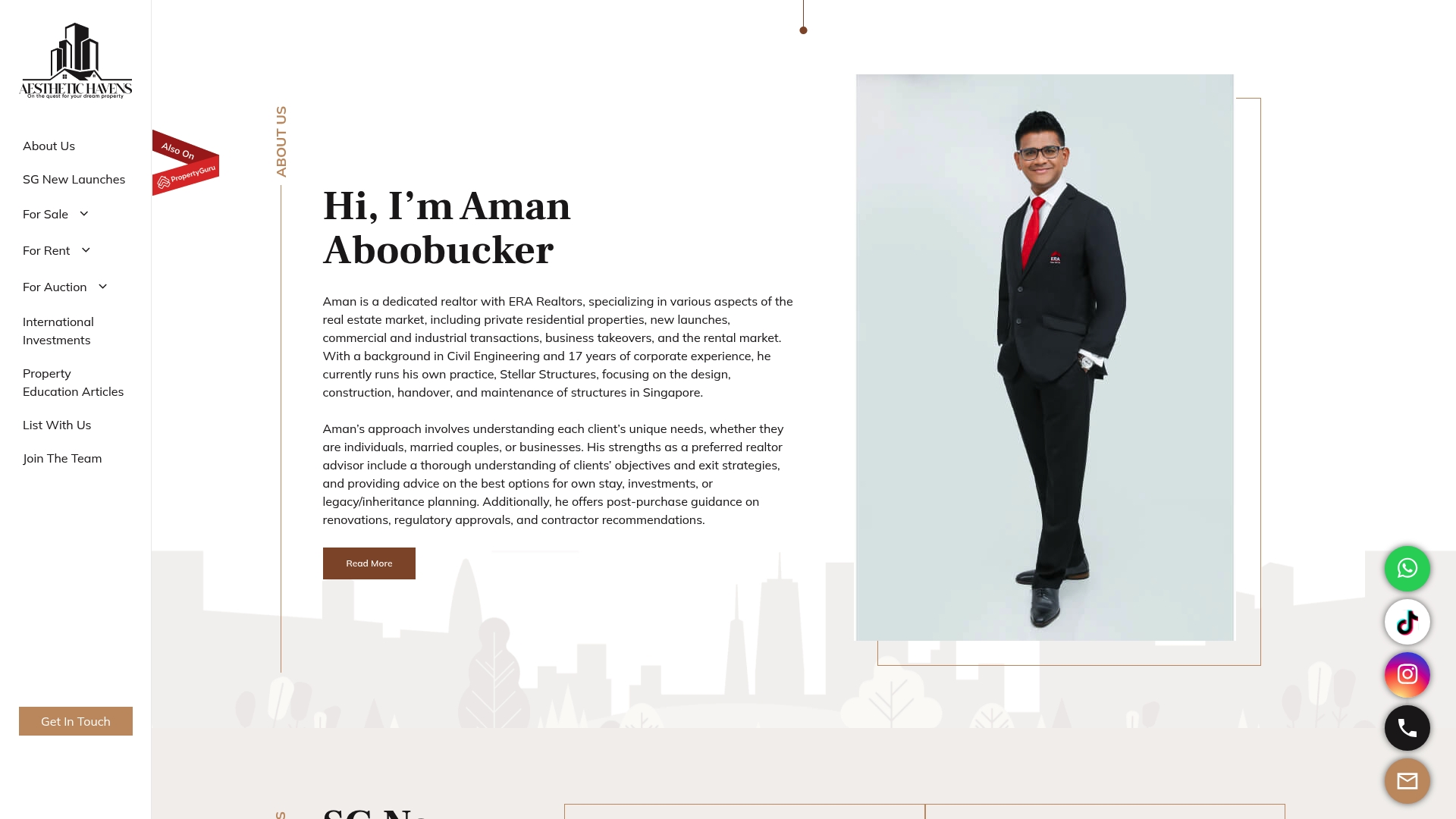
We help property owners, landlords, and business operators work through the parts of a change of use project that are easy to get wrong: confirming current zoning, running LBC scenarios before a lease is signed, preparing location and floor plans in the right format, coordinating with a Qualified Person where one is needed, lodging or filing the application through GoBusiness, and chasing down the agency clearances that come after approval.
What this typically looks like for a client:
- A pre-application review of the property’s current authorized use and Master Plan zoning.
- An LBC scenario run so you know the likely cost exposure before negotiating rent.
- Coordination with a QP and preparation of submission-ready plans.
- Filing on GoBusiness and follow-through on any multi-agency clearance requests.
If you are weighing a change of use for a property you already hold or one you are considering buying, our real estate consultancy team can walk through your specific zoning and LBC exposure before you sign anything.
FAQ
Where do you apply for a change of use in Singapore?
Applications go through GoBusiness Singapore, which routes your submission to URA and, where relevant, to agencies like SCDF or NEA. Check URA SPACE first to confirm your property’s current zoning and authorized use before you file.
Can you apply for a change of use yourself?
Yes, owners and tenants with the owner’s written consent can apply directly, and Qualified Persons or appointed agents can also file on an applicant’s behalf. The right route, lodgment or formal application, depends on whether your proposed use is on URA’s pre-identified list.
How do I apply for a change of use through URA?
Start by checking zoning on URA SPACE, then submit through GoBusiness Singapore with a location plan, a scaled floor plan, and the owner’s written consent. Formal applications are typically processed within 10 working days, while lodgment applications that meet the scheme’s conditions are approved instantly.
How do I change the use of a commercial property?
The process depends on whether your intended use qualifies for the Change of Use Lodgment scheme or needs a formal application. Either way, confirm zoning, gather your location and floor plans, secure owner consent, and avoid signing a lease or starting renovations until approval is granted.
What is a Land Betterment Charge and when does it apply?
A Land Betterment Charge is a fee on the increase in land value that results from a change or intensification of use, assessed separately from URA’s planning approval. Running SLA’s LBC Estimator on OneMap early helps you budget for this cost before committing to a lease or purchase.
Sources
- Changing the Use of Your Property | Urban Redevelopment Authority (URA)
- Demystifying the Land Betterment Charge (LBC) | Singapore Land Authority (SLA)
- Application process for change in use of HDB shop or office | HDB
Recommended
- Enterprise One Singapore: Ultimate 2026 Industrial Property Guide
- Singapore commercial real estate: Market guide for smart investors
- The URA Master Plan 2025: Your Ultimate Guide to Singapore’s Future Property Hotspots and Value Growth
- Fortune Centre New Launch Singapore: 2026 Commercial Investment Guide


