

Introduction
Choosing between a dual key condo and buying two separate units is one of the most consequential decisions a Singapore property investor will face-especially under the current Additional Buyer’s Stamp Duty (ABSD) regime. Both strategies promise rental income and capital growth, but the mechanics of how each delivers ROI differ sharply once you account for stamp duty, financing, cash flow, and exit liquidity.
This article focuses exclusively on Singapore’s private residential market-spanning CCR, RCR, and OCR zones-using data and price assumptions drawn from the 2015–2026 period. We cover ABSD and BSD implications, realistic rental yields, financing structures, and exit strategies for each approach. This is not a lifestyle comparison or an HDB upgrader guide; it is a data driven, investor-oriented analysis of which asset plan builds more wealth under which conditions.
The short answer: Dual key units offer stronger cash-on-cash returns in the early years when ABSD on a second property is high and rental demand for both the main unit and sub unit is robust. Two separate units, however, generally win on long-term capital appreciation, portfolio flexibility, and exit liquidity-particularly in prime or growth locations where standard layouts attract deeper buyer pools.
Here is what you will take away from this article:
-
How stamp duty ABSD rules create a meaningful cost gap between dual key and two standalone condos
-
Worked ROI examples using realistic 2024–2026 pricing and rent assumptions
-
When a dual key layout optimises yield versus when two separate properties build superior long-term wealth
-
A practical decision framework you can apply to your own portfolio
-
When it makes sense to seek professional portfolio advisory from AESTHETIC HAVENS
Throughout the article, we include comparison tables and suggest visual aids-floorplan diagrams and bar charts-to make the numbers easier to absorb.
Understanding the Two Asset Structures
Before comparing ROI, investors must clearly distinguish a dual key condo unit held under one strata title from owning two fully separate units with distinct titles. This structural difference drives everything downstream: taxes, financing capacity, rental strategy, and your eventual exit plan.
What Is a Dual Key Condo in Singapore?
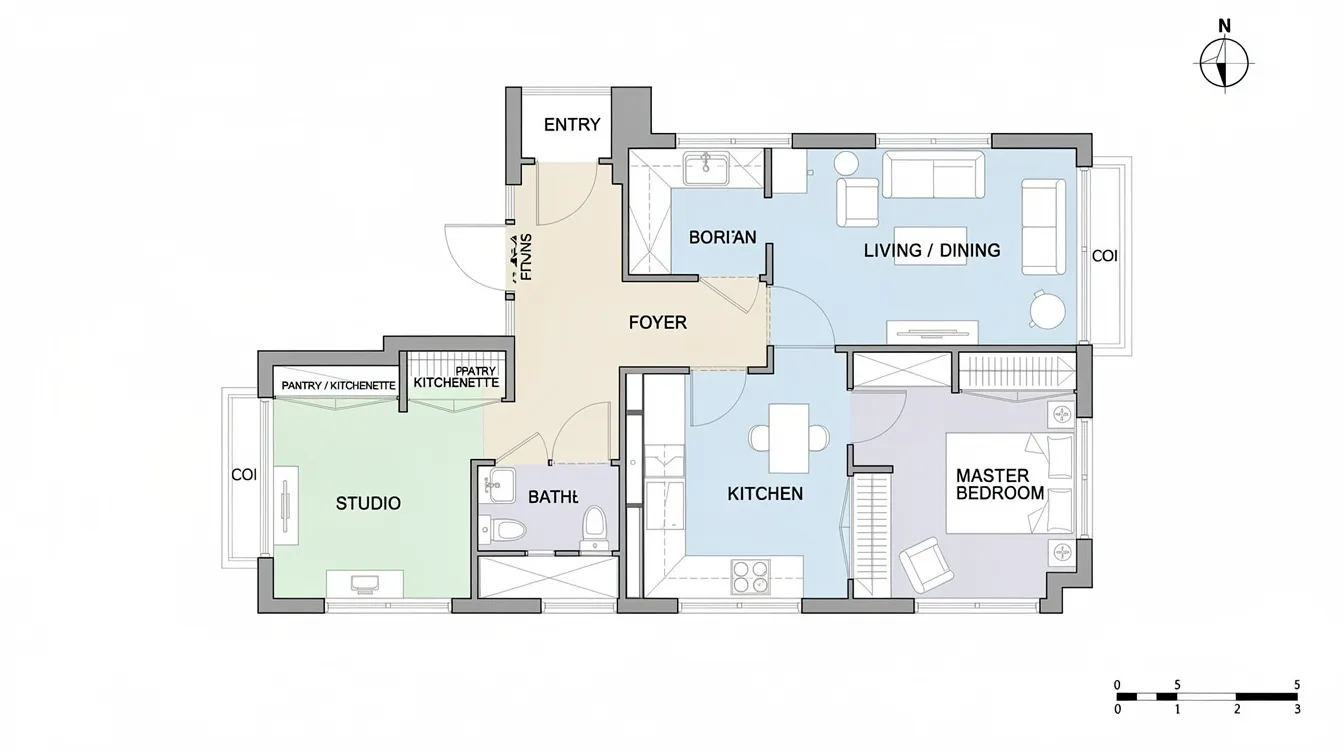
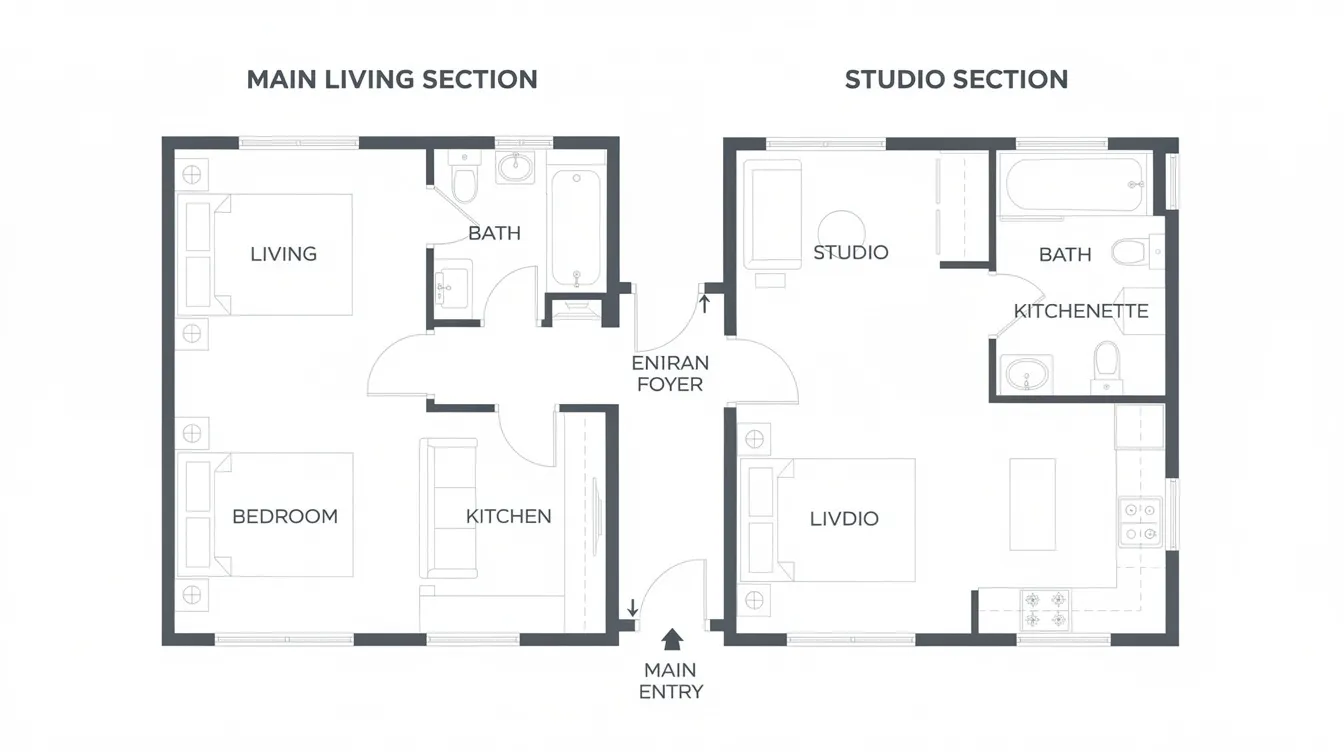
A dual key unit consists of two separately accessible living spaces-typically a larger main unit (2- or 3-bedroom) and a smaller sub unit (studio or 1-bedroom)-sold as a single property under one title. The two sections share a common foyer but have separate entrances, kitchens, and bathrooms, enabling each to function as its own space. Because a dual key condo is registered as one strata title, it counts as one property for ABSD purposes. This is the single most important structural distinction for investors.
Dual key units typically range from 900 to 2,000 sqft. Common configurations include 2-bedroom plus studio or 3-bedroom plus 1-bedroom, with the sub unit often having limited cooking facilities and smaller space. Projects launched after 2012 in OCR and RCR locations-such as Treasure at Tampines, Parc Clematis, Piccadilly Grand, and Enchante-have increasingly featured dual key layouts aimed at multigenerational families and property investors looking to live in one section and rent out the other.
Regulatory context matters: URA enforces a minimum 3-month lease on private residential rentals, meaning short-term stays are not permitted in either section. The internal separation does not create a new legal unit-you cannot split the title later or sell the sub unit independently.
This unique layout is what makes the dual key condo attractive from a stamp duty and rental income perspective, as we will quantify in the sections ahead.
What Does “Buying Two Separate Units” Mean in Practice?
Buying two separate units means acquiring two distinct strata titles-each with its own legal ownership, mortgage, strata maintenance contract, and property tax assessment. The units may sit within the same development or in entirely different projects across different regions.
Typical investor patterns with two separate properties include:
-
Owner-occupy one unit for own stay and rent out the second unit as a pure investment
-
Rent out both units across different tenant segments or locations
-
Pair a CCR capital-growth unit with an OCR yield-focused unit for portfolio balance
Critically, buying two separate units involves two distinct legal titles and transactions. Under post-April 2023 ABSD rules, a Singapore Citizen purchasing a second property pays 20% ABSD on the full purchase price of that second title, while Permanent Residents face 30% on a second property and foreigners face 60% on any residential purchase. This cost is unavoidable when two titles are involved.
Understanding these structural differences sets up a fair comparison of taxes, cash flow, and ROI-which is exactly where we turn next.
Where ROI Really Comes From in Residential Property
Once structures are clear, investors need to break ROI into its components rather than fixating on headline rental yields or brochure projections. The total return from a property investment is the sum of several moving parts, and the relative weight of each shifts depending on whether you hold a dual key or two separate properties.
Components of ROI for Singapore Condo Investors
ROI for residential property in Singapore is driven by four main components:
-
Net rental yield: Gross rent minus maintenance (MCST), property tax, vacancy costs, income tax on rental profit, and landlord expenses like insurance and repairs
-
Capital appreciation: The difference between your exit price and entry price, including the impact of any PSF premium you paid at purchase
-
Transaction costs and taxes: BSD, ABSD, legal fees, and agent commissions at both entry and exit
-
Financing effects: Leverage magnifies returns (and losses); the mortgage interest rate, loan-to-value (LTV) ratio, and TDSR limits determine how much of the property’s return you actually capture as cash-on-cash ROI
Each of these carries different risk profiles. Rental income is relatively stable but subject to vacancy and tenant quality. Capital appreciation is less predictable and depends on location, market cycle, and buyer demand at your exit point. Transaction costs are fixed and front-loaded, meaning they weigh more heavily on shorter holding periods. Policy changes-like the ABSD increases in 2018, 2021, and 2023-can materially alter the economics mid-hold.
How Structure Affects ROI: Dual Key vs Two Titles
Having one title versus two changes every component of the ROI equation:
Stamp duties at purchase: A dual key condo counts as one property, so a buyer with no existing private residential property pays zero ABSD. Two separate units trigger ABSD on the second title-currently 20% for Singapore Citizens, 30% for PRs, and 60% for foreigners. This alone can represent a six-figure cost difference.
Financing capacity: Dual key units require only one mortgage. Two titles require two separate loans, two sets of legal fees, and more equity upfront because LTV limits tighten on subsequent property loans. However, rental income from the dual key’s sub unit can improve TDSR calculations, potentially supporting a larger loan quantum on a single property.
Exit flexibility: With two separate properties, owners can liquidate one property while retaining the other-useful for rebalancing, de-leveraging, or responding to life changes. A dual key unit is all-or-nothing at exit; you cannot sell the studio independently.
Dual key units often trade at a PSF premium-typically 10-20% above regular units in the same development-but consolidate taxes and some operating costs under a single title. Two units may enjoy broader buyer demand at resale and more liquid secondary markets. Transaction costs for dual-key condos are generally lower since they involve one legal transaction.
The next section quantifies these differences with concrete numbers and side-by-side comparisons.
Stamp Duty and Upfront Cost Comparison
In Singapore’s high-ABSD environment, stamp duty is often the single biggest differentiator between the two strategies. The figures below use post-April 2023 ABSD rates and realistic 2024–2025 price points to illustrate the gap.
Scenario 1: Singapore Citizen Upgrading with One Existing Home
Assume a Singapore Citizen couple currently owning an HDB (or selling within 6 months of their new purchase) and planning a property investment purchase in 2025.
Option A – Dual key condo: Buy a S$1.8M dual key unit in OCR (~1,000–1,100 square foot at approximately S$1,600–1,700 psf). This counts as the buyer’s first private residential property. No ABSD is triggered. BSD applies at standard tiered rates on S$1.8M.
Option B – Two separate units: Buy two S$900k 1-bedroom units in OCR/City Fringe (~500–550 sqft each at S$1,900–2,000 psf). The first unit incurs no ABSD. The second unit triggers 20% ABSD on the full S$900k = S$180,000 in additional stamp duty.
|
Cost Item |
Dual Key (S$1.8M, 1 title) |
Two Units (S$900k × 2, 2 titles) |
|---|---|---|
|
BSD |
~S$49,600 |
~S$24,600 × 2 = ~S$49,200 |
|
ABSD |
S$0 |
S$0 (1st) + S$180,000 (2nd) = S$180,000 |
|
Legal fees (est.) |
~S$3,000 |
~S$3,000 × 2 = ~S$6,000 |
|
Total upfront tax & fees |
~S$52,600 |
~S$235,200 |
|
Difference |
– |
+S$182,600 more |
The initial cost of purchase for dual-key condos is often lower than for two separate units, and this scenario shows why: dual key units avoid Additional Buyer’s Stamp Duty on the rental portion because the entire property sits under a single title.
Scenario 2: PR or Foreign Investor with No Existing Property
Assume a Permanent Resident buying for investment only with no current residential property.
Option A: S$2.0M dual key condo in RCR (~1,200 sqft). As a PR’s first residential property, ABSD is 5%.
Option B: Two S$1.0M compact units in RCR/OCR. First unit: 5% ABSD. Second unit: 30% ABSD for a PR’s second property.
|
Cost Item |
Dual Key (S$2.0M, 1 title) |
Two Units (S$1.0M × 2, 2 titles) |
|---|---|---|
|
BSD |
~S$59,600 |
~S$24,600 × 2 = ~S$49,200 |
|
ABSD |
5% × S$2.0M = S$100,000 |
5% × S$1.0M + 30% × S$1.0M = S$350,000 |
|
Total stamp duties |
~S$159,600 |
~S$399,200 |
|
Difference |
– |
+S$239,600 more |
For foreigners, the gap is even more dramatic: 60% ABSD applies to every residential purchase, and two titles means two properties attracting the surcharge independently.
Lower stamp duty is the headline win for dual key, but ROI ultimately depends on ongoing cash flow and capital growth-which is what we examine next.
Rental Yield and Cash Flow: Real-World Math
Stamp duties are paid once, but rental income and expenses repeat every month. Sustainable cash flow is what determines whether a property investment strengthens or strains your finances over a 10-year hold.
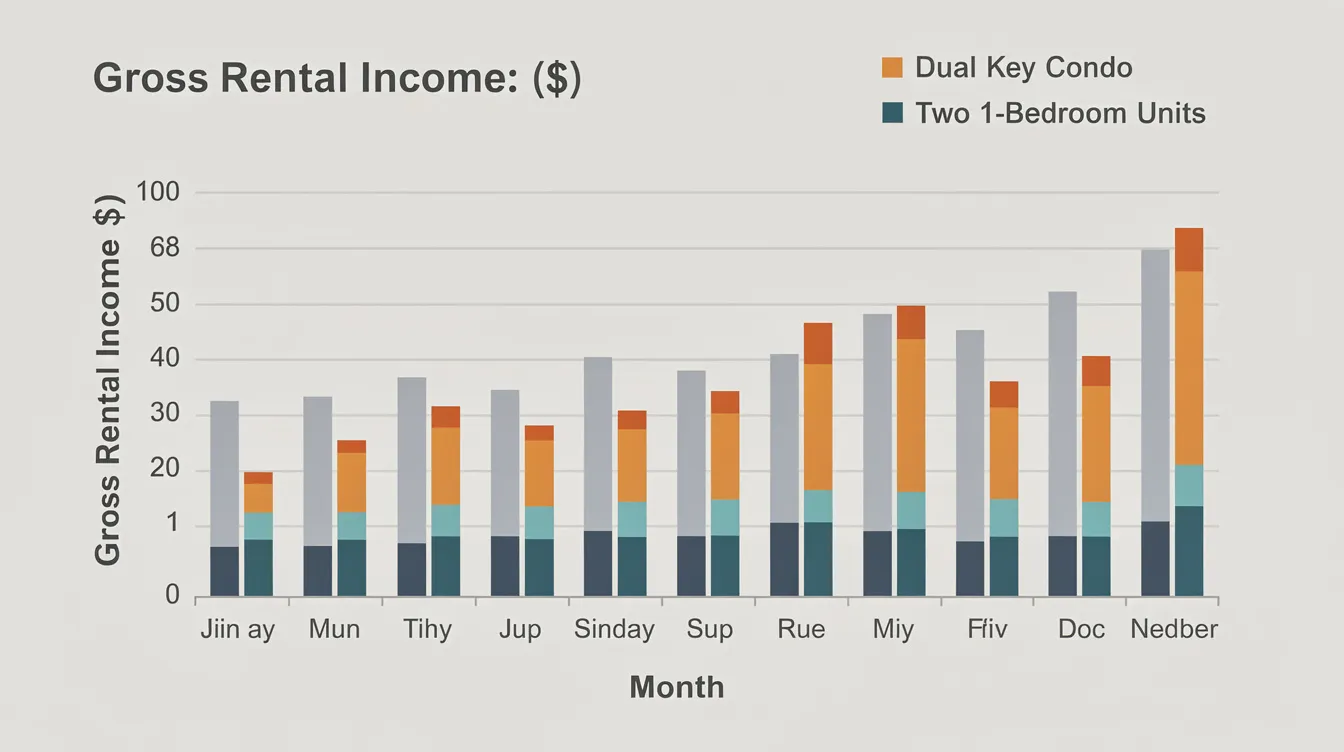
Expected Rents and Vacancies: Dual Key vs Two Units
Using market data from 2024–2026, here are realistic monthly rent estimates for comparable OCR/RCR locations:
Dual key unit (~1,100–1,200 sqft combined):
-
Larger main unit (2- or 3-bedroom): S$3,500–4,000/month
-
Studio unit (sub unit): S$1,800–2,200/month
-
Combined gross rent: approximately S$5,300–6,200/month
Dual-key condos often yield higher rental income due to dual-income potential. Dual-key units can fetch higher combined rent than conventional units because two separate tenancies in a single property effectively segment the living space for different tenant profiles.
Two separate 1-bedroom units (~500–600 sqft each):
-
Each unit: S$2,600–3,000/month
-
Combined gross rent: approximately S$5,200–6,000/month
Vacancy assumptions significantly affect net returns. For dual key, assume the studio sub unit may sit vacant for 1 month per year due to its smaller, less mainstream appeal; the main section is likely more stable. Sub-unit vacancy leads to pure cost for the main unit owner during that period. For two separate units, each may experience 1–2 months of vacancy independently, but because they are in different locations or developments, the probability of simultaneous vacancy is lower-providing some diversification of tenant risk.
Two separate properties may provide better tenant targeting and liquidity at exit because each unit appeals to a distinct demographic. The added flexibility of two independent tenancy contracts can reduce income volatility if one tenant leaves.
Operating Costs and Net Yield Comparison
To arrive at net rental yield, deduct these recurring costs from gross rent:
-
MCST maintenance fees: Higher absolute cost for a larger dual key unit (one bill, but the area is bigger); two smaller units each pay their own strata fees
-
Property tax: Non-owner-occupied rates apply to investment properties; IRAS progressive bands mean larger assessed annual values attract higher marginal rates
-
Income tax: Net rental profit is taxable under Singapore income tax; allowable deductions include mortgage interest, property tax, maintenance, fire insurance, and repairs
-
Repairs, insurance, and capital items: Air-conditioning servicing, appliance replacement, landlord insurance; managing a dual-key condo involves simpler maintenance due to shared expenses under one MCST, whereas two units duplicate these costs
-
Agent and management fees: Commissions for tenant sourcing; dual key may require finding two tenants but under one property management relationship
|
Item |
Dual Key (S$1.8M) |
Two Units (S$900k × 2) |
|---|---|---|
|
Gross monthly rent |
~S$5,800 |
~S$5,600 |
|
MCST / maintenance |
~S$450/month |
~S$300 × 2 = ~S$600/month |
|
Property tax (est. annual) |
~S$5,500/year |
~S$2,500 × 2 = ~S$5,000/year |
|
Vacancy loss (1 month/year) |
~S$1,900/year (studio) |
~S$2,800/year (one unit) |
|
Mortgage (75% LTV, 3.5%, 25yr) |
~S$6,050/month |
~S$3,025 × 2 = ~S$6,050/month |
|
Approx. net yield (on total price) |
~3.2–3.5% |
~2.8–3.1% |
|
Monthly cash surplus/deficit |
Modest positive or breakeven |
Slight deficit to breakeven |
Investors can maximize rental yield with only one mortgage on dual-key units, and rental income from the sub-unit can improve TDSR calculations, making the financing structure more manageable. However, the higher PSF premium for dual key (typically 10–20% over regular units) means you are paying more per square foot for the privilege of dual income-and the studio rental may not fully compensate for that premium in all markets.
The real question is whether ongoing cash flow advantages are enough to offset potentially slower capital growth and limited exit liquidity-which is exactly what the next section addresses.
Capital Growth, Flexibility, and Exit Strategy
Many Singapore investors ultimately depend on capital gains for the bulk of their wealth creation. Structure, liquidity, and the depth of your buyer pool at exit matter enormously here.
Historical Performance Patterns: Dual Key vs Regular Units
Observed trends from projects launched between 2012 and 2024 reveal a consistent pattern:
-
Dual key units typically command a higher purchase price per square foot at launch, but this premium often flattens or erodes in the resale market. At The Orie, for example, dual key units (~1,130 sqft) transacted at an average of S$2.866M versus S$2.806M for non-dual-key 3-bedrooms (~1,044 sqft)-higher in absolute terms but actually lower on a PSF basis due to larger area. This illustrates how dual key PSF dynamics can be misleading.
-
Dual-key condos may have slower capital appreciation than standard units due to niche appeal. Standard 1–2 bedroom units in well-located projects attract far deeper buyer pools and show more predictable, and often stronger, PSF growth over 5–10 year horizons. Standard units generally appeal to a broader buyer pool compared to dual-key configurations.
-
Regular units generally outperform dual-key units in resale ROI. The resale market for dual-key units is limited by buyer preferences-dual-key units have a narrower buyer pool than traditional units, and data suggests dual-key units can take 6 to 12 months longer to sell.
-
Smaller dual key formats (2-bed + studio) tend to perform better than large 4-bedroom dual key units, which are extremely niche and harder to exit without discounting.
Two separate units allow staged exits-selling one to de-leverage while keeping exposure through the other. This is impossible with a dual key condo, where your exit plan is binary: sell the entire property or hold everything.
Portfolio Flexibility and Risk Management
Owning one title versus two fundamentally changes how you manage portfolio risk:
Rebalancing ability: With two separate properties, you can sell your OCR investment while redeploying capital into an industrial property, a commercial shophouse, or a new launch in a different growth corridor. AESTHETIC HAVENS regularly advises clients on this kind of cross-asset rebalancing.
Mortgage and TDSR management: Two loans can be restructured independently-you can aggressively pay down one while maintaining leverage on the other. A dual key condo is a single mortgage commitment, offering less granularity in debt management. However, the simplicity of one loan also reduces administrative burden and financial strain from juggling multiple obligations.
Family planning and decoupling: Gifting or decoupling strategies (transferring ownership between spouses to reset ABSD eligibility) work differently with one title versus two. Two titles offer more tactical options for families with adult children entering the property market or elderly parents needing proximity to caregivers.
Concentration risk: A single large dual key unit places all your exposure in one project, one location, one micro-market. Two separate units can diversify market risk by owning properties in different locations-different MRT corridors, different tenant demographics, different supply pipelines.
Flexibility and growth potential often tip the ROI scales toward two units for investors with longer horizons and higher risk tolerance. But for those constrained by ABSD or seeking the convenience of a live-and-rent arrangement while maintaining privacy between household members, dual key remains compelling.
Putting It Together: Side-by-Side ROI and Strategy Comparison
The following comparison helps readers see, at a glance, when a dual key condo versus two separate units is more suitable based on their objectives, constraints, and risk appetite.
Quantitative Comparison Table
|
Criterion |
Dual Key Condo (Single Title) |
Two Separate Units (Two Titles) |
|---|---|---|
|
Total BSD + ABSD (SC, 1st investment) |
~S$52,600 (on S$1.8M) |
~S$235,200 (on S$900k × 2) |
|
Estimated net rental yield (Yr 1–3) |
~3.2–3.5% |
~2.8–3.1% |
|
10-year appreciation (medium scenario) |
Moderate; niche buyer pool constrains upside |
Higher; standard layouts attract mass market |
|
Liquidity at exit |
Narrower buyer pool; 6–12 months longer to sell |
Broader demand; faster transaction, sell units independently |
|
Diversification potential |
Low (one project, one location) |
High (different locations, segments, timing) |
|
Management complexity |
Lower (one MCST, one loan, shared expenses) |
Higher (two MCSTs, two loans, two tenancies) |
|
Financing efficiency |
One mortgage, better LTV on first property |
Two mortgages, tighter LTV on second loan |
Exact numbers depend on the specific projects selected, the location, and the buyer’s ABSD profile-which is where professional advisory matters. The table above uses the SC upgrader scenario from earlier sections, but PRs and foreigners will see even larger stamp duty gaps.
Qualitative Trade-Offs: Who Should Choose Which?
A dual key condo may be preferable for:
-
Investors heavily constrained by ABSD, especially those already owning one home who want to avoid the cost of a second property surcharge
-
Families who want a live-and-rent setup-occupying the main section for own stay while generating rental income from the studio-without sacrificing personal space or maintaining privacy
-
Buyers seeking simpler management under one MCST and one loan structure, with lower administrative burden
-
Multigenerational families housing elderly parents or adult children in proximity while each household retains its own space with separate entrances
Two separate units may be preferable for:
-
Investors prioritising capital growth and added flexibility over stamp duty savings, particularly those targeting a 10-year-plus hold
-
Those with higher budgets who can absorb ABSD and want to diversify locations, product types, or even asset classes
-
Business owners planning to adjust their property exposure over time as their company grows or exits-for example, combining a residential hold with an industrial asset
-
Investors who want the ability to sell one unit while retaining the other, creating a staged exit plan that responds to market cycles
The next section addresses the most common mistakes investors make when weighing these options.
Common Mistakes When Comparing Dual Key vs Two Units (and How to Avoid Them)
Many investors look only at headline ABSD savings or developer brochure projections, which can lead to sub-optimal decisions. Here are the pitfalls to avoid.
Ignoring Realistic Vacancy and Tenant Quality
The mistake: Assuming 100% occupancy for both the main section and studio, or expecting that a compact sub unit will always attract high-quality tenants willing to pay market rent.
The solution: Model at least 1–2 months of vacancy per year for each tenancy. The sub-unit in dual-key layouts is often smaller and less appealing to mainstream tenants; oversupply of smaller units in certain OCR locations can compress rents further. Use conservative rental assumptions-AESTHETIC HAVENS can help benchmark realistic figures for specific projects. Remember that when a tenant leaves the studio, it represents pure cost for the main unit owner until it is re-let.
Overvaluing Stamp Duty Savings vs Long-Term Growth
The mistake: Choosing to buy a dual key unit solely for ABSD savings, even in projects with weak fundamentals-poor transport access, limited tenant demand, ageing stock, or oversupplied micro-markets.
The solution: Insist on strong fundamentals first. Proximity to MRT stations, established amenities, quality schools, and robust tenant pools should drive your shortlist. Then weigh tax savings as an added benefit-not the primary reason. A S$180,000 ABSD saving is meaningless if the dual key layout appreciates S$200,000 less than a well-located standard unit over a decade.
Underestimating Exit and Liquidity Risk
The mistake: Assuming a dual key will always be easy to sell because of its flexibility, without checking historic transaction volumes and days-on-market for that specific project.
The solution: Review recent resale data for dual key layouts within the same development. Standard units generally appeal to a broader buyer pool, and dual key units can take 6 to 12 months longer to sell. Consider who your likely buyer will be in 5–10 years-if the project is saturated with similar dual key stock, your exit pool shrinks further. Investing in two separate units typically offers greater exit liquidity than a dual-key condo for this reason.
Not Stress-Testing Interest Rates and TDSR
The mistake: Stretching TDSR to acquire two units or a large dual key at current rates without testing higher-rate scenarios, creating potential financial strain if rates rise 1–2%.
The solution: Run stress tests at 1–2% above your current mortgage rate. For two units, ensure you can sustain both loans even if one unit is vacant for an extended period. For dual key, ensure you are not over-reliant on the studio rent to service the mortgage. Prudent planning avoids forced sales in adverse markets-AESTHETIC HAVENS can run these stress scenarios as part of a portfolio review.
Conclusion and Next Steps
Dual key condos deliver better immediate cash flow and meaningfully lower stamp duty when ABSD is a major constraint and rental demand for both the main unit and sub unit is stable. The benefits are clearest for first-time private property buyers, multigenerational families, and investors who value management simplicity under a single title. However, two separate units generally offer superior flexibility, diversification, and capital growth potential over a 10-year horizon-especially when standard layouts in good locations attract deeper buyer pools and more predictable appreciation.
Neither strategy is universally superior. The right choice depends on your ABSD position, capital availability, risk tolerance, hold period, and whether your primary goal is income today or wealth accumulation over time.
Your next steps:
-
Clarify your primary goal: Is it rental income now, capital growth over a decade, or flexibility for future portfolio moves?
-
Map your ABSD position: List your current properties, ownership structure (including spouse and co-owners), and determine which ABSD tier applies to your next purchase
-
Shortlist 3–5 specific projects: Include both dual key and non-dual-key options; pull recent transaction and rental data from URA REALIS or EdgeProp
-
Build a side-by-side cash flow and ROI model: Use the framework in this article to compare net yield, stamp duty impact, and projected appreciation for each shortlisted option
-
Book a portfolio review with AESTHETIC HAVENS: Test your numbers with a professional who can also map potential diversification into industrial or commercial assets for a blended portfolio strategy
Investors considering business-use real estate-such as purchasing an industrial unit for their company while holding residential assets for personal wealth-can also benefit from integrated advisory that accounts for how each asset class interacts with your overall financial position.
Additional Resources and FAQs
This section offers concise answers to specific questions that frequently arise when investors compare dual key vs two separate units.
Quick Reference Tools and Guides
Useful resources for your analysis:
-
Stamp duty calculator: Compare total BSD + ABSD for a single dual key unit versus two units at various price points and buyer profiles (SC, PR, foreigner)
-
Dual key project evaluation checklist: Assess layout efficiency, tenant profile suitability, PSF premium relative to regular units in the same development, and historical resale volumes
-
Two-unit strategy checklist: Evaluate diversification benefits, management capacity, ABSD impact, and exit sequencing options
AESTHETIC HAVENS regularly publishes updated analyses of residential and industrial asset strategies to help investors stay informed.
FAQs
Is a dual key condo always exempt from ABSD on the second portion? ABSD is charged on the entire property as one residential interest based on how many properties you already own. A dual key condo is sold as a single property under one title, so it does not create a second title or trigger additional ABSD. However, if you already own one property, the dual key counts as your second property and ABSD applies to the full purchase price-just as it would for any other unit.
Do banks treat dual key units differently for loan approval? Banks value dual key units as a single property and apply standard LTV and TDSR rules. Rental income from the sub unit can improve TDSR calculations if supported by a tenancy agreement, but not all banks apply the same haircut to projected rental. Confirm with your mortgage advisor how much of the studio rent will be recognised for servicing purposes.
Can I convert a dual key unit back into a single large apartment? Technically possible in some cases, but it requires MCST approval, may need URA endorsement if structural changes are involved, and will affect the unit’s marketability. Removing the dual key layout eliminates the rental flexibility premium that attracted buyers to the format. The cost and complexity of conversion should be weighed against expected resale gains-often, it does not make financial sense.
For a 10-year horizon, which usually wins on ROI? For most investors with adequate capital, two separate units in well-chosen locations tend to edge ahead over a decade due to stronger capital appreciation, deeper resale demand, and the ability to execute staged exits. However, if ABSD savings are substantial and the dual key project is in a high-demand rental area, the yield advantage can partially close the gap. Case-by-case analysis is essential.
How does this decision interact with investing in industrial or commercial property? Industrial and commercial properties carry different stamp duty structures-notably, ABSD does not apply to non-residential assets. An investor who holds a dual key condo for residential income could complement it with an industrial unit for business use, creating a blended portfolio with diversified risk and income streams. AESTHETIC HAVENS can map these cross-asset strategies to optimise total portfolio ROI.

