


A Singapore luxury condominium earns that label through scarcity, not marketing copy: fewer than 200 total units, freehold or exceptionally long tenure, and private features like dedicated elevator lobbies or plunge pools that a standard high-rise never offers. Most projects calling themselves “luxury” are simply expensive. The real ones are hard to buy into precisely because so few units exist.
If you’re building a shortlist this year, four project types deserve your attention: ultra-collectible low-unit towers with sub-100 unit counts, branded residences tied to international hospitality names, waterfront or beachfront trophy addresses, and centrally located architectural icons with strong developer pedigree. Review these before anything else:
- Le Nouvel Ardmore, Park Nova, or Boulevard 88 for the ultra-low-unit freehold archetype
- The Ritz-Carlton Residences (Cairnhill) or a comparable branded tower for hospitality-grade service
- W Residences or another Marina/Bay-facing development for waterfront trophy positioning
- Aurea at Golden Mile or Wallich Residences for a centrally located, architecturally distinct new build
Key Takeaways
A genuine luxury condominium is defined by low unit count and secure tenure first, brand and finishes second, and buyers who skip that order routinely overpay.
| Point | Details |
|---|---|
| Unit count is the real filter | Projects under 200 units, ideally under 100, tend to hold value better than larger “luxury-branded” towers. |
| Freehold carries a structural premium | Leasehold luxury can still work for irreplaceable locations, but factor in lease decay before you buy. |
| Verify, don’t trust the brochure | Confirm lease start dates, unit counts, and developer history against title documents and completed prior projects. |
| Budget beyond the psf figure | Stamp duties, maintenance fees, sinking funds, and renovation costs add materially to the headline price. |
| Get an independent second opinion | Com offers tailored shortlists and valuation checks so buyers compare projects like Aurea or The Marq against real resale data before committing. |
This article is general information, not a substitute for advice from a qualified financial advisor. Consult a qualified financial professional about your own circumstances before acting on anything here.
Table of Contents
- What Actually Makes a Condominium “Luxury” in Singapore
- Which Luxury Condominium Projects Should Be on Your Shortlist
- How the Top Luxury Condos Compare on the Specs That Matter
- Freehold vs Leasehold in the Luxury Segment
- How to Evaluate a Luxury Condo Before You Commit
- What a Luxury Condo Purchase Actually Costs, Start to Finish
- Is the Luxury Condo Market Still a Good Bet in 2026
- Why the Loudest Marketing Rarely Points to the Best Buy
- How Aesthetic Havens Helps You Buy the Right Luxury Condo
- Sources
What Actually Makes a Condominium “Luxury” in Singapore
Total unit count is the single most reliable filter. A development with 800 units and a marble lobby is not luxury, no matter what the brochure says. The projects that hold their value and command premium resale prices tend to sit under 200 units, and the truly collectible ones often land under 100. The Marq on Paterson Hill proves the point: only 66 residences on a large freehold site, with private lap pools and double-volume ceilings built into the unit design rather than bolted on as an amenity floor.
Tenure matters just as much as headcount. Freehold land carries a structural premium in Singapore’s luxury tier because it removes the depreciation clock that leasehold buyers eventually face. Industry analysis of what defines a genuine luxury property points to the same three markers repeatedly: low unit counts, freehold or very long leasehold, and bespoke private features such as private lift lobbies.
Beyond those fundamentals, a handful of specification details separate the genuine article from the pretenders:
- Private outdoor space attached to the unit, not shared with the floor
- Appliance and fixture tiers that go beyond a standard developer package
- Hotel or hospitality brand tie-ins that add a service layer most condos can’t match
- BCA Green Mark or equivalent sustainability certification, increasingly a baseline expectation rather than a bonus
- Smart-home integration built into the unit at handover, not retrofitted
Pro Tip: During a sales preview, ask how many units on your target floor share your lift lobby. A single-digit answer signals genuine exclusivity. A double-digit answer means you’re paying a luxury premium for a building that behaves like a standard condo once you’re past the ground floor.
Which Luxury Condominium Projects Should Be on Your Shortlist
Every project below solves a different problem for a different kind of buyer. Reviewing them side by side, rather than chasing the loudest launch marketing, is how you avoid overpaying for the wrong fit.
Wallich Residences sits atop Guoco Tower in Tanjong Pagar, part of a mixed-use integrated development with sweeping city views from the upper floors. It suits a buyer who wants CBD proximity and doesn’t mind sharing the building with office and retail components below.
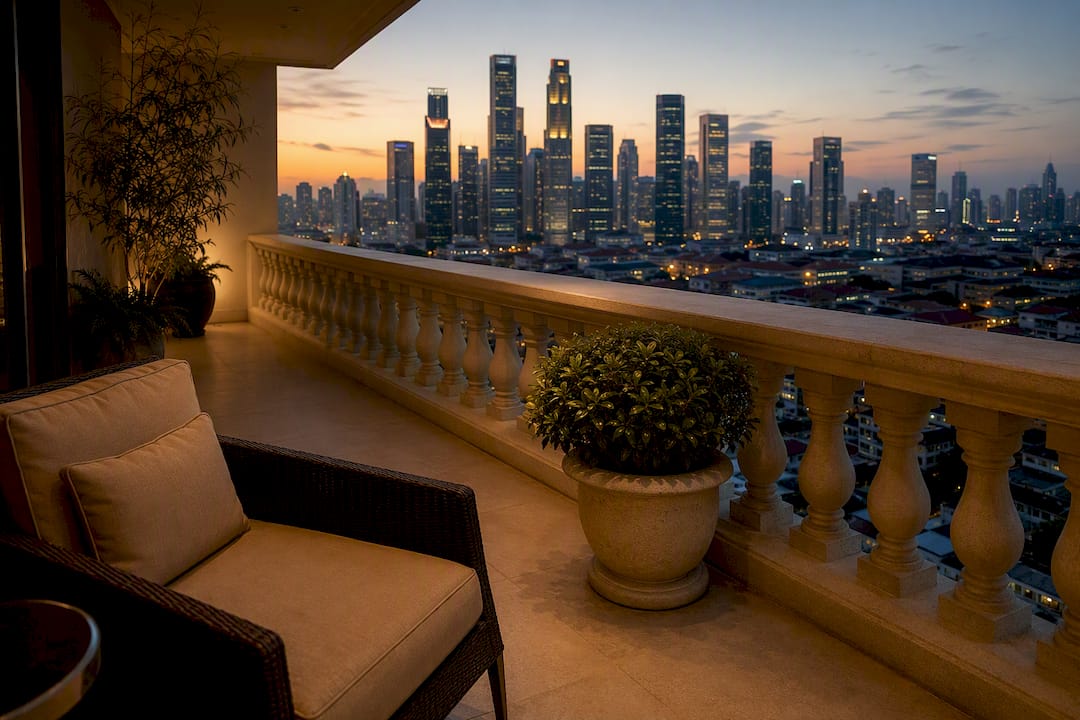
Park Nova on Tomlinson Road is a freehold, low-rise development in the Orchard/Tanglin belt, built around a small unit count and a quieter, more residential feel than towers along the main Orchard strip. It fits a buyer prioritizing privacy over sheer scale.
Le Nouvel Ardmore remains one of the most talked-about freehold trophy addresses in District 10, known for its slender tower form and low units-per-floor layout. Watch strata and maintenance fees here, which tend to run high given the building’s boutique scale.
Boulevard 88 on Orchard Boulevard pairs branded-hospitality service with a freehold Orchard Road address, appealing to buyers who want a lock-and-leave lifestyle with full concierge support.
The Ritz-Carlton Residences at Cairnhill brings a globally recognized hospitality name into the residential tier. As insights on branded residences note, that service premium comes with higher entry pricing and ongoing service charges buyers need to underwrite, not just admire.
W Residences, and comparable Marina or Bay-facing developments, target the waterfront trophy buyer chasing skyline and water views over pure land scarcity. These units suit investors betting on tourism and business-district demand rather than owner-occupiers seeking quiet.
Aurea at Golden Mile is the newest entrant worth reviewing: a downtown launch with 188 total units across 2 to 6 bedroom layouts, including large-floorplate penthouses, with launch pricing reported from roughly $2,750 psf. A closer look at Aurea’s Marina Bay view lines is worth your time if downtown positioning is the priority.
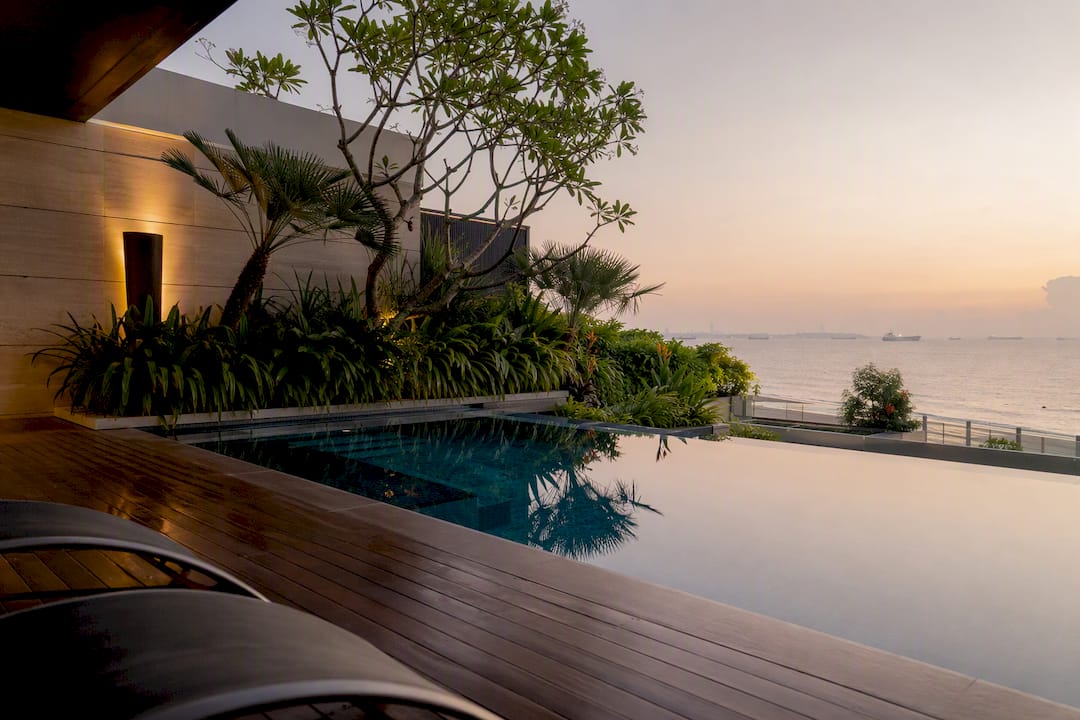
Seven Palms Sentosa Cove, for buyers drawn to resort-style scarcity, offers just 41 beachfront apartments with private pools attached to many ground and penthouse units. It’s the closest thing Singapore has to a landed-house feel inside a condominium structure.
Confirm lease start dates and TOP schedules directly with the developer before making an offer. Marketing timelines and actual handover dates can diverge by a year or more on large integrated projects.
How the Top Luxury Condos Compare on the Specs That Matter
The scarcity premium shows up most clearly at the low-unit end of this table. Editorial coverage of Singapore’s most spacious new luxury units notes that unusually large or unique layouts tend to hold rental and resale appeal longer than standard unit mixes, because there’s simply less comparable stock for a buyer to walk away to.
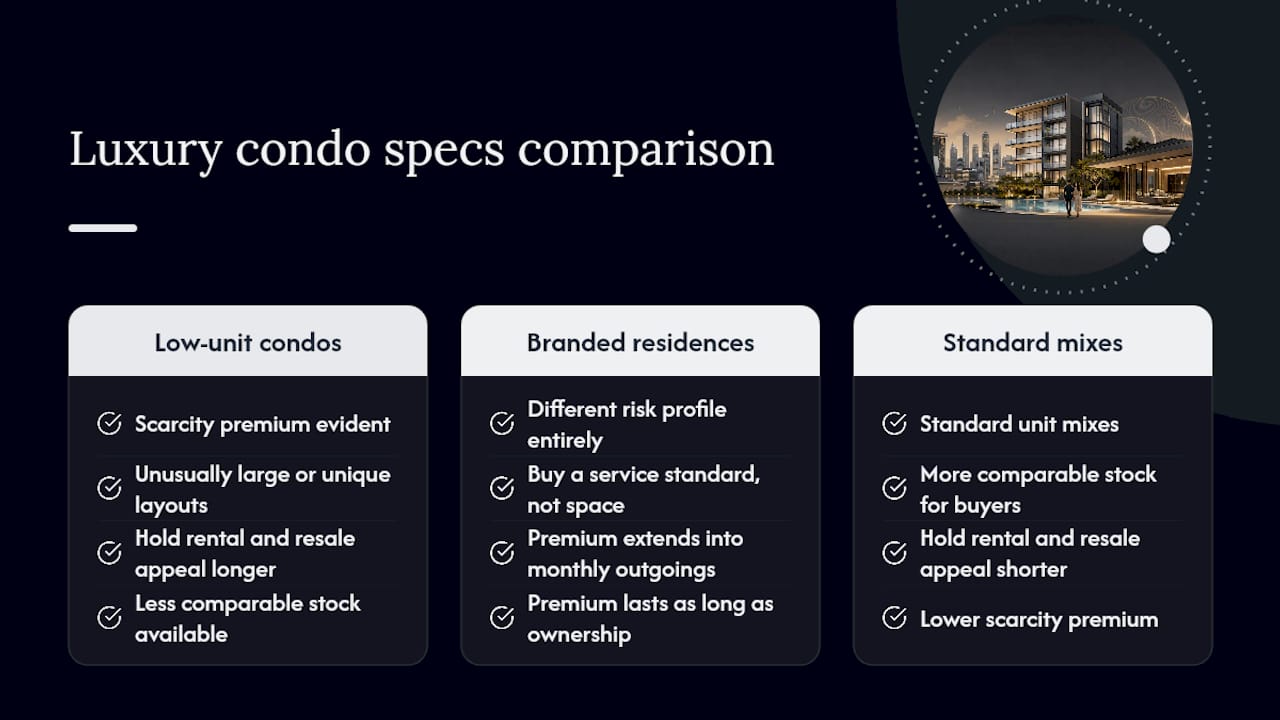
Branded residences occupy a different risk profile entirely. You’re not just buying square footage, you’re buying a service standard, and that premium extends into your monthly outgoings for as long as you own the unit.
Freehold vs Leasehold in the Luxury Segment
Freehold tenure commands a structural premium in Singapore’s luxury tier because it never resets a depreciation clock the way leasehold does. A 99-year lease that started decades ago behaves differently in valuation terms than one recently launched, even at an identical remaining lease length on paper. Buyers frequently underestimate how much residual lease length affects financing and resale liquidity down the line.
That said, leasehold luxury still makes sense in specific situations:
- The location is otherwise unreplicable (Marina Bay frontage, a business-district address)
- The developer has a strong enough brand to sustain premium resale regardless of tenure
- Your holding period is short enough that lease decay won’t materially affect your exit
- Redevelopment or en bloc potential adds a speculative upside freehold buyers don’t get
Union Square Residences illustrates the tradeoff well: 366 units on a 99-year lease start, but the project carries a BCA Green Mark Platinum rating and nine distinct layout types up to a 4,833 sqft penthouse, features that help offset the leasehold discount for buyers prioritizing sustainability credentials and layout variety over tenure alone. Reviewing tenure fundamentals before you commit will save you from comparing a freehold psf figure against a leasehold one as if they were the same asset class.
How to Evaluate a Luxury Condo Before You Commit
Run every shortlisted project through the same checklist, in this order, before you let a sales gallery walk you toward a decision:
- Confirm tenure and lease start date directly against the title document, not the marketing brochure.
- Verify developer track record across at least two completed prior projects, including how those projects have performed on resale.
- Check the actual unit count and floor plan, not the “exclusive collection” framing used in ads.
- Inspect finishes and appliance tiers in person, ideally in a completed unit rather than a show flat.
- Review strata rules and monthly maintenance fees against comparable buildings in the district.
- Ask for independent valuation comparables, not just the developer’s internal pricing rationale.
A few red flags deserve extra scrutiny: vague language around “up to” unit counts, sales staff who can’t confirm a lease start date on the spot, and marketing renders that show amenities not yet built or approved. At a viewing, ask the developer directly about defect liability terms, ask the sales agent for at least three recent resale comparables in the same building, and ask the estate manager what the sinking fund balance looks like relative to the building’s age.
Trust signals worth weighing heavily include a developer’s completed-project history, independent valuations rather than developer-supplied comparables, and photos from an actual on-site inspection rather than stock renders. A broader look at what separates genuine luxury development from marketing language is a useful cross-check before you sign anything.
What a Luxury Condo Purchase Actually Costs, Start to Finish
Budget for more than the headline psf figure. The option fee typically runs a small percentage of the purchase price, followed by a deposit schedule tied to construction milestones for new launches, or a lump exercise payment for resale units. Buyer’s stamp duty and any applicable additional stamp duty apply on top, and rates change periodically, so confirm current figures with a property tax and legal advisor rather than relying on a figure from an old brochure.
Ongoing ownership costs add up faster than most first-time luxury buyers expect:
- Monthly maintenance fees, often higher than mid-tier condos given lower unit counts sharing the same facilities
- Sinking fund contributions for long-term building upkeep
- Annual property tax, calculated on annual value
- Building and contents insurance
- Concierge or managed-service fees where a branded residence is involved
High-end fit-out and renovation budgets for luxury units commonly stretch well beyond a standard condo renovation, and buyers should plan for a realistic timeline from option exercise through TOP, handover, and move-in-ready renovation completion, often 18 to 30 months for a new launch depending on construction stage at purchase. Confirming the fee structure and workflow before you exercise an option avoids surprises mid-transaction.
Is the Luxury Condo Market Still a Good Bet in 2026
Demand from high-net-worth buyers continues to concentrate on the same narrow band of projects: low unit counts, branded service, or irreplaceable locations. Supply of genuinely ultra-exclusive units stays limited almost by definition, since developers can’t simply build more freehold land in District 9 or 10.
Branded residences and amenity-heavy developments tend to hold rental appeal better than standard luxury stock, largely because service quality and unit uniqueness both feed into longer-term tenant demand from expat executives. That said, the premium you pay for a hospitality brand name only pays off if the service standard actually gets maintained years after launch, something worth checking against the operator’s track record elsewhere, not just their marketing promise.
Two things temper the bullish case: rising service charges on branded towers, and the fact that a large chunk of “luxury” new-launch inventory still sits closer to premium mass-market than genuine scarcity.
Why the Loudest Marketing Rarely Points to the Best Buy
The projects that get the most launch-day press coverage are rarely the ones that hold value best a decade later. What tends to matter more is the boring stuff: actual unit count, the lease start date buried in the fine print, and whether the developer has a completed project you can walk through today rather than a rendering.
Conventional advice tells buyers to chase location above everything else. Location matters, but it’s incomplete advice. A phenomenal address with an oversized unit count and a leasehold clock ticking down will underperform a smaller, less flashy freehold building over a ten-year hold. If you’re prioritizing one factor first, make it exclusivity and tenure, then layer location and brand on top, not the other way around.
The biggest mistake affluent buyers make is treating a sales gallery visit as due diligence. It isn’t. It’s a controlled environment designed to sell you a feeling. Real due diligence happens with title documents, resale comparables from the same building, and a frank conversation with someone who has no commission riding on your decision.
How Aesthetic Havens Helps You Buy the Right Luxury Condo
Com built its advisory practice around exactly the gap most luxury buyers fall into: too much marketing, not enough independent verification. Where a developer’s sales team can only sell you their own project, Com’s role is to compare your shortlist against real resale data, tenure records, and developer track history before you commit capital.
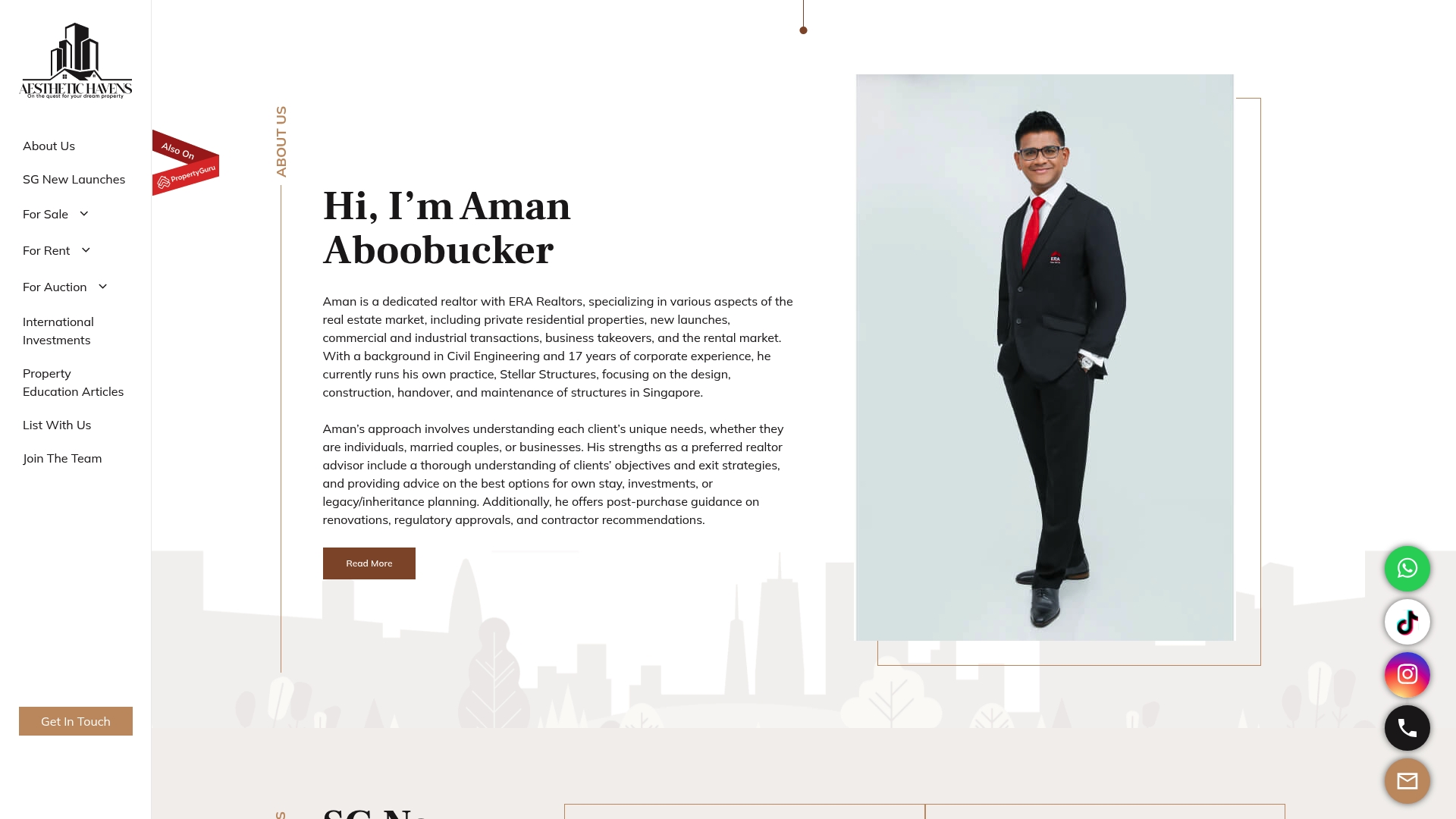
Aman, operating under ERA Realtors, works directly with affluent buyers and portfolio investors on tailored shortlists, independent valuation checks, negotiation support during option and exercise stages, and post-purchase advisory once you’re managing a completed unit. If you’re weighing a freehold trophy address against a branded residence, or trying to figure out whether Aurea’s current psf band justifies its central position, start with a private consultation to get a second opinion before your option fee is on the table.
Sources
- What defines a luxury property? | PropWise
- Aurea: New Launch Condo at Downtown Core | EdgeProp Singapore
- The Marq Luxury Condominium in Singapore by SC Global
- The Skywaters | Singapore’s Tallest World Class Integrated Development
Recommended
- Best Condo in Singapore: Top Picks for Every Lifestyle | Aesthetic Havens
- The Robertson Opus: Luxury Living Near Singapore River | Aesthetic Havens
- Singapore Luxury Real Estate 2025: The Ultimate HNWI Guide to Market Trends, Desired Features & Premier Developments | Aesthetic Havens
- Condo for Rent in Singapore: Where to Find the Best Deals | Aesthetic Havens


