

Introduction
City fringe lifestyle retail strata in Singapore delivers gross yields of 3.2% to 5.0% in 2026, outperforming most CBD core retail investments on a risk-adjusted basis while requiring less than half the capital per square foot. For investors seeking commercial properties without the Additional Buyer’s Stamp Duty applied to residential properties, small-format strata units in Districts 7, 8, and 9 sit at the intersection of favorable financing, constrained supply, and accelerating tenant demand.
This analysis covers the investment case for lifestyle retail strata in city fringe locations, examining market data from Fortune Centre (District 7), The Citron (District 8), and Orchard fringe mixed use developments. The target reader is an individual or family office investor evaluating commercial spaces in the $800K to $5M range. The article does not cover industrial strata, suburban retail, or full-building acquisitions.
City fringe commercial spaces outperform due to macroeconomic shifts and changing consumer habits. Post-pandemic consumer habits prioritize experiential spending over generic goods, and lifestyle concepts are less easily replaced by e-commerce than conventional merchandise retail. Combined with URA Master Plan 2025 rezoning, limited new strata supply pipeline, and commercial lending rates around 2.5%, the conditions for city fringe strata investment have not been this aligned in a decade.
After reading this article, you will understand:
-
How URA’s Master Plan 2025 and the strategic development incentive (SDI) scheme reshape city fringe retail zoning
-
Actual yield and capital appreciation data from Fortune Centre, Southbank, and District 8 transactions
-
Financing structures available for strata retail units at current SORA-based rates
-
A due diligence framework for evaluating tenant sustainability, lease terms, and exit options
-
Risk factors including maintenance fee escalation, vacancy exposure, and interest rate sensitivity
Understanding Lifestyle Retail Strata Investment
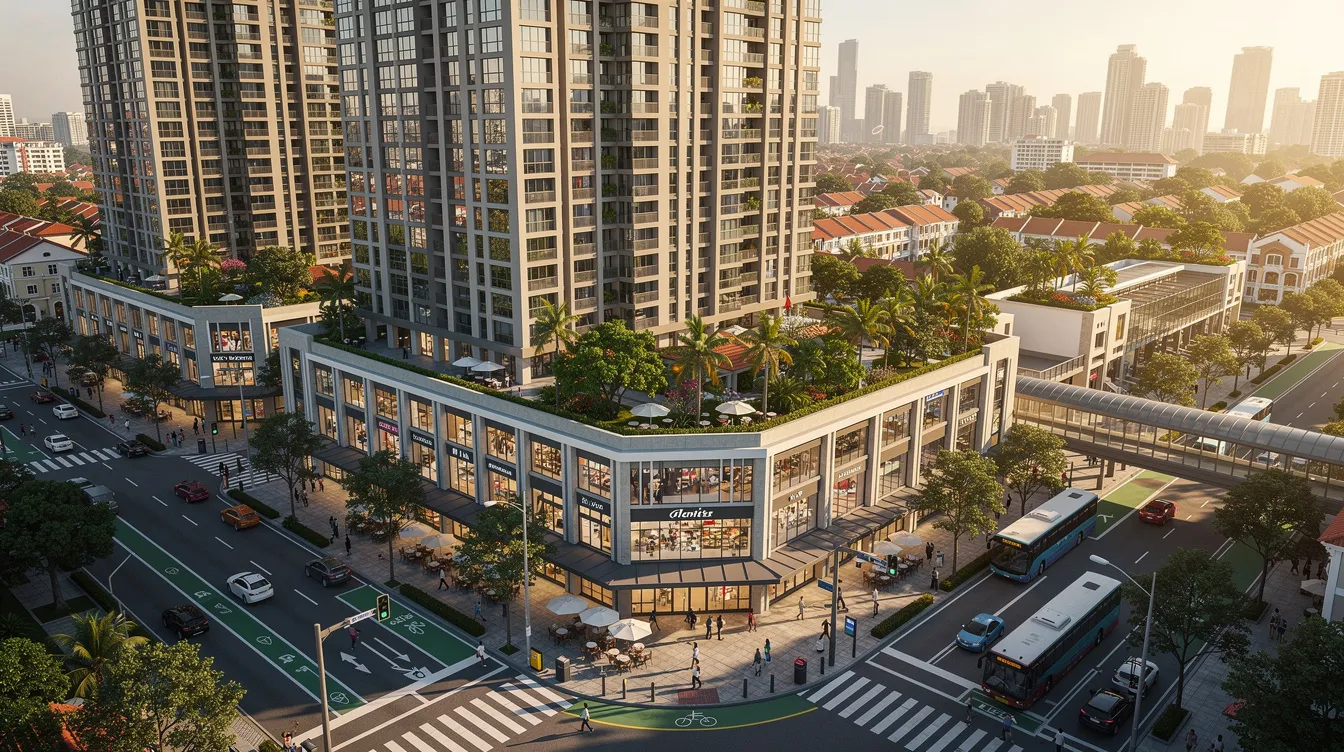
Lifestyle retail strata refers to small-format commercial units, typically 300 to 2,000 sq ft, sold under individual strata titles within mixed use development projects. These retail units house experiential tenants: F&B operators, wellness studios, boutique services, and creative spaces. Strata ownership allows individual buyers to hold separate certificates of title for each unit rather than purchasing an entire building, reducing the entry quantum to a fraction of what larger prime real estate assets such as a full shophouse or central mall acquisition would cost.
Dense residential growth and access to lifestyle amenities provide steady demand for city fringe lifestyle retail spaces. Ongoing flexible work arrangements increase local spending support for neighborhood lifestyle concepts, shifting foot traffic patterns away from the central business district toward residential-adjacent precincts.
City Fringe vs CBD Core Positioning
The distinction between city fringe and CBD core retail investment comes down to tenant economics and foot traffic composition. Prime Orchard Road ground-floor rents reached approximately SGD 37.75 psf per month in 4Q 2024, a 4.0% year-on-year increase according to OCBC Credit Research data. City fringe areas (“Other City Areas” in URA classification) recorded rents of SGD 17.75 psf per month in the same period, up 2.9% YoY, with lower vacancy.
The cost gap is the core advantage. Fortune Centre retail units in District 7 transact at $1,400 to $3,000 psf. Prime Orchard streetfront commands double or more. Yet Fortune Centre is located within 700 meters of five MRT stations (Bencoolen, Rochor, Bras Basah, Bugis, Dhoby Ghaut), providing connectivity comparable to CBD assets at half the price per square foot.
City fringe business and lifestyle hubs attract tech startups and hybrid workforces. Rather than depending on tourist foot traffic, which collapsed during COVID-19 and remains variable, city fringe retail units draw from stable local residential clusters and nearby educational institutions. City fringe lifestyle retail locations must have good transport accessibility and limited competing supply to sustain this advantage.
Strata Ownership Benefits in Commercial Context for Strata Offices
Investors avoid Additional Buyer’s Stamp Duty for commercial properties, a material advantage over residential development investment where ABSD rates can reach 60% for certain buyer categories. Strata-titled office units avoid Additional Buyer’s Stamp Duty entirely. Commercial strata is subject to non-residential property tax and GST on purchase price and rental income, but these costs are predictable and can be modeled into yield calculations.
Strata ownership allows for easier management and control over smaller retail assets. Investors can acquire fully tenanted strata units for immediate income, bypassing the development timeline of new projects. The format also provides portfolio diversification: a $2M allocation can purchase two to three individual retail units across different precincts, spreading tenant and location risk. Strata-titled properties are eligible for en bloc sales under URA schemes, providing an additional exit pathway beyond individual resale.
City fringe strata units offer a more accessible entry quantum with healthier gross yields compared to whole-building acquisitions in the central area.
City Fringe Commercial Market Dynamics in 2026 and Urban Redevelopment Authority Initiatives
The broader investment environment in Singapore is expected to be supportive with lower interest rates. SORA-based commercial lending sits at approximately 1.2%, with fixed-rate packages available around 2.50% for two-year lock-in periods from banks like SBI. Fringe retail occupancy edged up to 94.3%, supported by local demand and essential services. New retail completions from 2026 to 2029 are expected to stay below historical averages, according to Knight Frank’s Independent Market Review 2025. This limited supply pipeline supports rental and price growth for existing strata retail units in prime fringe zones.
The Urban Redevelopment Authority regulates new strata subdivisions in core commercial areas to prevent fragmentation. The result: existing strata retail supply in city fringe locations remains scarce, and new supply is concentrated in mall-scale podiums rather than individual strata commercial units.
District 7: Bras Basah-Bugis Corridor and Master Plan Highlights
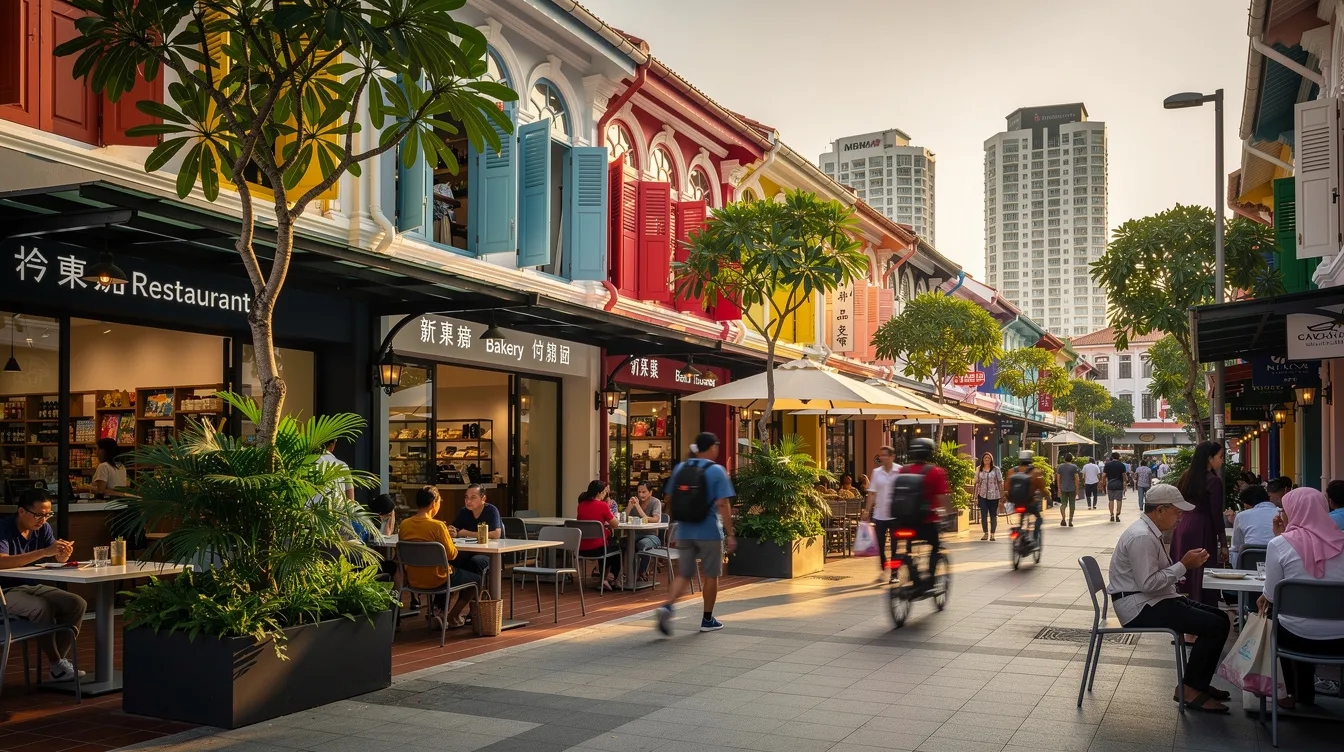
Fortune Centre is Singapore’s premier vegetarian food hub and attracts numerous authentic Japanese izakayas. The 20-storey office-retail building at 190 Middle Road houses a three-level retail podium anchored by cultural dining tenants whose demand is tied to dietary practice rather than trend cycles. Fortune Centre’s retail ecosystem relies on cultural dining habits, giving it a tenant base more resistant to turnover than fashion or lifestyle-only concepts.
Fortune Centre’s tenant mix benefits from nearby educational institutions including SMU, LASALLE College of the Arts, and NAFA. The student and faculty population generates weekday lunch traffic that many other city fringe retail precincts lack. Strata office average prices in District 7 averaged $1,630,730 in 2023, providing a useful benchmark for pricing strata offices in the district and reflecting steady capital appreciation in the corridor.
City Developments Limited (CDL) has been divesting Fortune Centre and Sunshine Plaza strata units, part of over S$240 million in divestments representing approximately 25% of CDL’s stated divestment target. These CDL plans bring institutional-quality stock into private investor hands. Fortune Centre offers an implied rental yield of 3.2% for strata offices, with retail strata yields ranging from 2.9% to 4.11% depending on unit size, floor position, and lease terms. The tenant mix at Fortune Centre supports stable rental yields across both retail and office components.
The North-South Corridor, scheduled for completion by 2030, and the pedestrianization of Waterloo Street will further increase foot traffic density in this precinct.
District 8: Transformation and Conservation Shophouse Premiums
District 8 strata retail presents a different profile. At The Citron, median strata retail sales price over the past five years sits around SGD 2,744 psf. For small Level 1 street-front units under 30 sqm, median rents reached approximately $107.29 per sqm per month (about S$9.96 psf/mo) in 2Q 2026, according to PropKaki data. Gross yield for strata retail in District 8 runs about 3.0%, netting approximately 2.7% after non-residential property tax at 10%.
Conservation shop houses in the surrounding area command premium pricing in the $4M to $8M range, attracting family offices seeking trophy assets with heritage character. The Greater Southern Waterfront redevelopment is expected to reshape the entire Tanjong Pagar corridor, with the Urban Redevelopment Authority’s “Rejuvenating Our Downtown” initiative converting older office buildings and car parks in the CBD fringe into mixed-use precincts with retail and lifestyle F&B uses.
District 9: Orchard Fringe and Mixed Use Nodes
Orchard fringe opportunities cluster around Somerset and Dhoby Ghaut MRT stations, where high-density residential development generates foot traffic independent of tourist cycles. Far East Orchard and other developers have pursued mixed use projects incorporating serviced apartment components and retail spaces at street level.
The URA Master Plan aims to create a vibrant mixed-use lifestyle hub across the central area. Canninghill Square, developed on the former Liang Court site along the Singapore River precinct, illustrates this approach. The integrated project combines a residential component, serviced residence, retail, and commercial spaces within a single development. Mixed-use developments can enhance community engagement through public spaces, and they can increase property values for units within the surrounding area.
The proposed redevelopment of Union Square provides another reference point as a strategic acquisition for investors. Union Square will have a gross floor area of 735,500 sq ft, with Union Square’s redevelopment increasing GFA by 67% to 735,500 sq ft through URA’s SDI scheme, which allows a 20% bonus gross floor area, and the scheme includes an office tower alongside retail and commercial elements. The project includes 366 luxury residential units alongside retail and commercial components, with its co-living element operating under a hotel licence. CDL moved to acquire Central Square through the Central Mall properties transaction for S$315 million in December 2021, with OPH Riverside Pte Ltd tied to the reversionary leasehold interest. Its proximity to Marina Bay strengthens its locational appeal. The enlarged site now carries development parameters that reflect the strategic development incentive payment structure, and the enlarged area supports that higher development intensity.
Investment Analysis and Implementation Framework
A particularly attractive asset includes a small strata unit with strong local catchment and limited supply. Asset enhancement initiatives can unlock value under constrained supply conditions. The following framework provides a systematic approach to evaluating these opportunities.
Financial Due Diligence Process
-
Gross rental yield calculation: Average rental yield for office units at Fortune Centre is 3.2 percent. Strata offices typically yield around 3.2 percent rental returns in comparable city fringe locations. For retail strata, yields range from 2.9% to 5.0% gross, depending on precinct. Deduct non-residential property tax (10% of annual value), maintenance fees (typically 3-5% annual escalation), and a 5-8% vacancy allowance to arrive at net yield. A District 7 retail unit in the Southbank area benchmarks at approximately 5.0% gross and 4.5% net of property tax.
-
Capital appreciation modeling: Fortune Centre listings indicate estimated 5-year price appreciation of roughly 23.5% in a base case scenario, according to SGPropPortal data. Strata office prices in District 7 averaged $1,630,730 in 2023. Mixed-use developments can increase property values for adjacent retail strata units, particularly when precinct-level infrastructure improvements complete.
-
Financing structure: Commercial property loans for completed strata units with strong tenant covenants price at SORA + 1.00% to 1.75%. Some banks, including SBI, offer fixed-rate packages at approximately 2.50% with two-year lock-in periods. Construction-stage commercial loans carry wider spreads of SORA + 2.00% to 3.00%. LTV ratios typically reach 70% for well-located commercial units with verified rental income.
-
Exit strategy: Strata-titled properties are eligible for en bloc sales under URA schemes. Individual unit resale liquidity depends on precinct demand; street-front units under 600 sq ft in District 7 have shown the strongest transaction volumes. Evaluate remaining lease tenure carefully for leasehold assets, as a 99 year leasehold with fewer than 60 years remaining will face loan-to-value restrictions.
Comparative Investment Analysis
|
Location |
Average Unit Size |
Price Range PSF |
Gross Yield |
Tenant Profile |
|---|---|---|---|---|
|
Fortune Centre, District 7 |
269-689 sq ft |
$1,400-$3,000 |
2.9%-4.1% |
Vegetarian F&B, Japanese izakayas, education services |
|
The Citron, District 8 |
300-500 sq ft |
$2,744 (median) |
~3.0% |
Lifestyle retail, cafes, boutique services |
|
Southbank, District 7 |
500-800 sq ft |
$1,400-$1,700 |
~5.0% |
Mixed F&B and services |
|
Orchard Fringe Mixed-Use |
600-1,000 sq ft |
$2,200-$2,800 |
4.0%-4.6% |
Premium F&B, wellness |
The yield play differs by entry price and tenant stability. Fortune Centre’s lower PSF range ($1,400-$1,700 for office and upper-storey units) provides the most accessible entry quantum. Smaller street-front retail units at $2,800-$3,000 psf carry lower gross yields but stronger capital value appreciation potential. Investors with capital below $1.5M should focus on upper-storey strata offices or non-street-front retail units where price competition is lower.
Common Investment Challenges and Solutions
Lifestyle retail strata properties in city fringe areas present unique advantages and trade-offs. The following obstacles appear consistently in investor experience.
Tenant Turnover and Vacancy Risk
Small F&B and experiential retail tenants carry higher business failure rates than institutional tenants. Fortune Centre mitigates this through its cultural dining ecosystem: vegetarian restaurants and izakayas serve dietary-practice-driven demand rather than trend-driven demand, reducing turnover. When evaluating other precincts, prioritize units where tenants have operated for three or more years. Negotiate lease terms of at least two years with options to renew. Avoid single-concept pop-up operators unless the unit’s location guarantees rapid re-leasing; Orchard Road vacancy sat at 5.9% in 4Q 2024, while city fringe vacancy remained lower.
Maintenance Fee Escalation
Strata units share common area costs among owners. Maintenance fees cover cleaning, utilities for shared areas, lift maintenance, and security. In older buildings like Fortune Centre, these costs tend to rise 3-5% annually as building systems age. Budget this escalation into yield projections. Structure lease agreements so tenants bear responsibility for unit-level utilities, minor repairs, and fit-out maintenance. Review the building’s sinking fund adequacy before purchase; underfunded sinking funds lead to special levies.
Financing and Cash Flow Management
Secure bank pre-approval for commercial facilities before property selection. The purchase consideration for strata retail often requires 30% equity (70% LTV). Maintain six months of operating expense reserves covering mortgage payments, maintenance fees, and property tax to buffer vacancy periods. Interest rate risk is real: even with a 2.50% fixed-rate lock-in, the floating SORA-related rate after the lock-in period can increase. Model a stress scenario at SORA + 2.50% to confirm the investment remains cash-flow positive.
Conclusion and Next Steps
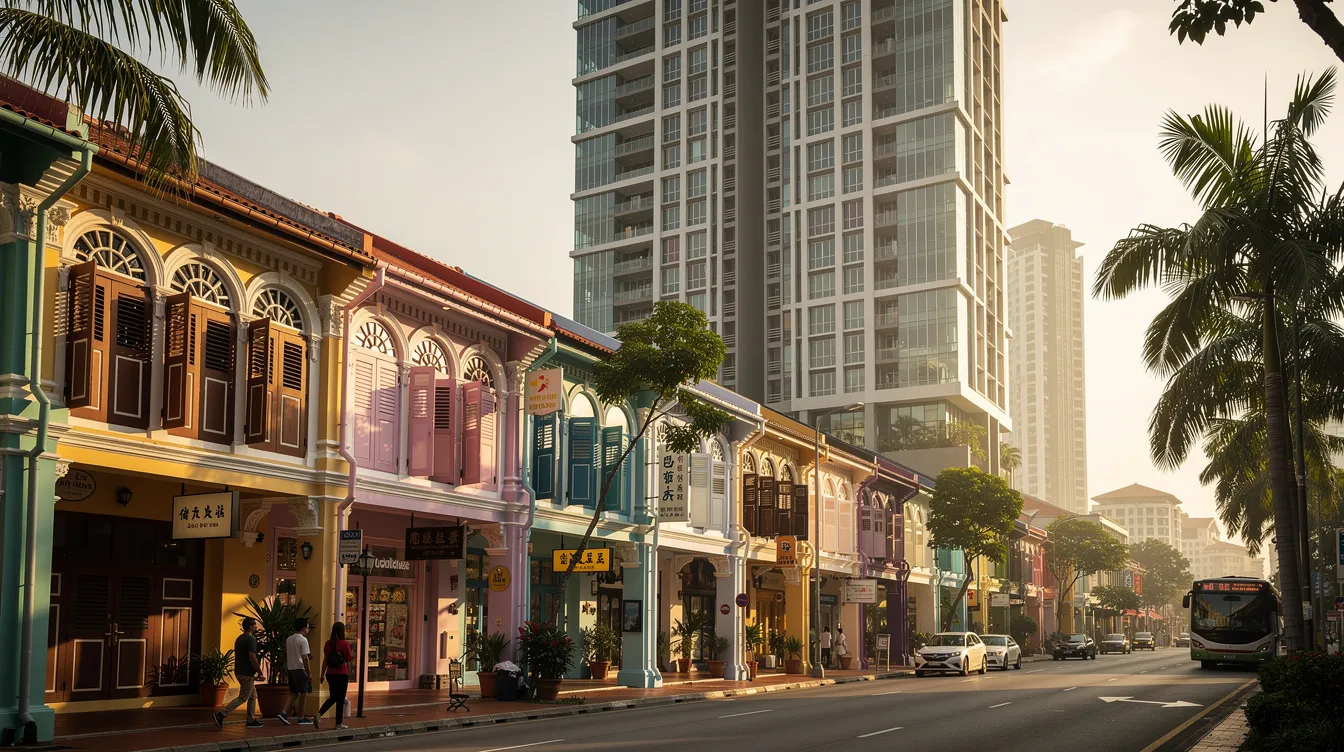
The combination of constrained supply pipeline, URA Master Plan 2025 precinct upgrades, and sub-3% fixed-rate commercial financing creates a window for city fringe strata retail investment in 2026. Gross yields of 3.0% to 5.0% in Districts 7 and 8, with capital appreciation potential of 20%+ over five years in well-positioned units, provide returns competitive with residential investment but without ABSD drag.
To act on this analysis:
-
Engage property agents specializing in commercial strata transactions in Districts 7, 8, and 9. Request transaction records for the past 12 months at Fortune Centre, The Citron, and Southbank.
-
Arrange commercial mortgage pre-approval with DBS, OCBC, or UOB. Compare fixed-rate lock-in packages and SORA spread structures for units in the $800K to $2M range.
-
Schedule site visits to Fortune Centre’s retail podium, Tanjong Pagar conservation shop houses, and Orchard fringe mixed use developments to assess foot traffic, tenant quality, and building condition firsthand.
-
Review each target unit’s remaining lease tenure, strata plan, permitted uses under URA zoning, and management corporation by-laws before making an offer.
Related considerations for 2027 and beyond: monitor the URA Master Plan for precinct-level zoning amendments, track North-South Corridor and Greater Southern Waterfront construction timelines, and evaluate in the second half whether Newport Plaza or other new mixed development projects will add competing strata retail supply to your target district.
Additional Resources
-
URA Master Plan 2025 interactive maps for zoning, gross plot ratios, and development pipeline by precinct
-
Nexus Mortgage commercial property loan comparison for current SORA spreads and LTV ratios across major banks
-
Aesthetic Havens commercial investment guide for Fortune Centre transaction data, district-level pricing analysis, and nearby references such as Fuji Xerox Towers
-
PropKaki commercial property portal covering all the sites tracked for strata retail and office yield benchmarks by building and district

