

Introduction
Springleaf Collection’s 999-year leasehold landed homes at 43–52 Meng Suan Road belong in a 2026 legacy portfolio because they pair individual land title, MRT connectivity, and District 26 Upper Thomson growth with the scarcity and wealth-preservation characteristics that few Singapore residential assets can match. For high-net-worth families deciding where to anchor long-duration capital, this development offers a rare combination of structural appreciation drivers, intergenerational utility, and near-perpetual holding relevance.
This article examines why strata freehold landed real estate can serve as a legacy portfolio component, using Springleaf Collection as the central case study. It is written for Singapore citizens and PRs with $6.5M+ in investable capital—particularly families and investors evaluating landed property for capital preservation, inflation resilience, and future wealth transfer. The scope covers the legal mechanics of 999-year leasehold tenure, the development’s physical and financial specifications, comparative analysis against other asset classes, and practical purchase considerations; it does not cover commercial property strategies or HDB upgrading pathways.
The core thesis: strata freehold landed properties like Springleaf Collection preserve and grow family wealth in ways condominiums, REITs, and shorter-lease residential assets generally cannot, because Singapore’s fixed land supply supports scarcity while landed ownership offers stronger inflation hedging and succession value. Singapore also has no domestic estate or inheritance duties on passing down real estate, which strengthens the case for holding this asset class across generations.
By the end of this article, you will understand:
-
How 999-year leasehold tenure functions as a near-freehold equivalent for legacy planning
-
Why Springleaf Collection’s specifications and location make it a compelling 2026 entry point
-
How landed property compares against alternative asset classes in a legacy portfolio framework
-
Specific risks, financing mechanics, and due diligence steps for prospective buyers seeking this asset class
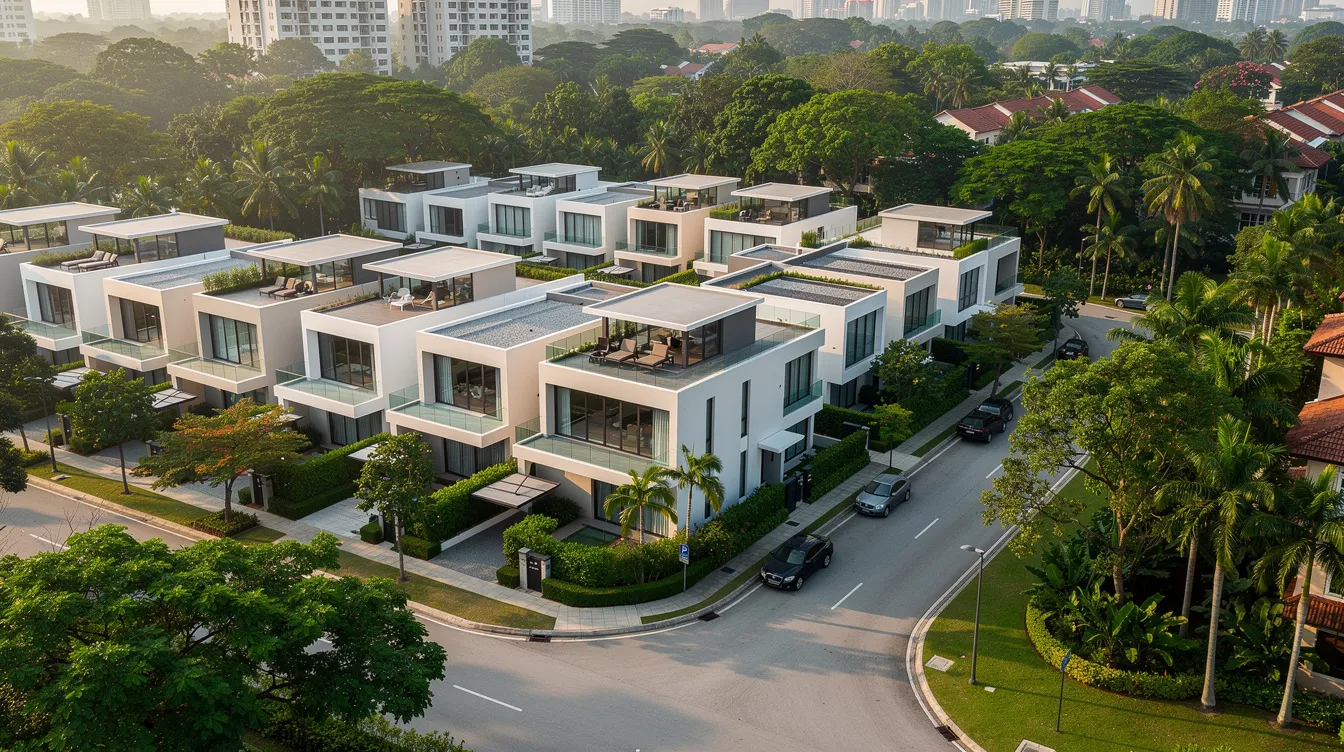
Understanding Strata Freehold Landed Property Real Estate
Singapore’s residential market is characterized by high density and limited land availability. Landed housing constitutes about 4.7% to 5% of Singapore’s total residential stock, and the country holds a finite stock of approximately 73,000 traditional landed plots. Within that already constrained universe, strata freehold landed properties occupy a uniquely advantageous position-offering individual land ownership within a development structure that provides shared infrastructure benefits without the loss of autonomy typical of condominium living.
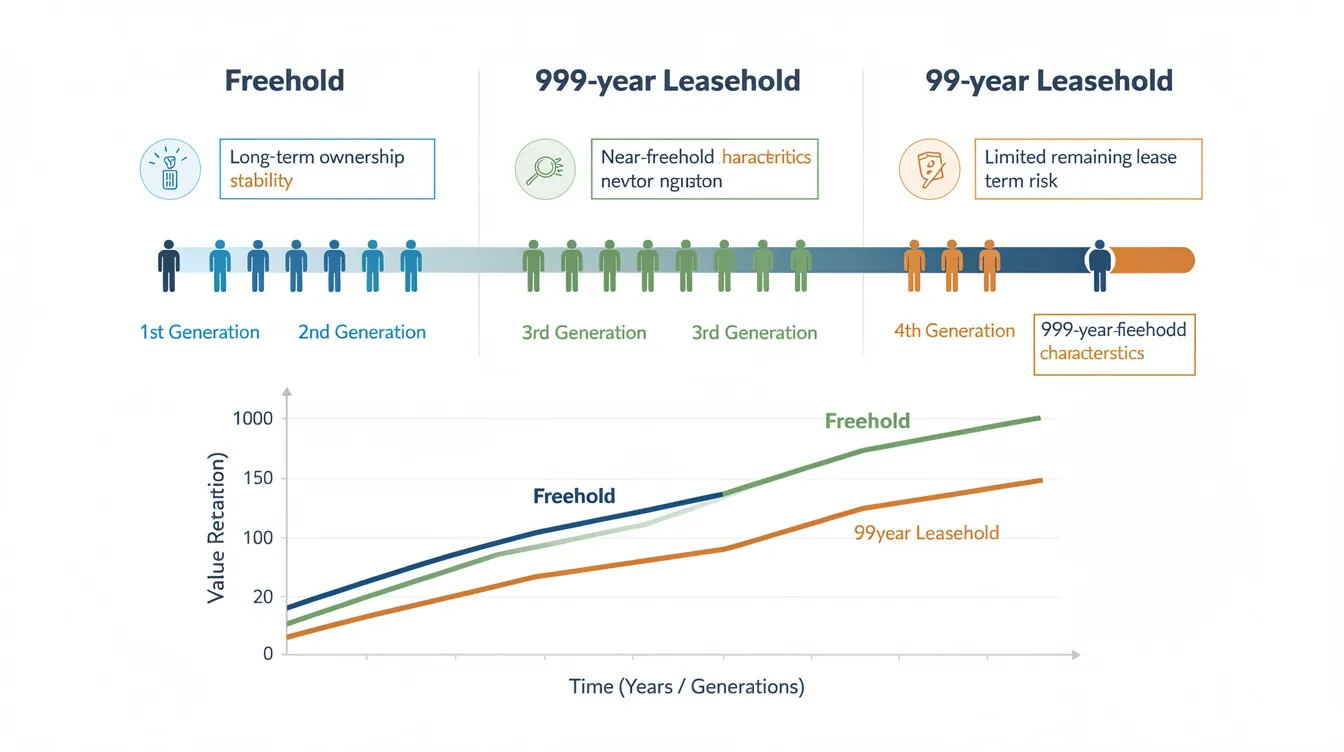
A 999-year leasehold, such as the tenure held by Springleaf Collection, functions as the practical equivalent of freehold for any conceivable legacy planning horizon. The lease commenced on 16 October 1884, meaning it extends well beyond the year 2800-rendering lease decay concerns irrelevant for multiple generations. According to parliamentary data from the Ministry of Law, fewer than 5% of Singapore’s landed homes are 999-year leasehold, while approximately 73% are freehold and the rest are shorter leases. This scarcity underpins the long-term value proposition.
The legal framework governing strata landed developments differs materially from both standard landed properties and regular condominiums. Under the Land Titles (Strata) Act 1967, strata subdivisions result in subsidiary strata certificates of title (SSCTs), which bundle individual unit ownership with shared common property obligations managed through a management corporation. Springleaf Collection, however, is structured with individual land titles per lot-each unit incorporated under its own MSR Pte Ltd entity-giving owners full control over their land without the typical strata constraints.
Strata Freehold Benefits
Individual land title ownership is the defining advantage. Unlike strata-titled condominiums where owners hold a share of common property, Springleaf Collection’s pure landed structure means each homeowner controls their plot outright. Landed properties can be redeveloped or remodeled according to ownership preferences-an impossibility within typical strata frameworks. Strata-titled landed properties typically trade at a 15% to 25% discount compared to standalone landed homes, but developments like Springleaf that offer individual titles effectively bridge that gap while retaining the benefits of a curated collection.
Full CPF Ordinary Account usage is permitted without the progressive restrictions that apply to shorter leasehold properties. For buyers financing a $6.85M–$7.28M purchase, the ability to deploy CPF savings fully-alongside bank financing at current loan-to-value ratios of up to 75%-materially improves cash flow planning. Ownership rights for 999-year leasehold are identical to freehold in practice, including mortgage treatment by lending institutions.
The development’s structure also provides estate management without the bureaucratic overhead of large management corporations. With only 10 exclusive terrace homes, shared obligations are minimal, and each owner retains autonomy over their boundary walls, landscaping, and architectural modifications.
Legacy Portfolio Context
A legacy portfolio is designed for intergenerational wealth transfer rather than short-term returns. Its core objective is preserving and growing family capital across decades-prioritizing assets with long-duration ownership characteristics that resist depreciation, inflation erosion, and regulatory disruption.
Within a diversified legacy portfolio that may include equities, bonds, and REITs for liquidity, landed property serves as the anchor asset. Physical assets like real estate can diversify financial portfolios effectively, providing a tangible hedge that paper assets cannot replicate. The connection between physical asset ownership and family heritage preservation is direct: a landed home at a specific address becomes part of a family’s identity, offering both financial and emotional utility that compounds over generations.
High-net-worth investors target landed properties for wealth preservation precisely because of these characteristics. Landed properties are attractive for investment due to their scarcity and capital preservation characteristics-qualities that become more pronounced as Singapore’s land supply remains fixed while population and wealth continue to grow.
Springleaf Collection’s Strategic Positioning in District 26
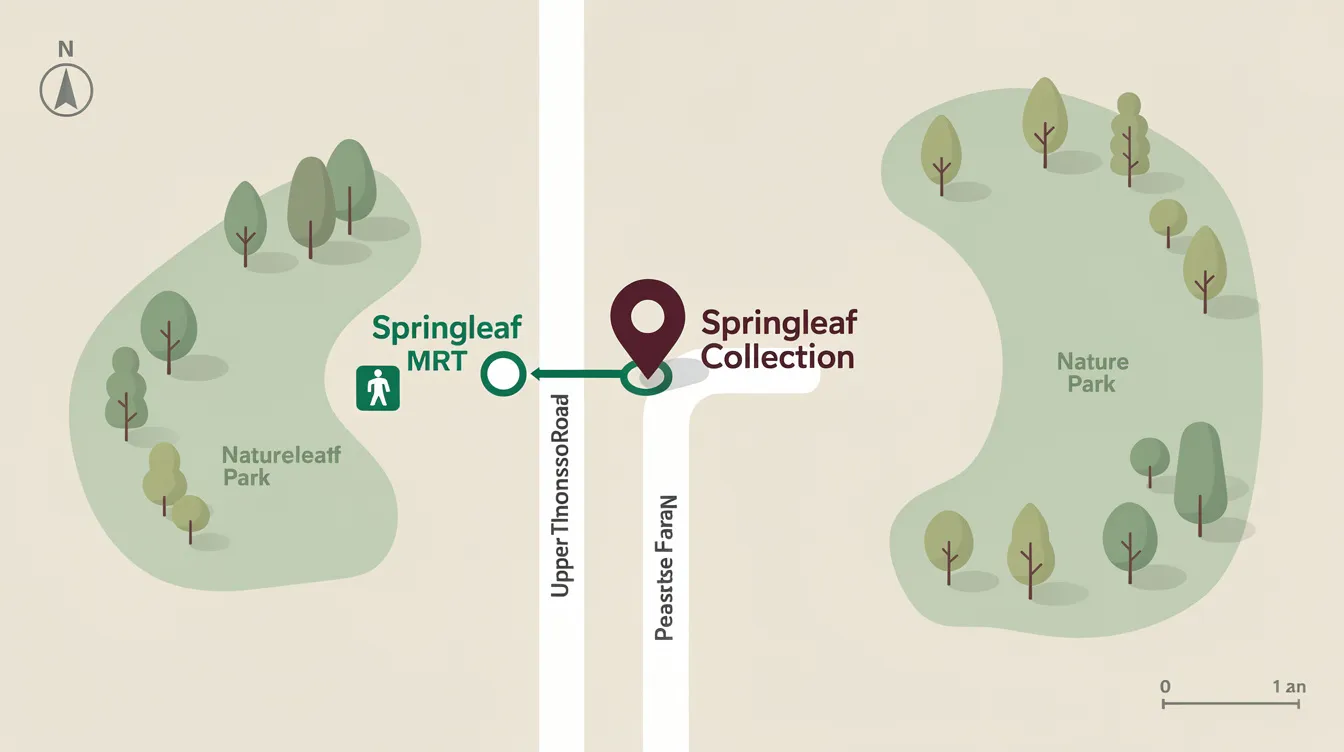
Springleaf Collection offers 10 luxury terrace homes along Meng Suan Road in District 26, with completion projected for late 2028. The project sits within Upper Thomson’s transformation zone-an area experiencing significant infrastructure investment through the Thomson East Coast Line and the upcoming North South Corridor, both of which are reshaping accessibility and desirability in Singapore’s north.
The development is located off Upper Thomson Road, within walking proximity to Springleaf MRT station (approximately 740 meters away, or roughly an 11-minute walk), giving residents a direct link to the city while preserving a quieter residential setting. This makes Springleaf Collection one of very few brand-new landed homes in north Singapore that can claim genuine MRT connectivity-a key advantage for both daily living and long-term value appreciation. The Springleaf area features parks like Windsor Nature Park and Thomson Nature Park, while Upper Seletar Reservoir is a short drive from Springleaf, reinforcing the neighbourhood’s appeal for families who value nature and space. Springleaf Residence also serves as a useful local reference point in the area’s ongoing growth story following improved rail connectivity.
Each home is developed under its own corporate entity (MSR Pte Ltd structure), reflecting a boutique developer approach that prioritizes exclusivity over volume. How many units does this project offer? Just 10-a deliberately constrained supply that enhances scarcity value and long-term price resilience. Springleaf Collection is designed for multi-generational living, with layouts that make these houses suitable for extended families across 3.5 stories.
Market Timing Factors for 2026
The financing environment in 2026 presents a favorable window for landed property acquisition. UOB Research projects 3-month SORA rates at approximately 1.24% in Q3 2026, rising modestly to around 1.42% in Q4 2026. These rates represent a meaningful decline from recent peaks, reducing the cost of servicing large mortgages on properties in the $6.85M–$7.28M range.
Landed property prices rose 2.5% in Q2 2026 while non-landed prices fell 0.1%, underscoring the divergent momentum favoring landed assets. Earlier in the cycle, landed home prices in Singapore rose 2.2% in Q2 2025, and 58% of landed home transactions were below $5 million in Q2 2025-indicating that Springleaf’s price point positions it firmly in the premium segment where competition from upgraders is lower and holding power among buyers is stronger.
District 26’s landed market is projected to appreciate 5–7% through 2026, driven by limited supply and sustained demand from families seeking space and privacy. Only 2 units remain at Springleaf Collection as of June 2026, creating genuine urgency for buyers seeking legacy portfolio positioning in this corridor. Prices for Springleaf Collection start from $6.68M, according to the Springleaf Collection price list-a quantum that, while substantial, captures both current value and forward-looking infrastructure premiums.
Physical Asset Specifications and Unit Types
The two remaining unit types at Springleaf Collection reflect distinct use cases for legacy buyers, with Springleaf Collection landed positioning these homes around exclusivity, long tenure, and family-scale living:
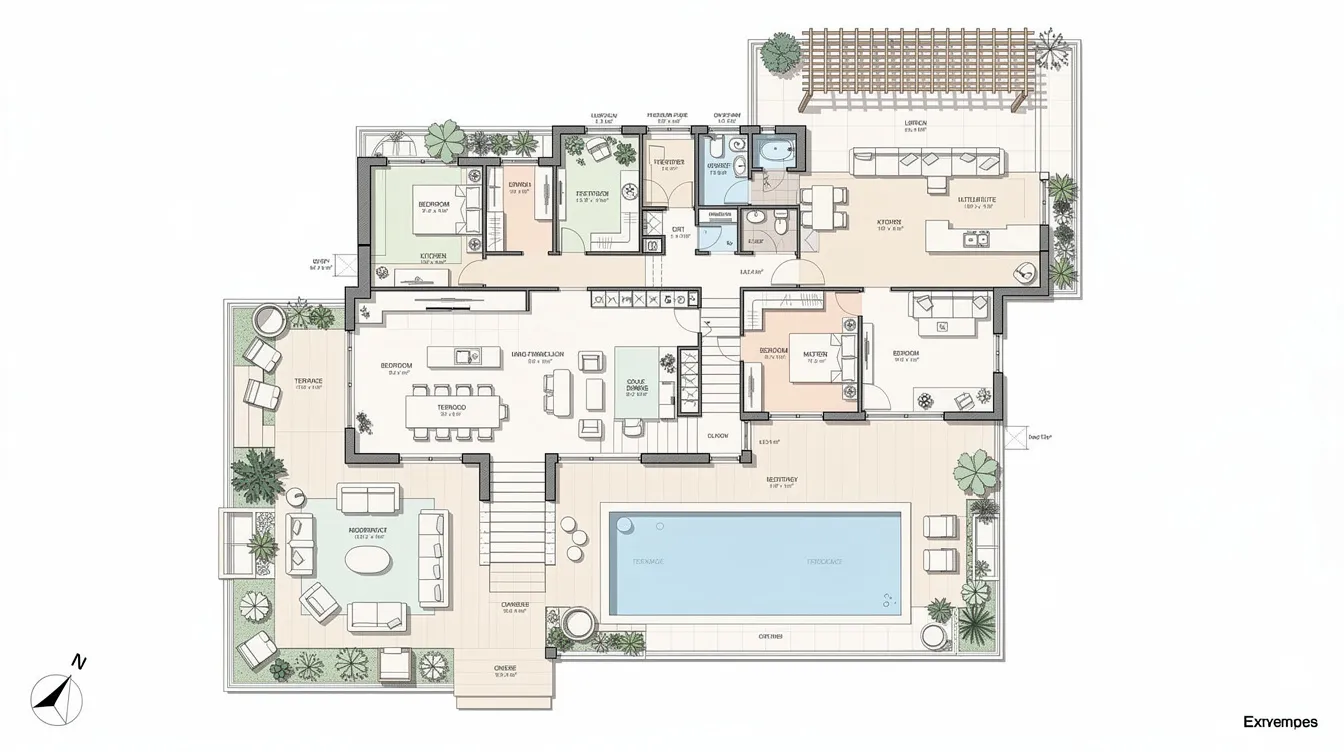
5-Bedroom Corner Terrace (Unit 43): Priced at approximately S$6.85M (~S$2,600 psf on built-up area), this unit offers a land area of roughly 2,632 sqft with a built-up area of approximately 5,694 sqft across 3.5 stories. Each home features 5 to 6 en-suite bedrooms, with the corner position providing additional natural light and cross-ventilation.
6-Bedroom Pool Terrace (Unit 47): Priced at approximately S$7.28M (~S$2,348 psf on built-up area), this pool unit delivers approximately 3,100 sqft of land and up to 8,392 sqft of built-up area. Two units include private swimming pools, a rare feature in new launch terrace developments. The 6 bedroom pool terrace configuration accommodates multigenerational households with separate living quarters across floors.
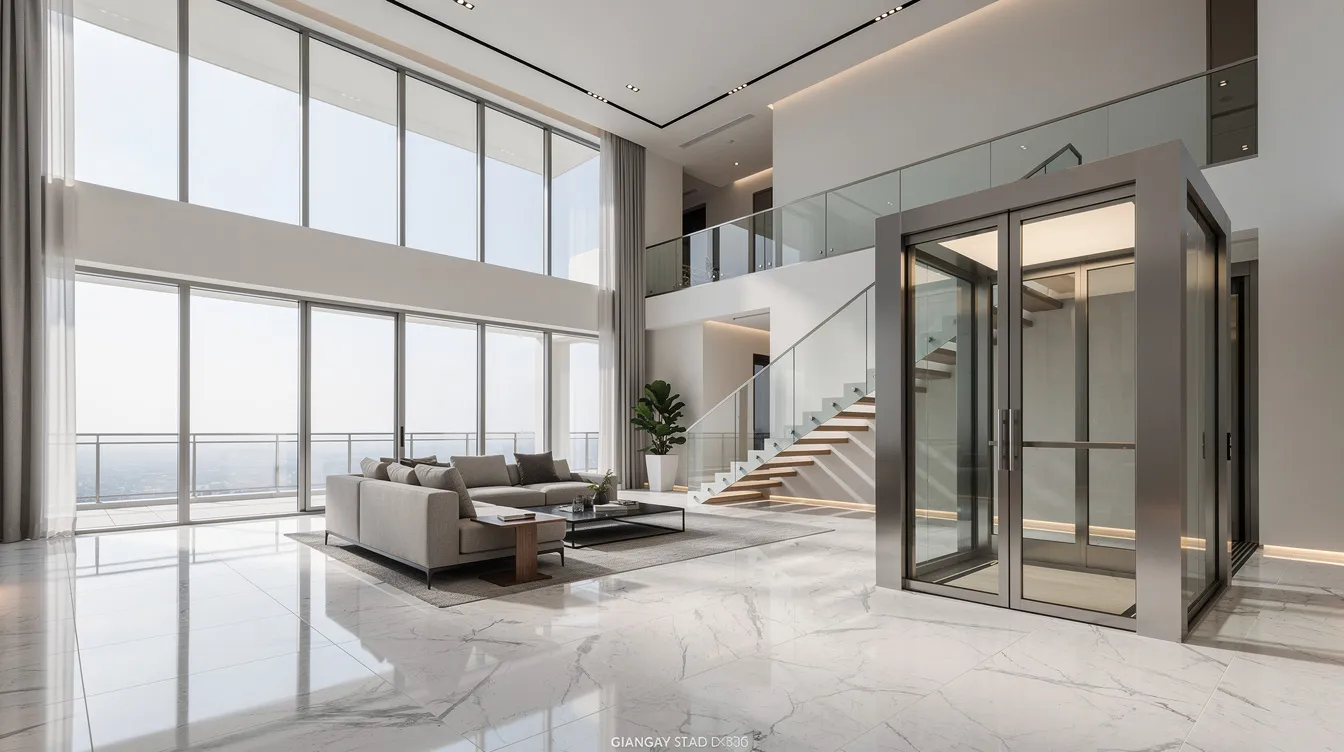
Both unit types feature private home lifts, 3.65-meter ceiling heights on the first storey, marble flooring in common areas, solid timber flooring in bedrooms, and generous dining areas designed for family gathering. The pool terrace units additionally include outdoor kitchens and landscaped gardens within the boundary walls.
Investment Analysis and Portfolio Allocation
The preceding sections establish Springleaf Collection’s physical, legal, and locational credentials. This section translates those attributes into a structured financial assessment, evaluating the development’s fit within a legacy portfolio framework where the primary objectives are capital preservation, inflation protection, and intergenerational transfer.
Comparative Asset Analysis
Landed property allocation makes optimal sense in legacy portfolios when the buyer has sufficient capital to deploy without compromising liquidity in other asset classes. For a total investable portfolio of $6.5M or more, strategic allocation of 15–25% to landed property provides meaningful real asset exposure while maintaining diversification across equities, bonds, and REITs.
Total investment quantum extends beyond the headline purchase price. Buyers must account for Buyer’s Stamp Duty (BSD), potential Additional Buyer’s Stamp Duty (ABSD) depending on citizenship status and existing property holdings, legal fees, and survey costs. For a S$7.28M pool terrace, BSD alone exceeds S$300,000. ABSD adds substantially for second-property buyers or PRs/foreigners requiring LDAU approval.
The progressive payment structure for properties under construction spreads approximately 75–80% of payments across construction milestones until TOP. The standard sequence-5% booking fee, 15% upon signing the Sale & Purchase agreement, then 10% tranches at foundation, reinforced concrete framework, ceiling/roofing, internal works, and drainage stages-allows buyers to manage cash flow across 18–24 months rather than deploying the full quantum upfront.
CPF utilization with full Ordinary Account usage provides meaningful financing flexibility. Unlike 99-year leasehold properties where CPF usage is progressively restricted as the lease shortens, the 999-year leasehold tenure ensures no such limitations apply for the foreseeable future-a structural advantage for legacy planning.
Based on District 26 landed appreciation forecasts of 5–7% annually, a S$7.28M purchase could generate absolute value appreciation of S$364,000–S$510,000 in the first year alone. Over a 10–15 year holding period, compounding at even the lower end of this range would deliver substantial wealth accumulation-particularly given that 999-year leasehold properties behave similarly to freehold in value retention, avoiding the lease decay that erodes shorter-tenure assets.
Risk-Return Profile Comparison
|
Criterion |
Springleaf Collection |
District 26 Condos |
S-REITs |
|---|---|---|---|
|
Liquidity |
Low (large ticket, fewer comparable buyers) |
Medium (broader buyer pool, lower quantum) |
High (exchange-traded, daily liquidity) |
|
Inflation Hedge |
High (land scarcity, physical asset, no lease decay) |
Medium (lease decay on 99-year, shared land) |
Low (distribution yields may lag inflation) |
|
Legacy Value |
Excellent (individual land title, 999-year tenure, family identity) |
Good (limited modification rights, strata obligations) |
Poor (no physical asset, no family identity) |
|
Entry Quantum |
S$6.85M – S$7.28M |
S$2.15M – S$3.28M |
Variable (from S$1,000+) |
|
Rental Yield |
Lower relative to cost (~2–3%) |
Moderate (~3–4%) |
Higher (~5–7% distribution yield) |
|
Control Over Asset |
Full (individual title, renovation freedom) |
Limited (MCST approvals required) |
None (fund manager controlled) |
The interpretation here is straightforward: for legacy portfolios where the objective is capital preservation across generations rather than short-term income or liquidity, Springleaf Collection scores highest on the metrics that matter most. Landed properties have shown strong resilience during economic adjustments, and the rental market for landed properties shows strong momentum due to high demand-though rental yield on premium landed homes is lower relative to purchase price than condos or REITs.
Physical assets like real estate can diversify financial portfolios effectively when balanced against liquid instruments. The optimal approach treats Springleaf as an anchor holding-illiquid but appreciating-while maintaining REITs, bonds, and equities for income and rebalancing flexibility.
Common Concerns and Strategic Responses
Buyers seeking legacy-grade landed property in 2026 face legitimate hesitations. Addressing these directly, rather than dismissing them, is essential for informed decision-making.
High Entry Quantum vs Diversification
The S$6.85M–S$7.28M entry point concentrates significant capital in a single asset. The strategic response is allocation discipline: treat landed property as 15–25% of a total legacy portfolio rather than the sole holding. For a family with S$30M in total assets, a S$7.28M Springleaf purchase represents ~24%-meaningful exposure without over-concentration. All properties face differing levels of vulnerabilities due to transaction costs and market conditions, making diversification across asset classes essential even when the core holding is compelling.
Financing strategies can preserve liquidity for other investments. With UOB’s projected SORA rates of ~1.24–1.42% in H2 2026, leveraging at 60–75% LTV allows buyers to maintain deployment capacity in equities and bonds while securing landed exposure. The progressive payment scheme further staggers capital outlay, reducing the immediacy of the full quantum requirement.
Liquidity Constraints
Landed properties are inherently less liquid than condominiums or exchange-traded instruments. Transaction volumes are lower, the pool of qualified buyers at the S$6.85M+ level is smaller, and resale timelines can extend to months rather than weeks.
However, this concern is perspective-dependent. A 10–15 year minimum holding period aligns naturally with legacy portfolio objectives, and the market for both strata-titled and freehold landed properties is managed by government land sales that constrain future supply. Over such horizons, liquidity at entry matters less than terminal value-and Springleaf’s scarcity (10 units total, with 80% already sold) supports price resilience at exit. Singapore has no domestic estate or inheritance duties, meaning that even if the asset is held through succession rather than sold, no value is lost to transfer taxes.
Market Timing Uncertainty
Dollar-cost averaging is impossible with a single-unit landed property purchase. Buyers cannot spread entry across multiple purchase windows or reporting periods the way they might with equity or REIT positions in a given quarter. The strategic response is to focus on long-term structural trends rather than attempting to time short-term market movements.
Upper Thomson’s infrastructure development timeline provides concrete medium-term appreciation catalysts. The North South Corridor along Upper Thomson Road, Springleaf MRT station on the Thomson East Coast Line, and proximity to major expressways including the Central Expressway and Seletar Expressway collectively improve accessibility in ways that are already priced into new launches but not yet fully reflected in existing District 26 landed values, with these advantages already present today. Landed properties exhibit strong rental market performance outperforming non-landed segments, providing an additional value floor even in softer market conditions. Inflation increases real estate values, making it a hedge against rising costs regardless of short-term price fluctuations.
Conclusion and Next Steps
Springleaf Collection represents what makes strata freehold landed real estate a compelling legacy portfolio anchor in 2026: a 999-year leasehold with individual land title, located within walking distance of an MRT station in a district undergoing structural infrastructure transformation, offered at a moment when financing conditions are improving and supply of comparable new launch landed homes is effectively zero. Freehold landed properties provide ownership in perpetuity without lease decay risks, and Springleaf’s 999-year tenure delivers functionally identical protection for any realistic planning horizon.
This rare opportunity is constrained by simple arithmetic-only two units remain from an original collection of 10, so buyer demand is likely to remain firm while supply stays this tight.
Immediate action items:
-
Schedule a private viewing of the remaining 5-bedroom corner terrace and 6 bedroom pool terrace at Meng Suan Road
-
Initiate financing pre-approval to confirm LTV, TDSR eligibility, and optimal rate lock strategy at current SORA levels
-
For PRs and foreigners, begin the LDAU approval process early, as processing timelines can extend several months
If you want deal-specific guidance, contact Assembly Place on WhatsApp directly rather than relying on a form.
Due diligence sequence:
-
Verify land title details, tenure commencement date, and confirm absence of caveats, encumbrances, or road reserve impacts
-
Review the progressive payment schedule against personal cash flow projections and CPF OA balances
-
Engage an estate planning advisor to structure ownership (personal vs trust vs corporate) for optimal intergenerational transfer
-
Optimize broader portfolio allocation to maintain liquidity in complementary asset classes
Related exploration: buyers seeking additional context may wish to examine alternative District 26 developments for comparison, complementary S-REIT strategies for portfolio liquidity balance, and Singapore’s estate planning structures for landed property succession. Nearby schools include CHIJ St Nicholas Girls’ School and Anderson Primary, while residents enjoy a short stroll to some dining options along Sembawang Road-factors that add lifestyle value for families with children and reinforce long-term holding appeal.
Additional Resources
-
Progressive payment schedule reference: Standard Building Under Construction (BUC) milestones as regulated under the Housing Developers Rules-booking fee (5%), S&P signing (15%), foundation (10%), RC framework (10%), ceiling/roofing (5%), internal works (5%), drainage/roads (5%), TOP (25%), CSC/legal completion (15%)
-
BSD quick reference (2026): First S$180K at 1%, next S$180K at 2%, next S$640K at 3%, next S$500K at 4%, next S$1.5M at 5%, remainder at 6%. For a S$7.28M property, BSD is approximately S$341,600
-
ABSD rates: Singapore citizen (first property: 0%; second: 20%; third+: 30%); PR (first: 5%; second: 30%; third+: 35%); foreigners: 60%
-
District 26 landed market data (July 2026): Median landed sale price ~S$4.68M; median PSF ~S$2,231. Springleaf Collection’s premium of 40–60% over median reflects superior specifications, tenure, and MRT proximity
-
Estate planning note: While Singapore currently has no estate duty, landed property succession should be structured to account for potential future policy changes, probate costs, and co-ownership arrangements among beneficiaries

