


The market standard for a security deposit in a Singapore rental is one month’s rent for a one-year lease and two months’ rent for a two-year lease. There is no statutory cap on this figure. Your Tenancy Agreement (TA) is the document that actually controls the amount, what the landlord can deduct, and when you get the money back, since Singapore has no dedicated law governing rental deposits.
Do three things before you hand over a single dollar. Get a signed receipt for the deposit. Take a dated, photographed inventory at move-in. Confirm the TA states an exact return timeframe, not a vague promise.
If a landlord withholds your deposit unfairly, you have real recourse: the Small Claims Tribunals handle leases up to two years, with claims capped at S$20,000 (or S$30,000 if both parties agree to raise the limit). The Council for Estate Agencies (CEA) also publishes guidance for tenants dealing with agents.
- Confirm the deposit amount and return window in writing, in the TA itself.
- Photograph every room, fixture, and existing defect before you move furniture in.
- Use PayNow or bank transfer, not cash, and keep every receipt.
Key Takeaways
A Singapore security deposit is governed entirely by the Tenancy Agreement, not by statute, so the contract’s wording determines your protection.
| Point | Details |
|---|---|
| Market norm, not law | One month’s rent for a one-year lease, two months’ for a two-year lease; no statutory cap exists. |
| TA controls everything | The Tenancy Agreement sets the deposit amount, permitted deductions, and return timeline. |
| Document before you move in | Dated photos, an itemized fixture list, and a signed handover form are your main evidence. |
| Escalate in order | Negotiate, then send a written demand, then file with the Small Claims Tribunals if needed. |
| Tribunal limits | Claims cap at S$20,000, or S$30,000 by mutual consent, for leases up to two years. |
| Get your TA reviewed | Aesthetic Havens helps tenants review contracts and prepare evidence before disputes start. |
Table of Contents
- How Much Is the Security Deposit for a Rental in Singapore?
- What Can a Landlord Legally Deduct From Your Deposit?
- How Do You Protect Your Deposit at Move-In?
- How Long Does It Take to Get a Security Deposit Back?
- What if the Landlord Withholds or Refuses to Return the Deposit?
- Do HDB Sublets, Commercial Leases, or Joint Tenancies Change the Rules?
- What Should Be in Your Tenancy Agreement to Avoid Deposit Disputes?
- A Property Consultant’s Take on Deposit Disputes
- How Aesthetic Havens Helps You Protect Your Deposit
- Frequently Asked Questions
- Sources
How Much Is the Security Deposit for a Rental in Singapore?
One month’s rent for a one-year lease, two months’ for a two-year lease. That’s the convention nearly every landlord, agent, and platform like PropertyGuru follows, but it’s a market norm, not a legal requirement. A landlord is free to ask for more, and some do, particularly for tenants without local credit history or a stable income record.
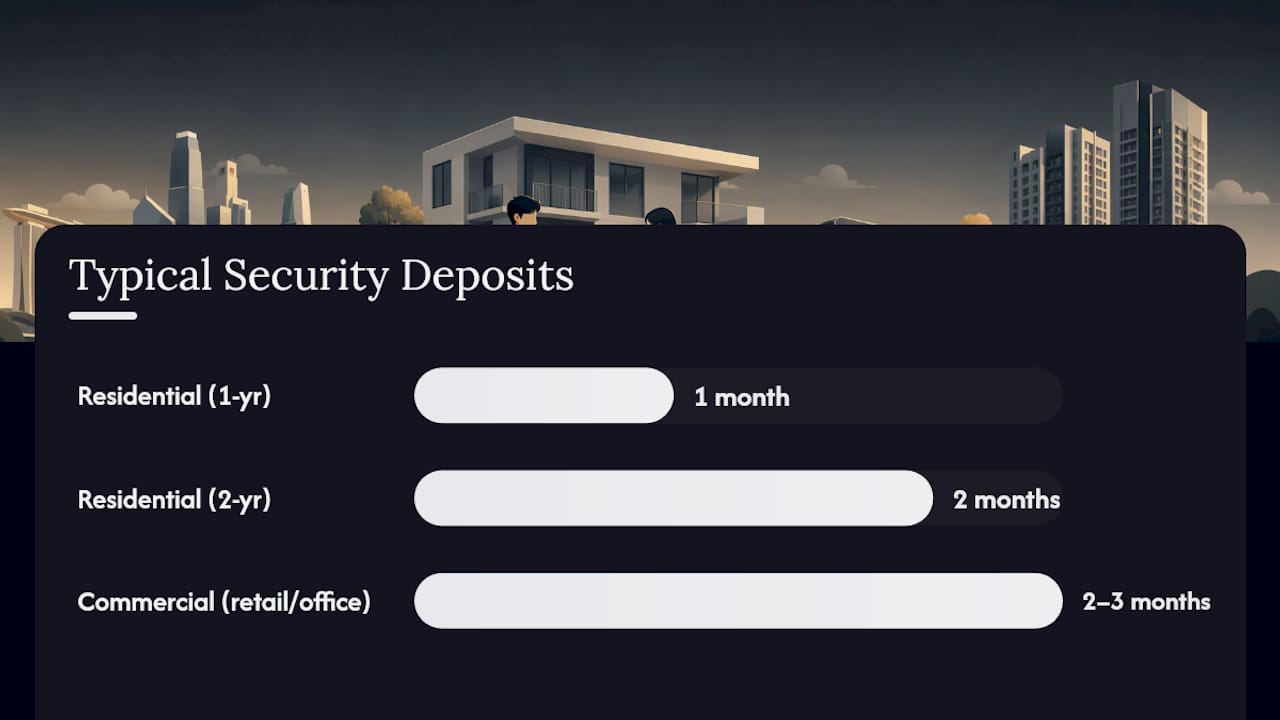
Commercial leases run higher. Retail and office landlords commonly ask for two to three months’ rent, sometimes structured as phased payments tied to renovation milestones or fit-out periods. If you’re negotiating office space, expect the deposit conversation to be more layered than a residential lease, often bundled with separate renovation or utility deposits.
Timing matters too. Many deals start with a holding deposit, sometimes called a good-faith deposit, paid when you sign a Letter of Intent (LOI) to signal serious interest while the landlord takes the unit off the market. That sum typically converts into the full security deposit once the TA is signed and the tenancy begins. They aren’t the same thing, and a good landlord’s LOI should say clearly what happens to that holding sum if the deal falls through.
- Holding deposit: paid at LOI stage, refundable or forfeited depending on the LOI terms.
- Security deposit: paid at TA signing or lease commencement, held for the full term.
- Commercial deposits: often 2-3 months, sometimes phased across the fit-out period.
Pro Tip: Always pay by bank transfer or PayNow, and ask for a signed receipt referencing the TA. A text message confirming “deposit received” is not proof of amount, date, or purpose if a dispute lands in the Small Claims Tribunals.
What Can a Landlord Legally Deduct From Your Deposit?
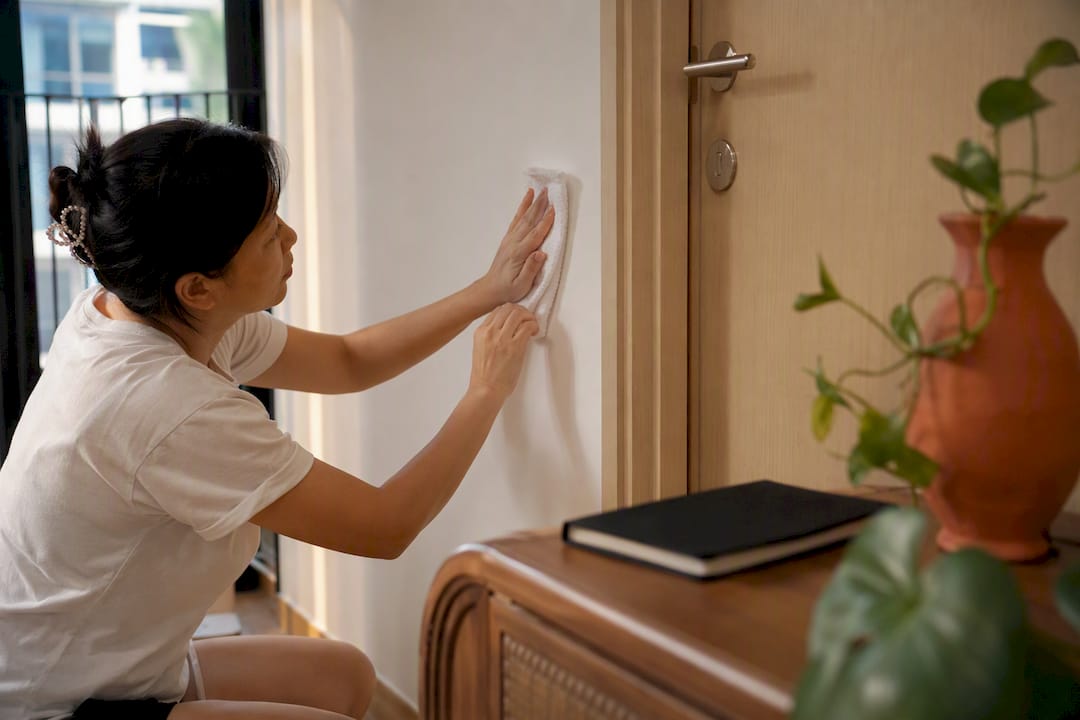
A security deposit exists to cover three things: unpaid rent, breaches of the TA, and damage that goes beyond fair wear and tear. That’s it. A landlord who tries to charge you for a naturally faded feature wall or carpet flattened by normal foot traffic is stretching the definition, and legal guidance for tenants is clear that ordinary wear and tear isn’t chargeable unless the TA specifically says otherwise.
The distinction usually comes down to cause, not appearance.
- Fair wear and tear (not chargeable): faded paint, minor scuff marks on walls, worn carpet fibers, small nail holes from hanging pictures.
- Chargeable damage: a cracked bathroom tile from dropped tools, a broken air-con remote, stained upholstery from a spill never cleaned, holes punched in drywall.
- Always chargeable: unpaid rent, unpaid utility bills the TA assigns to the tenant, early termination without proper notice.
If a landlord deducts anything, ask for an itemized invoice or repair quote, not a round number pulled from thin air. A reasonable landlord will have receipts. One who can’t produce them is on weak ground if the dispute escalates. The cleanest way to avoid all of this is making sure allowed deductions are spelled out in the TA itself, in plain language, before you sign anything.
How Do You Protect Your Deposit at Move-In?
Your strongest defense against an unfair deduction is boring, methodical documentation, done before you unpack a single box.
- Photograph and video everything. Walk through every room, cupboard, and appliance, capturing existing scratches, stains, or wear. Timestamp the files or email them to yourself the same day so the date is verifiable.
- Build an itemized fixture list. Note the condition of air-con units, water heaters, light fixtures, and furniture (if furnished), and get the landlord or agent to sign off on it.
- Keep every receipt and permission slip. If you pay for a repair or the landlord approves a change (a new lock, a wall mount), save the written exchange.
- Negotiate key TA clauses before signing, not after. Push for a specific return timeframe, a clear deduction list, and, if the landlord agrees, a note on whether the deposit accrues any interest.
Pro Tip: Name your photo files by room and date (“mastbed_movein_2026-03-14”) and back them up somewhere outside your phone. A jumbled camera roll is far less persuasive to a tribunal than an organized folder.
Some tenants use an escrow-style holding arrangement, but nothing obliges a landlord to place the deposit anywhere but their own account, since there’s no legal requirement for escrow in Singapore. That’s exactly why your own paper trail matters more than any structural protection the law provides.
How Long Does It Take to Get a Security Deposit Back?
There’s no single statutory return period. What you’ll actually get depends entirely on what the TA says, and contracts vary from a tight 7 days to a looser 30-day window. Industry practice tends to treat about 14 working days as reasonable when the contract is silent on timing, though that figure comes from convention rather than law.
The math itself should be straightforward: full deposit, minus any unpaid rent, minus documented and agreed deductions, equals the refund. Any deduction should come with a receipt or repair invoice attached, not a verbal estimate.
Before handing back your keys, run through this:
- Do a joint walk-through inspection with the landlord or agent, ideally scheduled a few days before the official move-out date.
- Document the final condition with photos, mirroring your move-in set.
- Get written confirmation there are no outstanding sums owed before you surrender the keys.
- Ask directly: when exactly will the deposit be wired back, and by what method?
Locking in these answers before you leave the unit saves weeks of chasing a landlord who’s since gone quiet.
What if the Landlord Withholds or Refuses to Return the Deposit?
Escalate in stages, and don’t skip the paper trail at each step.
- Negotiate directly first. Most disputes are about disagreement over amount, not outright refusal. A calm conversation backed by your photos often resolves it.
- Send a written demand letter. State the amount owed, reference the TA clause, attach your move-in evidence, and give a firm deadline, typically 7 to 14 days.
- File with the Small Claims Tribunals if the deadline passes. The Tribunals cover residential tenancy disputes for leases of two years or less, with a claim ceiling of S$20,000, or S$30,000 by mutual consent.
Before you file, assemble a tight evidence package. Tribunal officers respond well to organization, not volume.
- The signed Tenancy Agreement.
- Move-in and move-out photos or videos, dated.
- Rent and deposit payment records (bank transfer or PayNow confirmations).
- All written correspondence with the landlord, including the demand letter.
- Any signed inspection or handover forms.
Hearings are informal compared to a court trial. You won’t need a lawyer, and most cases settle through mediation before a formal hearing even happens. Realistic outcomes range from a full refund order to a partial split where the tribunal agrees some deductions were fair. What tips a case in your favor almost every time is dated photographic evidence paired with clean payment records. Landlords who show up with nothing but a verbal explanation tend to lose.
Do HDB Sublets, Commercial Leases, or Joint Tenancies Change the Rules?
HDB subletting carries extra regulatory weight. Confirm the landlord actually has HDB approval to sublet before you pay a cent. A tenancy built on an unapproved sublet can unravel fast, and your deposit becomes collateral damage in that mess.
Joint tenancy and guarantors need explicit TA language on how any deduction gets split among co-tenants. Don’t assume it’s automatically even.
Commercial leases run on different math entirely, often two to three months’ deposit or phased payments tied to fit-out stages, plus separate stamp duty considerations most residential tenants never encounter.
- Red flag: a deposit demand well above the one to two month norm with no explanation.
- Red flag: a landlord who refuses to issue a receipt.
- Red flag: insistence on cash-only payment.
What Should Be in Your Tenancy Agreement to Avoid Deposit Disputes?
A well-drafted TA is your real insurance policy, since Singapore leans on the contract itself rather than dedicated deposit legislation. Before signing, check it names:
- The exact deposit amount and payment method.
- A specific list of permitted deductions, not vague language like “damages.”
- A firm return timeframe (7, 14, or 30 days), not “reasonable time.”
- A required joint inspection before move-out.
- A requirement that any deduction come with a receipt or invoice.
Pro Tip: Ask your agent to insert a line like: “The Landlord shall return the Security Deposit within 14 working days of the expiry of the Tenancy, less any deductions supported by itemized receipts.” That single sentence closes most of the loopholes landlords exploit.
A Singapore-based consultant reviewing your TA before signing can flag one-sided deduction clauses most tenants miss entirely.
A Property Consultant’s Take on Deposit Disputes
The single biggest predictor of a smooth deposit refund isn’t the amount you paid. It’s whether your TA and move-in inventory were airtight from day one. Most disputes I see trace back to vague contract wording, not landlord bad faith.
If it does go sideways, the Small Claims Tribunals process is genuinely accessible and doesn’t require a lawyer to get a fair hearing.
How Aesthetic Havens Helps You Protect Your Deposit
Reviewing a Tenancy Agreement clause by clause before you sign is where most deposit disputes actually get prevented, not resolved after the fact. Aesthetic Havens works with tenants across Singapore to catch the vague deduction language and missing return timelines that turn into six-month headaches.

Our support covers the parts of a rental most tenants handle alone and get wrong: contract review before signing, move-in inventory documentation, negotiation on deposit terms with the landlord’s agent, and, if things go badly, organizing the evidence file a tribunal claim actually needs. If you’re weighing whether professional guidance is worth it before you commit to a lease, our breakdown of what a property consultant actually does for buyers and tenants walks through the specifics.
Reach out before you sign your next TA, and we’ll flag the deposit clauses worth renegotiating before they become a problem you’re fighting over in six months.
Frequently Asked Questions
How much is a typical security deposit in Singapore?
One month’s rent for a one-year lease and two months’ rent for a two-year lease. That’s market convention, not law, so some landlords ask for more depending on the tenant’s profile.
Is a security deposit refundable in Singapore?
Yes, minus any legitimate deductions for unpaid rent, TA breaches, or damage beyond fair wear and tear. The full refundable amount and timeline should be written into your Tenancy Agreement.
How long does a landlord have to return the deposit?
There’s no fixed legal deadline. Contracts commonly specify 7 to 30 days, and industry practice treats roughly 14 working days as reasonable when the TA doesn’t state a number.
What can I do if my landlord won’t return my deposit?
Start with a direct conversation, follow with a written demand letter and deadline, then file at the Small Claims Tribunals if the landlord still refuses, with claims capped at S$20,000 or S$30,000 by mutual consent.
Does the deposit cover normal wear and tear?
No. Fair wear and tear, like faded paint or worn carpet, isn’t chargeable unless the tenancy agreement explicitly says otherwise. Only unpaid rent, breaches, and genuine damage qualify.
This article is general information, not a substitute for advice from a qualified lawyer. Consult a qualified legal professional about your own circumstances before acting on anything here.
Sources
- Tenancy Matters for Renting a Flat or a Bedroom from Open Market — HDB
- Filing a small claim — State Courts / Judiciary of Singapore
- Landlord Won’t Return Your Security Deposit: What to Do — SingaporeLegalAdvice
- Security deposits — Landager (Singapore compliance guidance)


