


Yes, lease decay matters for your HDB flat. As remaining lease falls, buyers face tighter CPF limits and shorter bank loan tenures, and the market prices that shrinkage in. PropKaki’s quarterly tracker shows flats with under 60 years remaining transacted at a median of S$557 per square foot in Q2 2026, versus S$751 psf for 90+ year flats — a gap of roughly 25.8%. The two mechanisms driving that gap are the CPF age-95 rule (which reduces or eliminates CPF usage as lease shortens) and MAS loan-tenure and LTV caps that compress what buyers can borrow.
Two immediate steps worth taking now:
- Check your flat’s remaining lease on the HDB website using your flat’s address or postal code.
- Run the CPF housing usage calculator at cpf.gov.sg and your bank’s loan calculator to see how your current remaining lease affects a buyer’s eligibility today.
Key Takeaways
HDB lease decay is primarily a financing problem: as remaining lease shortens, CPF eligibility and bank loan tenures shrink, which reduces the buyer pool and pushes prices down faster than the structural Bala’s Table curve alone would predict.
Table of Contents
- What lease decay in HDB flats actually means
- How remaining lease changes your financing options
- How resale prices and liquidity shift as lease shortens
- What government schemes exist for older HDB flats
- How valuers convert remaining lease years into price
- Practical actions for homeowners: when to plan your exit
- A property consultant’s perspective on lease decay trade-offs
- How Aesthetic Havens can help you navigate lease decay
- Sources
What lease decay in HDB flats actually means
Lease decay is the industry shorthand for the declining economic value of a leasehold property as its remaining lease counts down. Every HDB flat in Singapore is sold on a 99-year lease. That clock starts from the flat’s completion date, not the date you bought it. If you purchased a flat in 2010 that was completed in 1985, your remaining lease in 2026 is already down to roughly 58 years.
At lease expiry, the flat reverts to HDB and the State. Owners receive no compensation. That terminal outcome is what gives remaining lease its economic weight: the shorter the lease, the closer the asset is to zero value, and the more that endpoint shapes how buyers, banks, and CPF treat the property today.
Remaining-lease bands matter because market behavior shifts at specific thresholds:
- 90+ years remaining: Treated like new or near-new stock. Full CPF usage, maximum LTV, widest buyer pool.
- 80–89 years: Minimal practical difference from 90+; most buyers unaffected.
- 70–79 years: CPF pro-ration begins to bite for older buyers; some loan tenures start to shorten.
- 60–69 years: Financing constraints become visible. Buyer pool narrows noticeably.
- Under 60 years: The financing cliff. CPF eligibility is sharply reduced for most buyer ages, LTV drops, and cash requirements rise. Liquidity thins.
The structural benchmark valuers use to convert remaining lease into a percentage of freehold value is Bala’s Table, published by the Singapore Land Authority (SLA). It describes a non-linear curve: value falls slowly in the early decades and accelerates sharply in the final 30 years. The curve’s shape explains why the financing cliff at 60 years is so consequential — it is also where Bala’s decay rate begins to steepen.
How remaining lease changes your financing options
Remaining lease directly determines how much CPF a buyer can use, how long a loan they can take, and what LTV ratio a bank will approve. Shorter lease means less CPF, shorter tenure, lower LTV, and more cash required at the table.
The CPF age-95 rule
CPF’s housing usage rules require that the flat’s remaining lease at the point of purchase covers the youngest buyer to age 95. If it does, full CPF Ordinary Account funds can be used. If it does not, CPF usage is pro-rated based on how many years of coverage remain. Below 20 years remaining lease, no CPF Ordinary Account funds can be used at all.
A 35-year-old buyer needs 60 years of remaining lease (95 minus 35) for full CPF access. A 45-year-old needs 50 years. This is why the same flat affects different buyers very differently depending on their age.
HDB loan vs. bank loan
HDB loans carry a fixed concessionary rate and are available only to eligible Singapore Citizens buying HDB flats. Bank loans follow MAS regulations. Both are affected by remaining lease, but the interaction differs:
- HDB loan: Maximum loan tenure is 25 years or the remaining lease minus 20 years, whichever is lower. Eligibility also depends on income ceiling and flat type.
- Bank loan: MAS caps loan tenure at 30 years for HDB flats, but the effective tenure is also limited by remaining lease and borrower age. LTV for bank loans is typically up to 75% for the first property, but this reduces when loan tenure exceeds certain thresholds tied to borrower age and remaining lease.
Indicative financing thresholds by remaining lease
The table below is illustrative. Always confirm with your bank, CPF, and HDB directly.
| Remaining Lease | CPF Usage | Max Loan Tenure (approx.) | LTV Availability | Cash Requirement |
|---|---|---|---|---|
| 90+ years | Full | Up to 25–30 years | Up to 75% (bank) | Standard |
| 70–89 years | Full to pro-rated (age-dependent) | Up to 25 years | Up to 75% | Moderate |
| 60–69 years | Pro-rated for most buyer ages | 20–25 years | Reduced for older buyers | Higher |
| 40–49 years | Significantly reduced | 15–20 years | Materially lower | Substantially higher |
| Under 20 years | None (CPF OA blocked) | Very short | Minimal | Mostly cash |
Pro Tip: A 30-year-old buyer and a 50-year-old buyer face completely different CPF eligibility on the same flat. Run the CPF calculator with the actual buyer’s age, not a generic scenario — the difference in usable CPF can be S$100,000 or more on a S$500,000 flat.
How resale prices and liquidity shift as lease shortens
Shorter leases generally trade at a discount, and the discount is not linear. The financing cliff around 60 years remaining is where the market gap becomes most visible.
PropKaki’s lease-decay tracker shows a median of S$557 psf for under-60 flats versus S$751 psf for 90+ flats in Q2 2026 — a 25.8% gap that reflects both structural depreciation and the financing constraints that shrink the buyer pool. Research from DR-NTU quantifies the per-year monetary impact: in its sample, a one-year reduction in remaining lease was associated with a measurable average price decline.
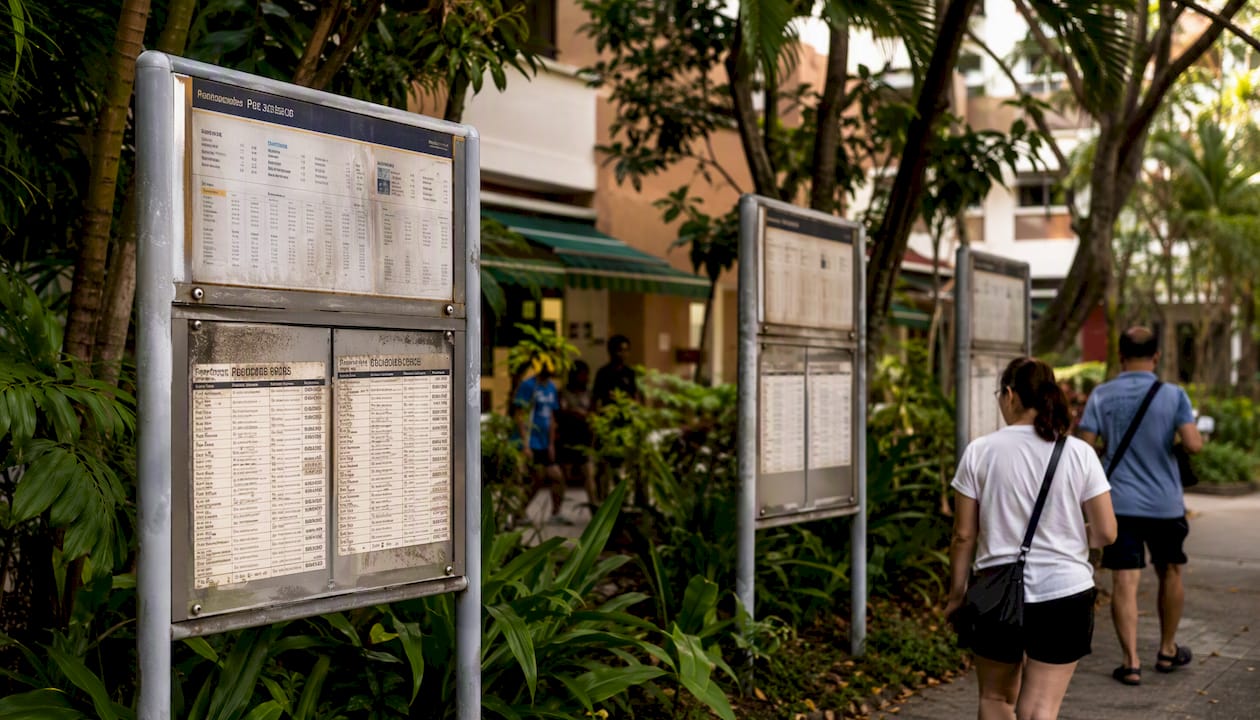
CheckHowMuch’s analysis estimates theoretical annual loss rates by band: roughly 0.14% at 90–99 years, rising to approximately 0.78% at 40–49 years. The acceleration is not purely Bala’s curve at work. Financing mechanics amplify it. When CPF usage is restricted and loan tenures shorten, fewer buyers can qualify, and those who can must bring more cash. That reduced demand pool pushes prices down faster than the structural lease-decay formula alone would predict.
Factors that can soften or override lease decay:
- Proximity to MRT stations, especially new lines under construction
- Upcoming town transformation or urban renewal (Queenstown, Kallang, Toa Payoh)
- Limited supply of a specific flat type in a popular estate
- Strong rental demand in the area supporting investment buyers
- Town-level price momentum driven by recent transaction activity
Factors that accelerate effective decay:
- Low-demand flat types (large executive flats in peripheral towns)
- Poor accessibility and limited amenities
- High supply of similar units in the same estate
- Buyer demographic mismatch (older buyer pool needing more CPF coverage)
When remaining lease falls below roughly 40 years, expect the buyer pool to shift almost entirely to cash buyers or buyers with very low CPF reliance. Liquidity at that point is thin, and transaction counts in the band drop sharply. Watching both median price and transaction volume in your lease band gives a more complete picture than price alone.
What government schemes exist for older HDB flats
Three main policy instruments address aging HDB flats: the Lease Buyback Scheme (LBS), the Selective En bloc Redevelopment Scheme (SERS), and the Voluntary Early Redevelopment Scheme (VERS). They serve different purposes and reach different groups of owners.
Lease Buyback Scheme (LBS)
LBS lets eligible flat owners sell part of their remaining lease back to HDB in exchange for a cash payout and CPF Life top-up for retirement income. The owner retains a shorter lease (typically 30 years) and continues living in the flat.

Key eligibility conditions include: Singapore Citizen household, at least one owner aged 65 or above, flat must be the owner’s only property, and the household must have lived in the flat for at least five years. The trade-off is explicit: you receive retirement income now, but the flat’s future resale value is reduced because the remaining lease is shortened.
Selective En bloc Redevelopment Scheme (SERS)
SERS is HDB-initiated, not owner-initiated. HDB selects specific precincts for redevelopment, acquires the flats at market value, and offers affected residents priority to purchase a new replacement flat nearby. Not all old flats qualify. Selection is based on redevelopment potential and planning considerations. Owners who receive a SERS offer generally benefit from the market-value compensation and the new flat offer, but the scheme reaches only a small fraction of aging HDB stock.
Voluntary Early Redevelopment Scheme (VERS)
VERS is the newer, precinct-based option announced by the Ministry of National Development (MND). Unlike SERS, it is voluntary: HDB offers to buy back flats in selected precincts, but residents vote on whether to accept. The compensation is expected to be below SERS levels because it is not compulsory. VERS is designed to give owners in older precincts a structured exit before the lease runs very low, but details on pricing and rollout remain subject to MND’s planning priorities.
A practical note: Neither VERS nor SERS is guaranteed for any specific flat. Owners should not plan their retirement finances around receiving a SERS or VERS offer. LBS is the only scheme owners can proactively apply for. For current scheme details and eligibility, check the HDB website and MND’s housing policy pages.
How valuers convert remaining lease years into price
Valuers use Bala’s Table as the structural starting point, but actual transaction prices diverge from it based on location, supply, and financing conditions.
Bala’s Table, published by the Singapore Land Authority (SLA), expresses leasehold value as a percentage of freehold value on a non-linear curve. The curve flattens in the middle decades and steepens sharply below 40 years. This is the structural benchmark — it tells you what a lease of a given length is theoretically worth relative to freehold, all else equal.
Market prices do not follow Bala’s Table precisely. For Singapore tenure types, the gap between structural and transacted value depends on several real-world factors:
Tools like PropKaki measure the observed market gap by comparing median transaction prices from HDB’s official resale dataset (available via data.gov.sg) across remaining-lease bands each quarter. The gap between Bala’s structural value and actual transacted prices tends to be smallest in high-demand towns (Queenstown, Bishan, Toa Payoh) and widest in peripheral estates with lower demand. In popular locations, strong demand can push transacted prices above what Bala’s curve alone would suggest, at least until the financing cliff makes the buyer pool too small to sustain that premium.
Worked example: how remaining lease changes what a buyer can borrow
Say a buyer aged 40 is purchasing a 4-room flat with 58 years remaining lease, priced at S$550,000. Here is how the numbers work out — illustrative only; always confirm with the CPF housing usage calculator and your lender.
The same flat with 75 years remaining would give the buyer full CPF access and a longer loan tenure, reducing cash pressure. The difference in usable CPF and loan tenure between 58 years and 75 years remaining can translate to tens of thousands of dollars in cash the buyer must bring to the table.
This example is illustrative only. Confirm all figures with the CPF housing usage calculator and your bank or HDB loan officer before making any financial decision.
Practical actions for homeowners: when to plan your exit
Plan before your flat crosses the 60-year remaining-lease threshold. Once it does, the buyer pool narrows, CPF restrictions bite harder, and your negotiating position weakens. Waiting until the flat has 50 or 40 years left means selling into a thinner market with fewer qualified buyers.
Now (regardless of remaining lease)
- Check your flat’s exact remaining lease on the HDB website. Use the completion date, not your purchase date.
- Run the CPF housing usage calculator at cpf.gov.sg with your flat’s remaining lease and a range of hypothetical buyer ages (35, 40, 45, 50) to see how CPF eligibility changes.
- Run a bank loan affordability check using MAS-regulated calculators to understand what LTV and tenure a buyer would get today.
- Note your lease band (90+, 80–89, 70–79, 60–69, under 60) and track median psf and transaction counts in that band quarterly via PropKaki.
5–15 years before you plan to sell
- Consult a property advisor to model your exit price under current and projected lease conditions.
- Assess LBS eligibility if you are approaching 65 and considering monetizing the flat for retirement income.
- Review your CPF accrued interest — CPF funds used for housing accrue interest that must be returned to CPF upon sale, which affects your net cash proceeds.
- Compare your flat’s resale price trajectory against comparable flats in your town to identify whether location is offsetting lease decay.
More than 15 years out
- Monitor VERS and SERS announcements from HDB and MND for your precinct.
- Consider whether upgrading to private property makes sense before your flat’s lease decay materially reduces your equity and CPF proceeds.
- Keep documents current: title deed, HDB ownership records, CPF statements, and any renovation permits — these are needed for scheme applications and sale transactions.
Questions to ask your lender and property consultant
- What is the maximum loan tenure available for this flat given its remaining lease and my age?
- How does the remaining lease affect the LTV ratio I can access?
- What is the CPF pro-ration for this flat at my age, and how does that change in five years?
- How many transactions have occurred in this lease band in my town in the past 12 months?
- At what remaining-lease point does this flat become effectively cash-only?
Pro Tip: Watch transaction counts in your lease band, not just median price. A band with fewer than 10 transactions per quarter in your town can show volatile medians that mislead. When volume drops below that level, it signals that liquidity is tightening before price data catches up.
A property consultant’s perspective on lease decay trade-offs
The most common mistake I see Singapore homeowners make is treating lease decay as a distant problem. They know the lease is counting down, but they assume the market will stay liquid until the flat is genuinely old. The financing mechanics do not work that way. CPF and bank rules create a practical cliff well before the lease hits its final decades, and by the time most owners feel the liquidity squeeze, their negotiating position has already weakened.
What actually determines whether lease decay is decisive for a specific flat is location and flat type, not just remaining years. A 62-year flat in Queenstown or Toa Payoh, near an MRT interchange and surrounded by strong rental demand, will hold its buyer pool far longer than a 70-year flat in a peripheral estate with limited transport. The Bala’s Table curve is the same for both. The market is not.
The practical advice I give owners is this: treat the 60-year remaining-lease mark as your planning trigger, not your exit point. Run your CPF and loan numbers at that threshold. If the buyer pool for your flat at that point is already restricted to cash buyers or heavily pro-rated CPF users, you have a narrow window to sell into a still-liquid market. Waiting for SERS or VERS to solve the problem is not a strategy — most flats will never receive either offer. LBS is a genuine option for retirement monetization, but it is not a resale strategy. Know which tool fits your situation before you need it.
How Aesthetic Havens can help you navigate lease decay
Lease decay creates real financial consequences, and the numbers look different for every flat and every buyer age. Aesthetic Havens, operated under ERA Realtors, gives you a personalized read on exactly where your flat sits: remaining lease, CPF eligibility for your likely buyer profile, indicative LTV and loan tenure, and a realistic resale price range based on current transaction data in your lease band and town.
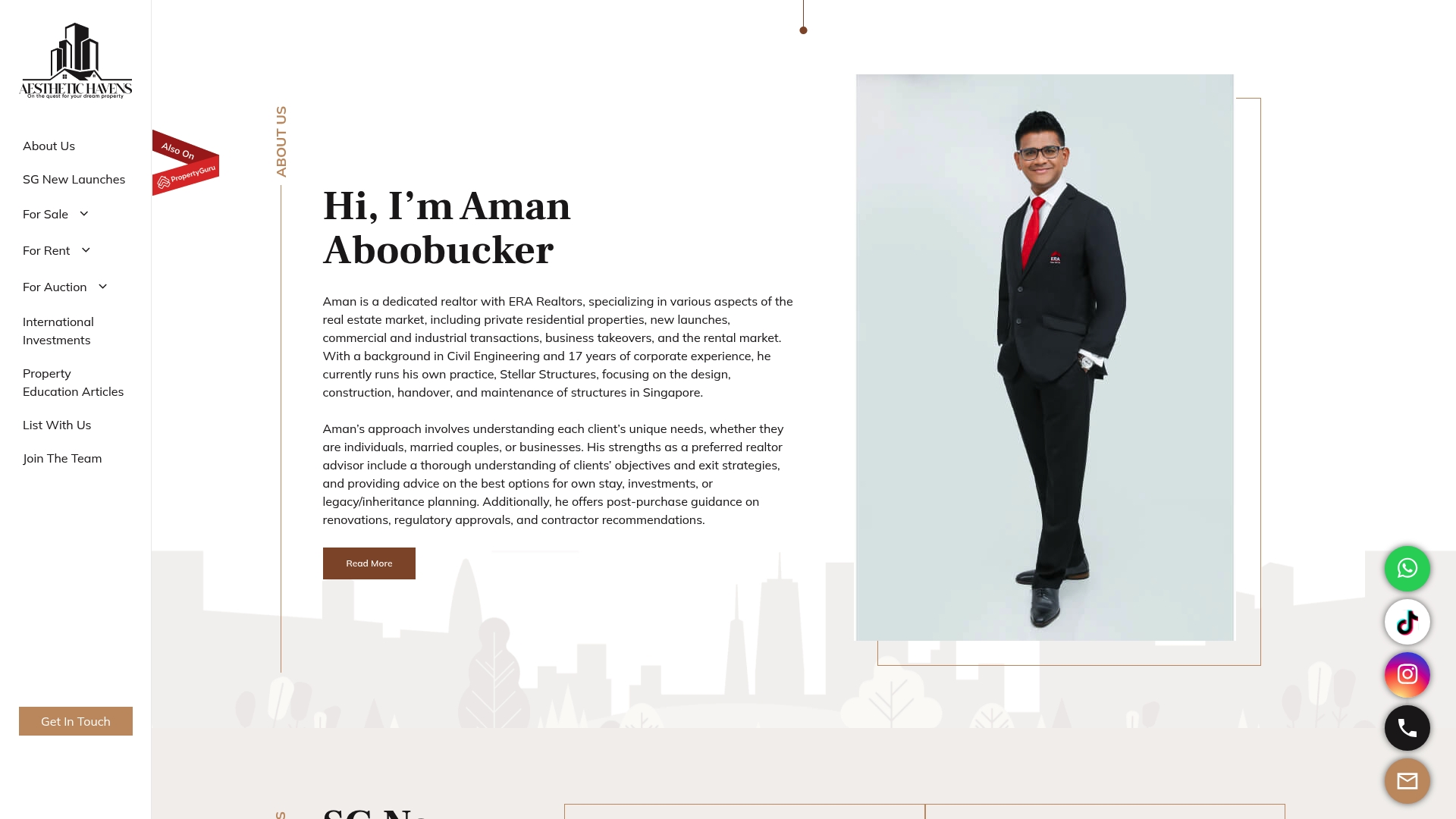
Whether you are deciding when to sell, assessing LBS eligibility, or planning an upgrade before your flat crosses the 60-year threshold, a structured property consultation gives you the numbers before you commit to a decision. Reach out to Aman directly through Aesthetic Havens to request a personalized lease-decay review for your flat, including a CPF pro-ration check and a current market comparison for your lease band.
Sources
Verify all rules and run your own calculations using these authoritative sources:
- HDB Lease Decay Tracker — the PropKaki Curve | PropKaki — Propkaki
- How Much Does Your HDB Lose in Value Each Year? Singapore Lease Decay Data | CheckHowMuch
- Cpf
- Mas
Always confirm CPF calculations with the official CPF calculator and loan figures with your bank or HDB loan officer before making any financial decision.
This article is general information, not a substitute for advice from a qualified financial advisor. Consult a qualified financial professional about your own circumstances before acting on anything here.


