

Introduction
Parktown Residence is a 1,193-unit mixed-use development at Tampines Avenue 11 in District 18, developed by CapitaLand, UOL, and Singapore Land Group (SingLand). The land was acquired for S$1.206 billion, and the project spans approximately 545,314 sq ft. It is the largest integrated development currently under construction in Singapore’s Outside Central Region (OCR), combining residential units with a retail mall, hawker centre, community club, integrated bus interchange, and a direct link to the upcoming Tampines North MRT station on the Cross Island Line.
This article is written for property investors and upgraders evaluating OCR developments with strong asset progression potential in 2026. If you are comparing integrated developments against traditional condominiums or trying to time your entry into the Tampines North growth corridor, the analysis below covers both the structural advantages and the specific risks.
Parktown Residences at Tampines Ave 11 sets a new benchmark for integrated developments in the OCR. Its direct MRT access, on-site retail mall, bus interchange, and community amenities position it to lead resale pricing in District 18, where the current average resale PSF sits at roughly S$1,520 across existing condominiums.
Here is what this article covers:
-
How integrated megaprojects differ from traditional condominiums and why that distinction affects resale pricing
-
Parktown Residences’ specific unit mix, connectivity infrastructure, and amenity ecosystem
-
Asset progression timing strategies for the 2026 to 2030 market cycle
-
Practical challenges including construction timelines, unit selection, and exit planning
Understanding Integrated Megaproject Fundamentals
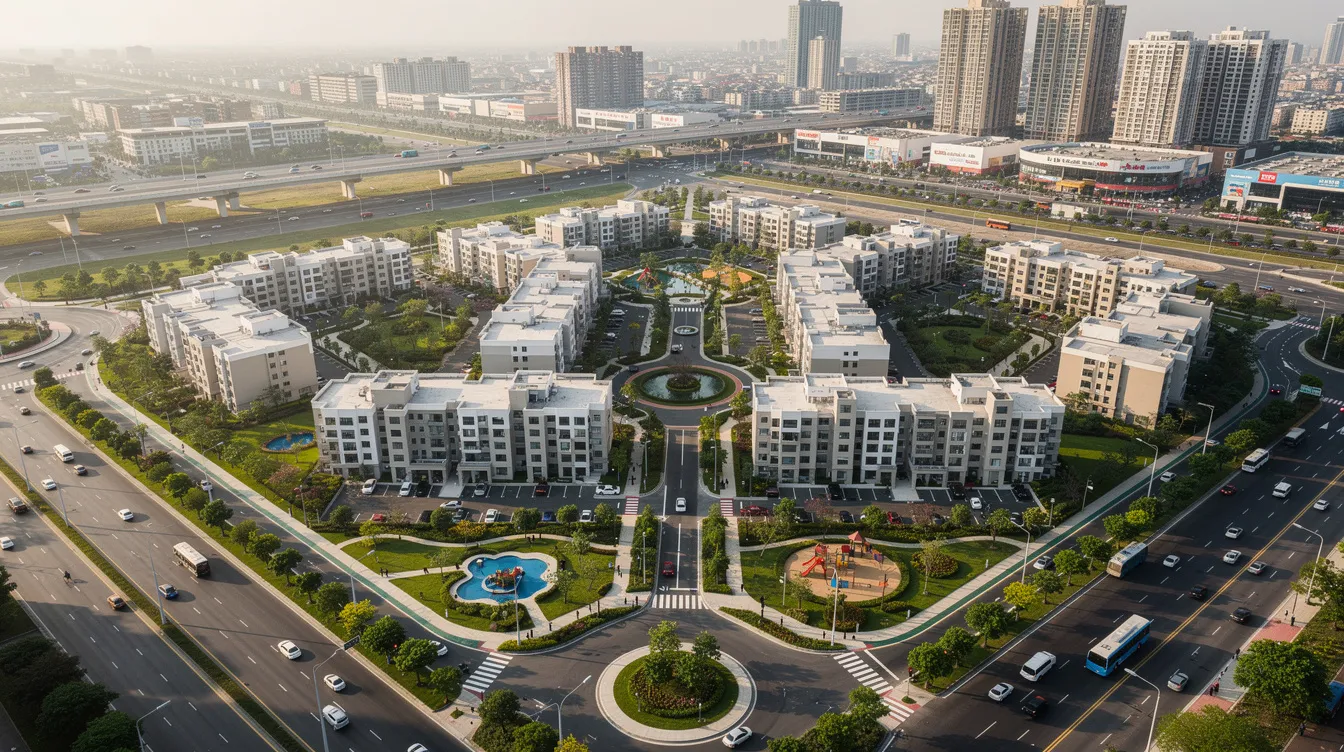
Integrated megaprojects in Singapore combine residential, transport, retail, and community functions within a single land parcel. A traditional condominium offers pools, a gym, and perhaps a function room. An integrated megaproject adds direct MRT connectivity, a bus interchange at ground level, a commercial podium with grocery stores and restaurants, and public amenities such as a hawker centre or community club. The result is a self-contained ecosystem where daily errands, commuting, and recreation happen without leaving the development’s footprint.
The criteria that separate integrated megaprojects from standard mixed-use projects are scale (typically exceeding 500 units), the presence of a major public transport node, and the inclusion of government-mandated community facilities. Parktown Residence meets all three. Understanding these structural features explains why integrated developments consistently command pricing premiums over standalone condominiums in the same district.
Infrastructure Integration Benefits
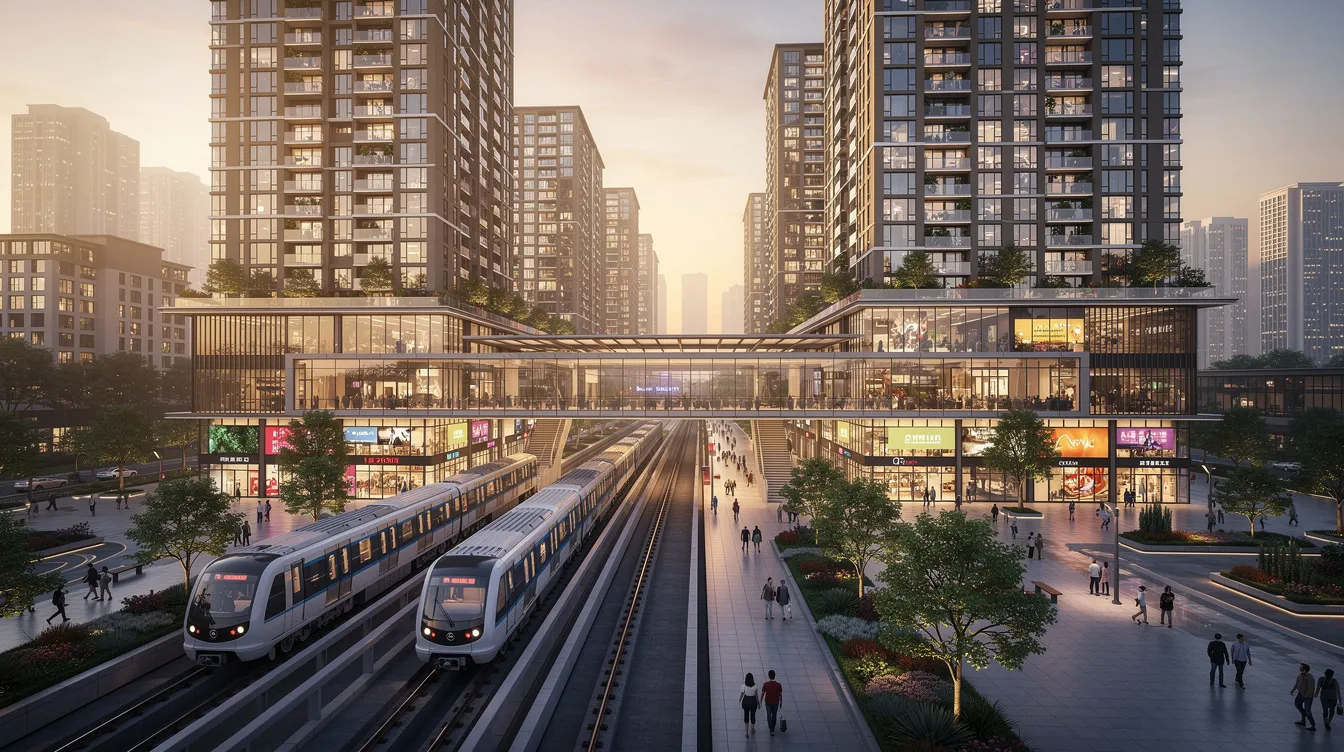
Parktown Residence is directly linked to the future Tampines North MRT station on the Cross Island Line, scheduled to open in 2030. The Cross Island Line will connect Tampines North to Pasir Ris, Ang Mo Kio, and points west, cutting travel times for residents who currently rely on feeder buses to reach the existing Tampines MRT on the East-West Line.
The development also houses the Tampines North Bus Interchange, integrated within its commercial podium. This dual-transit arrangement eliminates first-mile and last-mile friction for residents. Major expressways like the Pan Island Expressway (PIE) and Tampines Expressway (TPE) are accessible within minutes, providing convenient access to Changi Business Park, the city center, and business parks across the island. That combination of rail, bus, and expressway access creates the regional accessibility profile that drives both rental demand and resale premiums.
Mixed-Use Development Components
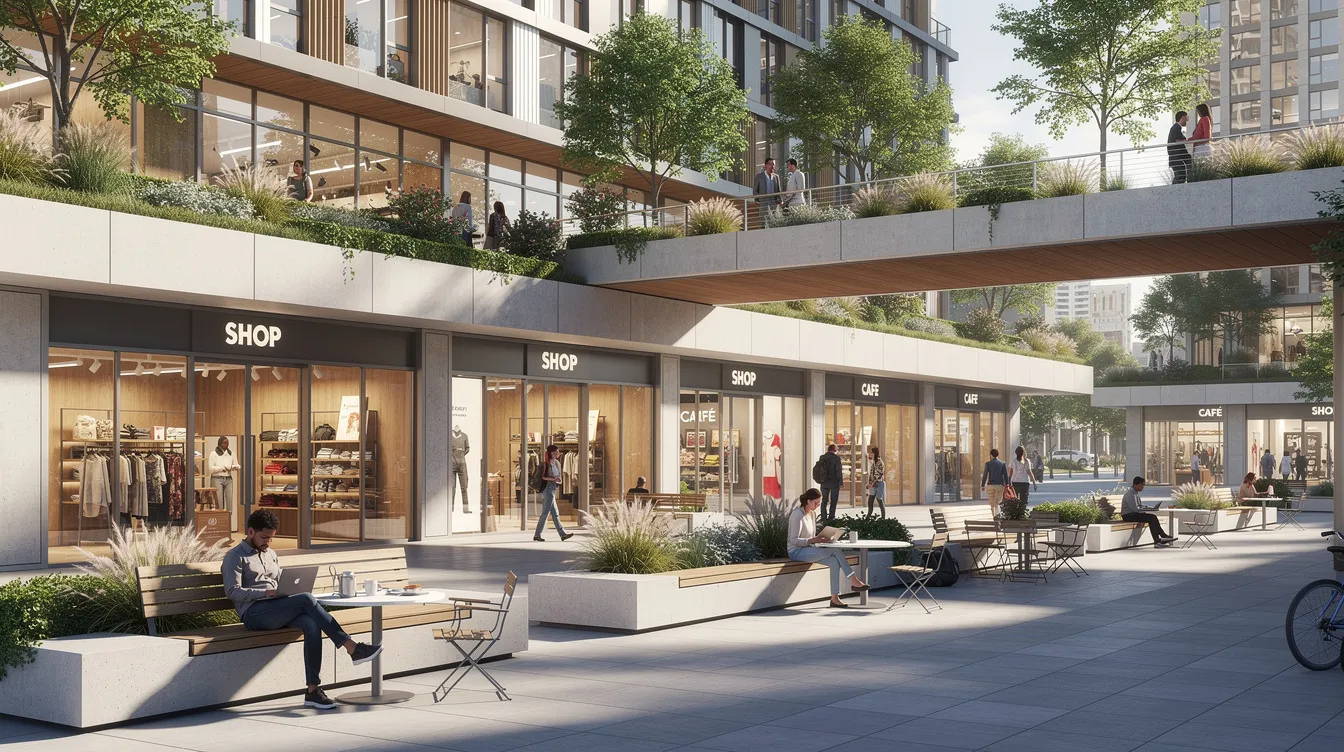
The integrated commercial podium at Parktown Residences includes PARKTOWN Tampines, a retail mall with retail spaces, commercial spaces, dining, and grocery options across two basement levels and a ground-level retail zone. Retail spaces within the podium serve daily needs; residents can pick up groceries or eat out without stepping outside the development’s boundary. This setup supports modern living by placing everyday services within the development.
Beyond the mall, the project incorporates a hawker centre and community club, both mandated as part of the government land sale conditions. These amenities serve not only residents but the broader Tampines North population, generating foot traffic that supports the retail component. For a buyer evaluating long-term value, this matters: a vibrant and connected community around the development sustains commercial tenancies, which in turn sustains the property’s appeal. The ecosystem is designed so that the residential, commercial, and civic elements reinforce each other rather than operating independently.
Parktown Residences District 18 Location and Development Specifications
The Parktown Residence location at Tampines Avenue 11 places it in a prime location within Tampines North, a designated growth area under the URA Master Plan. District 18 in the OCR has historically attracted upgraders from mature HDB estates in Tampines, Pasir Ris, and surrounding towns, and the site is also easy to orient within nearby Tampines Street corridors, with Tampines Street 62 serving as a useful local point of reference within the estate. Parktown sits at the intersection of established amenities (Tampines Mall, Century Square, Our Tampines Hub) and incoming infrastructure (Cross Island Line, Tampines Boulevard Park), making parktown residence a strategic location for both owner-occupiers and investors.
Development Scale and Unit Configuration
Parktown Residence offers 1,193 residential units across 12 blocks: 2 blocks at 6 to 7 storeys, 8 blocks at 11 storeys, and 2 blocks at 12 storeys. The site area covers about 545,511 sq ft with a 99-year leasehold tenure starting from July 2023.
The unit mix spans a diverse range:
|
Unit Type |
Size |
|---|---|
|
1-Bedroom + Study |
506 sq ft |
|
2-Bedroom Premium |
592 to 678 sq ft |
|
2 Bedroom Premium Study |
~764 sq ft |
|
3-Bedroom |
926 to 1,055 sq ft |
|
3 Bedroom Premium Study |
~1,163 to 1,184 sq ft |
|
4 Bedroom Premium |
~1,496 sq ft |
|
5-Bedroom Premium |
1,679 sq ft |
The Parktown Residence developer consortium brings specific credentials. CapitaLand has over 40 years of experience in real estate across South East Asia and globally. UOL Group, a subsidiary of United Overseas Bank Limited, manages a portfolio valued at about S$22 billion. SingLand (Singapore Land Group) has been shaping Singapore’s skyline for over 60 years. Their joint venture, Topaz Residential, acquired this land parcel in what remains one of the largest OCR land transactions in recent years.
Expected TOP is around 30 June 2030. For buyers entering in 2026, that leaves roughly four years of construction during which the Cross Island Line and integrated transport hub will also reach completion, aligning infrastructure delivery with residential handover.
Connectivity Infrastructure and Tampines North MRT Analysis
The upcoming Tampines North MRT station on the Cross Island Line sits directly beneath the development. CRL Phase 1 construction is underway, with the Tampines North Integrated Transport Hub expected to complete by 2030 alongside the MRT station. The Cross Island Line will stretch across Singapore’s eastern, northern, and western corridors, making it one of the most consequential rail additions since the Downtown Line.
Regional connectivity extends beyond rail. The Tampines Expressway provides direct access to Changi Airport and Pasir Ris, while the Pan Island Expressway PIE connects to the CBD and western Singapore. For residents commuting to Changi Business Park or the Tampines Central office cluster, the commute is under 15 minutes by car and will become faster by rail once the CRL opens.
Proximity to employment hubs matters for rental demand. Changi Business Park hosts major tenants including technology and financial services firms. The Tampines Regional Centre, identified in the URA Master Plan as a commercial node, continues to attract office and business park development, reducing the commute gap between eastern residents and their workplaces.
Amenity Ecosystem Assessment
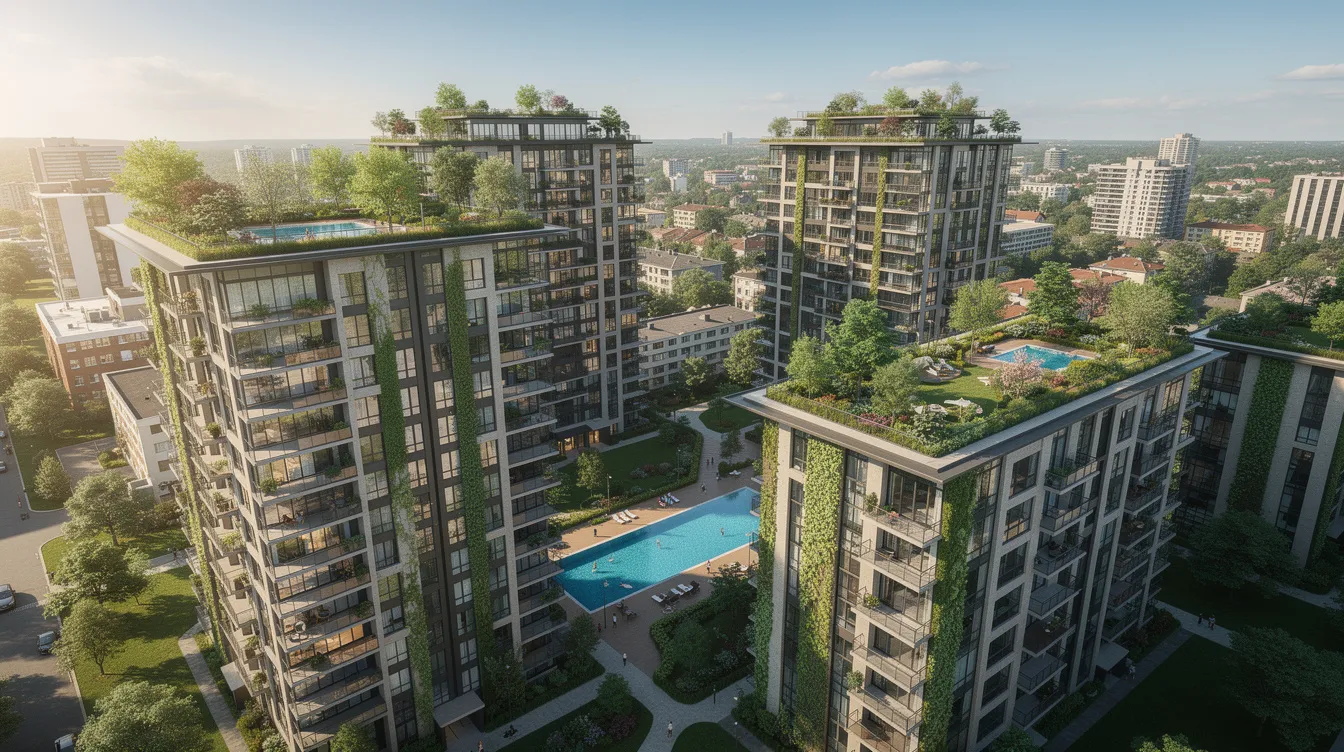
The on-site amenity package at Parktown Residence goes beyond the standard condominium offering. The development includes multiple pools, a gymnasium, a children’s playground, function rooms, and recreational areas spread across its 12 blocks. Green spaces and sky gardens are integrated throughout, reflecting green building practices in the development’s design.
Just an elevator ride from their units, residents reach the PARKTOWN retail mall, hawker centre, and community club. This is not just a home; it is a complete living environment where daily needs are met within the development footprint. The integrated commercial podium provides dining and grocery options that reduce dependence on external trips.
The broader Tampines amenity network adds further depth. Residents also have access to multiple shopping malls in Tampines Central, including Tampines Mall, Century Square, and Tampines 1. Tampines Mall and Century Square sit within the wider Tampines Central area. Tampines Retail Park adds another major retail destination in the area. Our Tampines Hub offers sports facilities, a library, and a performance theatre. For families, nearby educational institutions include Poi Ching School, Angsana Primary School, Gongshang Primary School, St. Hilda’s Primary School, Tampines Primary School, and Temasek Polytechnic. United World College of South East Asia (East Campus) is also accessible. Healthcare facilities serving the area include Tampines Polyclinic and Changi General Hospital.
Outdoor recreation options include Tampines Eco Green, Bedok Reservoir Park, Tampines Boulevard Park, and Pasir Ris Park, all reachable within a short drive or cycling distance.
Asset Progression Strategy and Market Positioning
Entering an integrated development during its pre-TOP phase has historically offered the steepest price appreciation curve in the OCR. The period between launch and transport hub completion is when the gap between current pricing and future infrastructure value is widest. For Parktown Residences, that window is 2025 to 2030.
Integrated Development Resale Performance Analysis
In Q1 2026, OCR non-landed property prices rose 2.2% quarter-on-quarter, outperforming other regions. Within the OCR, integrated developments consistently set the price ceiling for their districts. Pinery Residences, a 588-unit project with a direct link to Tampines West MRT and an integrated mall, achieved 92.5% take-up at launch in March 2026 at an average of S$2,546 PSF. That figure sits well above the District 18 resale average of roughly S$1,520 PSF across all condominiums.
Parktown Residence launched at approximately S$2,360 PSF, and projected selling prices may start from S$1,900 PSF for selected units. The premium over District 18’s existing resale average reflects the infrastructure integration that standard condominiums in the area lack. The Tampines Trilliant, an executive condominium that reached TOP in 2015, has seen resale transactions hover around S$1,700+ PSF in recent years. That provides a reference point for what matured OCR properties in Tampines can achieve without direct MRT connectivity or an integrated retail podium.
Making Parktown Residence stand out from comparable OCR launches is the completeness of its integration: MRT station, bus interchange, retail mall, hawker centre, and community club in a single project. Few developments in Singapore’s pipeline offer that full suite.
Tampines North Growth Trajectory Assessment
Tampines North is a designated growth area under the URA Master Plan, anchored by proximity to Changi Airport, Changi Business Park, and the Tampines Regional Centre. The master plan envisions Tampines North as a precinct where homes sit close to employment nodes, reducing commute dependency.
The BTO pipeline in Tampines North is substantial. Large upcoming HDB stock means that by 2028 to 2032, thousands of flats will reach their Minimum Occupation Period. Many HDB flat owners in mature Tampines estates have accumulated housing equity over five to ten years. That equity, once unlocked at MOP, flows into the private housing market. Parktown Residence condo and adjacent private launches are positioned to capture this upgrader demand.
The Cross Island Line’s impact on property values follows a pattern observed with previous MRT lines: properties within 500 metres of a new station see measurable PSF increases in the three years following station opening. Tampines North MRT will serve as the sole station for this precinct, concentrating the accessibility premium on developments with direct access, most notably Parktown Residence.
Investment Entry Timing Advantages
Buying during 2025 to 2026 at direct developer price locks in pre-infrastructure pricing. By the time the Tampines North MRT opens in 2030, coinciding with Parktown’s expected TOP, the development will transition from a construction site to a fully operational integrated ecosystem. Buyers who enter at this stage capture the price delta between current launch pricing and post-completion valuations.
Unit selection within a 1,193-unit project requires specificity. Larger configurations such as the 3 bedroom premium study and 4 bedroom premium units tend to outperform smaller units in resale within integrated OCR developments, because upgrader families moving from HDB flats prioritize space. View parktown residence showflat appointments to assess stack orientation; units facing away from the bus interchange and toward green corridors carry less noise exposure and stronger resale appeal.
For portfolio positioning, the Tampines Parktown Residence development serves dual objectives. Rental yield becomes viable immediately post-TOP as the MRT and bus interchange generate commuter demand. Capital appreciation follows as the wider Tampines North precinct matures through 2031 to 2033, supported by district benchmark rises across surrounding property development.
|
Strategy |
Optimal Unit Type |
Target Hold Period |
|---|---|---|
|
Rental yield focus |
1-Bed + Study, 2-Bed Premium |
1 to 3 years post-TOP |
|
Capital appreciation |
3-Bed Premium + Study, 4-Bed Premium |
3 to 5 years post-TOP |
|
Upgrader resale |
3-Bed, 5-Bed Premium |
5+ years post-TOP |
Parktown residence floor plans should be evaluated against these strategies; unit facing, floor level, and proximity to amenity decks all influence long-term returns.
Common Investment Challenges and Solutions
Integrated megaproject investments carry specific risks that differ from standard condominium purchases. Addressing these early improves both holding-period comfort and exit outcomes.
Construction Timeline and Market Risk Management
The four-year gap between purchase (2026) and TOP (2030) exposes buyers to interest rate fluctuations on progressive payment schedules. The Cross Island Line was delayed by one year due to COVID-19, which shifted the Tampines North ITH timeline accordingly. While current schedules target 2030 completion, further delays remain possible.
Mitigation: Structure financing to accommodate rate variability. Fixed-rate loan packages covering the construction period reduce monthly payment uncertainty. Buyers should also budget for the scenario where TOP shifts to late 2030 or early 2031, ensuring cash flow reserves cover additional months of progressive payments without forced liquidation.
Unit Selection and Stack Analysis Optimization
A 1,193-unit development across 12 blocks creates wide variation in noise exposure, view corridors, and sun orientation. Units directly above the bus interchange or retail podium experience higher ambient noise during operating hours. West-facing stacks in Singapore receive afternoon sun, increasing cooling costs.
Prioritize mid-to-high floors in blocks oriented toward Tampines Boulevard Park or internal garden courtyards. The Parktown Residence showflat provides a scaled model for assessing inter-block spacing. Stacks on the development’s eastern and northern edges tend to offer quieter environments with better airflow. For resale optimization, corner units with dual-aspect windows consistently command PSF premiums over interior-facing units in large OCR developments.
Exit Strategy Planning and Market Timing
The optimal exit window depends on infrastructure completion and area maturation. Selling immediately at TOP (2030) captures the MRT opening premium but misses the two-to-three-year price run-up that typically follows full precinct activation (retail tenancies stabilized, bus routes fully operational, community club programming established).
A hold until 2032 to 2033 allows the Tampines North precinct to reach maturity. By then, the BTO MOP wave will have released upgrader demand into the private market, supporting resale volume and pricing. Investors should monitor District 18 transaction data quarterly and benchmark their unit’s PSF against new launches in the area to identify the point where resale premiums plateau.
Conclusion and Next Steps
Parktown Residences combines direct MRT access, an integrated bus interchange, a retail mall, a hawker centre, and a community club within a 1,193-unit development strategically located at Tampines Avenue 11 in District 18. Its integrated development status, developer consortium pedigree, and alignment with the Cross Island Line completion timeline position it as the OCR benchmark for asset progression through 2030.
For investors and upgraders evaluating entry in 2026, the practical next steps are:
-
Book a Parktown Residence showflat visit to assess unit configurations, stack orientation, and finishing quality firsthand
-
Consult with a property advisor on unit selection aligned to your investment strategy (rental yield vs. capital appreciation vs. upgrader resale)
-
Secure financing pre-approval to lock in current interest rates before progressive payments begin
-
Map your investment timeline against CRL completion milestones and District 18 resale benchmarks
Related areas worth exploring include the broader OCR development pipeline in Tampines and Pasir Ris, the Cross Island Line’s impact on property values along its full corridor, and comparative analysis of integrated developments across Singapore’s eastern region.
Additional Resources
-
Parktown Residences official project details for floor plans, pricing, and developer factsheets
-
Cross Island Line construction timeline and station details from the Ministry of Transport
-
URA Master Plan for Tampines North covering zoning, infrastructure investment, and growth area designation
-
District 18 resale transaction data for benchmarking current PSF across OCR condominiums

