


Most buyers and investors assume exclusive listings mean better prices, tighter privacy, or access to deals the public never sees. The reality is more complicated. The role of exclusive listings in any property market, including Singapore’s, is shaped by contract structures, agent incentives, and market dynamics that rarely get explained clearly. This guide cuts through the noise, drawing on recent research and local market context to show you exactly what exclusive listings deliver, where they fall short, and how to use that knowledge to your advantage.
Table of Contents
- Key takeaways
- The role of exclusive listings, defined
- Market impact and what the data actually shows
- Benefits and drawbacks for buyers and investors
- How exclusive listings work in practice
- My honest take on exclusive listings in Singapore
- How Aesthetic Havens helps you navigate exclusive listings
- FAQ
Key takeaways
| Point | Details |
|---|---|
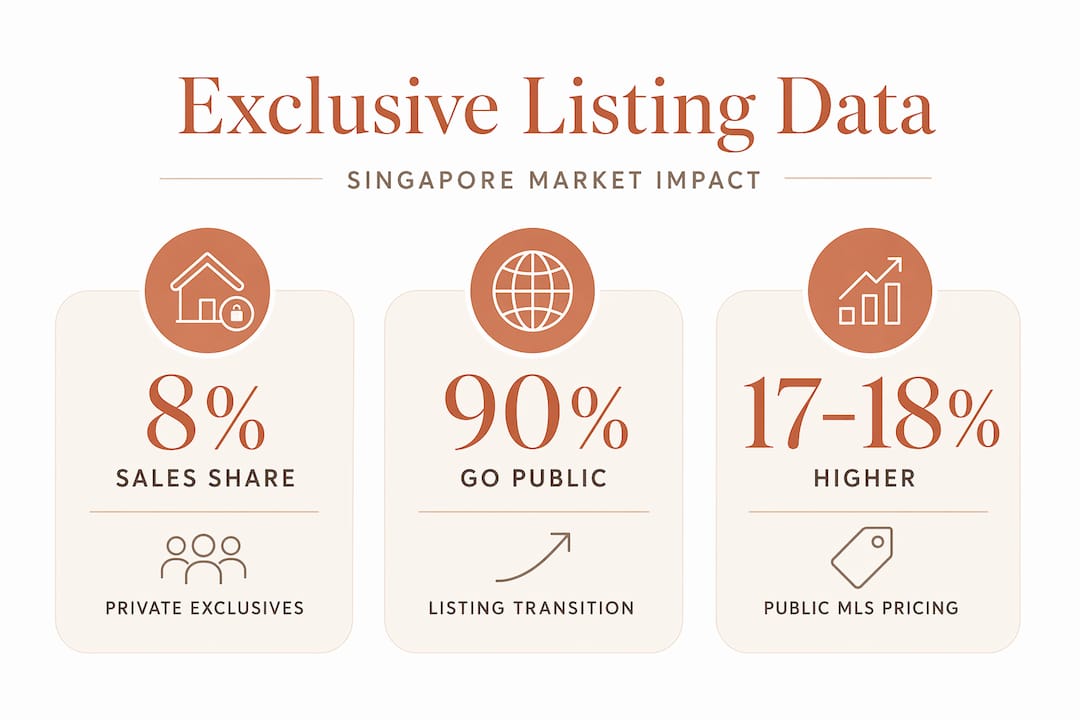
| Exclusive listings are growing | Private exclusives reached about 8% of total sales by early 2025, up from 2-4% previously. |
| Most go public eventually | Over 90% of exclusive listings transition to public MLS, limiting the “off-market” advantage. |
| Public listings command higher prices | Homes on MLS sell for roughly 17-18% more than comparable off-market properties. |
| Agent incentives matter | Brokerages sometimes use private listings for lead generation, not to maximize your sale price. |
| Informed buyers win | Understanding exclusive listing agreements lets you negotiate better and avoid information gaps. |
The role of exclusive listings, defined
An exclusive listing is a formal agreement between a property seller and a single agent or brokerage, granting that agent the sole right to market and sell the property for a set period. No other agent can bring buyers to the table without going through that appointed agent. The contract is what separates exclusive listings from open listings, where multiple agents compete freely with no exclusivity.
There are two main structures you will encounter:
- Exclusive Right to Sell: The most common form. The broker earns commission regardless of who finds the buyer, even if the seller finds one independently. The agent has full motivation to market aggressively.
- Exclusive Agency: The agent earns commission only if they procure the buyer. If the seller finds a buyer on their own, no commission is owed. Agents are generally less enthusiastic about this structure.
In Singapore, exclusive listing agreements are a standard part of how licensed agents under frameworks like ERA Realtors operate. Sellers sign a contract, typically for 60 to 90 days, and the agent takes on full marketing responsibility for that window.
Pro Tip: Always ask whether an agreement is Exclusive Right to Sell or Exclusive Agency before signing. The difference in agent motivation is significant, and it directly affects how hard they will work to generate buyer competition.
It is also worth distinguishing exclusive listings from off-market listings. An off-market property is not advertised publicly at all. An exclusive listing can be marketed widely, but only through one agent. Conflating the two is one of the most common misunderstandings buyers bring into property negotiations.
Market impact and what the data actually shows
The numbers around exclusive listings tell a story that many sellers and buyers have not heard. Private exclusives grew from roughly 2 to 4 percent of total sales to approximately 8 percent of all transactions between September 2024 and February 2025. That growth reflects a genuine shift in how some brokerages are positioning their inventory.
But here is the number that should recalibrate your thinking: more than 90% of exclusive private listings eventually transition to public MLS. That means the “secret inventory” framing is largely a myth. Most exclusive listings end up publicly visible anyway, usually because private-only marketing fails to generate sufficient buyer demand.
The pricing data is equally striking. Properties listed publicly on MLS sell for approximately 17 to 18% more than comparable off-market or exclusive-only sales. In dollar terms, that gap reached roughly $54,000 in 2022 data sets. For a Singapore investor buying or selling a condominium at $1.5 million, the equivalent gap would be material.
Why does this happen? Private listings restrict market demand, which reduces the intensity of competitive bidding. Fewer eyes on a property means fewer competing offers, and fewer offers means less price pressure in the seller’s favor. Appraisers and lenders also face a secondary problem: private listings impair market value accuracy by removing transparent comparable transactions from the record. That affects refinancing, valuations, and future sales in the same building or area.

The sentiment among agents reinforces this picture. Nearly 70% of agents report receiving no client requests for private marketing, and over half view private listing networks unfavorably. The demand is not coming from buyers or sellers. It is often coming from brokerage-level strategy.
Benefits and drawbacks for buyers and investors
Understanding the importance of exclusive listings means looking honestly at both sides of the equation. The benefits are real but limited, and the drawbacks are often underestimated.
What exclusive listings actually offer
Privacy is the most cited benefit, and it is genuine in certain situations. A high-profile seller who does not want their home publicly listed avoids the stigma of “days on market” accumulating publicly. Investors managing multiple assets sometimes prefer quiet sales to avoid tipping off competitors. In Singapore’s commercial segment, where exclusive listings influence market strategies, this can matter for portfolio management.
There is also the argument for more personalized service. With one agent holding the mandate, that agent invests more heavily in presentation, marketing materials, and buyer qualification. You are not dealing with five agents of varying quality all pitching the same property.
For buyers specifically, exclusive listings occasionally offer a window before broader competition arrives. If you have a relationship with the listing agent, you might view the property and negotiate before it goes public.
Where the drawbacks bite hardest
The pricing gap discussed above is the central drawback. Sellers who choose exclusive-only marketing are statistically likely to leave money on the table. Limited exposure equals limited competition, and limited competition rarely favors the seller.
For buyers, the risk is different. Brokerages use private listings as internal lead generation tools, not necessarily to match you with the best property at the best price. You may be shown an exclusive listing because the agent needs to fill a buyer slot, not because the property genuinely fits your criteria.
There is also an information asymmetry problem. Exclusive listings concentrate market power within select brokerages, potentially impacting competition and drawing regulatory scrutiny in some markets. As a buyer or investor, you may not know what comparable properties sold for if they were never publicly listed.
Pro Tip: When a seller or agent pitches an exclusive listing as a “rare opportunity,” run the same due diligence you would on any public listing. Check recent comparable sales, request a formal valuation, and do not let scarcity language substitute for actual analysis.
How exclusive listings work in practice
Knowing how exclusive listings work on paper is one thing. Knowing how to navigate them in a real transaction is what actually protects your interests. Here is what the process typically looks like and what you should watch for at each stage.
-
The mandate is signed. The seller signs an exclusive agreement with one agent, usually for 60 to 90 days. The agent now controls all buyer access and communication about the property.
-
Marketing begins privately. The agent may circulate the listing among their network, their brokerage’s buyer database, and select contacts before any public advertising. This is the window where “exclusive” actually means something.
-
You gain access as a buyer. If you are in the agent’s network or work with a co-broking agent, you may be offered a viewing. Understand that the listing agent represents the seller, not you. Their obligation is to the seller’s interest.
-
Negotiations happen with less information. Without public listing data, you have fewer anchors for pricing. This is where independent research and working with a qualified real estate advisor matters most.
-
The listing often goes public anyway. If the exclusive window closes without a successful sale, the property typically hits public platforms. Patience sometimes serves buyers better than urgency.
Pro Tip: If you are seriously considering a property under an exclusive agreement, ask the listing agent directly how long the mandate runs and whether there have been prior offers. These questions are legitimate and reveal a lot about why the property is still available.
Identifying exclusive listings in Singapore requires building relationships with active agents in your target segment, whether residential condominiums, HDB resale, or commercial units. Platforms like ERA’s internal networks surface exclusive inventory before it reaches public portals. Your agent’s network coverage is a direct asset in accessing these listings responsibly.
My honest take on exclusive listings in Singapore
In my experience working with buyers and investors across Singapore, the biggest mistake people make with exclusive listings is treating them as proof of quality. An exclusive tag does not mean the property is exceptional. It often just means the agent has a mandate.
I have seen sellers lose meaningful money by insisting on exclusive-only marketing because they believed privacy would protect their negotiating position. It rarely does. What it actually does is narrow the pool of buyers, and a narrower pool almost never produces a stronger offer.
What I do think exclusive listings can genuinely serve is specific, high-net-worth transactions where discretion has real value beyond price. If a seller is managing estate planning, going through a divorce, or selling a property tied to a business transaction, the privacy benefit can be worth the pricing trade-off. That is a legitimate use case.
What I find troubling is how often exclusives get used as a brokerage strategy, not a seller strategy. The data on brokerages using private listings as lead generation tools should make every seller ask one question before signing: who does this arrangement actually benefit?
My advice is simple. Demand transparency. Whether you are buying or selling, push for data, ask hard questions about who the agent’s mandate serves, and do not let “exclusive” function as a substitute for value.
— Aman
How Aesthetic Havens helps you navigate exclusive listings
Exclusive listings only work in your favor when you have the right information and the right professional backing you. At Aesthetic Havens, we give Singapore homebuyers and investors exactly that. Aman Aboobucker and the ERA Realtors team bring direct access to exclusive inventory across residential, commercial, and industrial segments, along with the market intelligence to evaluate whether an exclusive property is genuinely worth pursuing.

We do not just show you listings. We help you understand what they are worth, what the listing structure means for your negotiating position, and how each property fits your broader investment goals. From analyzing exclusive listing agreements to building acquisition strategies that account for off-market dynamics, our advisory approach is built around your outcomes, not our pipeline. Reach out today to explore current listings and get professional guidance on Singapore’s evolving property market.
FAQ
What is the role of exclusive listings in real estate?
Exclusive listings give a single agent the sole right to sell a property within a set period, controlling buyer access and marketing. Their role is to focus agent effort, though the benefits for sellers and buyers depend heavily on how the listing is structured and marketed.
Do exclusive listings result in higher sale prices?
Research shows the opposite is often true. Homes publicly listed on MLS sell for 17-18% more than comparable off-market or exclusive-only properties, because public listings generate more buyer competition.
How do exclusive listing agreements differ from open listings?
An exclusive listing agreement gives one agent sole marketing rights, while an open listing allows any agent to bring a buyer. Exclusive agreements create clearer agent accountability but limit the breadth of buyer exposure.
Do most exclusive listings eventually go public?
Yes. More than 9 in 10 private exclusive listings transition to public MLS, which suggests the “off-market advantage” is often short-lived and rarely as powerful as sellers expect.
How should buyers approach exclusive listings in Singapore?
Treat them like any other listing. Conduct independent due diligence, request comparable sales data, and work with your own advisor rather than relying solely on the listing agent, who represents the seller’s interests.
Recommended
- Real estate agents in Singapore: roles & key benefits
- Agent roles in Singapore commercial leasing: unlock value
- Singapore commercial real estate: Market guide for smart investors
- Singapore Luxury Real Estate 2025: The Ultimate HNWI Guide to Market Trends, Desired Features & Premier Developments | Aesthetic Havens


