


Finding a high-yield, resilient investment in Singapore’s property market is harder than it looks. Residential prices remain elevated, cooling measures limit leverage, and yields on private condos often sit below 3%. Commercial property tells a different story. Office and retail rents have held firm, with premium CBD office rents climbing 1.2% in 2025 and retail growing 0.9% quarter-on-quarter. For investors and business owners ready to move beyond the familiar residential playbook, commercial real estate offers a compelling combination of stronger income, tax efficiency, and long-term capital growth. Here is what you need to know before making the move.
Table of Contents
- Why choose commercial over residential property
- Steady income and capital appreciation potential
- Tax advantages and structural benefits in Singapore
- Risks, market nuances, and who should invest
- The untold truth about building sustainable wealth with commercial property
- Explore the best commercial property opportunities in Singapore
- Frequently asked questions
Key Takeaways
| Point | Details |
|---|---|
| Higher yields | Commercial property usually delivers better rental returns than residential in Singapore. |
| Steady income and growth | Prime office and industrial assets offer stable income and capital appreciation potential. |
| Favorable tax structure | No capital gains tax and deductions for expenses boost net returns. |
| Know your risks | Understand market segments, sector risks, and the importance of due diligence before investing. |
Why choose commercial over residential property
Most Singapore investors start with residential property because it feels familiar. But familiarity is not the same as optimal. When you compare the two asset classes side by side, commercial property holds several structural advantages that are hard to ignore.
The most immediate difference is rental yield. Direct commercial yields are meaningfully higher than residential, while REITs (Real Estate Investment Trusts, which are listed funds that own income-producing properties) provide easier market entry but generally lower net returns. A prime shophouse or office floor in the CBD can generate gross yields of 4% to 5%, compared to 2% to 2.5% for many private condominiums.
Market cycles also behave differently. Residential prices are heavily influenced by government cooling measures, loan-to-value limits, and Additional Buyer’s Stamp Duty (ABSD). Commercial property is largely exempt from ABSD and operates on a different demand cycle driven by business activity, employment growth, and trade flows. This means the two asset classes often move independently, which is exactly what you want in a diversified portfolio.
| Factor | Commercial property | Residential property |
|---|---|---|
| Gross rental yield | 4% to 5% (prime) | 2% to 2.5% |
| ABSD applicable | No | Yes (for second property) |
| Tenant lease terms | 2 to 5 years typically | 1 to 2 years typically |
| Market cycle driver | Business activity | Government policy, sentiment |
| Entry via REITs | Yes | Limited |
You also have two clear pathways to invest. Direct ownership gives you full control, higher income potential, and direct capital appreciation. REITs let you invest in a basket of commercial assets with lower capital and daily liquidity, though you sacrifice control and some upside.
Key advantages of commercial over residential:
- Higher gross rental yields on direct assets
- No ABSD on commercial purchases
- Longer lease terms create more predictable income
- Different market cycle reduces portfolio correlation
- Access through REITs or direct ownership depending on your capital base
Pro Tip: If you are not ready to commit S$2 million or more to a direct commercial asset, Singapore-listed REITs like CapitaLand Integrated Commercial Trust give you exposure to prime retail and office assets with as little as a few hundred dollars.
Steady income and capital appreciation potential
One of the most compelling reasons to hold commercial property is the quality and consistency of rental income. Unlike residential tenants who may leave after 12 months, commercial tenants typically sign leases of two to five years. Many leases also include built-in rent escalation clauses, which means your income grows automatically over time without renegotiation.
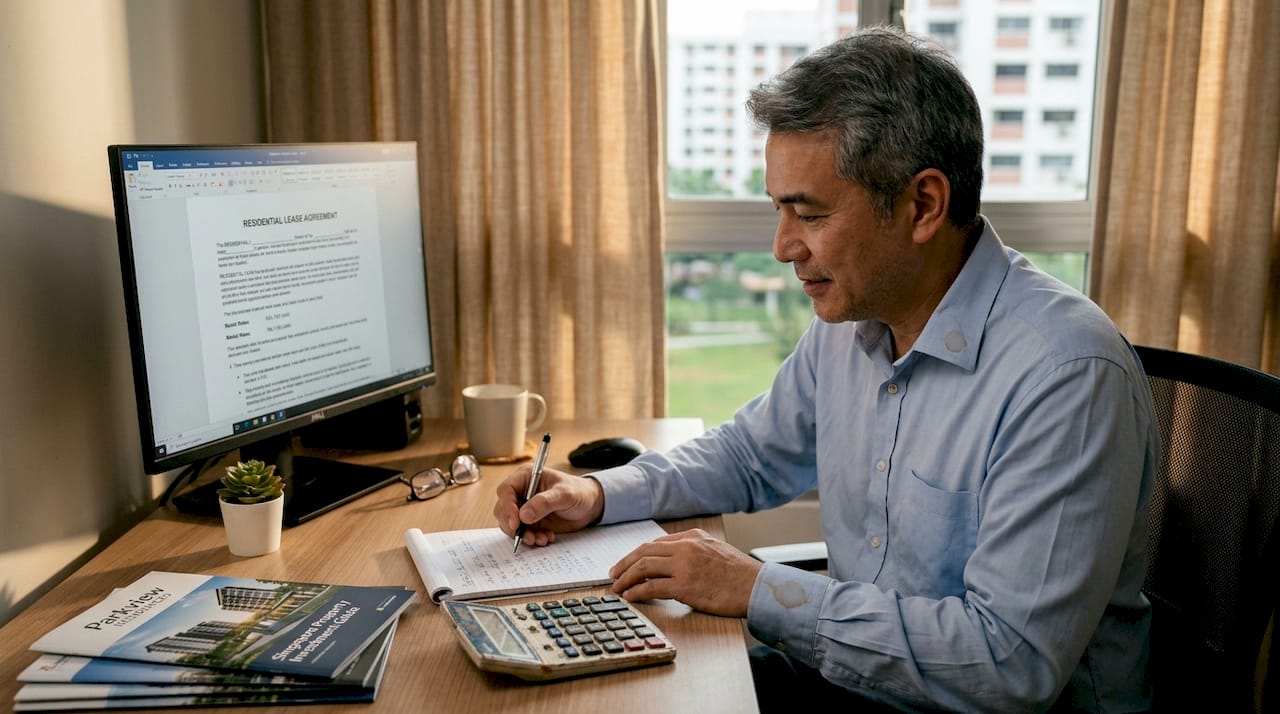
Recent market data backs this up. Office rents holding at approximately S$12 per square foot (psf) in the CBD and retail rents rising 0.9% quarter-on-quarter in Q3 2025 show that demand from quality tenants remains intact even as global economic uncertainty persists. This is not a speculative market. It is an income-producing one.
Capital appreciation is where the story gets more nuanced. Not all commercial assets appreciate equally. Prime Grade A office buildings in the CBD, well-located industrial properties, and freehold shophouses have historically delivered strong long-term capital growth. Secondary retail malls and suburban office space have underperformed.
“The Singapore commercial market is bifurcated. Prime assets are holding value and attracting institutional interest, while secondary and non-core assets face headwinds from shifting tenant demand and remote work trends.”
Factors that drive capital appreciation in commercial property:
- Location: Proximity to MRT stations, CBD, and business hubs
- Asset quality: Grade A buildings with modern specifications attract premium tenants
- Tenant mix: Diversified, creditworthy tenants reduce vacancy risk
- Lease structure: Long weighted average lease expiry (WALE) supports valuation
- Land tenure: Freehold or long-leasehold assets command higher prices over time
For 2026, prime CBD offices and well-located industrial assets are positioned for appreciation as supply remains constrained and demand from financial services and tech tenants stays firm. If you are selecting assets for long-term wealth creation, quality and location are not optional. They are the entire strategy.
Tax advantages and structural benefits in Singapore
Singapore’s tax environment is one of the most investor-friendly in Asia, and commercial property investors benefit from several structural advantages that are simply not available in most other markets.
The most significant is the absence of capital gains tax. When you sell a commercial property at a profit, that gain is generally not taxable, provided the transaction is not classified as a trading activity. This is a meaningful advantage when you consider that capital gains taxes in markets like Australia or the United Kingdom can consume 20% to 30% of your profit.
Using a company structure unlocks further tax benefits for property investors. A Singapore-incorporated company buying commercial or industrial property can deduct a broader range of expenses, manage GST (Goods and Services Tax) registration more efficiently, and benefit from lower corporate tax rates compared to personal income tax rates at higher income brackets.
Key tax and structural advantages for commercial property investors:
- No capital gains tax on property profits for most investors
- Tax-deductible expenses including mortgage interest, property tax, maintenance, and agent fees
- GST input tax claims when the property is used for GST-registered business activities
- Corporate tax rate of 17% which is lower than the top personal income tax rate of 24%
- Estate planning flexibility through company or trust structures for multi-generational wealth
Statistic: Singapore’s headline corporate tax rate of 17% is among the lowest in Asia Pacific, making it a preferred holding jurisdiction for regional investors structuring commercial property portfolios.
Pro Tip: Before purchasing commercial property through a company, consult a qualified tax advisor and a property specialist together. The structure that minimizes tax must also align with your financing, exit strategy, and long-term holding plan. Getting this wrong at the start is expensive to fix later.
Risks, market nuances, and who should invest
No investment is without risk, and commercial property in Singapore is no exception. The rewards are real, but so are the challenges. Understanding both sides clearly is what separates disciplined investors from those who get caught holding the wrong asset at the wrong time.
The most important risk factor right now is sector bifurcation. Prime Grade A office and industrial assets are outperforming, but secondary retail and non-core office space carry significantly higher vacancy and income risk. Buying a suburban mall unit or a fringe office floor because it is cheaper can look attractive on paper but underperform badly in practice.
Liquidity is another real consideration. Unlike residential property, which has a broad buyer pool, commercial assets attract a narrower market. Selling a commercial property can take longer, and in a downturn, the bid-ask spread widens considerably. REITs solve this problem with daily liquidity, but at the cost of control and direct appreciation.
| Investor profile | Best pathway | Reason |
|---|---|---|
| Large capital, long horizon | Direct ownership | Full control, higher yield, capital gains |
| Moderate capital, passive income | Singapore REITs | Liquidity, diversification, lower entry |
| Business owner occupier | Direct purchase | Operational control, asset building |
| First-time commercial investor | REITs first | Lower risk, market familiarity |
Who suits direct commercial investment:
- Investors with S$1.5 million or more in investable capital
- Those comfortable with illiquidity over a 5 to 10 year horizon
- Business owners who can occupy part of the asset
- Portfolio investors seeking diversification from residential holdings
“2026 is not a boom year for Singapore commercial real estate. It is a year for strategic positioning. Investors who select prime assets now, with patience and discipline, are likely to benefit as the cycle matures.”
The risk is not in the asset class itself. It is in buying the wrong segment, overpaying, or underestimating the cash reserves needed to hold through a soft leasing period.
The untold truth about building sustainable wealth with commercial property
Here is something most market commentary glosses over: the investors who build lasting wealth through commercial property are rarely the ones who time the market perfectly. They are the ones who pick the right segment and hold it with discipline through multiple cycles.
Asset selection matters far more than entry timing. A prime shophouse on a key street or a Grade A office floor in the CBD will recover from a soft market. A secondary retail unit in a declining catchment may never fully recover, regardless of when you bought it.
We also see investors consistently overstate near-term yields and underplan for vacancy periods. A 4.5% gross yield sounds excellent until you factor in a six-month vacancy, agent fees, and maintenance. Sustainable wealth planning means holding a liquidity buffer of at least 12 to 18 months of expenses before committing to a direct commercial asset.
Speed is not an advantage in an illiquid market. Caution, thorough due diligence, and a clear exit strategy are. The investors who outperform over a decade are those who treated every purchase as a long-term business decision, not a short-term yield play.
Explore the best commercial property opportunities in Singapore
Commercial property in Singapore rewards those who act with clarity and the right guidance. The market offers genuine income, tax efficiency, and long-term appreciation, but only when you match the right asset to your capital, risk profile, and investment horizon.
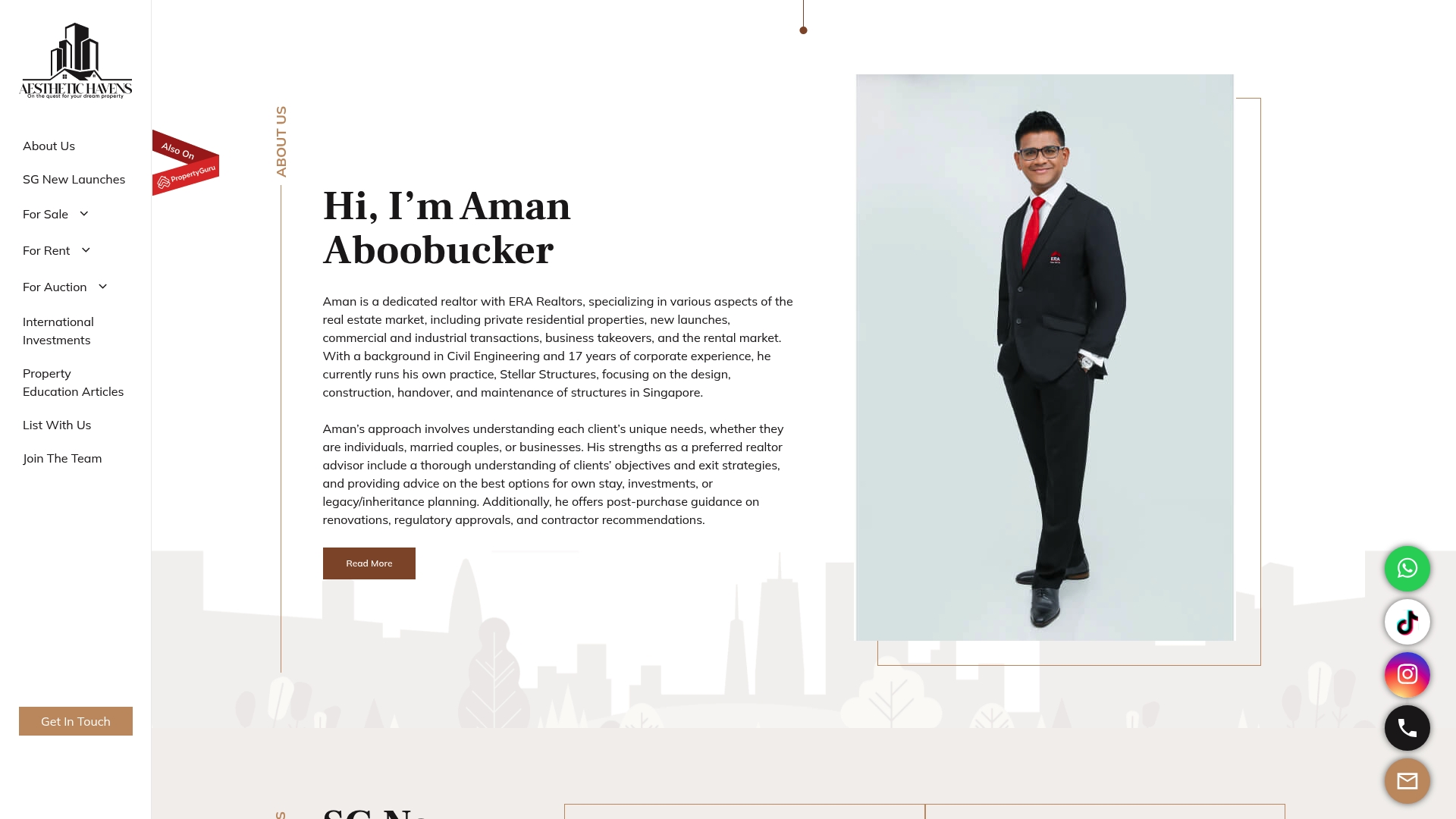
At Aesthetic Havens, we work with investors and business owners across Singapore to identify commercial assets that align with real wealth-building goals. Whether you are exploring direct ownership or building a diversified portfolio, our Singapore commercial property specialists bring current market intelligence and hands-on advisory to every conversation. Reach out today to discuss how commercial property fits into your broader investment strategy.
Frequently asked questions
What is the average rental yield for commercial property in Singapore?
Average gross rental yields for prime commercial property in Singapore typically range from 3% to 5%, which is higher than most residential yields. Office rents stable at around S$12 psf in 2025 support this income range for CBD assets.
Is capital gains tax applied to commercial property sales in Singapore?
No, Singapore does not charge capital gains tax on property sales unless they are considered trading operations by the tax authority. No capital gains tax applies for most long-term investors holding commercial assets.
Are commercial properties riskier than residential properties?
Commercial properties offer higher yields, but risk varies widely by sector and asset quality. Prime assets perform better while secondary retail and non-core office segments carry meaningfully higher vacancy and income risk.
Who is commercial property investment best suited for in Singapore?
It suits investors with larger capital, a long-term view, and the risk tolerance to hold through market cycles. Direct investment vs. REITs suitability depends on your capital base, income needs, and appetite for active management.


