

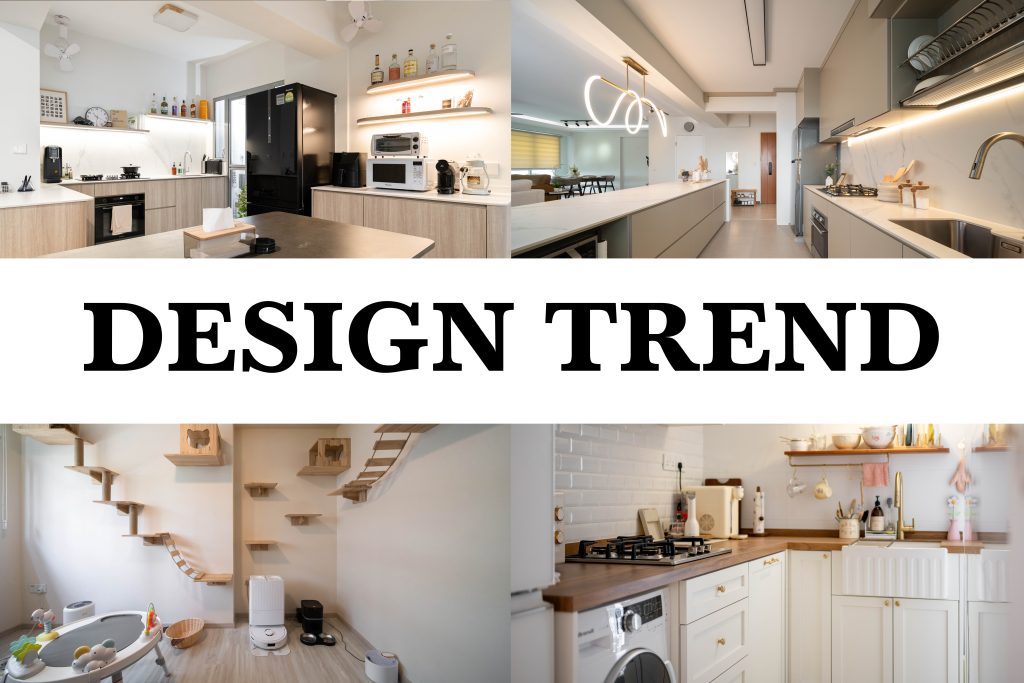
Section 1: The 2025 Singaporean Home: A Sanctuary of Comfort, Character, and Connection
Introduction: Beyond Aesthetics to Intentional Living
As we navigate 2025, the concept of “home” in Singapore has transcended its traditional role as mere shelter. It has evolved into a deeply personal sanctuary—a multifaceted space meticulously crafted to support a life of comfort, character, and connection.
The prevailing renovation and interior design trends are no longer just about fleeting aesthetics; they represent a collective shift towards intentional living. In the wake of global transformations and in response to the city’s dynamic pace, homeowners are increasingly viewing their properties as essential investments in their overall well-being.1
The home is now the central hub for work, relaxation, socialising, and personal growth, demanding a design language that is both beautiful and hyper-functional.
This comprehensive guide delves into the dominant trends shaping Singaporean homes in 2025. It explores the core themes driving this evolution: a profound embrace of natural warmth and organic forms, a critical demand for adaptable and multifunctional spaces.
And a vibrant celebration of individual expression through personalised design narratives.2 From the earthy tones grounding our living rooms to the smart technology seamlessly integrated into our daily routines, this year is about creating spaces that not only look good but feel fundamentally right.
A significant undercurrent in this design evolution is the rise of what can be termed the “Sanctuary Economy.” Singaporean homeowners are channeling their resources inward, transforming their living spaces into private havens that offer the restorative experiences once sought externally.
The spa-like bathroom replaces weekend wellness retreats, the dedicated coffee nook rivals the neighbourhood café, and biophilic-designed balconies become personal parks.2 This shift is propelled by a confluence of factors, including rising living costs and a deep-seated desire for greater control over one’s personal environment.5
The home is no longer just a base of operations; it is becoming a self-sufficient ecosystem for holistic living, and renovation is the primary vehicle for this profound transformation.6
The Three Pillars of 2025 Design
The design landscape of 2025 is built upon three foundational pillars that collectively redefine the modern Singaporean home.
- Restorative Living: The focus on wellness has moved from a niche interest to a central tenet of home design. Creating an environment that actively nurtures and recharges its inhabitants is paramount. This is evident in the widespread adoption of biophilic design, which forges a connection with nature to reduce stress and improve air quality, and the creation of dedicated wellness zones for meditation, yoga, or quiet reflection.2 Bathrooms are being reimagined as personal spas, featuring tranquil lighting, natural materials, and restorative amenities that promote relaxation and mental clarity.2
- Adaptive Spaces: In a city where space is a premium, the ability of a home to adapt to various needs is not a luxury but a necessity. The continued prevalence of hybrid work models has solidified the need for spaces that can seamlessly transition between functions—a dining table that becomes a workstation, a living room that serves as a media zone and a gathering space, or a guest room that doubles as a home office.6 This demand for hyper-functionality is driving innovation in multifunctional furniture and clever, space-saving layouts that ensure every square metre is optimised without sacrificing style.10
- Personalised Expression: The era of the “cookie-cutter” interior is officially over. Homeowners are moving away from slavishly following a single, monolithic design style. Instead, 2025 is about curation and personal storytelling. This is achieved by blending elements from different aesthetics to create a unique and deeply personal narrative.3 A home might feature the clean lines of Japandi, accented with the glamour of Art Deco lighting, or the rustic warmth of a farmhouse kitchen infused with industrial-chic details. This eclectic approach allows the home to become a true reflection of the inhabitants’ personalities, histories, and aspirations.11
Section 2: The Defining Aesthetics of 2025: Key Design Styles Taking Over Singapore
As Singaporean homeowners seek to craft their personal sanctuaries, several key design styles have emerged as the dominant aesthetics of 2025.
These styles, while distinct, share a common thread of warmth, nature, and sophisticated comfort, offering a versatile palette for creating inviting and timeless interiors.
2.1 The Warm Embrace: Earthy Palettes & Natural Materials
The most significant shift in the 2025 colour landscape is the definitive move away from the cool greys and stark, clinical whites that have dominated interiors for the past decade. In their place, a rich and grounding palette of warm, earthy tones has taken centre stage, transforming homes into cocoons of comfort and serenity.1
- The Colour Shift: This trend is defined by a layered approach to colour, creating depth and warmth.
- Core Neutrals: The foundation of this palette is built on soft beiges, warm taupes, and versatile greige (a blend of grey and beige). Off-whites with warm, creamy undertones are preferred over pure, brilliant white, creating a softer, more inviting backdrop that complements Singapore’s tropical light.1
- Earthy Tones: Deeper, nature-inspired hues are being used to add character and a sense of groundedness. Chocolate brown has emerged as a key colour, alongside rich terracotta, burnt sienna, and muted clay tones.11 Calming greens, particularly olive and sage, are also immensely popular, often used for feature walls, cabinetry, or plush furnishings.2
- Rich Accents: To add a layer of sophistication and opulence, this earthy palette is often punctuated with rich accent colours. Deep reds, burgundies, and jewel tones such as emerald green and sapphire blue make powerful statements on sofas, armchairs, or decorative pieces.4
- Material Harmony: This colour palette finds its perfect expression when paired with natural, tactile materials. The trend emphasizes authenticity and a connection to the raw elements of nature. Muted-tone woods like oak, which possess a gentle, understated grain, are favoured over woods with strong yellow or red undertones.1 Natural stone, including marble, granite, and slate, adds a sense of timelessness and luxury to countertops, flooring, and accent walls.4 The look is completed with an abundance of tactile fabrics such as linen, wool, bouclé, and organic cotton, which add softness and textural interest.2
- Application Across Home Types:
- HDB & Condos: In smaller spaces, it is advisable to use the lighter neutrals like beige or greige as the primary wall colour to maintain a sense of airiness. The deeper, earthier tones like chocolate brown or olive green can then be used to create a powerful focal point on a single feature wall, such as behind the sofa or bed.
- Landed Properties: With more generous floor plans and higher ceilings, landed properties can accommodate bolder applications. Entire rooms painted in a rich chocolate brown or deep terracotta can create a dramatic, enveloping effect that feels both luxurious and intimate.
2.2 Japandi & Wabi-Sabi: The Art of Imperfect Serenity
The Japandi style, a harmonious blend of Japanese minimalism and Scandinavian functionality, continues its reign as one of the most sought-after aesthetics in Singapore.7
Its focus on clean lines, decluttered spaces, and natural beauty makes it perfectly suited to the city’s compact urban homes, creating an atmosphere of calm and understated elegance.16
Deeply intertwined with Japandi is the philosophy of Wabi-Sabi, which finds beauty in imperfection, transience, and authenticity, influencing the choice of materials and objects within the home.17
- Key Elements of Japandi:
- Furniture: The furniture is characterised by its functionality and clean, simple forms. Pieces are often low-profile, a nod to the Japanese tradition of living closer to the ground, which also helps to create an illusion of higher ceilings. Light-coloured woods, a hallmark of Scandinavian design, are prevalent.7
- Materials: The material palette is organic and tactile. Wood, bamboo, rattan, and paper (especially in lighting fixtures like pendant lamps) are essential elements that bring warmth and a connection to nature indoors.7
- Colour Palette: The colour scheme is consistently muted and neutral. Shades of beige, taupe, soft pastels, and gentle greys create a serene and restful backdrop, allowing the natural textures of the materials to take prominence.7
- Wabi-Sabi Influence: This philosophy is expressed through the embrace of handcrafted, artisanal pieces over mass-produced perfection. An unglazed ceramic vase, a piece of furniture made from reclaimed wood, or a wall with a slightly uneven, textured finish all celebrate the unique character that comes from imperfection.17
- The Singaporean Adaptation: The Japandi style resonates deeply with the Singaporean lifestyle. In a fast-paced city, the home becomes a crucial sanctuary for rest and mindfulness, which this aesthetic provides in abundance. Local interior designers are adept at adapting Japandi principles to HDB and condo layouts, using its minimalist ethos to maximise the sense of space and light.19 Case studies of local homes often showcase clever storage solutions to maintain the clutter-free look, alongside the use of natural materials like rattan and bamboo that are well-suited to the tropical climate.20
2.3 Biophilic Sanctuaries: Bringing the Outdoors In
Biophilic design has firmly transitioned from a niche trend to a fundamental principle of modern home renovation in Singapore.2
This approach is rooted in the idea that humans have an innate need to connect with nature, and that incorporating natural elements into our built environment can significantly enhance our physical and mental well-being.24
In the dense urban landscape of Singapore, creating a green sanctuary at home has become an essential strategy for a healthier, more balanced lifestyle.2
- Practical Strategies for a Biophilic Home:
- Abundant Greenery: The most direct way to embrace biophilic design is through the integration of plants. This can range from a few low-maintenance potted plants like snake plants or succulents to more ambitious features like a lush vertical garden (green wall), which serves as a stunning visual focal point while actively improving indoor air quality.2
- Maximising Natural Light: Designing spaces to maximise the ingress of sunlight is a core tenet of this trend. This can be achieved through the use of large windows, skylights in landed properties, and sheer, lightweight curtains that diffuse light without blocking it.7
- Natural Materials and Patterns: Beyond plants, the biophilic connection is strengthened through the use of natural materials like wood, stone, rattan, and bamboo in furniture and finishes. Textiles or artwork featuring nature-inspired patterns, such as botanical prints or abstract landscapes, also contribute to the overall effect.2
- Balcony Transformation: Balconies are no longer underutilised service yards but are being transformed into lush green oases. These spaces are treated as extensions of the indoor living area, complete with comfortable seating, vertical planters, and herb gardens, providing a tangible connection to the outdoors.2
- Biophilia as a Climate-Responsive Design Strategy: The adoption of biophilic design in Singapore extends beyond its aesthetic and wellness benefits; it is an intelligent and practical response to the local tropical climate. In a city grappling with the urban heat island effect, integrating nature into our homes can offer tangible environmental advantages. The strategic placement of indoor plants and the creation of green walls can contribute to a cooler indoor microclimate, reducing the ambient temperature.8 Furthermore, biophilic principles that favour open layouts and natural ventilation can lessen the reliance on energy-intensive air-conditioning, a significant factor in household utility costs.28 By embracing designs that work with, rather than against, the climate, homeowners are creating spaces that are not only more sustainable but also more comfortable to live in.
2.4 Modern Luxe & Art Deco Revival: A Touch of Timeless Glamour
While comfort and nature are paramount, 2025 also sees a strong desire for a touch of glamour and sophistication. This is manifesting in two interconnected trends: Modern Luxe and the Art Deco Revival. Modern Luxe, also known as “Quiet Luxury,” is a departure from ostentatious displays of wealth. Instead, it focuses on understated opulence achieved through the use of high-quality materials, impeccable craftsmanship, and refined, thoughtful details.7
- Key Elements of Modern Luxe:
- Premium Materials: The look is defined by a palette of luxurious materials. Polished marble and natural stone surfaces are used for flooring, feature walls, and countertops.9 Plush velvet and bouclé upholstery on sofas and chairs add a layer of tactile richness.4 Accents of brushed gold or brass on lighting fixtures, cabinet handles, and furniture legs provide a warm, metallic sheen without being overly flashy.7
- Art Deco Influence: Drawing inspiration from the glamour of the 1920s and 1930s, the Art Deco revival brings a sense of history and geometric elegance to modern interiors.7 This trend is characterised by bold, symmetrical patterns, which can be seen in wallpaper, tiles, or textiles. Sleek, lacquered wood finishes and opulent lighting, such as dramatic chandeliers or sculptural pendant lights, are also key features that evoke the era’s appreciation for both craftsmanship and luxury.7
- How to Achieve the Look: The key to successfully incorporating Modern Luxe and Art Deco elements is balance and selectivity.
- HDB & Condos: In smaller homes, these luxurious touches should be used as accents to elevate the overall design. A single statement piece, such as a marble-topped coffee table, a pair of velvet accent chairs in a jewel tone, or an ornate, Art Deco-inspired mirror, can inject a powerful dose of glamour into an otherwise minimalist living room.
- Landed Properties: The larger canvas of a landed property allows for more dramatic statements. A full-height marble feature wall in the living room, a grand chandelier suspended in a double-volume space, or the extensive use of dark wood and brass detailing can create a truly opulent and sophisticated atmosphere.30
Section 3: The Shape of Things to Come: Form, Texture, and Detail
Beyond overarching styles, the character of a 2025 Singaporean home is defined by a specific focus on form, texture, and detail.
These are the tangible elements that bring a design to life, engaging the senses and adding layers of interest and sophistication to every surface.
3.1 The Reign of the Curve: Softening the Edges
One of the most visually dominant trends of the year is the definitive shift away from the sharp, rectilinear lines of modernism towards softer, more organic forms.1
Curves are being embraced in every facet of interior design, from architectural elements to furniture, creating spaces that feel more fluid, welcoming, and harmonious.5
- Applications of the Curve:
- Architectural Flourishes: Arched doorways and entryways are making a significant comeback. These graceful forms not only add a touch of timeless charm and character but also help to soften transitions between spaces and create an illusion of height and openness.5
- Sculptural Furniture: Furniture design has fully embraced the curve. Rounded sofas with deep, enveloping seats, circular or oval coffee tables, and sinuous accent chairs are replacing their hard-edged counterparts. These pieces introduce a sense of softness and elegance, improving the flow of movement within a room and encouraging comfortable lounging.1
- Innovative Details: Beyond the obvious, designers are finding new and exciting ways to incorporate curves. This includes flowing transitions between different flooring materials, gently curved feature walls crafted from carpentry or masonry, and even curved kitchen islands that become inviting social hubs.5
The appeal of the curve is deeply rooted in psychology. Organic shapes are instinctively perceived as being safer, more natural, and more inviting than sharp angles.11
By incorporating them into our homes, we create environments that feel less rigid and more attuned to human comfort, promoting a sense of calm and balance.1
3.2 A Feast for the Senses: The Rise of Textured Surfaces
Flat, uniform walls are giving way to surfaces that demand to be touched. The desire for sensory richness has led to a surge in popularity for textured finishes that add depth, character, and a handcrafted feel to interiors.1
This trend is part of a larger movement towards material authenticity, where homeowners are rejecting the glossy, mass-produced perfection of the past in favour of materials that proudly display their natural composition and the mark of the artisan.
This aligns perfectly with the Wabi-Sabi philosophy of celebrating the imperfect and the authentic, reflecting a deeper desire for homes that feel grounded and real.2
- Popular Textured Finishes:
- Limewash & Microcement: These finishes have become ubiquitous in Singaporean homes for their ability to create a soft, matte, and subtly varied surface reminiscent of Mediterranean villas or rustic farmhouses.1 Limewash, made from natural lime putty, is a low-VOC, breathable paint that results in a chalky, cloud-like effect.33 Microcement provides a seamless, concrete-like finish that is both durable and waterproof, making it suitable for floors and bathrooms.32 Due to the labour-intensive, artisanal application process, homeowners can expect these finishes to cost between S
10andS20 per square foot.33 Their natural composition also makes them well-suited to Singapore’s humid climate, as they are moisture-resistant and can help prevent mould growth.34 - Fluted & Grooved Panels: Vertical lines created by fluted or grooved panels, typically made of wood or composite materials, are a popular way to add texture and rhythmic detail. They are often used on feature walls, cabinetry fronts, and kitchen islands to create a sophisticated and contemporary look.14
- Sintered Stone: As a high-performance material, sintered stone is rapidly becoming a preferred choice over quartz for countertops, backsplashes, and even large-format wall cladding.1 It is an ultra-compact surface made from natural minerals subjected to extreme heat and pressure, resulting in a material that is exceptionally resistant to scratches, stains, heat, and UV rays. Its versatility allows it to mimic the look of natural stone, concrete, or metal, offering a wide range of design possibilities with superior durability.35
3.3 Nostalgia with a Twist: The Comeback of Glass Blocks & Pebbled Foyers
Trends often move in cycles, and 2025 sees the stylish return of materials once considered dated, now reimagined in fresh and contemporary ways.
- Glass Blocks Reimagined: Once relegated to HDB stairwells and 1980s shopping malls, the humble glass block is experiencing a major resurgence.5 Designers are now using it to add a touch of whimsy, nostalgia, and textural interest to modern homes. Its key advantage is the ability to partition spaces and provide privacy without sacrificing the flow of natural light—a crucial benefit in compact apartments.5
- Modern Applications: Glass blocks are being used creatively as internal room dividers, separating a study from a living room or creating a unique shower enclosure in a bathroom.39 They also appear as decorative feature walls, translucent kitchen backsplashes, and even as the base for a statement kitchen island.5
- The Pebbled Entryway (Genkan): A uniquely Singaporean trend that is gaining significant traction is the creation of a pebbled foyer or entryway.5 This concept is inspired by the traditional Japanese
genkan, a transitional area where shoes are removed before entering the main living space.40
- Creating the Effect: The look is achieved either with loose river pebbles for a rustic, zen-garden feel, or more practically with a “pebble wash” finish, where pebbles are set into a cement or epoxy base for durability and ease of maintenance.42 This feature creates a powerful first impression, establishing a tactile and visual boundary that signals a transition from the bustling outside world to the calm sanctuary of the home.5 It instantly evokes a serene, resort-like atmosphere, setting a tranquil tone for the entire residence.
3.4 The New Focal Point: Statement Ceilings & Lighting
For years, the ceiling was an overlooked surface in interior design. In 2025, it is being rightfully reclaimed as the “fifth wall,” offering a new canvas for bold design statements that add architectural depth and character to a room.6
- Elevated Ceiling Treatments: Homeowners are moving beyond flat white ceilings and exploring more decorative options. This includes adding rustic charm with exposed wood beams, creating classical elegance with coffered details or custom mouldings, or making a dramatic statement with bold, patterned wallpaper.6 These treatments draw the eye upward, making rooms feel grander and more sophisticated.
- Lighting as Art: Functional, recessed downlights are now being supplemented—and often replaced—by statement lighting fixtures that serve as sculptural works of art.4
- Artisanal Glass: There is a renewed appreciation for the timeless beauty of handcrafted glass. Lighting fixtures made from Murano glass or other artisanal glass techniques are being used to infuse spaces with a sense of luxury and history.11
- Oversized & Sculptural Forms: A single, oversized pendant light hanging over a dining table or a sculptural floor lamp in the living room can act as the primary focal point of a space, anchoring the design scheme.4
- Integrated LED Technology: The advancement of LED technology has been a game-changer for lighting design. LEDs are not only longer-lasting and more energy-efficient, but their compact size allows them to be seamlessly integrated directly into light fittings. This gives designers the freedom to create sleek, minimalist fixtures where the light source itself is part of the design, rather than relying on traditional bulbs.1
Section 4: The Smart, Functional Home: Designing for Modern Life
In 2025, a successful home renovation is as much about intelligent function as it is about compelling form.
The modern Singaporean home must be a high-performing environment, seamlessly adapting to the demands of daily life, from work and socialising to rest and wellness.
This section explores the key functional trends that are making our homes smarter, more efficient, and better attuned to our lifestyles.
4.1 The Evolving Heart of the Home: Kitchen & Dining Innovations
The kitchen has firmly cemented its status as the multifunctional heart of the home. It is no longer a purely utilitarian space for cooking but has evolved into a dynamic social hub for family gatherings, entertaining guests, and even casual work.6 This shift in function is reflected in a range of new design features aimed at enhancing both aesthetics and practicality.
- Key Kitchen Features for 2025:
- Range Alcoves: A stylish feature making a comeback is the range alcove—a recessed niche designed to house the stove and range hood.6 Often detailed with an arch or custom tiling, these alcoves create a strong architectural focal point, giving the kitchen a bespoke, high-end feel while neatly containing the primary cooking zone.14
- Paneled and Integrated Appliances: The trend is moving away from prominent stainless steel appliances towards a more seamless and cohesive aesthetic. Refrigerators, dishwashers, and even ovens are being concealed behind custom cabinetry panels that match the rest of the kitchen, creating an uninterrupted, furniture-like look that feels warmer and more integrated with the living space.14
- Dedicated Beverage Stations: To improve workflow and manage traffic during social gatherings, dedicated beverage stations are becoming increasingly popular. These are specific zones, often located at the edge of the kitchen, equipped with a coffee machine, a wine fridge, or an open bar with shelving for spirits. This clever design keeps guests and non-cooks entertained and out of the main food preparation area.5
- Elevated Dining Areas: More thought and investment are being channelled into the dining area. It is now seen as a versatile space that must accommodate everything from daily family meals and children’s homework to large celebrations. This translates to more comfortable seating, better lighting, and flexible furniture arrangements that can adapt to any occasion.5
4.2 From Bathroom to Spa: Creating a Wellness Retreat
The bathroom’s transformation from a purely functional room into a personal wellness retreat is one of the most significant lifestyle trends in home design.2
Homeowners are now seeking to create a sanctuary-like space for daily rituals of relaxation and rejuvenation, inspired by the tranquil ambiance of boutique hotels and day spas.6
- Spa-Inspired Design Elements:
- Open-Air Wet Rooms: A key feature of this trend is the wet room concept, where the shower and bathtub are integrated into a single, open, and fully waterproofed area.14 This design eliminates the need for a separate shower enclosure, creating a sleek, spacious, and luxurious feel, even in more compact bathrooms.
- Built-in Benches: The inclusion of built-in benches within the shower area is a simple yet effective feature that enhances both accessibility and comfort, providing a spa-like spot to sit and relax.5
- Wellness Technology: Homeowners are incorporating advanced features to elevate their bathing experience. Steam showers, which offer therapeutic benefits, and integrated aromatherapy diffusers are becoming more common, turning the daily shower into a multisensory wellness ritual.14
- Natural Finishes and Soft Lighting: The spa ambiance is heavily reliant on materials and lighting. The use of natural finishes like stone-look tiles and warm wood accents creates a calming, organic backdrop. This is complemented by layered, soft lighting, often with dimmable controls, to create a tranquil and restorative atmosphere.2
4.3 The Hardest Working Rooms: Mastering Multifunctional Spaces
In the context of Singapore’s urban living, where every square metre is precious, multifunctional design is not just a trend—it is an absolute imperative.7
The ability to make a single space or piece of furniture serve multiple purposes is the key to creating a home that is both highly efficient and comfortably livable.10
- Clever Space-Saving Solutions:
- Convertible and Multifunctional Furniture: The market for transformative furniture is booming. Pieces like sofa beds, extendable dining tables that can also function as work desks, and storage ottomans are staples in modern HDBs and condos.7 More advanced solutions, such as Murphy beds that fold away into a wall or convert into a desk, are offered by local specialists like Spaceman, providing ingenious ways to reclaim floor space in bedrooms or studies.47
- Flexible Zoned Layouts: In open-concept homes, creating distinct functional zones without building solid walls is crucial. This can be achieved through clever design strategies like using large area rugs to anchor a living area, employing open-backed shelving as a permeable divider, or installing sliding glass partitions that can close off a space for privacy when needed.7
- The Power of Built-in Storage: The ultimate key to a successful multifunctional space is excellent storage. Custom-built joinery that maximises vertical space, utilises awkward corners, and provides hidden storage is essential for maintaining a clutter-free environment, which is critical for a space to feel calm and organised.7
4.4 Seamlessly Smart: Integrating Technology That Disappears
The smart home has matured beyond a novelty for tech enthusiasts into an expected feature of a modern renovation. However, the trend in 2025 is not about showcasing conspicuous gadgets.
Instead, it is about “discreet tech”—the seamless integration of smart technology in a way that it enhances daily life without disrupting the home’s aesthetic.2
The goal is a home that is intuitively responsive, where technology supports, rather than distracts from, the overall design.9
- Building Your Smart Home Ecosystem:
- Central Hubs: The foundation of a smart home is a central hub that allows different devices to communicate. The most popular ecosystems in Singapore are Google Home and Amazon Alexa, which offer robust voice control and compatibility with a wide range of third-party devices.49
- Key Integrated Devices: The focus is on technology that blends in. This includes hidden ceiling speakers for ambient music, smart lighting systems with recessed fixtures and dimmers that can be controlled by voice or even adjust automatically to the time of day or a person’s mood, and motorised curtains or blinds that open and close on a schedule or with a simple command.2 Furniture with built-in wireless charging pads is another example of technology that disappears into the design.4
- HDB’s Smart Initiative: It is worth noting that the Housing & Development Board is actively promoting smart living. Newer HDB developments, such as those in Punggol Northshore, are being built with the necessary digital infrastructure to support the easy installation of smart home solutions, including home energy management systems.50
- Practical Setup Advice: For a smart home to function reliably, a robust home network is essential. Investing in a mesh Wi-Fi system is highly recommended for larger or multi-storey homes to ensure strong, stable coverage in every corner.49 Additionally, homeowners must prioritise network security by using strong passwords and encryption to protect their connected devices from potential vulnerabilities.49
Section 5: Your Renovation Blueprint: A Practical Guide for Singaporean Homeowners
Embarking on a renovation is a significant undertaking, requiring careful planning, financial prudence, and a clear understanding of the regulatory landscape.
This section provides a practical blueprint for Singaporean homeowners, offering essential, actionable guidance to navigate the journey from initial budgeting to the final handover.
5.1 Decoding the Dollars and Cents: Budgeting for Your 2025 Renovation
The first and most critical step in any renovation project is establishing a realistic budget.
In 2025, homeowners should be aware that costs continue to be influenced by factors such as inflation on raw materials and a tight manpower market, which keeps labour costs elevated.51
- Comprehensive Cost Estimates: To provide a clear starting point for financial planning, the table below offers a detailed breakdown of estimated renovation costs for various property types in Singapore. These figures are synthesized from industry data and represent a realistic range for a full renovation, distinguishing between a “blank slate” new BTO/condo and a resale property, which often requires additional hacking and rectification works.51
Table 1: Estimated Renovation Costs in Singapore (2025)
| Property Type | Status | Estimated Full Renovation Cost (SGD) |
| HDB Flats | ||
| HDB 2-Room | New/BTO | $15,400 – $31,600 |
| Resale | $28,100 – $41,300 | |
| HDB 3-Room | New/BTO | $32,800 – $51,500 |
| Resale | $42,900 – $66,600 | |
| HDB 4-Room | New/BTO | $40,300 – $62,300 |
| Resale | $55,700 – $80,400 | |
| HDB 5-Room | New/BTO | $44,700 – $69,800 |
| Resale | $64,300 – $92,600 | |
| HDB Executive/Maisonette | Resale | $83,500 – $134,800 |
| Condominiums | ||
| Condo Studio/2-Bedroom | New | $15,400 – $48,200 |
| Resale | $47,900 – $71,100 | |
| Condo 3-Bedroom | New | $32,200 – $68,500 |
| Resale | $60,400 – $84,100 | |
| Condo 4-Bedroom / Loft | New | $40,200 – $72,900 |
| Resale | $66,300 – $92,400 | |
| Partial Renovations | ||
| 1 Kitchen | New/Resale | $10,800 – $22,300 |
| 1 Bathroom | New/Resale | $4,200 – $8,700 |
Source: Data synthesized from.51 Costs are estimates and can vary based on scope, materials, and contractor.
Carpentry and masonry typically account for over 60% of the budget.
- Strategic Budgeting:
- Contingency Fund: It is crucial to set aside a contingency buffer of 10-15% of the total budget to cover unforeseen costs, such as hidden structural issues in a resale flat or mid-project design changes.45
- Prioritise Must-Haves: Create two lists: “must-haves” (essential functional items like waterproofing, plumbing, and basic storage) and “nice-to-haves” (aesthetic elements like a feature wall or designer lighting). Allocate the budget to the must-haves first, and only proceed with the nice-to-haves if funds permit.45
- Splurge vs. Save: Make smart investment choices. Splurge on high-use, long-lasting items where quality is paramount, such as durable flooring, quality carpentry hardware, and proper waterproofing.45 Save on elements that are easier and less costly to upgrade later, such as loose furniture, decorative items, and paint colours.54
5.2 Navigating the Red Tape: HDB & BCA Renovation Rules You Must Know
Renovations in Singapore are governed by a strict set of regulations from the Housing & Development Board (HDB) for public housing and the Building and Construction Authority (BCA) for private properties.
These rules are in place to ensure the structural safety of buildings and maintain a harmonious living environment for all residents.54
- Key HDB Guidelines:
- Permit Requirements: Many renovation works require an official permit from HDB before commencement. This includes any hacking of walls, replacement of floor finishes in wet areas, and window replacement. Minor cosmetic works like painting or installing non-fixed carpentry generally do not require a permit but must still adhere to guidelines.56
- Structural Integrity: The most critical rule is that structural elements—including reinforced concrete (RC) load-bearing walls, columns, beams, and slabs—cannot be hacked, drilled, or altered in any way.56 Doing so can compromise the entire building’s safety.
- Wet Area Restrictions: For new BTO flats, there is a mandatory three-year restriction on hacking or replacing the original floor and wall finishes in bathrooms and toilets. This is to allow the HDB-provided waterproofing membrane to stabilise and prevent water leakage issues.56
- Permitted Working Hours: To minimise disruption to neighbours, general renovation work is only permitted between 9:00 a.m. and 6:00 p.m. on weekdays and Saturdays. Noisy works, such as hacking and drilling, have stricter hours, typically from 9:00 a.m. to 5:00 p.m. on weekdays only. No renovation work is allowed on Sundays and public holidays.56
- Condo and Landed Property Regulations (BCA): For private properties, renovations are governed by the building’s Management Corporation Strata Title (MCST) and the BCA. Homeowners must submit their renovation plans to the MCST for approval before any work begins.64 Major structural alterations, such as removing walls or constructing extensions in landed properties, will require plans to be submitted to the BCA by a Qualified Person (QP), such as a registered architect or professional engineer.66
To simplify the process for HDB homeowners, the following table provides a quick reference guide.
Table 2: HDB Renovation Permit Quick Guide
| Type of Work | Permit Required? | Key Guidelines & Restrictions |
| Hacking of non-structural walls | Yes | Must not be a load-bearing RC wall. Engage HDB-licensed contractor. Noisy work hours apply. |
| Replacing bathroom floor/wall tiles | Yes | 3-year restriction for new BTOs. Must use pre-packed waterproofing screed & membrane. |
| Replacing kitchen floor tiles | Yes | Must use pre-packed waterproofing screed. |
| Replacing living room/bedroom floor finishes | No | Total thickness of screed and finish must not exceed 50mm. |
| Painting of internal walls | No | No specific restrictions. |
| Installing built-in cabinets/wardrobes | No | Permitted if no hacking is involved. |
| Installing false ceiling | No | Minimum clearance of 2.4m from finished floor. Must not conceal gas pipes. |
| Replacing windows | Yes | Must engage a BCA-approved window contractor listed with HDB. Must match original colour/type. |
| Replacing main door (fire-rated) | Yes | Replacement door must be half-hour fire-rated with a self-closing device. |
| Repositioning internal doors | Yes | New opening cannot be created in an RC wall. |
Source: Information synthesized from.56 This is not an exhaustive list; always confirm with your HDB-licensed contractor.
5.3 Assembling Your Dream Team: How to Choose the Right Interior Designer/Contractor
The success of a renovation project hinges on the quality and professionalism of the team executing it. Choosing the right interior designer (ID) or contractor is a critical decision.
- A Step-by-Step Guide to Hiring:
- Gather Recommendations and Research: Start by seeking recommendations from friends and family who have recently renovated.69 Supplement this with online research, browsing the portfolios of design firms on their websites and in local publications like
Home&Décor or SquareRooms.70 - Verify Credentials: Ensure any contractor you consider for an HDB renovation is listed on HDB’s Directory of Renovation Contractors (DRC). This confirms they are aware of HDB’s regulations.54 Check for company accreditation and positive online reviews on various platforms.71 Platforms like Qanvast and Deconstruct also offer vetting services to help homeowners find reliable professionals.72
- Conduct Interviews: Shortlist three to four firms and schedule consultations. Use this meeting to gauge their communication style, professionalism, and whether they truly understand your vision and lifestyle needs. A good designer should listen intently and offer creative solutions, not just push a standard package.70
- Compare Quotations Diligently: Do not choose based on the lowest price alone. Scrutinise each quotation to ensure you are comparing like-for-like. Check that the scope of work is clearly detailed and that the materials specified (e.g., brand of laminate, type of countertop) are consistent across quotes.70 Beware of vague items or suspiciously low prices, which could indicate hidden costs or substandard materials.54
- Insist on a Clear Contract: Before committing, ensure you have a detailed contract that outlines the full scope of work, a clear project timeline, and a payment schedule based on project milestones. Never pay the full amount upfront. A standard practice involves a down payment, followed by progressive payments upon completion of key stages.45
5.4 Sustainable & Healthy Homes: Making Eco-Conscious Choices
Sustainability in home design is no longer a fringe movement but a core value for many Singaporean homeowners.
A green renovation focuses on creating a healthier living environment and reducing the home’s long-term environmental impact.4
- Eco-Conscious Material Choices:
- Sustainable Materials: Look for materials that are renewable, recycled, or reclaimed. Bamboo flooring is a fast-growing, sustainable option.7 An innovative choice available in Singapore is Resysta, a durable, wood-alternative building material made from rice husks, salt, and mineral oil, which is ideal for decking and cladding.28
- Healthy Indoor Air Quality: The humidity in Singapore makes indoor air quality a significant concern. Opt for materials with low formaldehyde emissions, such as those rated ENF or E0 grade, especially for carpentry.8 Use low-VOC (Volatile Organic Compound) or zero-VOC paints to minimise harmful off-gassing after painting.9
- Energy and Water Efficiency: A sustainable home is also an efficient one. When selecting appliances, look for models with high energy efficiency ratings. The widespread adoption of LED lighting is another simple yet effective way to significantly reduce electricity consumption.7 In bathrooms and kitchens, install water-saving fixtures to lower utility bills and conserve a precious resource.
Section 6: Get Inspired: Case Studies & DIY Touches
Theory and trends are best understood when seen in practice. This section brings the concepts to life with inspirational case studies of real Singaporean homes and empowers homeowners with achievable DIY projects to add a personal touch to their own spaces.
6.1 Real Singaporean Homes, Reimagined: 2025 Case Studies
These vignettes, synthesized from local design features, showcase how 2025’s top trends are being artfully applied across different property types in Singapore.
- Case Study 1: The Japandi HDB Sanctuary in Yishun
A resale executive HDB flat was transformed into a serene sanctuary reminiscent of a modern Kyoto ryokan (traditional inn). The journey begins at the entrance, where a distinct genkan area, demarcated by a change in flooring material, provides a psychological boundary between the outside world and the tranquil home within. The designers opened up the layout to create a seamless flow between the living, dining, and kitchen zones. A defining feature is a tactile pebbled threshold set into the concrete floor, acting as a “stepping stone” moment that encourages pause and mindfulness.40 The heart of the living space is a raised tatami platform, offering a versatile nook for reading or tea ceremonies, with hidden storage tucked beneath. The material palette is intentionally quiet and natural—pale timber, muted concrete, and soft stone—complemented by soft, ambient lighting to create a contemplative and deeply calming atmosphere.44 - Case Study 2: The Colourful & Creative BTO in Geylang
Breaking away from minimalist norms, this 4-room BTO flat is a vibrant testament to the maximalist trend of personalised expression. Home to two creatives, the space is a riot of colour, pattern, and personality.75 The design eschews a single theme, instead layering eclectic furniture, bold artwork, and cherished travel souvenirs to tell the owners’ unique story. An accent wall in a deep jewel tone might be paired with a vintage patterned rug, while open shelving proudly displays a collection of quirky ceramics. This home demonstrates how blending styles and embracing bold choices can result in a space that feels joyful, energetic, and authentically lived-in, proving that design rules are meant to be creatively broken. - Case Study 3: The Modern Luxe Condo in Upper Thomson
This two-bedroom condo masterfully blends modern luxury with subtle nods to Singapore’s Peranakan heritage, creating a sophisticated yet soothing retreat.75 The design by Crumbs Interior evokes an old-world charm through the use of intricate patterns, possibly in floor tiles or a kitchen backsplash, reminiscent of traditional Peranakan motifs. This is balanced with a contemporary palette of high-end finishes, such as marble surfaces and brushed gold fixtures. The overall ambiance is akin to a boutique hotel, where every detail is curated to feel both elegant and comfortable. Soft, layered lighting and plush textiles complete the look, crafting a space that is both a nod to the past and a vision of modern, understated opulence. - Case Study 4: The Biophilic Landed Home in Bukit Timah
This landed property, known as the Bamboo Veil House, exemplifies biophilic design at its most integrated. The home’s façade is wrapped in an intricate lattice of bamboo, which acts as a permeable screen that provides privacy while allowing natural light and breezes to filter through.76 The interior is conceived as a series of interconnected pavilions separated by water features and lush pocket gardens, blurring the lines between indoor and outdoor living. Every room is designed to have a direct connection to nature, whether through large glass doors that open onto a garden or windows that frame views of the surrounding greenery. The use of natural materials throughout—wood, stone, and water—creates a resort-like environment that is both sustainable and deeply restorative.76
6.2 The Personal Touch: High-Impact, Budget-Friendly DIY Ideas
A full-scale renovation is not always necessary to refresh a space. For homeowners looking to inject personality and style on a smaller budget, these high-impact DIY projects align with 2025’s trends and are perfectly suited for Singaporean homes.
- Project 1: Curate a Personal Gallery Wall
A gallery wall is a powerful way to showcase your personality and tell a story.
- How-to: Gather a collection of items that are meaningful to you—family photos, travel prints, children’s artwork, or even beautiful postcards.77 To create a cohesive look, choose frames in a consistent colour (e.g., all black, white, or natural wood) but vary their sizes and orientations. Before hammering any nails, lay out your arrangement on the floor to find a composition you love. Use painter’s tape to mark the positions on the wall to ensure perfect placement.78
- Project 2: Paint a Bold Accent Wall
One of the quickest and most affordable ways to transform a room is with a fresh coat of paint.
- How-to: Choose a single wall to be your focal point, typically the one behind your sofa or bed. Select an on-trend, earthy colour like a warm terracotta, deep sage green, or even a sophisticated charcoal grey.77 Ensure the wall is clean and smooth before you begin. Use painter’s tape to create clean edges along the ceiling, baseboards, and adjacent walls. Apply two coats for a rich, even finish.
- Project 3: Add Architectural Detail with DIY Wainscoting
Wainscoting or wall moulding can add a touch of classical elegance and architectural character to plain HDB or condo walls.
- How-to: Plan your design by deciding on the height and pattern of your moulding (e.g., simple rectangular boxes). Lightweight wood or PVC moulding strips are readily available at hardware stores. Measure and cut the strips to size using a miter box for clean 45-degree corner cuts.80 Attach the strips to the wall using construction adhesive and secure them with small finishing nails. Fill any gaps and nail holes with caulk or wood filler, then paint the moulding and the wall below it in a single, cohesive colour for a professional, built-in look.82
- Project 4: Upcycle and Refinish Old Furniture
Give tired or outdated furniture a new lease on life.
- How-to: A simple wooden side table, bookshelf, or chest of drawers can be completely transformed. Start by lightly sanding the piece to remove the old finish.77 Apply a coat of primer, followed by two coats of paint in a modern colour. For a final touch, replace the old hardware (knobs or handles) with new ones in a stylish finish like matte black or brushed brass. This simple change can make a generic piece of furniture look custom and expensive.77
Conclusion: Your Home, Your Story in 2025
As we have explored the multifaceted landscape of renovation and interior design in Singapore for 2025, a single, powerful truth emerges: the ultimate trend is personalisation.
The shift towards warm, earthy palettes, the embrace of natural materials and biophilic principles, the demand for smart, multifunctional spaces, and the revival of nostalgic details are all tools at the disposal of the homeowner.
They are elements of a new design language, one that prioritises creating a home that is a deeply personal sanctuary—a space that nurtures well-being, adapts to a dynamic lifestyle, and, most importantly, tells a unique story.
The 2025 home is not about conforming to a singular, prescribed look. It is about a thoughtful curation of ideas, a blending of styles, and a conscious selection of materials and objects that resonate on a personal level.
It is a home that finds beauty in the imperfect, comfort in the natural, and intelligence in its functionality. Whether embarking on a full-scale renovation of a resale flat or adding personal touches to a new BTO, the goal remains the same: to craft a space that is a true and authentic reflection of your journey, your values, and your aspirations. Use this guide as your blueprint, but let your own story be the final design.
Works cited
- 8 Singapore Interior Design Trends to Watch Out For in 2025 | Qanvast, accessed August 13, 2025, https://qanvast.com/sg/articles/8-singapore-interior-design-trends-to-watch-out-for-in-2025-3380
- Interior Design Trends Shaping Singapore Homes in 2025 | Blog – Renologist, accessed August 13, 2025, https://renologist.sg/blog/interior-design-trends-in-2025
- Rustic, Contemporary, or Bohemian? The Best 2025 Interior Styles for Every Singapore Home, accessed August 13, 2025, https://renopedia.sg/home-renovation-blog/the-best-2025-interior-styles-for-every-singapore-home/
- 20 Interior Design Trends 2025: Must-Have Looks You’ll Love – Decorilla, accessed August 13, 2025, https://www.decorilla.com/online-decorating/interior-design-trends-2025/
- Predictions are in! These 11 Trends Will Be Shaping Singapore …, accessed August 13, 2025, https://www.renonation.sg/articles/these-trends-will-be-shaping-singapore-homes-in-2025
- Top 14 Home Remodel Design Trends for 2025 – Mitchell Construction Group, accessed August 13, 2025, https://www.mitchcogroup.com/renovation-articles/home-remodel-design-trends-for-2025
- Top Interior Design Trends To Transform Your Home In 2025 …, accessed August 13, 2025, https://www.spacefactor.com.sg/top-interior-design-trends/
- Wellness Interiors: MRETTY’s Luxurious Health-Centric Designs for Singapore Homes, accessed August 13, 2025, https://www.mretty.com/blogs/industry-trends/wellness-interiors
- Trendy Condo Interior Design Ideas 2025, accessed August 13, 2025, https://www.swissinterior.com.sg/blog/trendy-condo-interior-design-ideas-2025
- Multifunctional Furniture: MRETTY’s Space-Saving Designs for Singapore Homes, accessed August 13, 2025, https://www.mretty.com/blogs/industry-trends/multifunctional-furniture
- Designing The Future: 7 Interior Design Trends For 2025 – Hommés Studio, accessed August 13, 2025, https://hommes.studio/journal/designing-future-interior-design-trends-2025/
- Top Interior Painting Colours in Singapore for 2025, accessed August 13, 2025, https://www.freshcoatsingapore.com/post/top-interior-painting-colours-in-singapore-for-2025
- 2025 Color Trends: The Best Shades for a Stylish Home – Twothree.sg, accessed August 13, 2025, https://www.twothree.sg/article-1/2025-color-trends-the-best-shades-for-a-stylish-home
- 10 Home Remodeling and Design Trends for 2025 – Liston Design Build, accessed August 13, 2025, https://www.listondesignbuild.com/10-home-remodeling-and-design-trends-for-2025/
- Top Condo Interior Design Trends in Singapore for 2025 – VIA Media, accessed August 13, 2025, https://viamedia.sg/top-condo-interior-design-trends-in-singapore/
- Create Balance with Japandi Interior Design Style – Swiss Interior, accessed August 13, 2025, https://www.swissinterior.com.sg/blog/japandi-interior-design-style
- Ultimate Guide to Wabi-Sabi HDB Interior Design – Megafurniture Singapore, accessed August 13, 2025, https://megafurniture.sg/blogs/articles/wabi-sabi-hdb-interior-design
- Wabi-Sabi Inspirations Meet Soft Minimalism In This Cozy HDB Home – Renopedia, accessed August 13, 2025, https://renopedia.sg/home-renovation-blog/wabi-sabi-inspirations-meet-soft-minimalism-in-this-cozy-hdb-home/
- Japandi-Style Minimalism In A Singaporean HDB Apartment – Habitusliving.com, accessed August 13, 2025, https://www.habitusliving.com/projects/japandi-style-hdb-artistroom
- Japandi Interior Design: 10 Must-Know Styling Tips for Homes in Singapore – fujioh story, accessed August 13, 2025, https://global.fujioh.com/2025/05/01/japandiinteriordesignsingapore/
- 7 Best Wabi Sabi HDB & Condo Renovations In Singapore – Uchify, accessed August 13, 2025, https://uchify.com/best-wabi-sabi-home-renovations-singapore/
- Revamp Your Singapore HDB with the Japandi Interior Design Style – Space Factor, accessed August 13, 2025, https://www.spacefactor.com.sg/japandi-interior-design-style/
- Japandi Interiors Hdb – Pinterest, accessed August 13, 2025, https://www.pinterest.com/ideas/japandi-interiors-hdb/916557821732/
- Biophilic Interior Designs in Singapore: Bringing Nature Indoors, accessed August 13, 2025, https://mosscape.com.sg/blog/biophilic-interior-designs-in-singapore-bringing-nature-indoors/
- Bringing the Outdoors In: Biophilic Design Ideas for Your Singapore HDB / Condo, accessed August 13, 2025, https://skycreation.com.sg/bringing-the-outdoors-in-biophilic-design-ideas-for-your-singapore-hdb-condo/
- Bringing Nature Home: A Guide to Incorporating Biophilic Design in Your Singapore HDB Interior, accessed August 13, 2025, https://www.theinteriorlab.com.sg/bringing-nature-home-a-guide-to-incorporating-biophilic-design-in-your-singapore-hdb-interior/
- Biophilic Design in Singapore: Infusing Nature into Your Home – IDID PTE Ltd, accessed August 13, 2025, https://idid.sg/blog/biophilic-design-in-singapore-infusing-nature-into-your-home/
- Construction Materials Singapore | Resysta Building Products, accessed August 13, 2025, https://resysta-asia.com/singapore-building-products/
- Singapore’s Newest Developments Are Bringing Nature Indoors, accessed August 13, 2025, https://sg.news.yahoo.com/singapore-newest-developments-bringing-nature-234100163.html
- Breathtaking Landed Interior Design Styles In Singapore for 2025 …, accessed August 13, 2025, https://www.spacefactor.com.sg/5-breathtaking-landed-interior-design-styles/
- Singapore Landed House Interior Design | Starry Homestead, accessed August 13, 2025, https://starryhomestead.com/work/residential/landed/
- Renovation Ideas 2025: Rockin Spaces Singapore Guide, accessed August 13, 2025, https://rockinspaces.com/renovation-ideas
- Everything You Need to Know About Using Limewash Paint in Your …, accessed August 13, 2025, https://qanvast.com/sg/articles/everything-you-need-to-know-about-using-limewash-paint-in-your-home-3128
- Buy Limewash Paint Colours in Singapore – aratamete, accessed August 13, 2025, https://aratamete.com/collections/limewash
- casastone.sg | Durable Sintered & Quartz Stone Countertop Singapore and Malaysia, accessed August 13, 2025, https://www.casastone.sg/
- Stone Loft: Premium Quartz Top & Countertop Supplier Singapore, accessed August 13, 2025, http://www.stoneloft.sg/
- Sintered Stone Singapore | Bellus Group, accessed August 13, 2025, https://www.bellus.com.sg/sintered-surface
- 5 Modern Ways To Incorporate Glass Blocks Into Your Home Renovation – Uchify, accessed August 13, 2025, https://uchify.com/glass-blocks-ideas/
- 20 Cool Ways to Use Glass Blocks and Breezeblocks In Your Home – Qanvast, accessed August 13, 2025, https://qanvast.com/sg/articles/20-cool-ways-to-use-glass-blocks-and-breezeblocks-in-your-home-3304
- Live the ryokan way: Stunning design ideas from Singapore homes, accessed August 13, 2025, https://www.lookboxliving.com.sg/ideas-tips/live-the-ryokan-way-stunning-design-ideas-from-singapore-homes
- Stylish HDB Foyer and Living Room Inspiration with Darwin Interior Singapore – Lemon8, accessed August 13, 2025, https://www.lemon8-app.com/@darwininteriorsg/7529924449924547090?region=sg
- Creating a Multi-Functional Genkan Entryway for Your Home – Lemon8 App, accessed August 13, 2025, https://www.lemon8-app.com/sherrarchi/7280754364258615809?region=sg
- Pebble Wash Do It Yourself – Method Statement HQ, accessed August 13, 2025, https://methodstatementhq.com/pebble-wash-do-it-yourself.html
- This flat feels more Kyoto than HDB – Lookbox Living, accessed August 13, 2025, https://www.lookboxliving.com.sg/homes/this-yishun-flat-feels-more-kyoto-than-hdb/amp
- Budget Renovation Strategies for Every Home in Singapore – SIXIDES, accessed August 13, 2025, https://www.sixides.com/articles/singapore-2024-renovation-budget-does-having-design-styles-affect-your-budget
- Multifunctional Furniture for Small Spaces – Houzz, accessed August 13, 2025, https://www.houzz.com.sg/magazine/multifunctional-furniture-for-small-spaces-stsetivw-vs~89048049
- Murphy beds, storage beds, sofa beds – space saving from Spaceman, accessed August 13, 2025, https://www.spaceman.com/
- Space saving furniture in Singapore perfect for small spaces – Spaceman, accessed August 13, 2025, https://www.spaceman.com/pages/space-saving-furniture-in-singapore
- Smart Home Setup in Singapore 2025: Everything You Need to Know, accessed August 13, 2025, https://atsmarthomesg.com/smart-home/smart-home-setup-in-singapore-2025/
- Smart HDB Town Framework, accessed August 13, 2025, https://www.hdb.gov.sg/about-us/our-role/smart-and-sustainable-living/smart-hdb-town-page
- 2025 Renovation Cost in Singapore – HomeMatch, accessed August 13, 2025, https://www.homematch.sg/ask/latest-average-renovation-cost-in-singapore
- HDB Renovation Cost & Loan Guide Singapore (2025) – MoneySmart, accessed August 13, 2025, https://www.moneysmart.sg/personal-loan/hdb-renovation-cost-loan-guide-singapore-ms
- Home Renovation Budget & Loan Guide Singapore 2025 – MoneySmart, accessed August 13, 2025, https://www.moneysmart.sg/personal-loan/home-renovation-loan-planning-budgeting-singapore-ms
- The Ultimate Guide to HDB Renovation in Singapore (2025) – Elite Boss Interior Design, accessed August 13, 2025, https://elitebossinteriordesign.com/the-ultimate-guide-to-hdb-renovation-in-singapore/
- How to Apply For HDB Renovation Permit and Check Status – CreditMaster, accessed August 13, 2025, https://www.creditmaster.sg/how-to-apply-for-hdb-renovation-permit-and-check-status/
- HDB Renovation Guidelines in Singapore, accessed August 13, 2025, https://mujirenovation.sg/hdb-renovation-guidelines-in-singapore/
- Applying for Approval – HDB, accessed August 13, 2025, https://www.hdb.gov.sg/residential/living-in-an-hdb-flat/renovation/applying-for-approval
- All The HDB Renovation Guidelines You Should Know – Fineline Design, accessed August 13, 2025, https://fineline.com.sg/all-the-hdb-renovation-guidelines-you-should-know/
- Building Works – HDB, accessed August 13, 2025, https://www.hdb.gov.sg/residential/living-in-an-hdb-flat/renovation/guidelines/building-works
- Guidelines for Renovation Works – HDB, accessed August 13, 2025, https://www.hdb.gov.sg/-/media/doc/HMG/parkland-hougang-reno-guidelines.ashx
- How To Apply For A HDB Renovation Permit & Check The Status – Lending Bee, accessed August 13, 2025, https://www.lendingbee.com.sg/how-to-apply-for-hdb-renovation-permit/
- Guidelines For HDB Renovation Works in Singapore 2024 – Swiss Interior, accessed August 13, 2025, https://www.swissinterior.com.sg/blog/guidelines-for-hdb-renovation-works
- Helpful Guidelines For Your HDB Home Renovation – Niche Koncept, accessed August 13, 2025, https://nichekoncept.sg/helpful-guidelines-for-your-hdb-home-renovation/
- Condo Renovation Rules Singapore (Updated For 2025), accessed August 13, 2025, https://condolaunch.sg/news/condo-renovation-rules-singapore/
- Condo Renovation Rules in Singapore: What You Need to Know Before You Start, accessed August 13, 2025, https://condominiuminteriordesign.sg/condo-renovation-rules-in-singapore-what-you-need-to-know-before-you-start/
- Renovation, Maintenance and Building Works for Private Properties, accessed August 13, 2025, https://www1.bca.gov.sg/public/private-property-ownership/renovation-maintenance-and-building-works-for-private-properties
- Building Works that do not Require Plan Submission to BCA, accessed August 13, 2025, https://www1.bca.gov.sg/public/private-property-ownership/renovation-maintenance-and-building-works-for-private-properties/building-works-that-do-not-require-plan-submission-to-bca
- HDB Renovation Permits in Singapore – D’Phenomenal, accessed August 13, 2025, https://dphenomenal.sg/hdb-renovation-permits-in-singapore/
- handmarkinterior.com, accessed August 13, 2025, https://handmarkinterior.com/6-tips-for-choosing-a-professional-interior-designer-in-singapore/#:~:text=Recommendations,to%20get%20more%20diverse%20references.
- 8 Tips on Hiring the Right Interior Design Company in Singapore, accessed August 13, 2025, https://www.dperceptionritz.com.sg/blog/tips-on-hiring-the-right-interior-design-company-in-singapore
- 6 Tips for Choosing a Professional Interior Designer in Singapore, accessed August 13, 2025, https://handmarkinterior.com/6-tips-for-choosing-a-professional-interior-designer-in-singapore/
- Qanvast Singapore | Interior Design & Home Renovation Platform, accessed August 13, 2025, https://qanvast.com/
- Deconstruct I Find genuinely reliable IDs & contractors I Singapore’s …, accessed August 13, 2025, https://www.deconstruct.sg/
- Interior Design Portfolio in Singapore | Fineline Design, accessed August 13, 2025, https://fineline.com.sg/portfolios/
- home tour | Lookbox Living, accessed August 13, 2025, https://www.lookboxliving.com.sg/tag/home-tour
- Beautiful Landed Homes in Singapore, accessed August 13, 2025, https://sgluxuryhomes.com.sg/beautiful-landed-homes-in-singapore/
- Singapore Home Improvement: DIY Projects to Enhance Your Space – Interior Times, accessed August 13, 2025, https://interiortimes.sg/singapore-home-improvement-diy-projects-to-enhance-your-space/
- DIY Home Decor Singapore: Ideas, Trends, Workshops, accessed August 13, 2025, https://buycondo.sg/diy-home-decor-singapore-ideas-trends-workshops/
- Affordable Interior Design Ideas For Singaporean Homes – Renopedia, accessed August 13, 2025, https://renopedia.sg/home-renovation-blog/affordable-interior-design-ideas-for-singaporean-homes/
- How to Create an Easy DIY Wainscoting Look – The Home Depot, accessed August 13, 2025, https://www.homedepot.com/c/ah/how-to-create-an-easy-diy-wainscoting-look/9ba683603be9fa5395fab901534ef591
- How To Install Easy DIY Wainscoting (Step-by-Step Guide) – This Old House, accessed August 13, 2025, https://www.thisoldhouse.com/walls/21017565/how-to-install-easy-diy-wainscoting
- DEAD simple DIY Wainscoting Accent Wall (Don’t Overthink It) – YouTube, accessed August 13, 2025, https://www.youtube.com/watch?v=oFBRi8hjT5s
10 Best Interior Design Firms In Singapore – Uchify, accessed August 13, 2025, https://uchify.com/interior-design-firms-singapore/

