


Singapore’s rental market in 2026 is best described as stable with a soft edge. Private home rents are still edging up, with the Urban Redevelopment Authority (URA) reporting a 1.3% quarter-on-quarter rise in Q3 2026, after 0.7% in Q2. But vacancy has climbed and more supply is on the way, so the room for strong rental growth is narrow. Landlords who price realistically and tenants who negotiate with data are both in a good position.
TL;DR
- Private rents rose 1.3% in Q3 2026 and 0.7% in Q2, according to URA, so growth continues but at a measured pace.
- The vacancy rate of completed private homes (excluding ECs) rose to 7.2% in Q3 2026, a sign that tenants have more choice.
- About 13,500 HDB flats reach their Minimum Occupation Period (MOP) in 2026, roughly double 2025, which adds landlord competition in the HDB segment.
- Savills keeps a broadly flat private rent forecast for the year, while prime retail rents are projected to grow 2% to 4%.
- Location, unit quality and realistic pricing now matter more than the headline index.
Table of Contents
- Where rents stand after Q3 2026
- Vacancy in Singapore: what 7.2% means
- Supply: completions and HDB flats reaching MOP
- What could push rents up or down
- Commercial and retail: a different story
- What it means for you
- Our perspective
- Talk to us before you list, renew or buy
- A simple checklist for the rest of the year
- FAQ
- Sources
Where rents stand after Q3 2026
The latest official figures come from URA’s Q3 2026 real estate statistics release of 23 October 2026. Private residential rents increased 1.3% quarter-on-quarter, a faster pace than the 0.7% recorded in the second quarter. That is a firmer reading than many forecasters expected at the start of the year, but it is still a single-digit annual story, not a surge.
Leasing activity tells a similar story. Savills, as reported by Real Estate Asia, noted that private residential leasing transactions rose 5.1% quarter-on-quarter and 3% year-on-year in Q2 2026. Demand was stronger from senior North Asian expatriate executives looking at homes renting above S$10,000 per month. In other words, the top of the market has been supported by a specific tenant group, while the mass market has been more price-sensitive.
Savills nonetheless maintains a broadly flat forecast for private rents across 2026. The two views are not contradictory. Quarterly gains can add up to modest growth over the year, and a “flat” call allows for a softer second half.
How to read the headline numbers
Two measures are often mixed up:
- The rental index reflects changes in rents derived from tenancy agreements stamped with IRAS, as SgProperty explains. It tells you what new and renewed leases were signed at.
- The vacancy rate measures the share of completed stock that is unoccupied at a point in time.
The two can move apart. Some vacant units are held for sale or are under renovation, so they are not competing for tenants today. A rising vacancy rate alongside rising rents is therefore possible, and it is what we see in Q3 2026.
Vacancy in Singapore: what 7.2% means
URA reported that the vacancy rate of completed private residential units, excluding Executive Condominiums, rose to 7.2% in Q3 2026. For a landlord, this is the number to watch more closely than the index. A higher vacancy rate generally means a unit sits empty for longer if it is overpriced, or poorly presented, or badly located.
A few practical readings:
- Vacancy is an average. Prime, well-connected projects near MRT stations tend to behave differently from older, remote or oversized units.
- It includes units that are not really on the market. Do not assume 7.2% of homes are actively competing with yours.
- It moves with completions. When a large project is completed, vacancy often ticks up before tenants arrive.
If you own a unit and want a grounded rent expectation, start with comparable lease transactions in your project and the stage of its lifecycle. Our guide on how to value rental property walks through the yield maths.
Supply: completions and HDB flats reaching MOP
Supply is the main reason forecasters stay cautious.
Private completions
URA says about 57,200 private housing units, including ECs, are expected to be completed in the coming years, with about 22,300 by 2028 and 34,900 from 2029 onwards. The Business Times, reporting on Q2 data, says 5,012 private homes are expected to be completed in the second half of 2026. Most of these sit in the Rest of Central Region (RCR) and Outside Central Region (OCR), while limited supply in the Core Central Region (CCR) is likely to support rents there.

That split matters. A landlord in the city core and a landlord in a suburban estate near several new completions face different competition, even though they read the same island-wide index.
HDB flats reaching MOP
The Straits Times, reporting OrangeTee’s 2026 outlook, says about 13,500 HDB flats are projected to reach their five-year MOP in 2026, versus about 7,000 in 2025. Once the MOP is met, owners can rent out their entire flat, subject to HDB’s rules. The larger pool is expected to increase landlord competition and cap HDB rental growth. The Business Times puts the figure at 13,480 flats, consistent with that estimate.
The Straits Times adds that growth could be slower particularly in less convenient locations, while flats near MRT stations, amenities and commercial hubs may have more resilient demand and pricing. For HDB landlords, that is the clearest message of the year: location carries the rent.

What this means for the pipeline of homes for sale
URA also notes about 32,800 private units could be made available for sale in the next one to two years. New launches feed the rental market later, when buyers who purchase as investors put their completed units up for lease. If you are tracking that pipeline, our new launch trends for 2026 piece covers what is coming.
What could push rents up or down
Demand is the other half of the equation, and 2026 has mixed signals.
Factors that support rents
- Continued foreigner inflows and a stable global economic outlook could cushion the effect of higher private-home completions, according to the Straits Times.
- Limited CCR supply, as noted above, backs rents at the top end.
- Tenants may favour well-located new flats over smaller private apartments because of cost and convenience, which helps well-placed HDB units.
Factors that could weigh on rents
- Savills points out that technology and productivity gains may let companies expand output without matching headcount growth, and that uneven multinational cash flow could temper expatriate inflows. Headline GDP growth therefore may not translate into equal rental demand.
- The Business Times says expatriate professionals have been adjusting housing arrangements after job changes or restructuring, particularly in sectors touched by automation and AI. A worsening macro outlook could soften demand in the second half.
The takeaway: the forecast is not driven by one big variable. It is the balance between rising supply and a demand base that is steady but not expanding quickly.
Commercial and retail: a different story
Not every segment moves together. Knight Frank projects prime retail rents in Singapore will grow 2% to 4% in 2026, supported by tourist arrivals and major events. It also suggests outcomes are becoming more differentiated by segment, with prime retail expected to outperform broader trends because of tourism-specific demand.
For business owners, that means a well-located unit in a tourist-facing area may face a tighter market than a secondary-location unit. If you are weighing a lease or a purchase, read our Singapore commercial property trends for 2026 and the guide to agent roles in commercial leasing.
What it means for you
If you are a landlord
- Price to the comparable, not the peak. With vacancy at 7.2% and more completions coming, a unit that is priced above its immediate comparables will sit.
- Invest in presentation. Good photography, a clean unit and clear details shorten vacancy. Video and social marketing helps a listing stand out.
- Think about tenant type. Corporate leases for senior executives behave differently from room-by-room demand or family leases.
- Keep your tenant if the rent is fair. A small concession often costs less than a vacant month plus agent and marketing costs.
If you are a tenant
- Use the supply. More choice means more leverage, especially for older or less convenient units. Ask for a rent reduction, a longer lease at a locked rate, or included repairs.
- Compare by location. A flat close to an MRT station commands a premium for good reason; decide how much commute time is worth to you.
- Do not wait for a crash. URA’s index is still rising, so waiting for a sharp fall may not pay off.
If you are an investor
- Check yield against vacancy risk. A gross yield that looks attractive on paper can fall short if the unit is empty for two months. Our rental yield forecast compares districts.
- Favor scarce supply. Segments with limited completions, such as parts of the core central region, are better protected from competition.
- Plan the exit. Rental income is one leg; capital appreciation and your holding period are the others.
For a wider view, see our pieces on the Singapore property trends to watch in 2026 and the rental market in 2025, which shows how we got here. If you rent at the premium end, luxury rental trends in 2026 is the closer match.
Our perspective
The 2026 rental market rewards owners and tenants who treat each unit as its own market. The island-wide index says rents are rising slowly. The vacancy rate and the supply pipeline say your result will depend on where the unit is, how it is priced and how it is presented.
In our experience, the most costly mistake a landlord makes in a softer market is anchoring on last year’s rent. The second is treating a property purely as a yield number. We start from your objective, whether that is an own stay, steady income or portfolio growth, and work back to the exit strategy. That is why we combine an engineering mindset with real estate advisory: we test the numbers, not just the story.
Post-purchase matters as much as the purchase. Renovation choices, regulatory requirements and tenant selection all change what a unit earns. We stay with you through those steps.
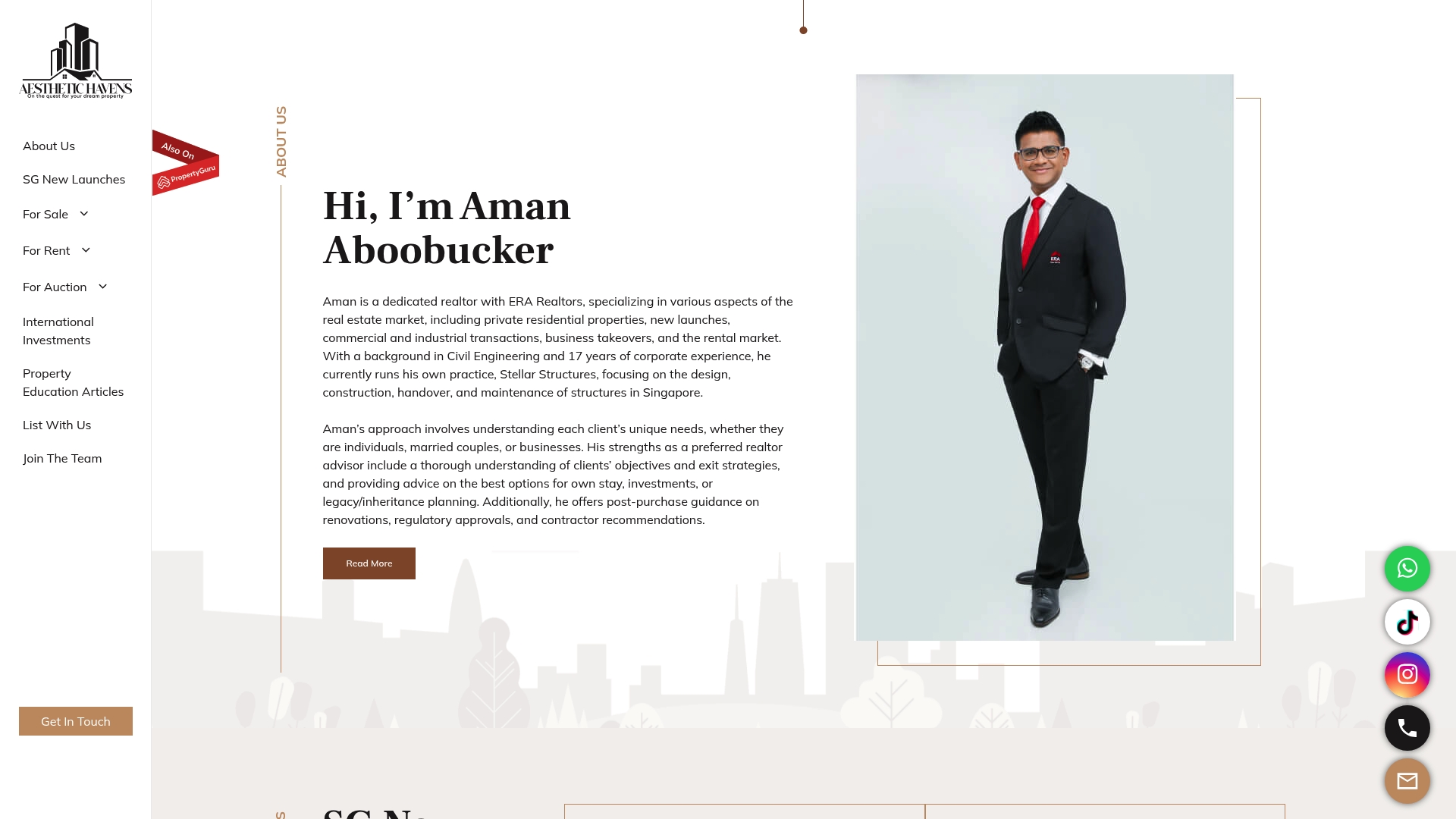
Aman
Talk to us before you list, renew or buy
If you are deciding what rent to ask, whether to buy a unit to lease out, or how a lease fits into a wider portfolio, our team can help with real estate consultancy, valuation and sales and leasing. We start with your goals and the specific unit, then set a rental strategy that fits the current supply picture.
If you are comparing options before committing, browse residential listings or read our property leasing guide first.
A simple checklist for the rest of the year
- Pull comparable leases from your project or street over the last three to six months.
- Check upcoming completions near your unit, since a new project nearby changes your competition.
- Decide your priority: the highest rent, the fastest lease or the most reliable tenant.
- Review lease terms such as length, break clauses and who pays for repairs.
- Revisit in the new year, when full-year 2026 data from URA is released.
None of this requires predicting the economy. It requires knowing your unit and its competitors well.
FAQ
Will Singapore rents go up or down in 2026?
Private rents have gone up modestly: URA reported rises of 0.7% in Q2 and 1.3% in Q3 2026. Savills still holds a broadly flat forecast for the year because of rising supply and uncertain expatriate demand. Expect small movements, with differences by location.
What is the rental vacancy rate in Singapore?
URA’s latest figure is 7.2% for completed private residential units, excluding Executive Condominiums, as of Q3 2026. It measures the share of completed stock inferred to be unoccupied at a point in time. It includes units held for sale or under renovation, so it overstates the number competing for tenants.
How will HDB flats reaching MOP affect rents?
About 13,500 flats reach their five-year MOP in 2026, roughly double the 2025 figure, according to the Straits Times citing OrangeTee. More flats eligible for rental means more landlord competition, which is expected to cap HDB rental growth. Flats near MRT stations and amenities should hold up better.
Are commercial rents following the same trend?
Not exactly. Knight Frank projects prime retail rents to grow 2% to 4% in 2026, helped by tourism. Other commercial segments have their own drivers, so check the specific submarket before you sign a lease.
Sources
- URA: Release of 3rd Quarter 2026 real estate statistics
- The Straits Times: Rental market stabilises, with higher supply set to cap growth in 2026
- The Business Times: Private residential rents rise 0.7% in Q2
- SBR: Private home prices to grow modestly in 2026 amidst fewer launches
- SgProperty: Why Singapore Private Rents Rose in Q2 2026


